

Introduction
A birdhouse is a very precise thing. If the entrance hole is too big then starlings will move in. If the floor is too small then the nest will be cramped. However if the measurements are correct then the bird you want will find a secure hole which will act as a substitute for the tree holes they have evolved to use.
This set of bird house plans provides you with three established designs with precise measurements from Cornell Lab NestWatch. Choose which bird you want to attract and then cut your wood. The designs include: nest box, chickadee/wren box and open robin platform.
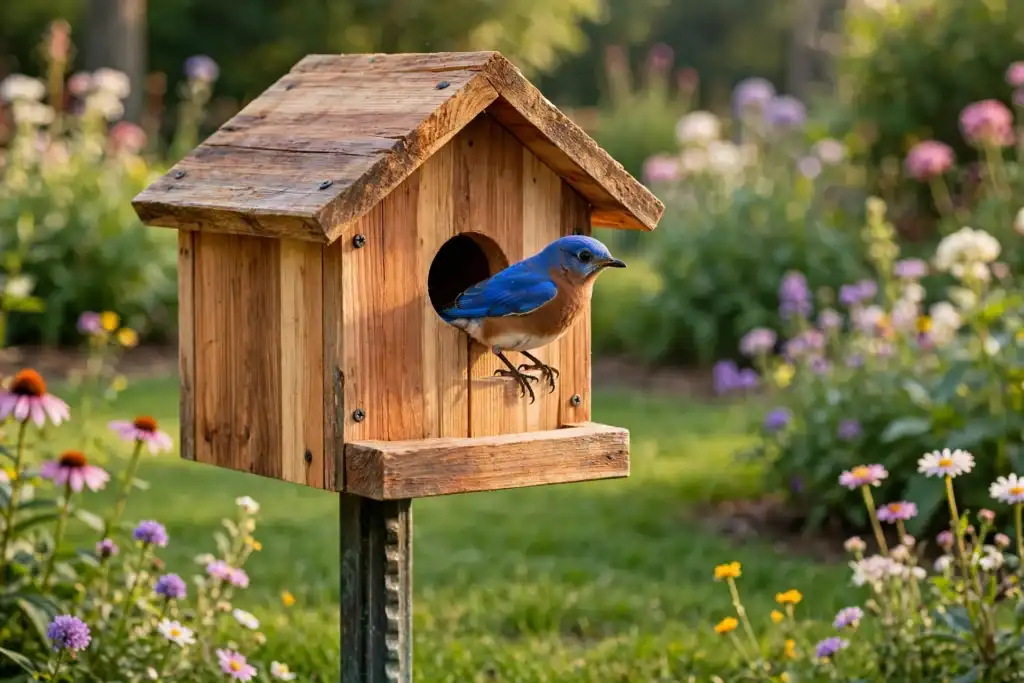
What Every Good Bird House Plan Shares
The three plans below differ in size and shape, but every working nest box follows the same rules. Cornell Lab NestWatch lists these features for any good birdhouse, and they matter more than decoration.
The entrance hole decides the tenant: The hole is a gate. It admits your target bird and blocks bigger competitors. Our guide to birdhouse hole size explains the gate idea in full. The numbers behind it are strict: a European Starling can squeeze through 1 9/16 inches, and a House Sparrow needs only 1 1/4 inches, so every hole in these plans stays below the starling line.
The floor fits the family: Floor size sets how much room the nest and growing young have. Most small songbirds use a floor of 5 1/2 by 5 1/2 inches. A floor that is too small crowds the brood, and one that is too large lets the nest spread thin and chill.
Thick, untreated wood: Walls should be at least 3/4 inch thick to insulate the nest against heat and cold. Use untreated, unpainted wood such as cedar, pine, cypress, or fir. Skip pressure-treated lumber, and never use metal or plastic, which overheat in summer sun.
Ventilation gaps: Drill two 5/8 inch holes near the top of each side wall, four in total. Rising hot air escapes through them, which keeps nestlings from overheating on still, hot days.
Drainage holes: Add at least four drainage holes of 3/8 to 1/2 inch in the floor, or clip the corners of the floorboard instead. Any rain that blows in drains away instead of soaking the nest. Set the floor recessed, at least 1/4 inch up from the bottom edges of the walls, so the walls shed water past it.
A roof that sheds water: The roof should slope and overhang the front by 2 to 4 inches and the sides by about 2 inches. Shallow cuts under the roof edges, about 1/4 inch deep, work as gutters that channel rain away from the walls.
A rough way out: Young birds climb the inside front wall to leave. Smooth lumber gives them nothing to grip, so roughen the inside below the entrance with horizontal kerf cuts, grooves, or scoring with a screwdriver tip.
No outside perch: This is the rule beginners most often get wrong. Cavity nesting birds cling to the entrance and slip inside without any perch. A perch only gives predators and rival birds a place to stand and reach in. Leave it off.
A door for you: One side or the top should hinge open, secured with a simple latch. You need that access to monitor the nest and to clean the box between broods.
Materials and Tools
One standard nest box takes a single board and basic tools, which is why it makes such a good first build.
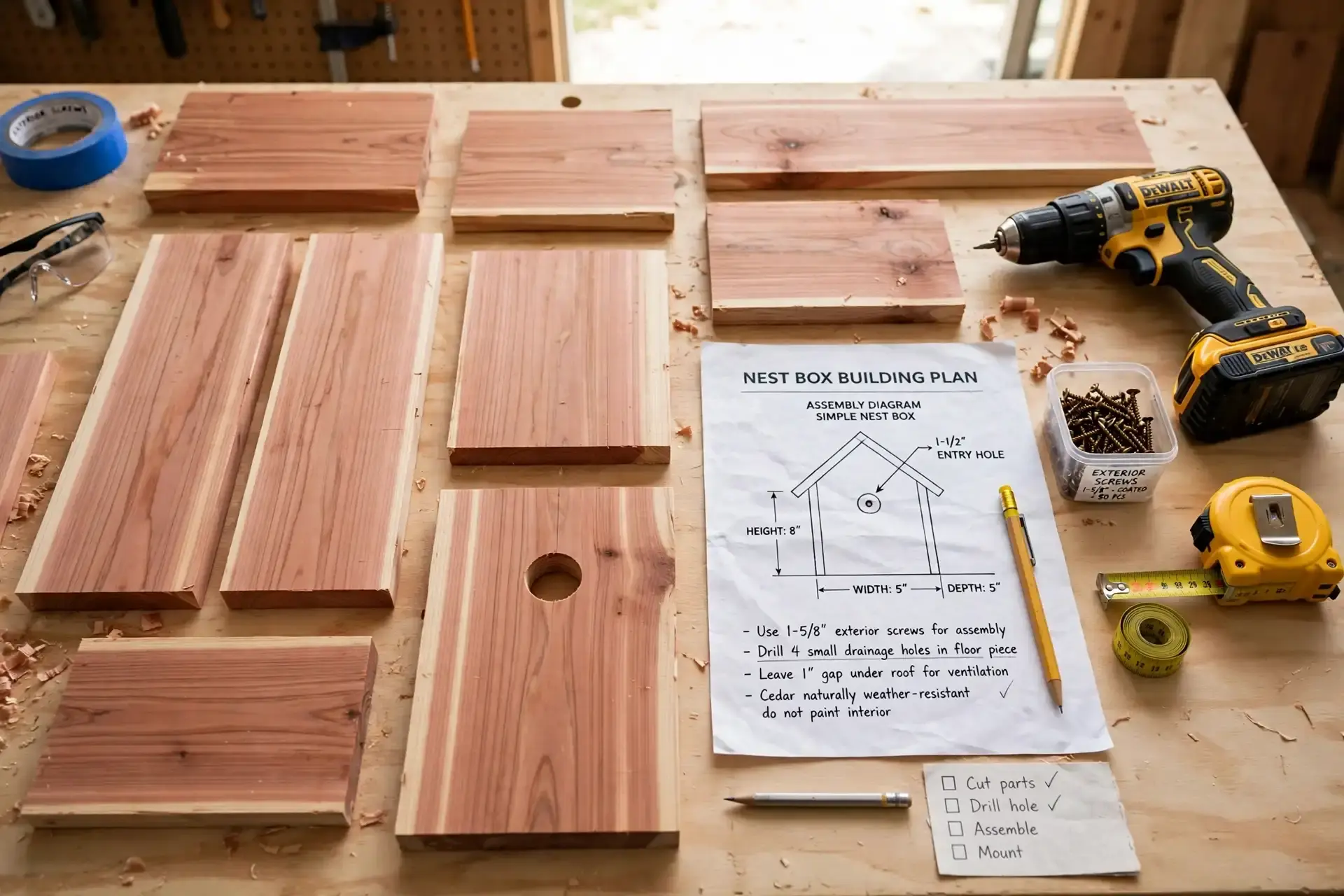
Wood: Cedar is the favorite because it resists rot without any treatment. Pine, cypress, and fir also work. Audubon’s bluebird plan builds the whole box from 1 by 6 boards, with a wider 1 by 10 piece for the roof, plus a small block for pole mounting. Buy boards a little longer than the cut list so a bad cut does not end the project.
Fasteners: Use exterior screws, about 1 5/8 inches long, rather than nails. Screws hold tight as the wood swells and shrinks, and they let you take the box apart for repairs. A bent galvanized nail makes a simple, reliable latch for the cleaning door.
Tools: You need a saw, a drill, a tape measure, and a square. A 1 1/2 inch hole saw or spade bit cuts the entrance cleanly. Smaller bits handle the ventilation and drainage holes. Sandpaper smooths the entrance rim so it cannot snag feathers.
Finish: Leave the wood bare, inside and out. If you want the outside to weather more slowly, a coat of linseed oil on the exterior only is a safe option. Never paint or stain the inside.
Plan 1: The Standard Nest Box
This is a classic bluebird box that can be used by more backyard birds than any other design. One box can be used by bluebirds, tree swallows and several other cavity nesting species.
Floor and depth: The inside floor measures 5 1/2 by 5 1/2 inches, and the inside depth is 9 inches. That depth matters: the nest sits well below the entrance, out of reach of a raccoon paw or a crow’s bill.
Entrance hole: Drill a round hole of 1 1/2 inches, high on the front panel. NestWatch also lists an oval option of 1 3/8 by 2 1/4 inches for the Eastern Bluebird, and its plan page shows the 2 1/4 inch figure, which is the height of that oval. For a simple round hole, stay at 1 1/2 inches. Going up to 1 9/16 inches, as a few plans suggest, crosses the line that lets starlings in.
Who uses it: Eastern Bluebirds are the main target. Tree Swallows, whose listed hole size is 1 3/8 inches, also move into this box readily. House Wrens use it too, though males often fill spare boxes with twig mock nests and let the female pick one.
Placement basics: Mount the box 4 to 6 feet above the ground, with the entrance facing east toward open habitat. Bluebirds want short grass and open ground for hunting insects, not deep shade. If tree swallows compete hard for the box, put up a second one 15 to 20 feet away. Swallows often take the spare and leave the first to the bluebirds.
Plan 2: The Chickadee and Wren Box
In this second design a smaller entry hole and shallower interior are made in the same basic structure. This will attract the smallest of cavity nesters instead of bluebirds.
Floor and depth: NestWatch lists the same 5 1/2 by 5 1/2 inch floor for chickadees and house wrens, with an inside depth of 8 inches. Some older plans shrink the floor to 4 by 4 inches for these birds, but the NestWatch plan keeps the standard floor and lets the hole do the sorting.
Entrance hole: Drill 1 1/8 inches for chickadees. Drill 1 inch for house wrens. Both sizes sit below the 1 1/4 inches a House Sparrow needs, so this box is the most sparrow resistant of the three plans. That alone makes it a smart choice in towns and suburbs where house sparrows swarm.
A chickadee extra: Put about 1 inch of wood shavings on the floor of a chickadee box. Chickadees are used to excavating soft, rotting wood, and the shavings let them feel at home and shape the nest cup.
Placement basics: Chickadees accept boxes 5 to 15 feet up, near trees and woodland edges, with the entrance facing away from the prevailing wind. House wrens nest 5 to 10 feet up and want shrubs or woody cover within about 100 feet. Keep boxes meant for other species at least 100 feet from a wren box, because wrens sometimes destroy the eggs of nearby nesters.
Plan 3: The Robin and Phoebe Platform
Robins and phoebes do not nest in cavities. Therefore, the size of the hole will never matter. They nest on ledges such as tree limbs, porch beams, and light fixture tops. A platform is provided to mimic this ledge.
The design: Build an open shelf with a floor of about 7 by 8 inches, a back panel for mounting, a low front lip to hold the nest, and a simple roof or none at all if the spot is already sheltered. The front stays open. Add the same drainage holes in the floor that a closed box gets, because an open shelf still catches rain.
Who uses it: American Robins are the main tenants. Eastern Phoebes, which naturally nest under bridges and eaves, use the same shelf. Mourning doves sometimes claim one too.
Placement basics: NestWatch advises mounting the shelf on a building in a sheltered site, under the eaves or soffits, or over a light fixture. The listed height range is wide, 5 to 25 feet, but the eave and porch spots birds actually choose sit at the lower end of it. Face the shelf in any direction the shelter dictates. After the young fledge, remove the old nest so the shelf is ready for the next brood.

The Three Plans at a Glance
| Design | Floor size | Entrance hole | Mounting height | Best for |
|---|---|---|---|---|
| Standard nest box | 5 1/2 by 5 1/2 in | 1 1/2 in round | 4 to 6 ft | Bluebirds, tree swallows |
| Chickadee and wren box | 5 1/2 by 5 1/2 in | 1 1/8 in or 1 in | 5 to 10 ft | Chickadees, house wrens |
| Robin platform | 7 by 8 in | None, open front | 5 to 25 ft, under eaves | Robins, phoebes |
Bigger Boxes for Wood Ducks and Owls
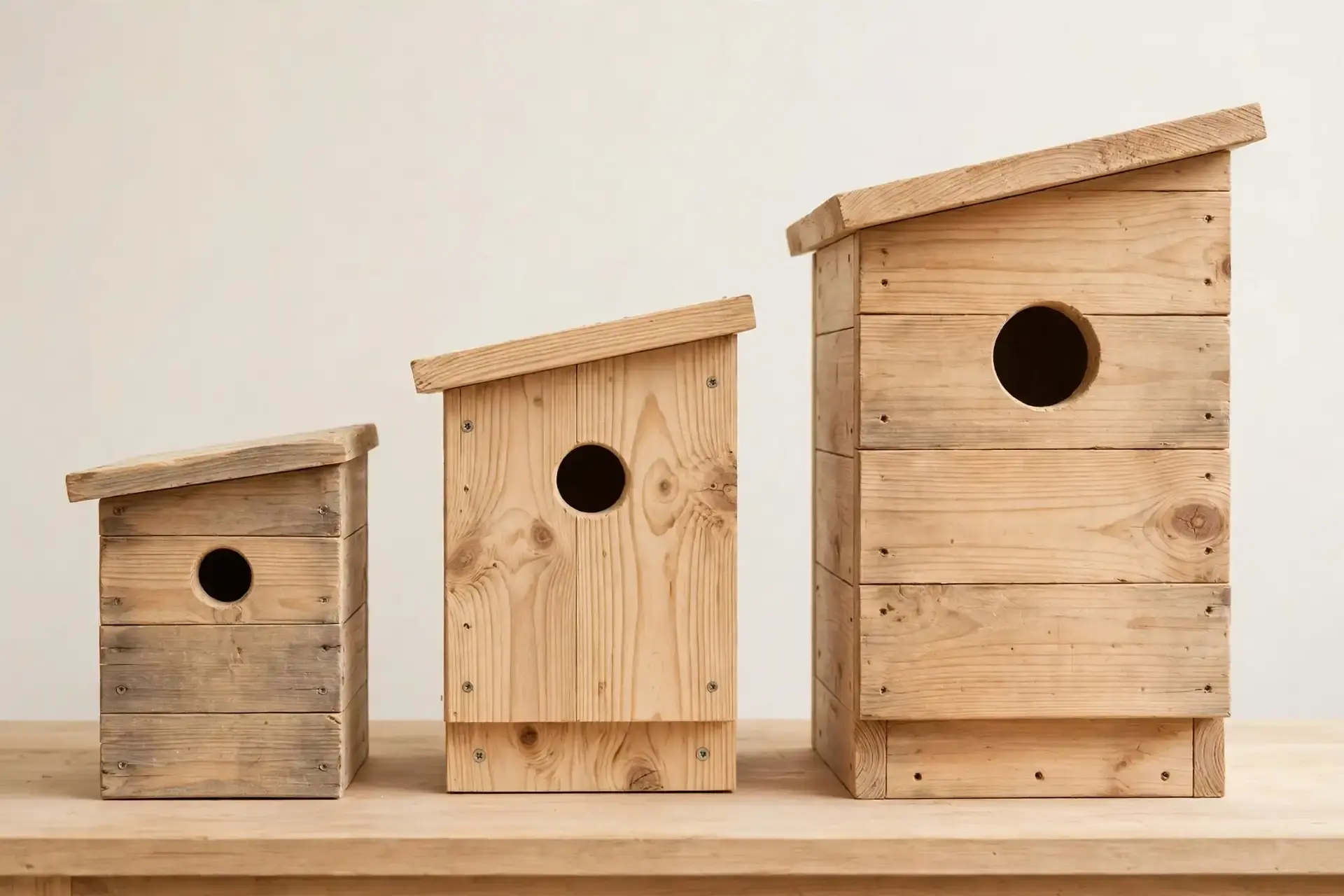
Wood ducks, screech-owls, and kestrels need far bigger cavities than a songbird box, and this guide only sketches them. Their floors run much larger, their entrances are wide ovals or circles of several inches, and NestWatch places owl and kestrel boxes 10 to 30 feet up.
Even a small owl box is a serious build. The Elf Owl plan, for example, uses a 2 inch entrance, a floor of about 7 1/4 by 7 1/4 inches, and an inside depth of 13 inches. For boxes this size, NestWatch allows non-pressure-treated exterior plywood as well as solid wood. Ducks and owls bring little nesting material of their own, so their plans include a layer of wood shavings in the bottom.
Treat these as second projects. Ensure you have seen the complete species plan before cutting and mount on a suitable support which will hold its weight. They will require more maintenance than those for songbirds.
Mounting and Predator Protection
A good box in a bad spot stays empty, and a good box without a guard can become a trap. Mounting decides both.
Use a pole, not a tree: NestWatch recommends a free-standing metal or PVC pole for small boxes. It is harder for predators to climb than a trunk or fence post, and it accepts a guard. Audubon’s plan mounts the box on galvanized conduit slipped over a driven steel stake, a setup that stays firm for years.
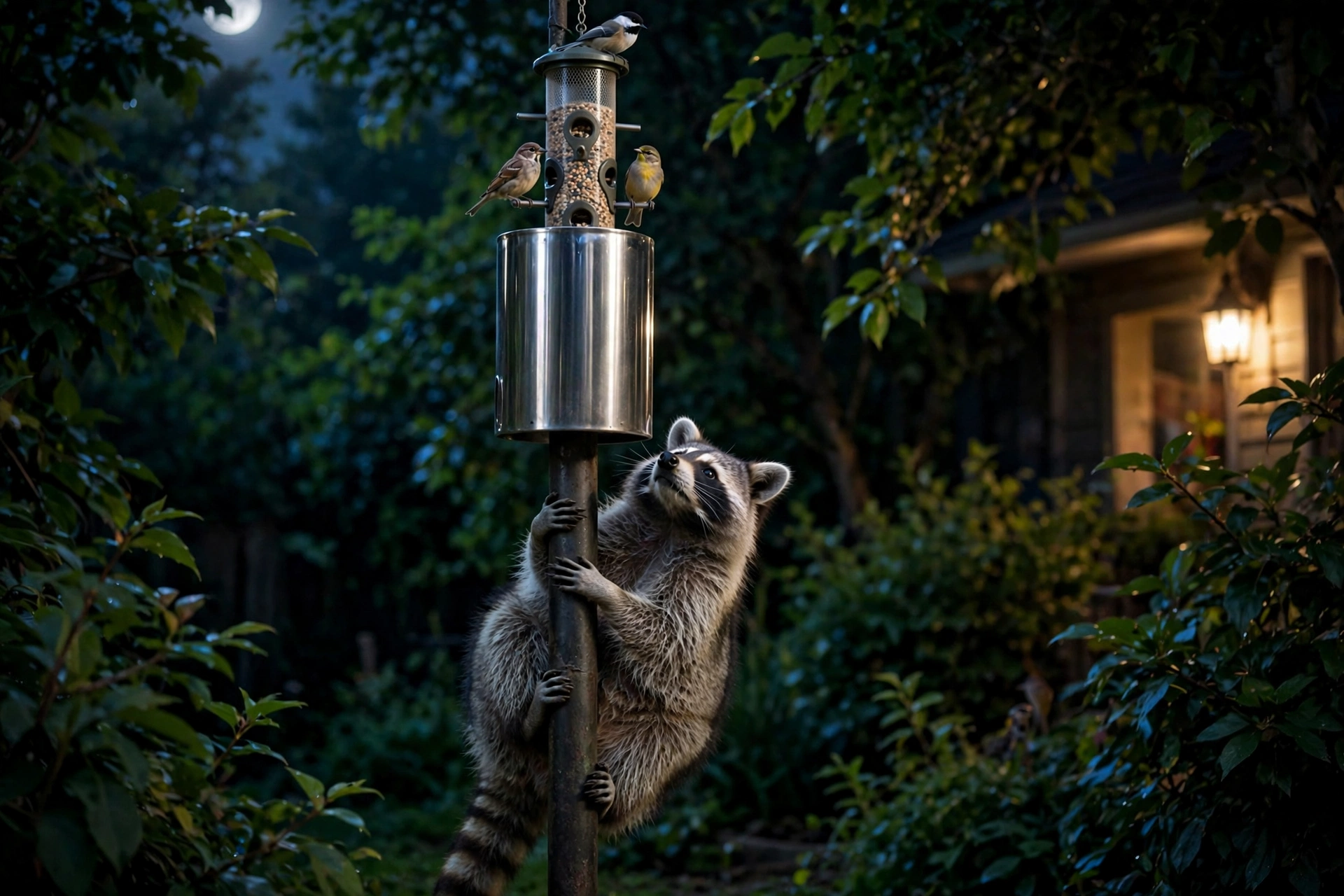
Fit a baffle: A predator guard is not optional. NestWatch describes a cone baffle about 3 feet across, or a stovepipe baffle about 8 inches wide and 24 to 36 inches long, mounted on the pole below the box. Raccoons and snakes that climb the pole meet the baffle and give up.
Height and direction: Follow the height range for your plan in the table above. Face the entrance away from the prevailing wind and out of harsh afternoon sun. Bluebirds do best with the entrance facing east. Tilt the box very slightly forward so wind-driven rain runs out instead of pooling.
Timing: Put boxes up early. NestWatch advises having them in place by February in the South and by mid to late March in the North, and fall or winter installation works too, since birds scout sites well before spring. Our guide to when to put up birdhouses covers the timing by region in more detail.
Space and habitat: Bluebird boxes should stand about 300 feet apart, and a general rule is no more than two houses per species per acre. Remember that a box adds one cavity to the yard. It supports the habitat around it rather than replacing it, as our comparison of birdhouses vs nesting habitat explains. Cover, food, and water nearby matter as much as the box itself.
Mistakes to Avoid
Adding a perch: The most common error. Perches help predators, not nesting birds. Leave the front plain.
Oversizing the hole: A bigger hole is not generous, it is an invitation to starlings and house sparrows. If no bird uses the box, check the location before you reach for a larger bit.
Using treated or painted wood inside: Pressure-treated lumber and interior paint or stain do not belong in a nest box. Keep the inside raw wood, always.
Sealing the box shut: Decorative houses with no vents, no drainage, and no opening side fail birds in the first heat wave or storm. Every plan here breathes, drains, and opens.
Mounting where predators stroll: Never set a box on a horizontal branch or a fence railing, where a cat or raccoon can walk straight up to the entrance. A baffled pole is the fix.
Skipping the cleanout: Old nests harbor mites and moisture. Open the box after each brood or at least every fall, clear it out, and check the entrance for chewing or swelling. Our walkthrough of how to clean out birdhouses shows the full routine.
Frequently Asked Questions
What is the best wood for a bird house?
Cedar is the top choice because it resists rot with no treatment at all. Pine, cypress, and fir also work well. Whatever you choose, use untreated boards at least 3/4 inch thick, and avoid pressure-treated lumber, metal, and plastic.
Should a bird house have a perch?
No. NestWatch is clear on this point: cavity nesting birds do not need a perch, and one only helps predators and rival birds reach the entrance. Birds cling to the hole rim and slip inside on their own.
What size hole does a bluebird house need?
Drill a round hole of 1 1/2 inches. That size admits bluebirds and excludes European Starlings, which need 1 9/16 inches to squeeze through. Some plans call 1 9/16 inches ideal, but it crosses the starling line, so 1 1/2 inches is the safer cut.
Do bird houses need ventilation and drainage?
Yes, both. Drill two 5/8 inch ventilation holes near the top of each side wall so hot air can escape, and at least four drainage holes of 3/8 to 1/2 inch in the floor so rain can get out. A sealed box overheats and floods.
How high should I mount a bird house?
It depends on the bird. Bluebird boxes go 4 to 6 feet up. Chickadee boxes work from 5 to 15 feet, and wren boxes from 5 to 10 feet. Robin shelves can sit anywhere from 5 to 25 feet, usually under eaves. Mount on a pole you can reach safely for cleaning.
Can I paint a bird house?
Leave it unpainted if you can. Birds accept plain, weathered wood readily, and NestWatch lists unpainted wood as a feature of a good box. If you finish the outside, use a natural, dull treatment such as linseed oil, and never apply anything to the inside.
When should I put up a new bird house?
Fall or winter is ideal, because birds scout nesting sites long before spring. Have boxes in place by February in the South and by mid to late March in the North. A box put up late can still host a second brood or serve as a winter roost.
Why is my bird house still empty?
Habitat is the usual reason. A bluebird box in deep shade, or a wren box far from shrubs, ignores the bird’s basic needs. Check the placement against the plan, confirm the hole size, and give it a full season. Competition matters too: house sparrows and wrens claim boxes early, so a second box often solves the problem.
Conclusion
Three basic designs will attract most of your backyard birds. A standard box for bluebirds and swallows, a small hole box for chickadees and wrens, and an open platform for robins and phoebes. Use thick, untreated wood. Drill the hole to the correct size. No perch. Attach to a baffled pole. Measure twice and let the birds do the rest.
Sources and Further Reading
- Cornell Lab NestWatch, All About Birdhouses and Right Bird, Right House
- Cornell Lab NestWatch, Eastern Bluebird nest box plan
- Cornell Lab NestWatch, Black-capped Chickadee nest box plan
- Cornell Lab NestWatch, House Wren nest box plan
- Cornell Lab NestWatch, American Robin nest structure plan
- Mass Audubon, Your Guide to Birdhouses
- Alabama Cooperative Extension, Bird Houses for Songbirds