
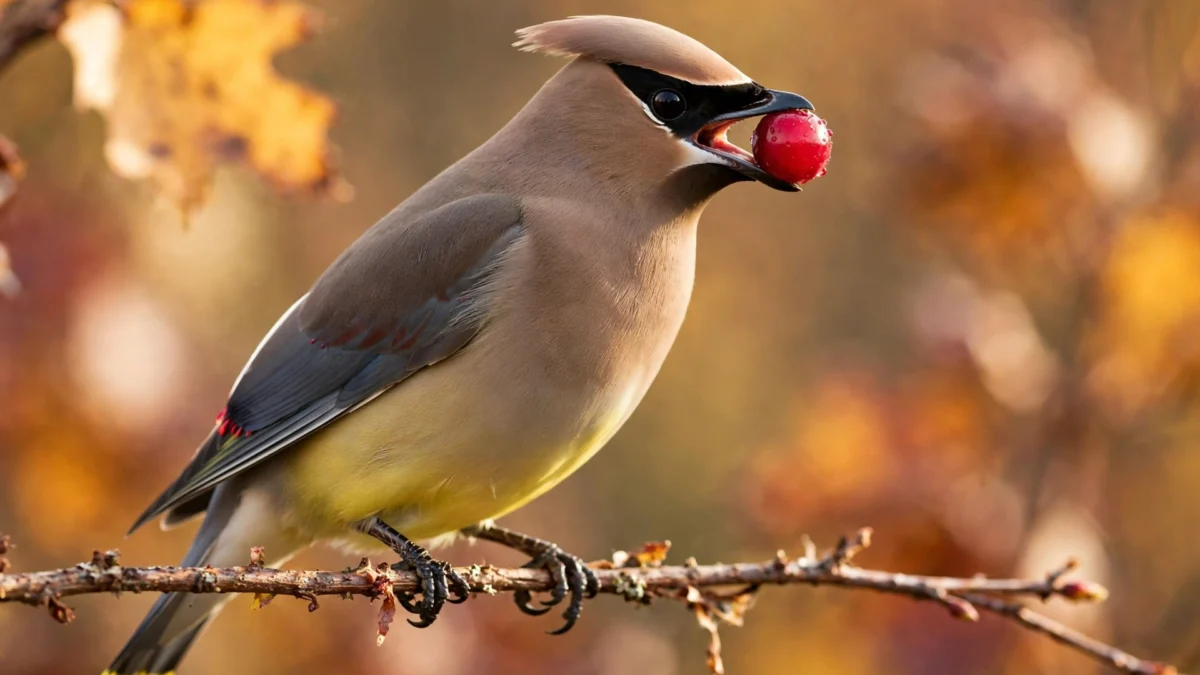
Every fall, grocery stores pile glossy red cranberries high for the holiday season. If you watch birds, you may wonder whether that bright red fruit can go on the platform feeder too. Can birds eat cranberries? The short answer is yes. Fresh cranberries are safe and non-toxic for backyard birds, and wild species like robins and cedar waxwings already seek out native berries on their own every autumn.
The catch is not the berry itself. It is what people do to cranberries before serving them. Sweetened dried cranberries, jellied cranberry sauce, and cranberry juice cocktail carry loads of added sugar that birds do not need and should not eat. Served the right way, plain and unsweetened, cranberries make a perfectly good fall and winter treat. This guide covers which forms are safe, which species will actually eat them, and how to serve them with no waste.
The Short Answer: Yes, Cranberries Are Safe for Birds
Cranberries are not toxic to birds. They do not appear on any reputable list of dangerous foods for birds, and they contain none of the compounds that make foods like chocolate, caffeine, avocado, or xylitol dangerous. Wild birds in North America have eaten native cranberries and their close relatives, such as lingonberries and other Vaccinium berries, for as long as those plants have grown.
That said, safe does not mean ideal in every form. A raw cranberry is tart, firm, and acidic. Birds handle it fine, but many backyard birds will ignore a whole fresh cranberry simply because it is too large and too hard to manage comfortably. Preparation matters more than most people expect, and the processed versions of cranberries sold in stores introduce real problems. The sections below walk through each form so you can offer cranberries the way birds actually want them.
Fresh vs Dried vs Juice vs Sauce: Which Forms Are Safe
Cranberries reach your kitchen in several very different forms, and they are not interchangeable at the feeder. The table below summarizes the verdict for each.
| Form | Safe for Birds? | Notes |
|---|---|---|
| Fresh raw cranberries | Yes | The safest option. Chop or halve for small birds so they can manage the firm flesh. |
| Frozen cranberries (thawed) | Yes | Identical to fresh once thawed. A good way to offer cranberries after the season ends. |
| Unsweetened dried cranberries | Yes, with prep | Very chewy and concentrated. Soak in warm water until soft before offering. |
| Sweetened dried cranberries | No | Most commercial dried cranberries are infused with sugar, sometimes more sugar than fruit by weight. Avoid. |
| Cranberry sauce or relish | No | Jellied sauce is mostly sugar and corn syrup. Homemade relish often contains added sugar, citrus, and spices. |
| Cranberry juice or juice cocktail | No | Juice cocktail is largely sugar water. Even 100% juice is too acidic and too sugary for a bird bath or feeder. |
The pattern is simple. The closer the cranberry is to the way it grows, the better. Every processing step between the bog and your feeder tends to add sugar, and sugar is the main danger in the cranberry story.
Why Sugar Is the Real Problem
Birds metabolize sugar quickly, and a little natural fruit sugar is part of a normal diet for fruit-eating species. The problem with sweetened cranberry products is the amount. Many commercial dried cranberries contain around two-thirds sugar by weight, added during processing to balance the berry’s natural tartness. Jellied cranberry sauce is even more extreme, essentially candy shaped like a can.
For birds, a diet heavy in added sugar can contribute to obesity and poor feather condition, and sticky sweet foods can gum up feathers around the bill. Fermentation is another concern. Sugary fruit sitting uneaten in a warm feeder can ferment, and the alcohol produced is harmful to birds. This is one reason to offer small amounts, remove leftovers, and keep feeding surfaces clean, as Project FeederWatch recommends in its safe feeding practices.
The rule of thumb is easy to remember. If the ingredient list contains sugar, corn syrup, or fruit juice concentrate added for sweetness, keep it out of the feeder. Plain is always the right choice.
Cranberry Nutrition: What Birds Actually Get
A fresh cranberry is about 87 percent water, which makes it a hydrating snack as well as a food. The remaining solids include natural fruit sugars, fiber, vitamin C, vitamin E, manganese, and a family of plant compounds called proanthocyanidins that give cranberries their deep red color and tart bite.
For birds, the meaningful contributions are hydration, a modest energy boost from natural sugars, and fiber that supports digestion. The antioxidant compounds are interesting, and they are well studied in human nutrition, but there is no solid research showing specific health benefits of cranberry antioxidants for wild birds. It is fair to describe cranberries as a wholesome supplemental food, not as a medicine or a cure for anything.
One more honest note on nutrition. Cranberries contain oxalic acid, a compound that in very large amounts can interfere with calcium absorption. Some cautious feeding guides mention it. In practice, the quantity of cranberries a backyard bird eats is far too small for oxalates to matter, and no avian research identifies cranberry oxalates as a real-world hazard. Offer them as a treat alongside seeds, suet, and other foods, and nutrition takes care of itself.
Do Birds Eat Cranberries in the Wild?
Yes, and this is one of the strongest reasons to feel confident offering them. Wild cranberries grow in bogs and wetlands across northern North America, and the fruit often persists on the plant through winter, exactly when birds need it most. Fruit-eating birds learn to find these late-season berries, and cranberries are a documented part of the fall and winter diet for several species.
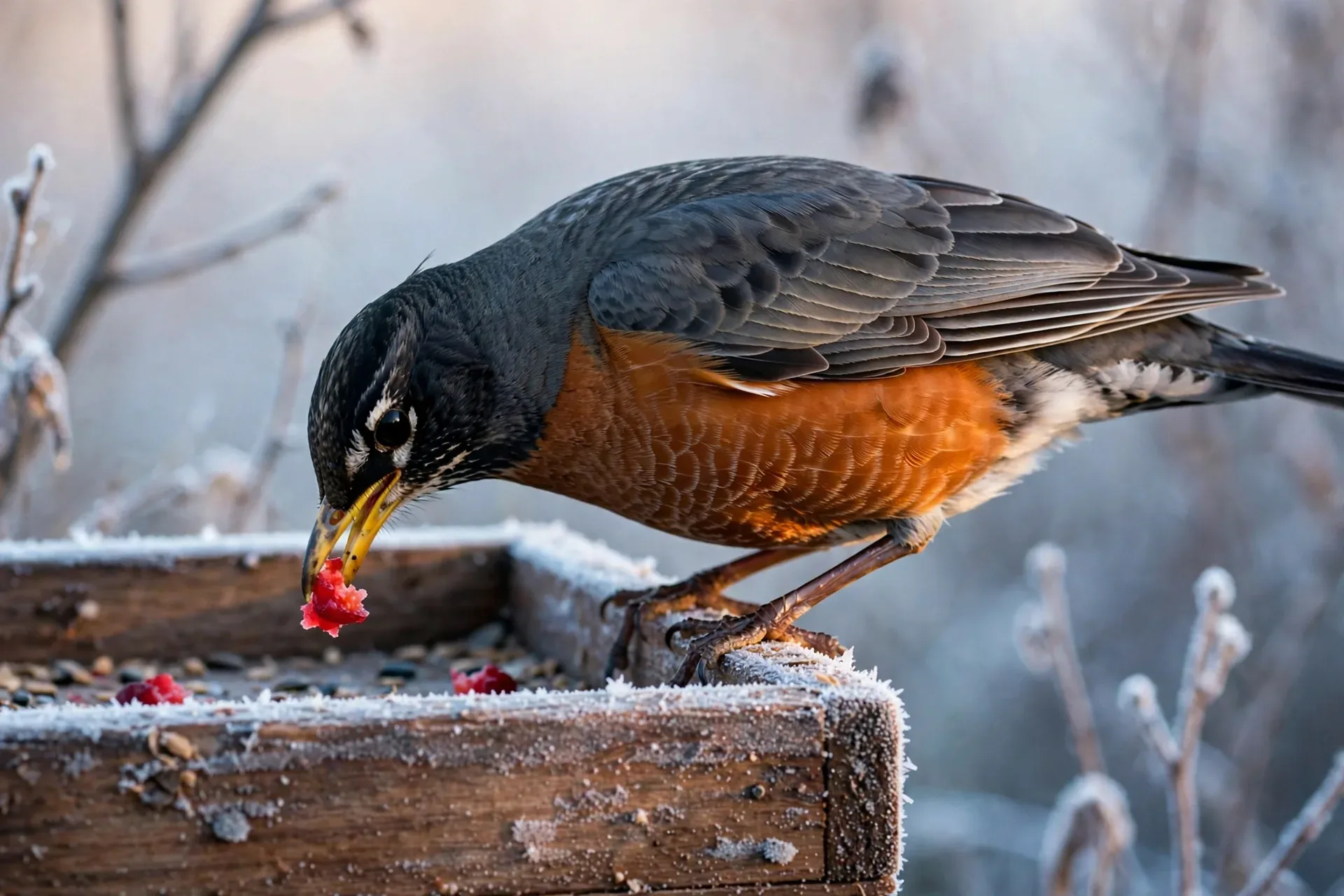
Berries in general are a cornerstone of cold-weather survival. Insects disappear, seeds get buried under snow, and fat-rich suet is not available in nature. Fruit that hangs on the branch becomes the backup plan. Cornell Lab of Ornithology notes that American Robins eat an enormous variety of fruits, including chokecherries, hawthorn, dogwood, and sumac, especially once cold weather arrives, as described in the American Robin life history. Cranberries fill the same ecological role wherever they grow.
Which Birds Eat Cranberries
Not every backyard bird will touch a cranberry. Seed specialists like goldfinches and chickadees usually ignore fruit entirely. The birds most likely to accept cranberries are the species that already eat berries in the wild.
- American Robin: A classic fall and winter fruit eater. Robins switch from worms to berries as temperatures drop and will readily take chopped cranberries from a platform feeder or the ground.
- Cedar Waxwing: The ultimate berry specialist. Waxwings travel in flocks and can strip a berry bush in hours. Cornell notes that in fall these birds gather by the hundreds to eat berries, filling the air with their high, thin whistles, per the Cedar Waxwing overview.
- Eastern Bluebird: Winter bluebirds depend heavily on fruit, including berries and small fruits, when insects are gone.
- Blue Jay: Omnivorous and bold. Jays will sample almost anything, including chopped cranberries, especially from tray feeders.
- Gray Catbird and Northern Mockingbird: Both are enthusiastic fruit eaters that linger through fall in many regions.
- Woodpeckers: Downy and Hairy Woodpeckers occasionally take fruit, especially when it is offered near their suet.
- Wild Turkey: Where turkeys roam near feeders, they will vacuum up fallen cranberries from the ground.
The Cedar Waxwing Warning: Watch for Fermented Berries
Cedar waxwings deserve a special caution because of their famous appetite. Waxwings gorge on berries, and when berries ferment on the branch or in a feeder, the alcohol can intoxicate them. Wildlife rehabilitators report waxwings every year that are literally drunk from fermented fruit, sometimes flying into windows or becoming too impaired to fly.
This does not mean you should avoid offering berries. It means you should manage them. Offer small quantities that get eaten in a day, clear away uneaten or mushy fruit promptly, and never leave a large pile of berries sitting for days. Clean feeding surfaces regularly. A tidy feeding station keeps the berry treat safe instead of turning it into a hazard.
Why Some Birds Ignore Cranberries Completely
If you offer cranberries and nothing touches them for a week, do not take it personally. Fruit acceptance varies by species, season, and even individual habit. A yard dominated by finches and sparrows may never see cranberry action, while a yard with wintering robins and waxwings might empty the tray in an afternoon. Cranberries are a specialty item, not a universal attractant like black oil sunflower seed. Offer them alongside proven staples, not instead of them.
How to Serve Cranberries to Birds: 6 Simple Steps
Preparation is the difference between cranberries that get eaten and cranberries that get ignored. Follow these steps for the best results.
- Start with plain berries. Buy fresh or frozen whole cranberries with no added ingredients. If using dried, read the label and choose unsweetened only.
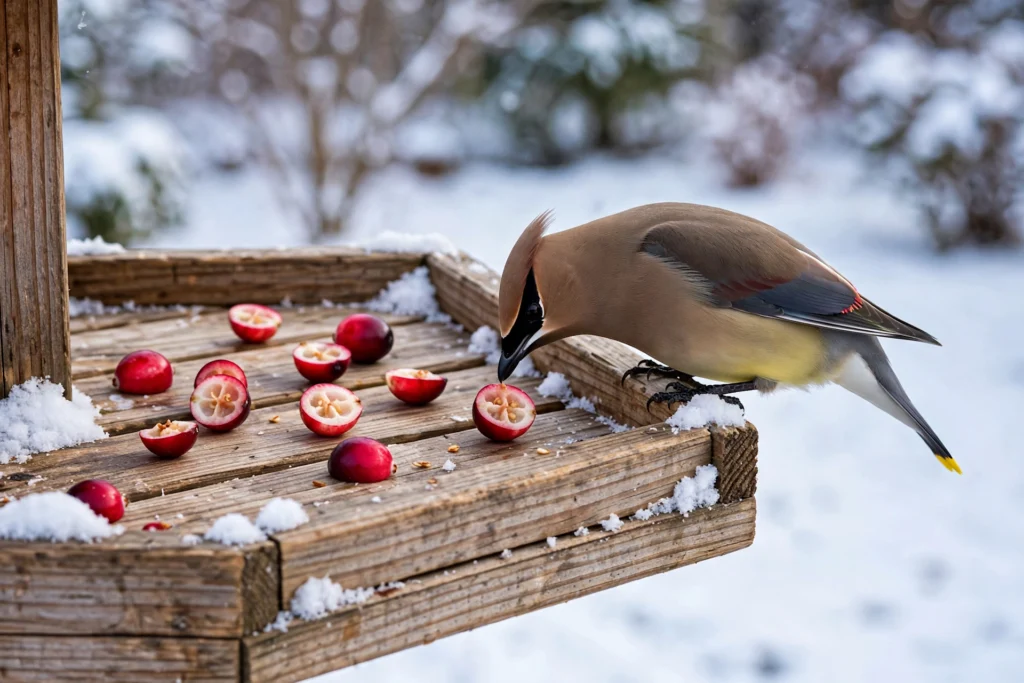
- Chop or halve fresh berries. A whole cranberry is about the size of a large marble, too big and too firm for most songbirds. Halving or roughly chopping them exposes the softer interior and makes each piece manageable.
- Soak dried cranberries. Place unsweetened dried cranberries in warm water for 20 to 30 minutes until they plump and soften. Drain well before serving so the feeding area does not turn into a sticky mess.
- Use the right feeder. Spread prepared cranberries on a platform or tray feeder, or scatter them on a clean ground-feeding area. Fruit does not work in tube feeders, and it clogs hopper mechanisms.
- Offer small amounts. A small handful is plenty. Fruit spoils faster than seed, so modest portions that disappear in a day keep everything fresh and reduce fermentation risk.
- Clean up daily. Remove uneaten, shriveled, or moldy pieces each evening. Wash the tray or platform regularly, following the same hygiene routine you use for seed feeders.
Mixing Cranberries Into Suet and Other Treats
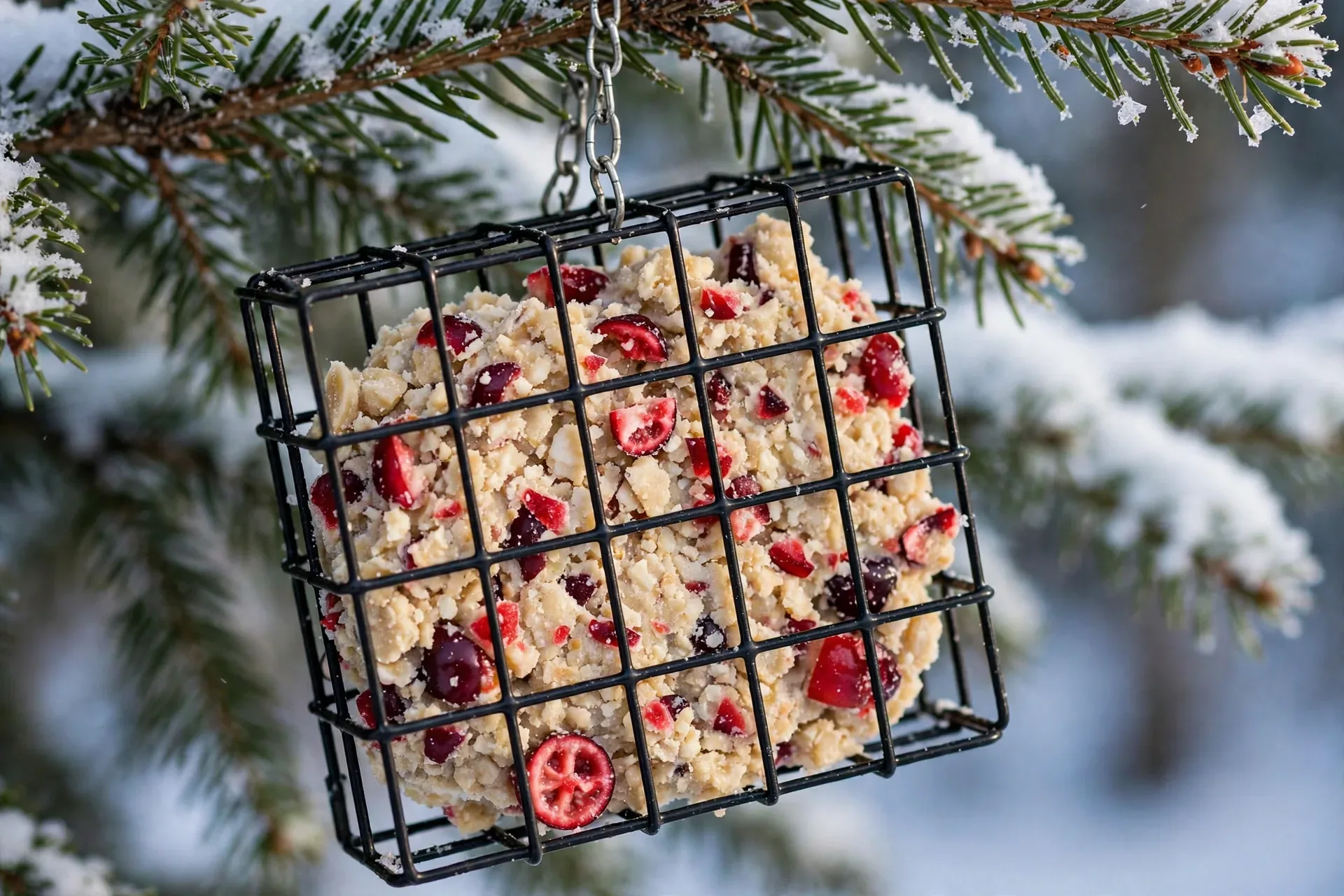
Chopped cranberries mix beautifully into homemade suet. Stir a tablespoon or two of chopped fresh or rehydrated dried cranberries into your suet recipe before it sets. The red flecks look festive in winter, and woodpeckers, nuthatches, and chickadees that visit the suet cage will sample the fruit pieces along with the fat.
You can also scatter chopped cranberries over a seed tray so ground-feeding birds encounter them while foraging. Another simple option is threading whole fresh cranberries on a string and hanging it like a garland near a feeder, which works well for jays and robins. Just remember to take the string down once the berries are gone so no bird tangles in the empty line.
Fall and Winter: Why Cranberries Make Sense Right Now
Cranberry season and bird-feeding season overlap almost perfectly. Fresh cranberries hit stores in October and November, exactly when migrating and wintering birds are shifting to fruit-heavy diets. Offering cranberries in fall connects your feeding station to the natural rhythm of the season.
In winter, berries become even more valuable. When snow covers the ground and temperatures stay below freezing, high-energy food is survival. Cranberries will never replace calorie-dense staples like suet, peanuts, and black oil sunflower seed, but they add variety, hydration, and foraging enrichment. For a full seasonal plan, see what to feed birds in winter, which covers how to balance fruit with the high-fat foods cold weather demands.
Fall is also the season to think about your yard as a whole. If you enjoy watching waxwings and robins devour berries, consider planting native berry-producing shrubs like winterberry, serviceberry, or dogwood. A living berry supply feeds birds for years with no chopping required.
What to Avoid When Feeding Cranberries
- Sweetened dried cranberries: The most common mistake. Most bagged dried cranberries are candy in disguise, with added sugar outweighing the fruit.
- Cranberry sauce and relish: Jellied sauce is nearly pure sugar. Homemade relish adds citrus, spices, and sweeteners birds do not need.
- Juice and juice cocktail: Too sugary, too acidic, and of no use in a feeder or birdbath.
- Moldy or fermented fruit: Toss anything mushy, fizzy-smelling, or visibly moldy. When in doubt, throw it out.
- Whole berries for tiny birds: Always chop for small species. A whole cranberry can be a choking frustration for a chickadee-sized bird.
- Cranberries as the only food: Fruit is a supplement, not a diet. Keep seed, suet, and water available as the foundation.
And a broader reminder that applies far beyond cranberries: many common human foods are genuinely dangerous to birds. Before experimenting with new treats, check toxic foods for birds so you know exactly which kitchen items to keep far away from the feeder.
Frequently Asked Questions
Do birds eat cranberries in the wild?
Yes. Wild cranberries and related native berries grow in northern bogs and wetlands, and fruit-eating birds such as robins, waxwings, and bluebirds eat them through fall and winter. Berries that persist on the plant into cold weather are an important natural food source when insects and seeds become scarce.
Are cranberries toxic to any birds?
There is no evidence that cranberries are toxic to any bird species. They are not listed among dangerous foods by avian veterinary sources or wildlife agencies. The documented risks come from added sugar in processed cranberry products and from fermented fruit, not from the berry itself.
Can birds eat dried cranberries?
Only unsweetened dried cranberries, and only after soaking them in warm water until soft. Most commercial dried cranberries contain large amounts of added sugar, so read the ingredient label carefully. If sugar or syrup appears in the ingredients, do not offer them to birds.
Can birds eat cranberry sauce?
No. Cranberry sauce, whether jellied from a can or homemade, contains far too much sugar for birds, plus ingredients like citrus and spices that do not belong at a feeder. Serve plain fresh or thawed cranberries instead.
Will cranberries attract specific birds to my yard?
Cranberries are most likely to attract fruit-eating species such as American Robins, Cedar Waxwings, Eastern Bluebirds, Gray Catbirds, and Blue Jays. Seed-eating birds like finches and chickadees will probably ignore them. For the best chance of visitors, offer chopped cranberries on a platform feeder during fall and winter when natural fruit is in high demand. If you are building a full fall menu, cranberries pair well with other seasonal treats like pumpkin.
Conclusion
So, can birds eat cranberries? Absolutely, as long as you keep them plain. Fresh or thawed cranberries, chopped for easy eating, are a safe and natural treat that mirrors what fruit-eating birds already find in the wild each fall. Unsweetened dried cranberries work too once soaked soft. What does not work is anything from the sweetened side of the grocery aisle: sugared dried cranberries, cranberry sauce, and juice cocktail all carry far more sugar than any bird should eat.
Offer a small handful on a platform feeder, mix chopped berries into homemade suet, and clean up leftovers before they ferment. Target the birds that love fruit, robins, waxwings, bluebirds, and jays, and do not be surprised if the seed specialists ignore the offering entirely. Done right, cranberries are a simple seasonal way to add variety to your feeding station through the cold months ahead.