

Introduction
The robin, flute-like song from deep in the woods and brown spotted-breasted bird on the forest floor – all are types of thrush. These are some of the most musical birds in North America. The thrush family holds the robin you see every day and the shy forest singers you may never see at all. They have spotted breasts when young, sing beautifully and eat on the ground. This guide will help you identify the most common species of thrush: the American robin, wood thrush, hermit thrush, Swainson’s thrush and veery, plus the bluebirds. We will look at their size, identification features, songs, where they live and their migration patterns. Next time you hear or see a thrush you’ll know its actual name!
What Is a Thrush
Thrushes are medium-sized songbirds in the Turdidae family. There are 174 species of thrush in the world. Some of the most well known species can be found in North America. These birds are known for their flute-like songs, spotted-breasted nestlings and pale robin’s-egg-blue eggs.
Thrushes are strong songbirds with a longish bill, strong legs and are ground feeders. Most species have an insectivorous diet with some fruit. They have a quick upright gait when running or hopping around lawns and forest floors. Juvenile thrushes have spotted breasts which fade as they grow.
Thrushes can be found in a wide range of habitats, from urban lawns to deep northern woods. Some species are quite bold and common such as the American robin. Other species are quite shy and secretive such as the veery. They are heard far more often than they are seen.
How to Identify a Thrush
Start with the breast. Many adult thrushes show spots or streaks on the breast, and young thrushes are heavily spotted. A spotted breast on a medium songbird points toward a thrush.
Look at their bill and legs. Their bill is fairly long and slightly curved downwards, which makes them good for catching insects and fruit from the ground. They have strong legs for hopping across lawns and leaf litter.
Listen to their song. Thrushes are well known for their singing. Their song is flute-like and can be heard from far away through the trees. If you hear a rich, rolling, flute-like song coming from a forest in spring, then it is very likely to be a thrush, even if the bird stays hidden.
Look at their habitat. Robins live in lawns, parks and gardens. Wood thrushes and veeries live in deciduous forest interiors. Hermit thrushes and Swainson’s thrushes live in northern and mountain forests. The place often names the bird before you see it.
American Robin
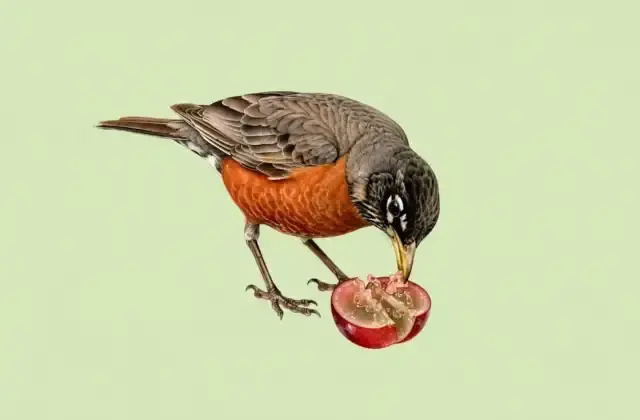
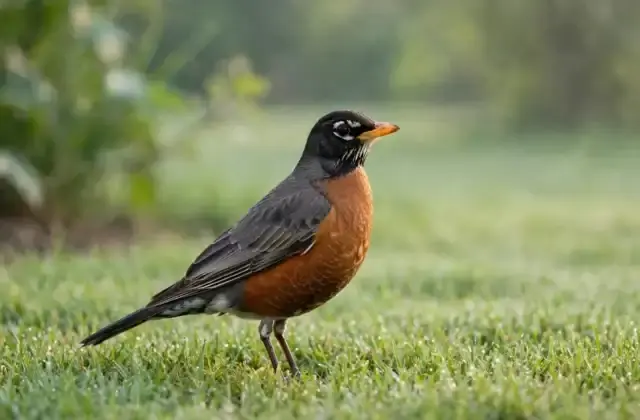
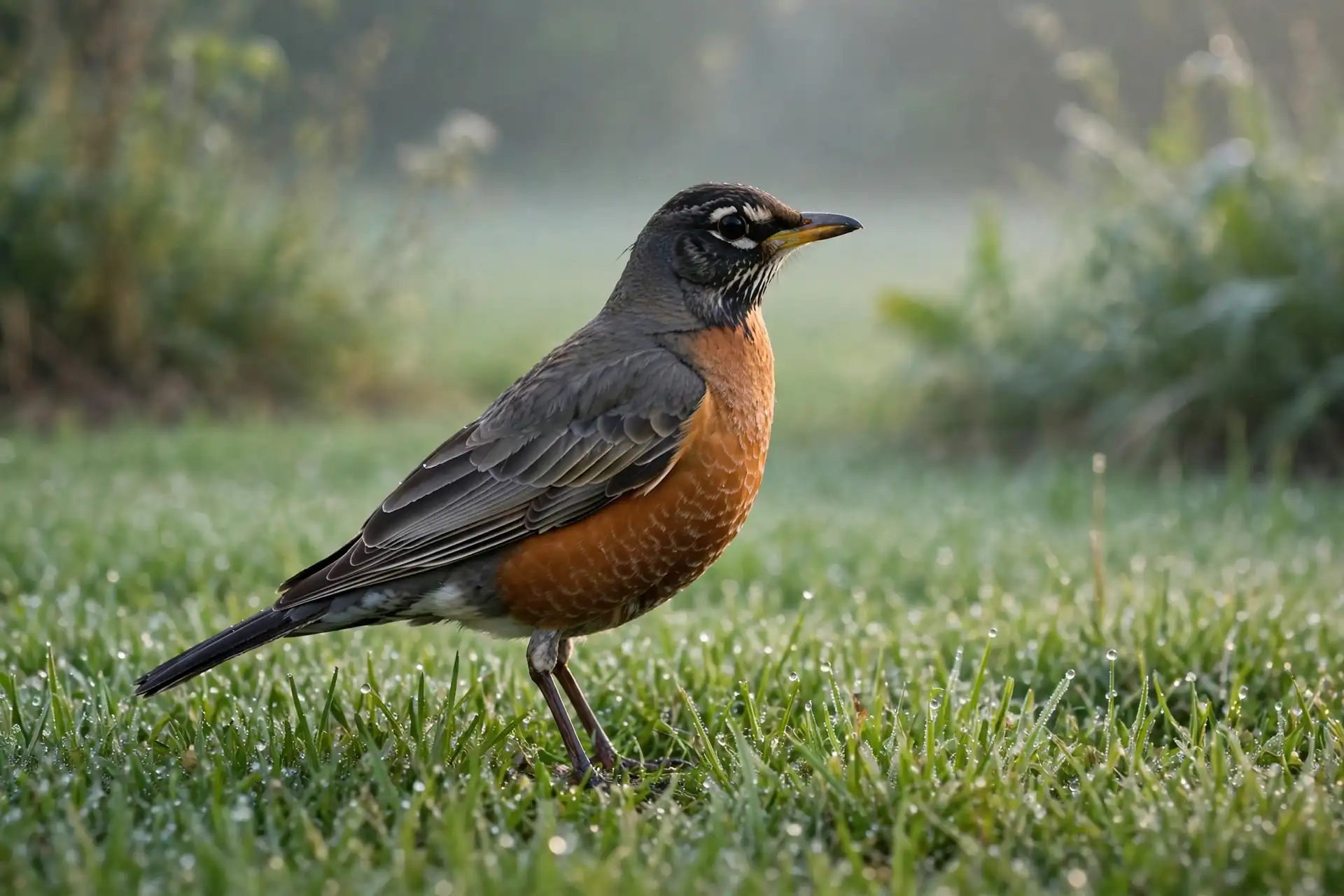
The American robin, Turdus migratorius, is the thrush everyone knows. Measuring 9 to 11 inches long, with a wingspan of 14 to 16 inches, and weighing 2.7 to 2.8 ounces, it is the largest thrush in North America. Its back is gray-brown, its breast is rusty-orange, and its head is dark with white arcs above and below the eye. Juveniles are heavily spotted, like other young thrushes.
American robins breed in Canada and Alaska, and they winter in the southern United States and Mexico. They live year-round in much of the United States, so a robin in winter is no surprise. They are the thrush most people meet first, on lawns, in parks, and in gardens, pulling earthworms from the grass at dawn.
The robin is a true member of the thrush family, and its song, its spotted young, and its pale blue eggs are all classic thrush traits. For the complete story of this familiar bird, from its nesting habits to its winter flocks, see our full guide to the American robin.
Wood Thrush
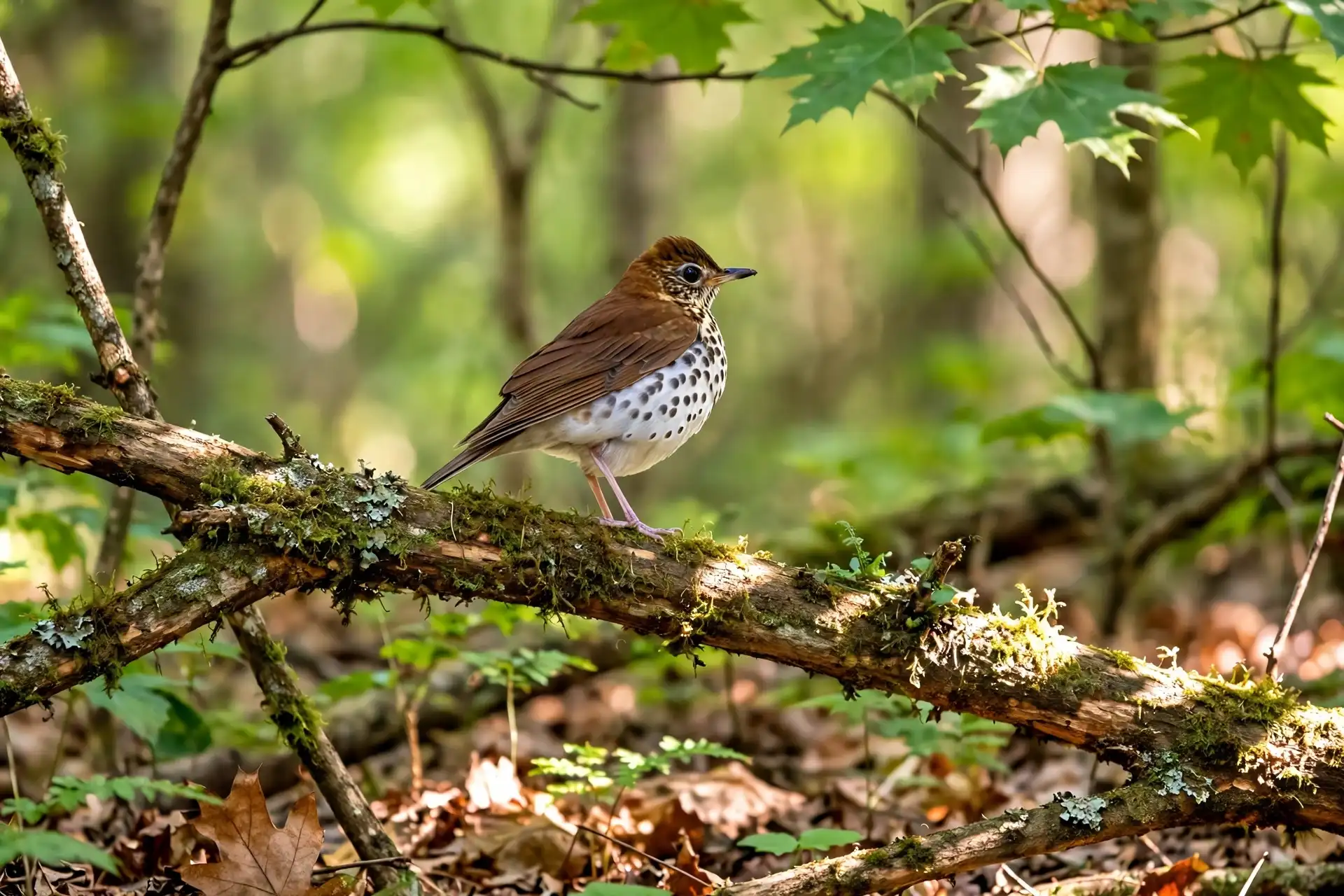
The wood thrush, Hylocichla mustelina, is a beautiful singer of the eastern forest. This bird is 7 to 8 inches long, with a wingspan of 12 to 13 inches, and it weighs 1.5 to 1.8 ounces. Its upperparts are rich reddish-brown, its underparts are white with bold black spots, and it shows a pale eye ring.
The wood thrush has one of the most beautiful songs of any bird in North America. It has a flute-like three-part song that is often referred to as ee-oh-lay. Each phrase rises and falls like a bell. The bird sings from a shaded perch in the forest, often at dawn and dusk, and the song carries far through the trees.
Wood thrushes are found in deciduous woodlands in the eastern United States. They build their nests in shrubs and low trees. In winter they move to Central America, leaving the northern forests silent until spring. During the summer months, seeing a wood thrush means you are in a healthy woodland, as they need large, unbroken woods to nest successfully.
Hermit Thrush
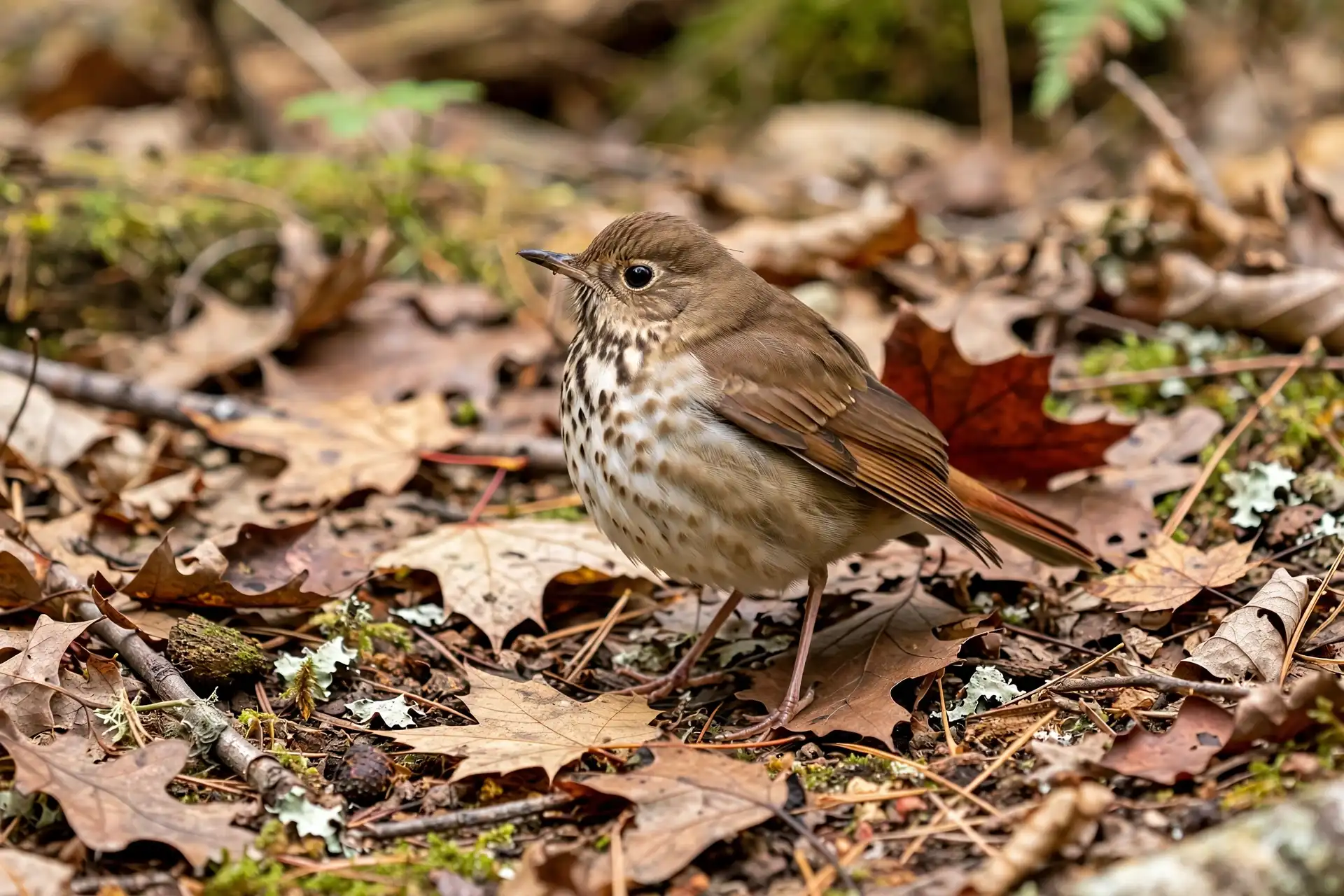
The hermit thrush, Catharus guttatus, is the quietest member of this group. It can be easily identified by its markings. This bird is 6.7 to 7.1 inches long, with a wingspan of 11 to 12 inches, and it weighs 0.8 to 1.1 ounces. Its upperparts are olive-brown, its breast is lightly speckled, and its tail is distinctly reddish, contrasting with the duller body.
This species has a behavior that no other thrush has. It slowly raises and lowers its tail and flicks its wings as it stands on the forest floor. That tail-pumping habit is the fastest way to name a hermit thrush, even before you see the reddish tail.
The hermit thrush is the only Catharus thrush that winters in North America. It breeds in Canada and the northern United States, and it winters in the southeastern United States and Mexico. In winter it is often found alone on the forest floor, quietly picking through leaf litter.
Swainson’s Thrush
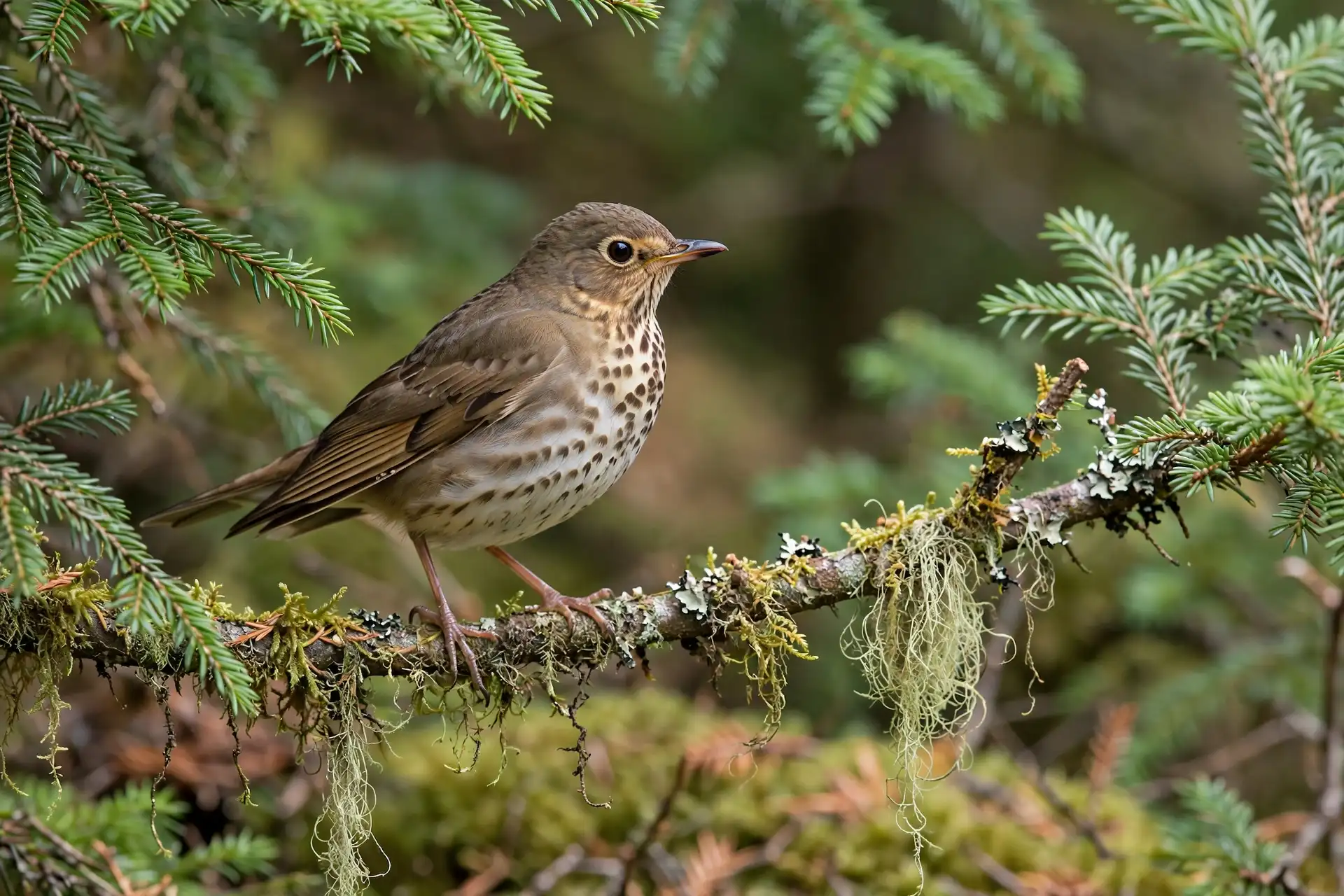
The Swainson’s thrush, Catharus ustulatus, is a retiring forest thrush with a soft, musical voice. It has a warm brown cap, a buffy eyering that stands out on its face, and dense dark spotting that runs down its flanks. The spotting is heavier than the light speckling of a hermit thrush, and it reaches well down the sides of the breast.
Swainson’s thrushes are found in northern forests. They stay low in dense cover and are heard far more often than they are seen. They feed on the forest floor and in low shrubs, picking insects and fruit from leaves and branches. The buffy eyering is the mark to check when a brown thrush appears at the edge of a trail.
Telling a Swainson’s thrush from a hermit thrush takes care. The Swainson’s has the buffy eyering and the dense flank spotting, while the hermit has the reddish tail and the tail-pumping habit. In the hand or in a clear view, those two marks settle it.
Veery
The veery, Catharus fuscescens, is the plainest of the forest thrushes and one of the sweetest singers. It is reddish-brown all over, with a faintly spotted cream breast. There is no strong face pattern, no bold eye ring, and no reddish tail to grab the eye. Its plainness is its mark.
Veeries inhabit damp deciduous woodlands, often near streams and wet thickets. They stay low, in dense cover, and they are heard far more often than they are seen. Their song is a soft, downward-spiraling flute, and it is one of the most beautiful sounds of a summer forest at dusk.
The veery can be easily identified by its faint breast spots and uniform reddish-brown plumage. A Swainson’s thrush shows a buffy eyering and heavy flank spotting. A hermit thrush shows a reddish tail. A veery shows neither, just warm brown feathers and a soft, faintly spotted breast.
Bluebirds: Thrushes in Blue
Bluebirds are also a type of thrush, and have bright blue plumage. Like the robin, they belong to the thrush family. They have similar features to the thrushes, including a fairly long bill, strong legs, and ground feeding. Their young have spotted breasts. Their eggs are pale blue, the same robin’s-egg blue that gives the family its famous color.
Bluebirds live in open areas such as meadows, pastures, and parkland with scattered trees. They perch low, drop to the ground to catch insects, and return to the same perch again and again. They are much easier to see than the forest thrushes. They are one of the best reasons to put up a nest box.
The bluebird reminds us that the thrush family is wider than the brown forest birds. A robin on a lawn and a bluebird on a fence post are cousins. Both have the thrush marks of spotted young and rich song.
Thrush Songs
Many birders love this family because they have beautiful songs. The songs are flute-like, rich, and musical, and they carry far through the forest. The wood thrush sings a three-part flute, often described as ee-oh-lay, with each note clear and bell-like. It is one of the most admired bird songs in North America.
The hermit thrush, the Swainson’s thrush, and the veery all sing too, each with its own flute-like voice. Their songs are softer and more secretive than the wood thrush, and they often come from deep cover at dawn or dusk. Learning the songs is the best way to find these birds, since they are far easier to hear than to see.
The American robin also has a song. It sings a cheerful carol from a rooftop or a treetop at dawn. This is the thrush song most people know, and it is the sound of spring in much of North America. Start with the robin, then learn the wood thrush, and the forest thrushes will follow.
Where Thrushes Live
Thrushes can be found anywhere where there are insects, fruit and cover. Robins live on lawns, in parks, gardens and suburban streets. They can be found in both urban and rural areas. Wood thrushes require deciduous forest with tall trees, leaf litter and lots of undergrowth. Veeries require damp forest near streams and wet thickets.
Hermit and Swainson’s thrushes live in northern forests. They live in conifer and mixed woods with a thick floor of leaves and moss. They feed on the ground, in low shrubs, and in the lower branches of trees. Bluebirds use open country, meadows and scattered trees with a perch to hunt from.
Each thrush has its own place, and the place often names the bird. If it is on a lawn it will be a robin. If it is deep in an eastern forest it will be a wood thrush or veery. If it is in a northern conifer forest it will be a hermit or a Swainson’s thrush.
Migration and Winter
Thrushes are migratory birds, and each species moves in its own way. American robins breed in Canada and Alaska, and they winter in the southern United States and Mexico, though many stay year-round in the middle of the country. A robin in January is not lost, it is simply wintering where the food is.
Wood thrushes leave the eastern forests in fall and winter in Central America, returning in spring to the same woods. Hermit thrushes breed in Canada and the northern United States and winter in the southeastern United States and Mexico. They are the only Catharus thrush that spends the winter in North America.
Winter changes the thrush you see. Robins gather in large flocks and feed on fruit when insects are gone. Hermit thrushes stay alone and quiet on the forest floor. If you wonder where birds go when the cold arrives, our guide on where birds go in winter explains migration, partial migration, and the birds that stay behind.
What Thrushes Eat
Thrushes eat insects and fruit, and the mix changes with the season. In the spring and summer months they will eat earthworms, beetles, caterpillars and other insects, picking them from lawns and leaf litter. The young will be fed insects to provide protein. Parents work hard to ensure their nest is well stocked with hungry chicks.
In fall and winter, fruit takes over. Robins will eat berries, cherries and other soft fruit. They gather in flocks around fruiting trees and shrubs. Hermit thrushes and other forest thrushes will also eat berries and fruit on the forest floor and in low shrubs.
If you want to help thrushes in your yard, plant native berry bushes and leave leaf litter under trees, since thrushes feed on the ground. For the wider picture of what birds eat, and which foods are safe to offer, our guide to bird food covers seeds, suet, fruit, nectar, and the foods to avoid.
How to Watch Thrushes
Watching thrushes takes patience, because the forest species hide well. Go early, when the birds are singing and feeding. Listen first, since a thrush you cannot see is often a thrush you can hear. The wood thrush song and the veery song will tell you the bird is there before you ever see it.
Move slowly and stay low. A thrush on the forest floor will freeze or slip into cover if you move fast. Use binoculars, and watch the ground under trees and shrubs, where thrushes hop and pick through leaves.
Robins are easy on open lawns. The forest thrushes take more work. A quiet trail at dawn, with mist in the trees and a flute song overhead, is the best place to start.
Thrush vs Blackbird
Thrushes can be confused with blackbirds but are easily distinguishable. Thrushes are medium sized songbirds that have a spotted breast, at least as a youngster, and a flute-like song. Blackbirds are more slender with a sharper bill, and they often travel in large flocks.
The American robin is the thrush most often mistaken for a blackbird, because its dark head and rusty breast can look blackbird-like at a glance. The robin is larger and heavier, with a longer bill and a different shape, and its song is a rich carol, not the harsh chatter of a blackbird.
On the ground, a thrush hops and runs with quick, upright steps, stopping to listen and look. A blackbird walks and struts, often in a flock, and it is far less shy. If the bird is alone, singing a flute-like song from a forest perch, it is a thrush.
Thrush Species Comparison Table
| Species | Size | Field marks | Habitat |
|---|---|---|---|
| American robin | 9 to 11 inches, wingspan 14 to 16 inches | Grey-brown above, rusty-orange breast, dark head, white eye arcs | Lawns, parks, gardens, suburbs |
| Wood thrush | 7 to 8 inches, wingspan 12 to 13 inches | Rich reddish-brown above, white underparts with bold black spots, pale eye ring | Eastern deciduous forest |
| Hermit thrush | 6.7 to 7.1 inches, wingspan 11 to 12 inches | Olive-brown above, reddish tail, lightly speckled breast | Northern and mountain forests |
| Swainson’s thrush | Medium | Warm brown cap, buffy eyering, dense dark flank spotting | Northern forests |
| Veery | Medium | Reddish-brown all over, faintly spotted cream breast | Damp deciduous forest, near streams |
| Eastern bluebird | Medium | Bright blue plumage, thrush family member | Open country, meadows, parkland |
Frequently Asked Questions
Is the American robin really a thrush?
Yes. The American robin is a true thrush in the family Turdidae, and it is the largest thrush in North America. Its spotted young, its flute-like song, and its pale blue eggs are all classic thrush traits.
What is the best thrush song to learn first?
Learn the wood thrush first. It has a very distinctive flute-like three-part song, often described as ee-oh-lay, which is clear, beautiful, and easy to recognize. Once you know it, the other forest thrush songs are easier to pick out.
How do I tell a hermit thrush from a Swainson’s thrush?
Look at the tail and the face. The hermit thrush has a distinctly reddish tail which it slowly raises and lowers. The Swainson’s thrush has a buffy eyering and dense dark spotting down its flanks, and no reddish tail.
Are bluebirds thrushes?
Yes. Bluebirds belong to the thrush family, just like the American robin. They share the thrush toolkit of a fairly long bill, strong legs, ground feeding, and spotted-breasted young.
Where do wood thrushes go in winter?
Wood thrushes leave the eastern United States in fall and winter in Central America. They return in spring to the same deciduous forests to breed.
Why do thrushes have spotted breasts?
Young thrushes wear spotted breasts, and some adults keep spots too. The spots break up the bird’s outline in dappled forest light, and they are a family mark shared by thrushes around the world.
What do thrushes eat?
Thrushes eat insects in spring and summer, including earthworms, beetles, and caterpillars, and they switch to fruit and berries in fall and winter. Robins eat fruit in winter flocks, and forest thrushes eat berries on the ground and in low shrubs.
Where is the best place to see thrushes?
Look for robins on lawns and in parks. Wood thrushes and veeries can be found in eastern deciduous forests. Hermit and Swainson’s thrushes will be found in northern forests. Go early, listen first, and watch the ground under trees and shrubs.
Conclusion
Thrushes are the singers of North America, from the robin on the lawn to the wood thrush deep in the forest. The robin is the largest thrush on the continent, the wood thrush sings the finest flute song, the hermit thrush pumps its reddish tail on the forest floor, the Swainson’s thrush wears a buffy eyering, and the veery glows reddish-brown in damp woods. Each one has its own size, its own field marks, and its own song, and together they fill every lawn, forest, and meadow in North America. Learn the robin first, then add the wood thrush song, and check the field marks in the table above when you are unsure. Bring binoculars, go early, and listen. The thrush will be there, singing from the trees or hopping across the lawn.