
Spotting Small Brown Birds in your yard can be surprisingly tricky. Unlike colorful cardinals or blue jays, many small brown birds share soft brown feathers, subtle markings, and similar sizes, making them difficult to identify at first glance.
A single small brown bird may look almost identical to another until you notice details like its bill, behavior, or song. Some people even mistake a small brown bird with a red head for a completely different species when it is actually a finch. The good news is that only a few species account for most backyard sightings.
In this guide, you’ll learn how to quickly tell apart the House Sparrow, House Finch, and Carolina Wren using simple visual clues and behaviors.
Whether you’re trying to identify brown small birds at your feeder or wondering if a small brown finch has arrived in your garden, this beginner-friendly guide will help you recognize them with confidence.
Why Are So Many Backyard Birds Brown?
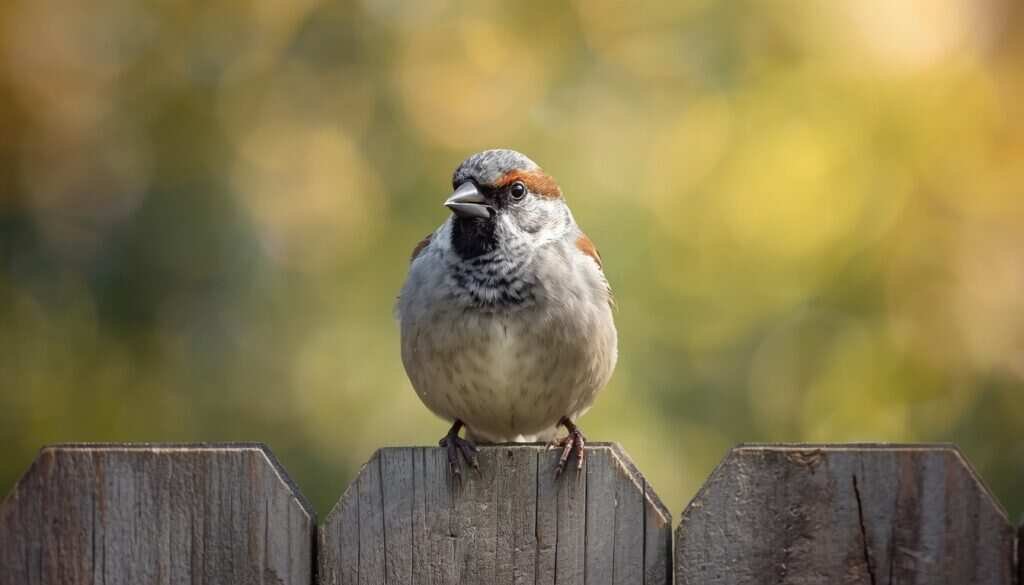
Many Small Brown Birds have dull, earthy feathers because these colors help them survive. Brown plumage provides excellent camouflage, allowing birds to blend into trees, shrubs, grass, and leaf litter where predators have a harder time spotting them. This natural protection is especially important during nesting, when females spend long periods sitting on eggs or caring for young.
In many species, females are browner than males because they benefit the most from staying hidden, while males often display brighter colors to attract mates. Even a small brown bird with a red head, such as a male House Finch, uses subtle markings instead of flashy patterns.
Since many small brown birds look alike, color alone is not the best identification clue. Instead, watch the bird’s shape, bill, size, feeding habits, and behavior. These features make it easier to identify any small brown bird, including a finch small brown bird or other brown small birds.
How to Identify Small Brown Birds Quickly
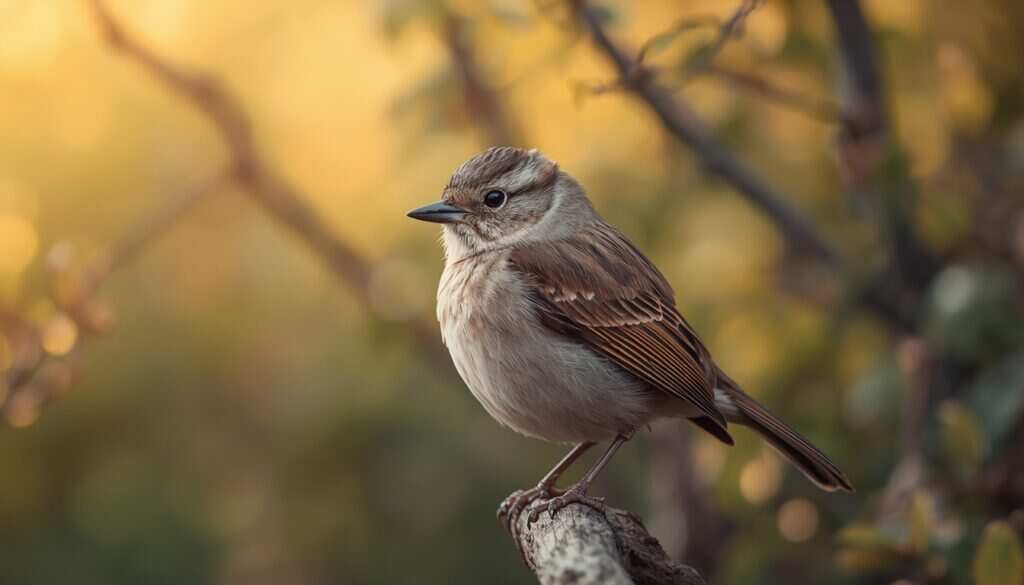
Many small brown birds look almost identical at first glance, but you can identify them by focusing on a few key features instead of color alone. Size, body shape, beak, behavior, and song are often much more reliable than feather color. Even a small brown bird with red head can be identified more confidently when you combine these clues.
1. Look at the Bird’s Size
Start by estimating the bird’s overall size. This simple step immediately narrows your options.
- Tiny: Smaller than a sparrow, usually quick and lightweight.
- Small: Around the size of a House Sparrow or House Finch, making up many common backyard visitors.
- Medium-small: Slightly larger with a more noticeable body and longer profile.
Comparing the bird with nearby species at your feeder is an easy way to accurately judge its size.
2. Check the Shape
Body shape is one of the best ways to distinguish small brown birds.
Look for these features:
- Thick, rounded body: Often seen in sparrows and finches.
- Slender body: Common among wrens and insect-eating birds.
- Long tail: Frequently carried upright or flicked while moving.
- Short tail: Gives the bird a compact, stocky appearance.
A finch, a small brown bird, usually has a plump body with a short neck, while a Carolina Wren appears slimmer with a longer tail.
3. Observe the Beak
The beak provides valuable clues about what the bird eats.
- Thick, cone-shaped bill: Built for cracking seeds, typical of sparrows and finches.
- Thin, pointed bill: Designed for catching insects.
- Slightly curved bill: Common in wrens that search bark and shrubs for insects.
Even if two birds have similar brown feathers, their bills often reveal their identity.
4. Watch the Bird’s Behavior
Behavior is often more distinctive than appearance.
Pay attention to whether the bird:
- Feeds on the ground beneath feeders.
- Hangs directly on seed feeders.
- Hops through shrubs and low branches.
- Flicks or raises its tail while moving.
These habits quickly separate many small brown birds, even when their colors are nearly identical.
5. Listen to the Song
Bird songs and calls are often the fastest identification tool. Many species have unique vocalizations that are easier to recognize than subtle feather patterns. Learning just a few common calls can help you identify a small brown bird long before you get a clear view. Combining sound with size, shape, and behavior is the quickest way to confidently identify backyard birds.
House Sparrow Identification
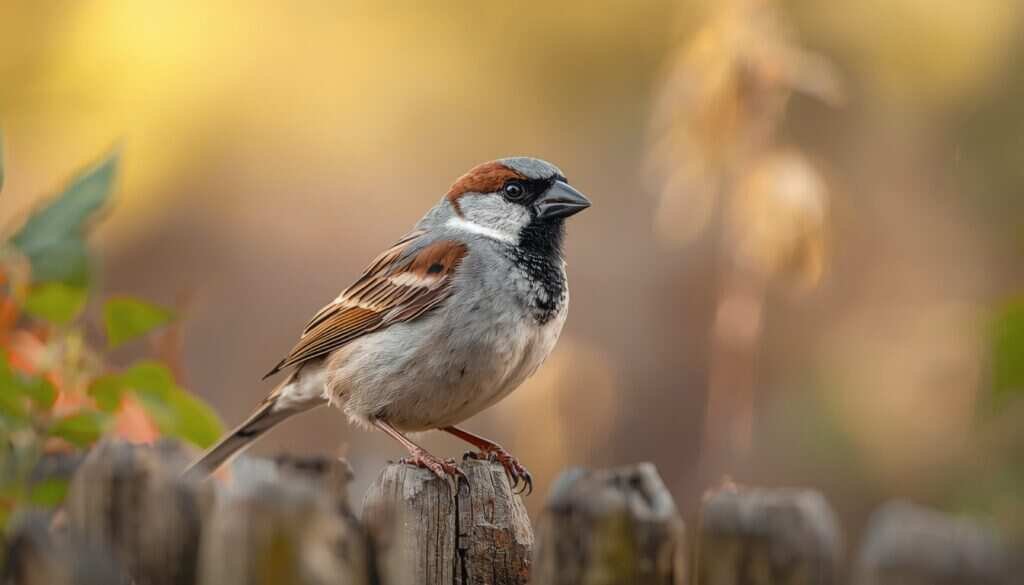
The House Sparrow is one of the most common small brown birds found in neighborhoods, parks, and backyards. Although many people confuse it with a finch small brown bird, the House Sparrow has several distinctive features that make identification much easier. Learning these characteristics will help you quickly recognize this familiar backyard visitor.
Appearance
- Stocky body with a compact, chunky shape.
- Thick, cone-shaped bill designed for cracking seeds.
- Male House Sparrow: Gray cap, black bib, chestnut-colored neck, and bold facial markings.
- Female House Sparrow: Plain gray-brown feathers with a noticeable pale eyebrow stripe and no black bib.
- Unlike a small brown bird with red head, House Sparrows never show red coloring on the head.
Behavior
- Travels in noisy flocks throughout the day.
- Commonly seen around homes, buildings, sidewalks, and parking lots.
- Often gathers beneath feeders searching for dropped seeds.
Favorite Foods
- Seeds
- Bread crumbs
- Grain
- Sunflower seeds and other foods offered at backyard bird feeders
These habits make the House Sparrow one of the easiest brown small birds to identify.
House Finch Identification
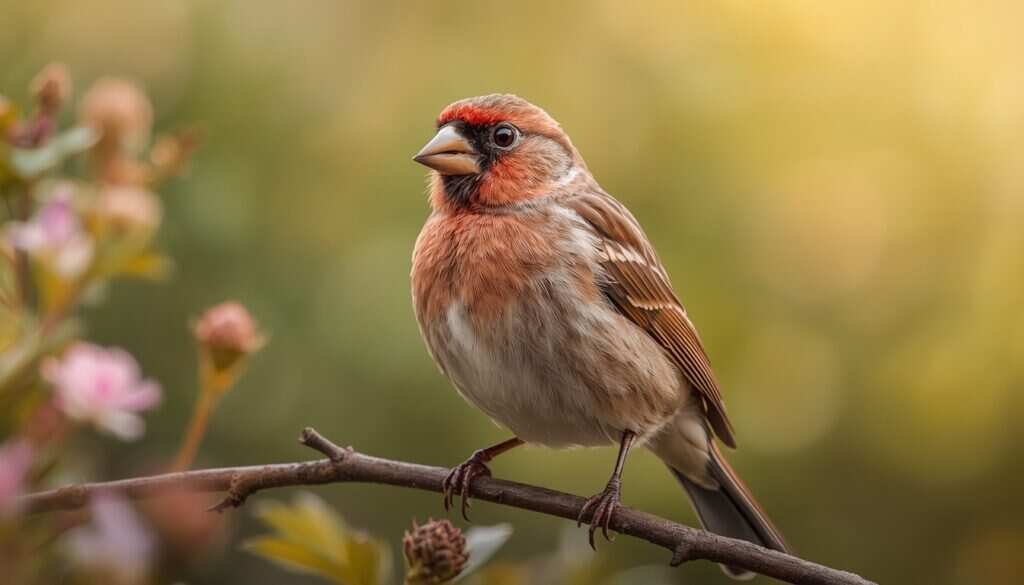
The House Finch is one of the easiest small brown birds to spot once you know its key features. It is a common backyard visitor that enjoys seed feeders and often stays close to homes and gardens. While females are mostly brown, males stand out with colorful markings, making this species easier to identify than many other brown small birds.
- Appearance: Small, slender body with a short neck, a slightly curved seed-cracking bill, and a slightly notched tail.
- Male House Finch: A classic small brown bird with red head, featuring a bright red or orange head, red chest, and a brown streaked back. This colorful finch small brown bird is often seen perched on feeders.
- Female House Finch: Brown overall with heavy streaks across pale underparts and no red coloring, helping it blend into its surroundings.
- Behavior: Frequently visits tube feeders, is comfortable around humans, often feeds in small flocks, and sings a cheerful, warbling song throughout the breeding season.
Carolina Wren Identification
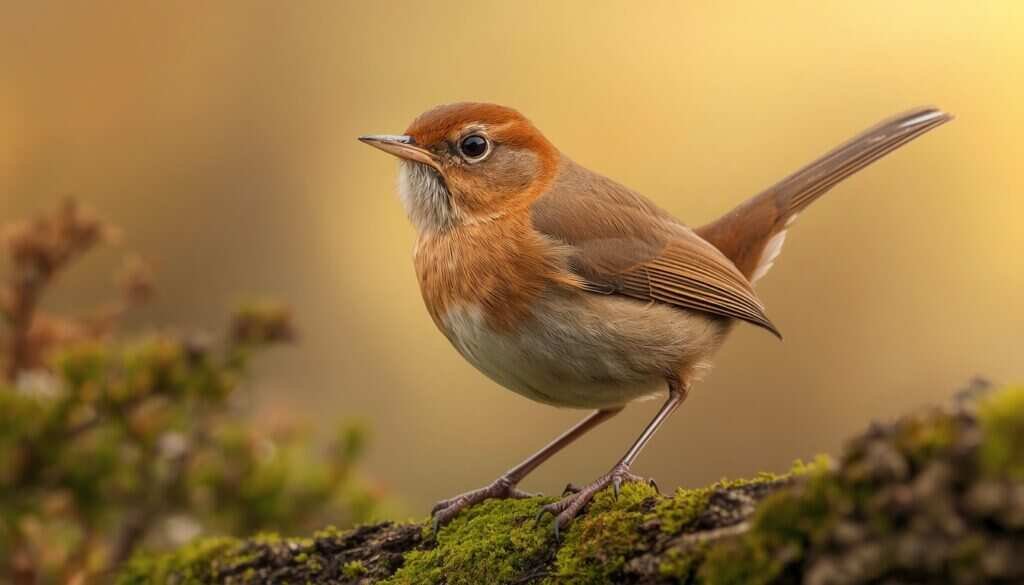
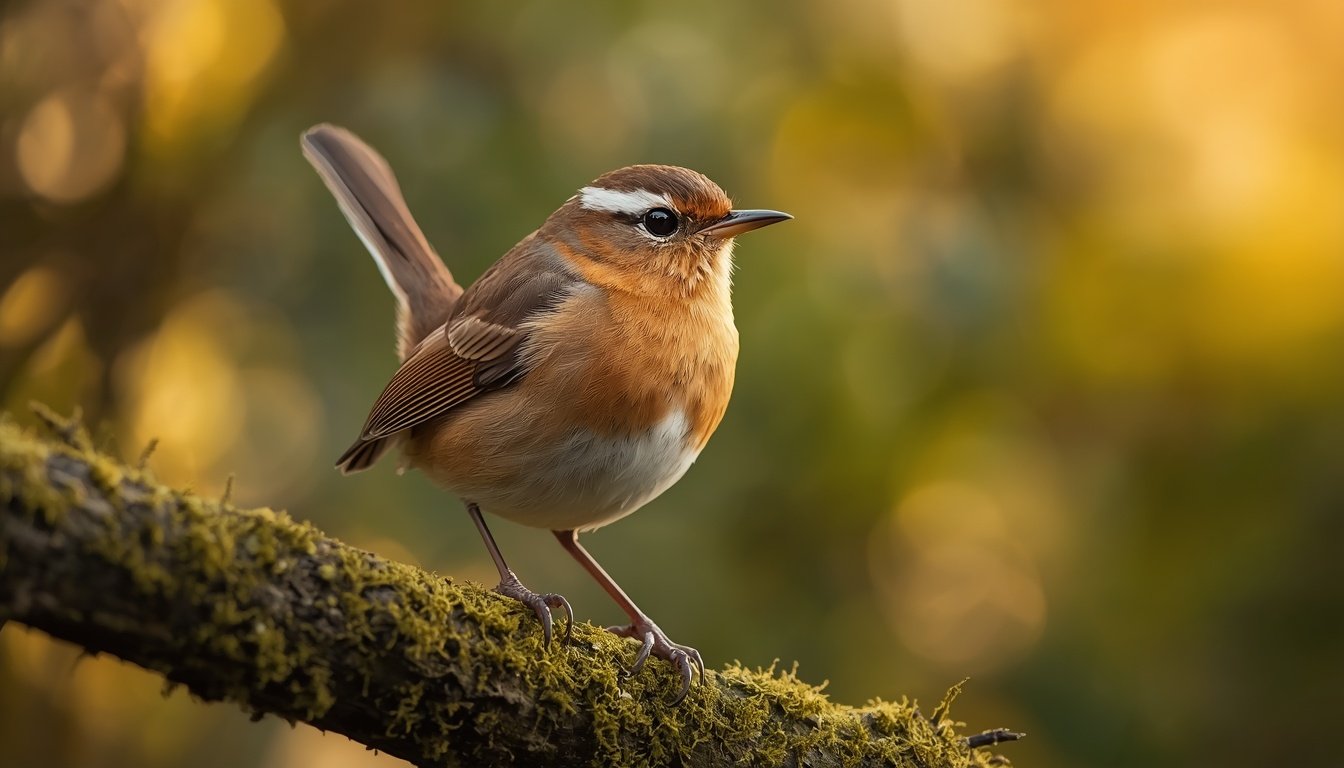
The Carolina Wren is one of the easiest small brown birds to recognize once you know what to look and listen for. Although this small brown bird lacks the bright colors of many backyard species, its energetic personality and distinctive features make it stand out. Unlike a small brown bird with red head or a finch small brown bird, the Carolina Wren relies on its bold eyebrow stripe, upright tail, and loud song for easy identification.
- Appearance: Warm reddish-brown upperparts with soft buff-colored underparts and a bright white eyebrow stripe above each eye. Its long tail is often held upright, giving it a confident look.
- Behavior: Constantly hops through shrubs, gardens, and woodpiles while searching for insects. It is curious, energetic, and rarely stays still for more than a few seconds.
- Song: Famous for its loud “tea-kettle, tea-kettle” call, which is often heard before the bird appears. Among brown small birds, its clear, powerful voice is one of the best identification clues.
Side-by-Side Comparison of the Three Most Common Small Brown Birds
| Feature | House Sparrow | House Finch | Carolina Wren |
|---|---|---|---|
| Size | Small (about 6–6.5 in / 15–16 cm) | Small (about 5–6 in / 13–15 cm) | Small (about 5–5.5 in / 13–14 cm) |
| Body Shape | Stocky, round-bodied | Slim to medium build with a rounded head | Compact body with an upright posture |
| Beak | Thick, cone-shaped seed bill | Short, thick conical bill for seeds | Thin, slightly curved bill for catching insects |
| Tail | Short and square | Medium-length with a slight notch | Long tail, usually held upright |
| Main Color | Gray and brown with black streaks | Brown streaked body; males have red on the head and chest | Warm reddish-brown upperparts with buff underparts |
| Distinct Markings | Gray crown, black bib (male), streaked back | Male has a red face, throat, and chest; female is brown and streaked | Bright white eyebrow stripe and rich reddish-brown back |
| Typical Behavior | Feeds in flocks, often forages on the ground | Visits feeders, social, frequently seen in small groups | Active, curious, hops through shrubs and woodpiles |
| Favorite Habitat | Neighborhoods, parks, farms, urban areas | Backyards, gardens, woodland edges, feeders | Dense shrubs, brushy gardens, woodpiles, forest edges |
| Diet | Seeds, grains, insects, food scraps | Seeds, berries, buds, and fruits | Insects, spiders, caterpillars, and occasionally berries |
| Song & Call | Repetitive chirps and cheeps | Cheerful warbling song with short chirps | Loud, clear “tea-kettle, tea-kettle” song, often heard before seen |
Where You See the Bird Can Help Identify It?
The location where you spot a bird is often one of the quickest ways to identify it. If you see a bird feeding on the ground, it is often a House Sparrow, which regularly searches for seeds and food scraps. Birds visiting feeders are commonly House Finches or House Sparrows.
Especially if they are eating sunflower seeds or millet. A bird moving through shrubs, brush, or woodpiles is more likely to be a Carolina Wren, which searches for insects in sheltered areas.
If the bird is frequently seen around buildings, sidewalks, or parking lots, it is most likely a House Sparrow, a species that thrives in urban and suburban environments.
Conclusion
Identifying small brown birds becomes much easier when you focus on more than just feather color. Pay attention to the bird’s size, beak shape, body markings, habitat, behavior, and unique song to confidently distinguish similar species.
Whether you’re watching a House Sparrow on the ground, a House Finch at your feeder, or a Carolina Wren exploring shrubs, each bird has distinctive traits that make identification easier.
Spend time observing birds in different areas of your yard and notice how they move, feed, and sing. With a little patience and regular practice, every new bird sighting will become more familiar, enjoyable, and rewarding for any backyard bird enthusiast.