
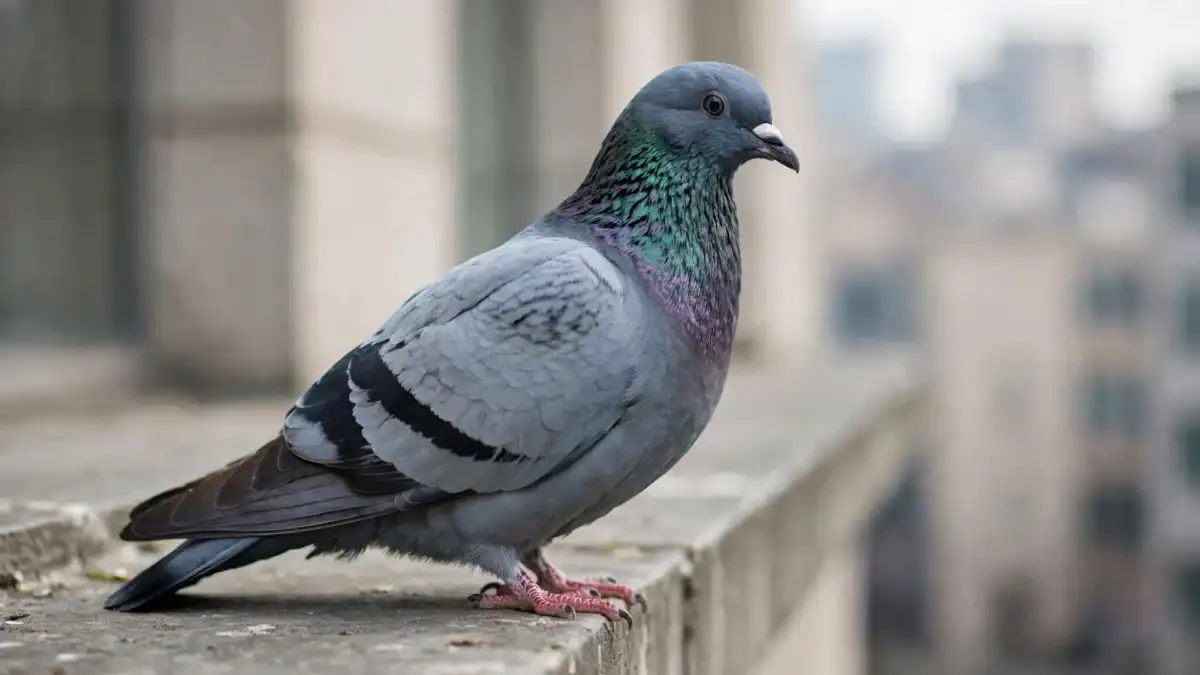
Do pigeons migrate? In short, no. Feral pigeons found in urban areas will remain within the same area all year round. They will not head south during the autumn and then come back during the spring as they never left. This guide will explain why urban pigeons can remain in one place whereas wild pigeons and doves do migrate. It will also explain why sometimes pigeons seem to disappear during the winter months when they are actually still around.
The Short Answer
The common city pigeon is a feral variety of rock dove. They have the scientific name of Columba livia. Feral pigeons are mostly sedentary. Most individuals will stay within a small home range their whole life, often only a few kilometers from where they were hatched. Studies using bird ringing have found that 86 percent of recaptured feral pigeons had moved less than 90 meters (Birdfact). Wild birds in one population in Britain have been known to move up to 8 kilometers, with very rare cases of 16 and 28 kilometers. This is not migration, but daily and local movements.
This does not mean that there are no migratory pigeons and doves. Some of their wild relatives do migrate seasonally and some populations only partially migrate or migrate to lower altitudes. The confusion is because there are a number of different birds with the same name, pigeon. Once we separate the city pigeon from their wild cousins everything becomes clear.
What Counts as Migration
Migration is the regular long distance movement of animals between breeding and non-breeding grounds. This is due to changing food supplies, light levels, temperature and breeding requirements. Many species such as swallows, geese and warblers migrate. They will leave their breeding ground, travel hundreds or thousands of kilometers and return the following year.
Local movement is different, though. If a bird is moving locally, for example commuting 20 kilometers between a roost and a feeding ground, it is not migrating. If birds move between an open field and a sheltered valley for a short period during the cold months, they may not be migrating either. Scientists look for regular seasonal movements, a distinct change in range and a return journey. City pigeons fail that test. They stay resident, even when winter is hard.
The Bird Most People Mean
If you ask anyone about pigeons, they will probably think of the gray, blue barred bird which can be seen on pavements, station roofs and park benches. This bird is descended from wild rock doves which lived on sea cliffs, and from domestic pigeons which have been bred by humans for thousands of years. Cornell Lab notes that rock pigeons were brought from Europe to North America in the early 1600s, and city pigeons now nest on buildings, window ledges, barns, bridges and cliffs.
The wild rock dove is much more uniform than city flocks. It has a blue gray color with two black wing bars and a white patch on the lower back. Urban pigeon flocks are very varied with plain, spotted, pale, rusty red and all dark pigeons. This variation is due to their domestic heritage. This doesn’t affect their basic behavior though. Urban pigeons, whether gray, checked or pied, are resident.
Pigeons have been domesticated for over 5,000 years. Initially they were used for food, but have since been used for carrying messages, racing and showing. That long history matters. Throughout domestication, only pigeons which were sedentary, returned to the loft and bred around humans were selected. This means that feral pigeons are also sedentary.
Why City Pigeons Do Not Need to Migrate
Migration is an expensive and risky process which can include storms, predation, fatigue and unfamiliar territory. However, a species will only undertake this if it is a better option than remaining in one place. In general, city pigeons will remain in one place due to three factors working together; food, shelter and a body adapted to the cold.
Food all year
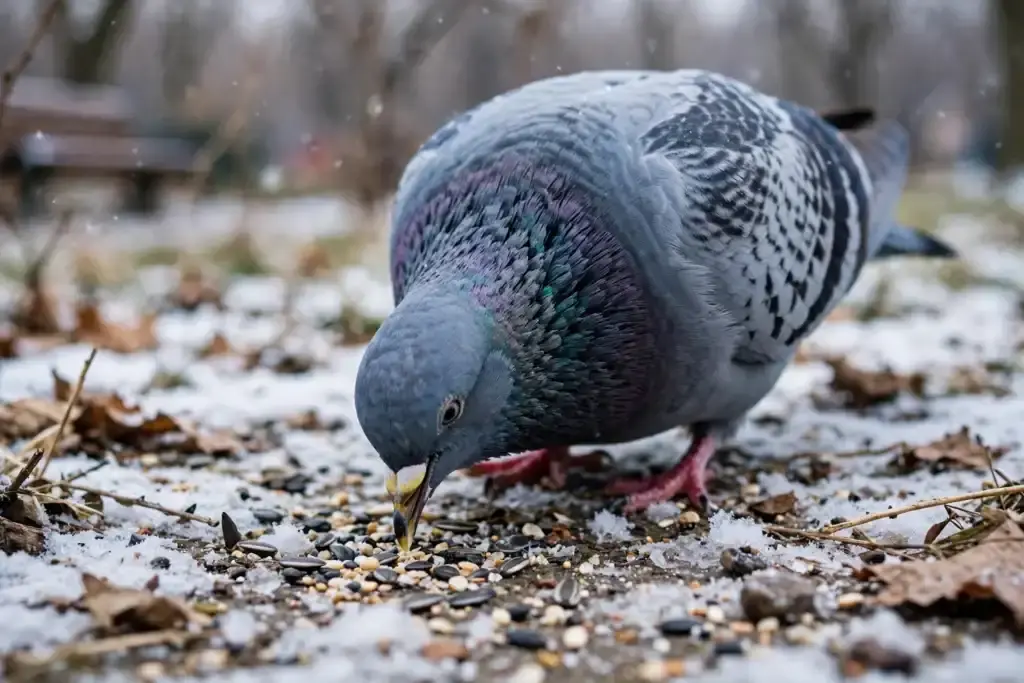
Cities offer a consistent food source. Pigeons can eat seeds, grains, food waste, birdseed and food scraps from markets, farms, feed mills and streets. During the winter months, there may not be as many seeds available naturally but markets will still be open, grain will still be transported and people will still feed the birds. If a pigeon were to fly south, they would be going from a consistent food source to an unpredictable one.
Pigeons are also largely ground foragers. They do not have to rely on flying insects which become unavailable in winter or fruit that only becomes available in the summer. They have a generalist diet which helps them survive periods of low food availability without having to travel.
Shelter that mimics cliffs
Wild rock doves nest in natural ledges and caves. In modern cities there are plenty of places to nest, such as building ledges, eaves, bridges, railway arches, roof vents and sheltered courtyards. Heated buildings, vents and covered walkways add warmth that a cliff never offered. A pigeon can roost out of wind and rain, close to food, without leaving town.
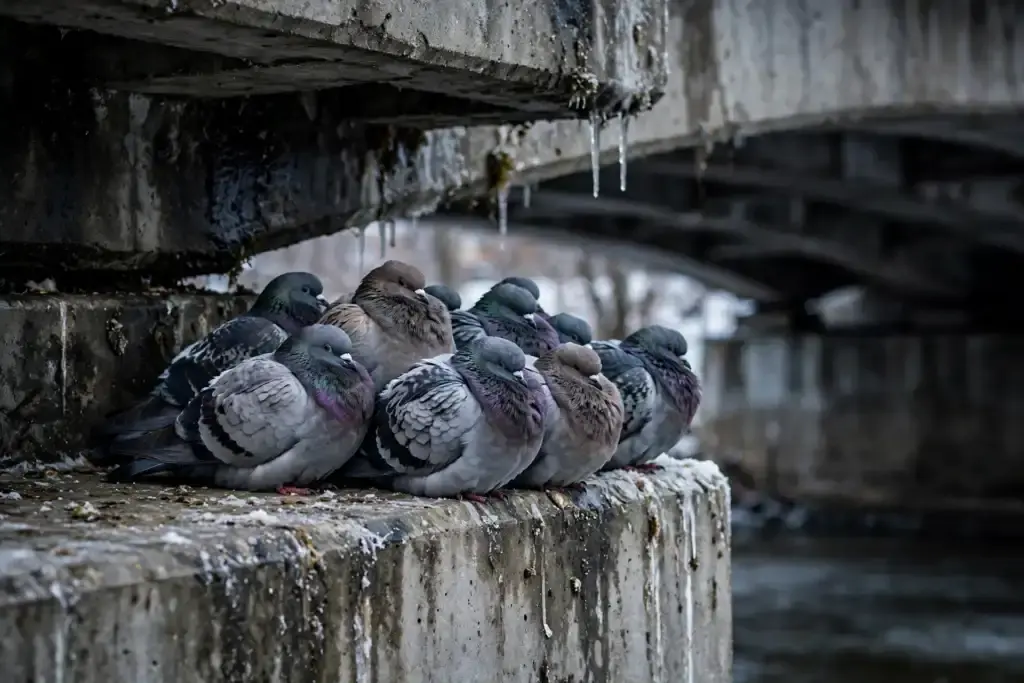
In cold conditions, pigeons will also behaviorally thermoregulate. They will fluff up their feathers to create an air pocket, tuck a foot into their abdominal feathers, huddle together and seek out sunny and sheltered areas in the daytime. These little behaviors allow a small bird to maintain its body temperature without having to fly for long periods of time.
A body that copes with cold
Pigeons are not tropical birds. They are warm-blooded and can feed intensively on the short winter days to give them enough energy to survive the long nights. They can also breed for most of the year if there is enough food and shelter, which is another sign of a resident life. A migrant would have a very strict breeding time to fit within a short northern summer. Urban pigeons can nest in spring, summer and in mild areas, even in winter.
How Pigeons Survive Winter
The survival of the urban pigeon is a regular process comprising four stages. If you watch a flock of pigeons on a cold morning, you can see all four stages.
- Feed early and often: Pigeons spend winter days searching for seeds and grain, because they must replace the energy burned to stay warm at night.
- Roost together: Flocks gather on ledges, under bridges and in sheltered corners. Huddling reduces heat loss, and a large flock also means more eyes for predators.
- Conserve heat: Fluffed feathers, a tucked foot, a lowered head and a still posture all help to reduce heat loss. Like all birds, they can also shiver to produce heat via muscular activity.
- Commute, not migrate: Many pigeons undertake short journeys every day between their roosting site and feeding area. Some may travel 20 kilometers per day. That sounds far on foot, but for a strong flier it is a local trip, repeated daily, not a seasonal move.
Water can be important in the winter months. While pigeons can drink using a sucking mechanism (similar to a straw), many birds require their head to be raised. They still need open water. Frozen bird baths and snow are not enough, and pigeons can be seen around open water sources such as unfrozen drains, streams and heated vents.
Why Pigeons Seem to Disappear in Winter
Why do we see fewer pigeons on cold days if they do not migrate? The answer is behavior, not departure. During very cold weather, pigeons become less active and spend more time roosting in hidden places such as attics, industrial rooftops and sheltered courtyards. They may also gather in larger flocks in one favored place, leaving other streets quiet.
Short days also change what you see. Pigeons feed in daylight, and winter daylight is short. A flock that was visible all afternoon in June may only be active for a couple of hours at midday in January. With rainy, snowy and windy weather, many birds will just stay put until better weather.
Pigeon numbers can be misleading. Often in winter they will be found in larger groups, and a large group in the market square can lead you to think that there are fewer pigeons in the nearby parks, even though the total number of birds in town has not fallen. To get an accurate figure it is best to watch the same roost at dusk over several days, rather than judging from one quiet street.
Which Pigeons and Doves Do Move
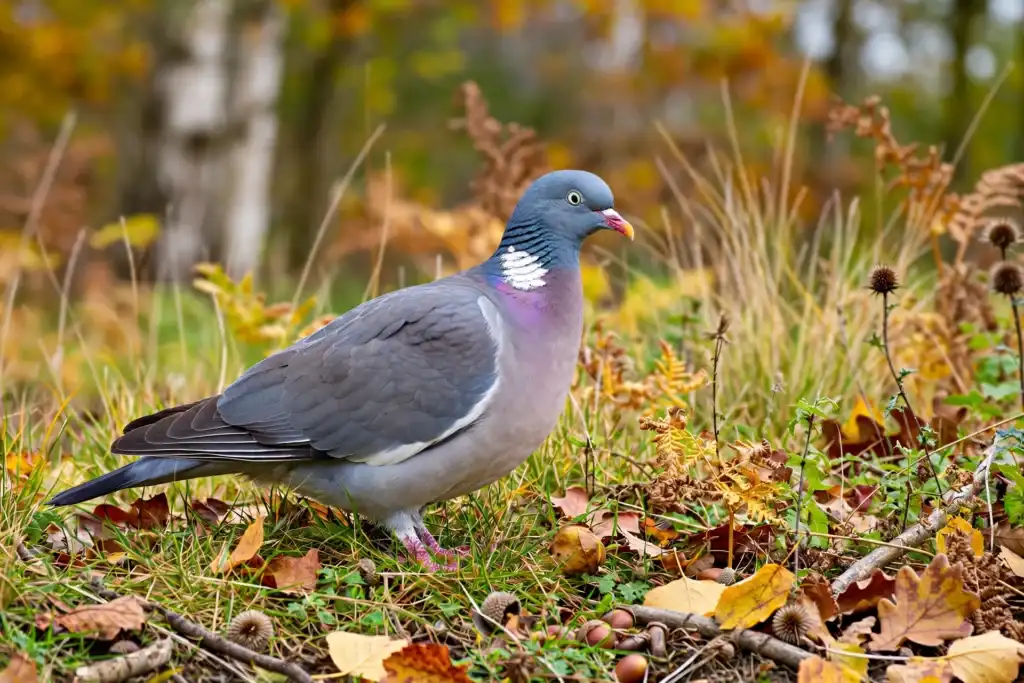
Not all members of the pigeon family are sedentary. The family Columbidae consists of over 300 species that all vary in their migratory tendencies. Here are three examples.
| Bird | Movement | What happens in winter |
|---|---|---|
| Feral rock dove, Columba livia | Resident, nonmigratory | Stays in the same town or city all year, with only local daily movements |
| Common wood pigeon, Columba palumbus | Partial migrant | Northern and continental birds often move south and west to milder areas, while southern birds stay resident |
| European turtle dove, Streptopelia turtur | Long distance migrant | Breeds in Europe and winters in sub-Saharan Africa, a true seasonal migration |
| Band-tailed pigeon, Patagioenas fasciata | Partial and altitudinal migrant | Some populations move to lower ground or further south in winter, while others stay put |
Wood pigeons provide a good example of partial migration. Many of these birds migrate in autumn from northern Europe to the Atlantic coast, Iberian Peninsula and some parts of the Middle East. However, many wood pigeons remain in southern England and other temperate areas throughout the winter where they often form large feeding flocks on farmland. This means that in different countries this species may appear to be migratory or resident.
Band-tailed pigeons in western North America exhibit a different behavior. Some move down mountainsides to lower, milder ground, rather than traveling far south. That altitudinal movement still counts as a seasonal shift, but it is shorter and more local than a turtle dove crossing the Sahara.
Mourning doves also show this behavior. Many northern mourning doves migrate south during the autumn, while many southern mourning doves are resident. This is common in widespread species. Climate, food and daylight at the northern edge push birds south, while the southern range has more mild conditions, so they can stay.
Homing Is Not Migration
Pigeons are well known for their long distance homing abilities. This can cause some confusion, as racing/homing pigeons released hundreds of kilometers away can find their way back to their loft using various methods such as the sun, magnetic fields, sound, smell and recognizing landmarks. This is homing, not migration.
Migration is a seasonal event where the whole population migrate to a new location and then return to breed. Homing is returning to a single home after being displaced once. The bird is trying to return to its known loft rather than trying to find a new place to spend the winter.
Wild pigeons also have good navigational abilities. However, many resident birds also have excellent navigation skills. The defining factor in determining if a bird is migratory is whether it leaves its home range for a season. In this example, with feral city pigeons, that is not the case.
What to Do if You See Pigeons in Winter
You don’t need to rescue healthy winter pigeons. A single pigeon in the snow is not necessarily in trouble. They will just be eating or resting. However, there are some simple things that can be done to help.
- Offer proper food: Small amounts of birdseed, dried peas, corn or sorghum on a platform or on the ground are better than just offering bread, which will make them full but not balance their diet.
- Keep water open: If you use a bird bath, break ice in the morning and refill with fresh water. Do not add salt or chemicals to keep water liquid.
- Leave roosts alone: Do not block vents or ledges where pigeons roost in cold weather without a safe alternative, and do not chase flocks in freezing wind.
- Watch for real trouble: Pigeons who are unable to fly, have a drooping wing, are weak and fluffed up for hours or being attacked will need help from wildlife. If they are healthy and fly away when you approach they will not.
Feed the pigeons sparingly and regularly. Remove any excess food. Large amounts of food will attract rats and cause disease within the closely gathered flock. This should be done all year round but is most important during the winter months when flocks are large and food is concentrated.
FAQs
Do pigeons fly south for winter?
However, this is not true of city pigeons. Feral rock doves remain in the same area all year round. Although wild wood pigeons from northern Europe and turtle doves do fly south, these are different species or different populations.
Do pigeons migrate at night?
City pigeons do not migrate at all, so there is no nighttime migration. Real migrating pigeons and doves such as turtle doves mainly migrate during the day or are active during the early morning and evenings, depending on species and conditions.
Where do pigeons go in winter?
They will often live very close to home, roosting on ledges, under bridges, in barns, sheltered courtyards and other sheltered areas. They will also eat in the same town every day. For a more general idea of how birds behave in the winter, see where birds go in winter and how birds stay warm in winter.
Do baby pigeons migrate?
No. The young feral pigeon will stay close to the nesting area and join local groups. As they aren’t migratory they won’t make their first migration. When they’re old enough they will follow the migratory pattern of their population if they are a migratory dove species.
Why did all the pigeons leave my street?
They may not have left the town. They may have moved a few streets away due to food, a roost site or disturbance. Check nearby markets, station roofs and large sheltered ledges at dusk, when flocks will come together to roost.
Do robins and pigeons migrate in the same way?
No. Many robins are migratory. Pigeons in the city are residents. See do robins migrate for a direct comparison, which explains partial migration and why some robins stay while others leave.
Conclusion
Do pigeons migrate? Urban pigeons don’t. They are resident birds. Their strategy to survive the winter is to stay where there is a good supply of food, shelter and company. However, their wild cousins do migrate. Wood pigeons migrate partially, band-tailed pigeons move to lower altitudes and turtle doves migrate across continents. The key thing to remember is that if you have a feral rock dove on your street in January, it won’t have migrated in the autumn and won’t return in the spring as it has been there all along.
Sources: Cornell Lab of Ornithology, Rock Pigeon overview; Birdfact, Feral Pigeon (Rock Dove) facts, including the ringing study on local movement.