
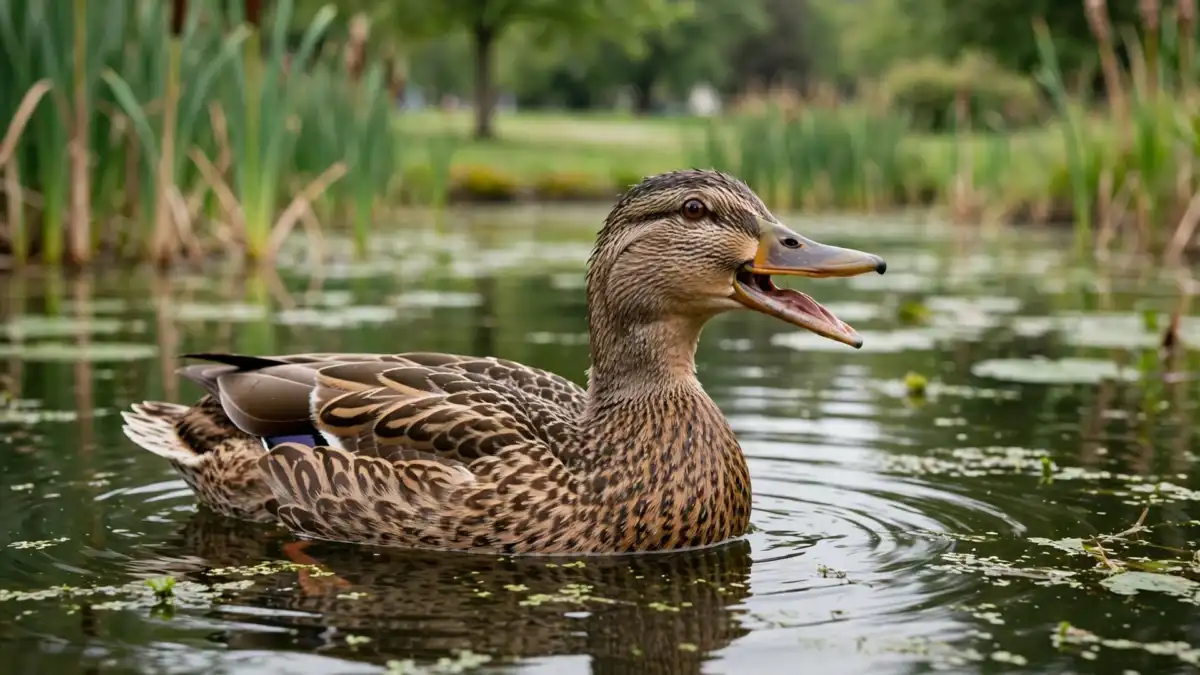
If you ask someone to act like a duck they will give a loud, self-assured quack. However, there is only one type of duck that actually quacks like this, the female mallard. Male mallards do not make any quacking noises, most species of duck don’t even sound like the cartoon version. On a farm, some of the quietest ducks will never make a single quack. This quack isn’t just a general duck noise; it is a specific noise used by the females due to their anatomy and the roles they play within a flock (to keep them together) and leading their ducklings through reeds. Here is what the quack really means, which ducks make it and why so many ducks don’t!
First, the Myth: Does a Duck’s Quack Echo?
One of the most common myths about animals is that a duck’s quack cannot echo. This is false, and has been properly tested. Scientists have recorded ducks quacking in echo-friendly environments and found that they can echo, but the echo cannot be easily heard. This is because the quack dies out gradually, and so the echo can be difficult to hear as it becomes part of the tail of the sound. This myth has stuck because it is an odd fact that sounds like it must be true and because few people actually test it in a place where it can be clearly echoed.
This myth is useful to know as there are plenty of confident statements about duck noises. All ducks quack, male ducks quack louder, and they quack when happy. However, all of these statements can be debunked. The real story is actually fascinating to learn about, and tells us why a particular sex in one species has the most famous sound in the birdworld!
The Short Answer: Female Mallards Quack, Males Do Not
The classic quacking sound is made by the female mallard duck and is most commonly a series of 2 to 10 quacks (also known as the decrescendo). The female will make this sound when flying over a wetland area to identify herself and locate some company. The female will also make this sound when on the water to keep in contact with her flock. The mother will make softer calls to communicate with her ducklings. This call can be heard over long distances across the water and through reeds, making it ideal for a bird that lives in thick wetland vegetation.
Male mallards (drakes) make a softer, raspy noise. This is often referred to as a low ‘raeb’ or a soft rattling sound. This is due to their voice box being structured differently. They simply can’t make the loud, resonant quack of the female. The female can’t make the drake’s soft call, and vice versa. So if you hear a loud quacking from a pond in a park, it is almost certainly going to be a female.
How a Quack Is Made: The Syrinx
Rather than having a larynx like humans, they have a syrinx. This is a vocal organ located where the windpipe splits into the lungs. Vibrating membranes cause air passing through them to become sound. The shape of the syrinx and muscles surrounding it determine what kind of sound they can produce. Female mallards have syrinxes shaped to produce a loud, broad quack. Drakes, however, have a different syrinx shape with an enlarged section that changes the resonance and keeps the call soft and raspy.
This is important, as it answers an old debate about whether males decide not to quack. Males cannot decide: their anatomy sets the limit, and evolution has found ways to make use of both sounds. The female’s call is loud, which fits a bird that must be heard over a marsh. The male’s call is soft, which suits a bird whose main vocal job is close-range courtship. A loud call there would draw rivals and predators, for no benefit.
What Different Quacks Mean
A quack is not a single sound. The female mallard can vary her volume, speed, and repetition to change the meaning, much like a human voice can say the same word in different ways. The context means that the same call can mean different things when flying, on the water, near a nest, or with ducklings. Observers who notice these variations can learn some surprising things about what is going on in the pond.
| Call pattern | What it usually signals | When you hear it |
|---|---|---|
| Loud decrescendo, 5 to 7 quacks fading | Contact call, announcing presence | Female flying over water, looking for a flock |
| Rapid, repeated loud quacks | Alarm or excitement | Predator nearby, sudden disturbance |
| Soft, short quacks | Reassurance to ducklings | Mother leading ducklings through reeds |
| Paired quacks during courtship | Interest in a mate | Breeding season, near a drake |
| Low, raspy single notes | Male courtship or mild warning | Drake close to other ducks |
The amount of quacking will also increase at certain times. Female ducks will produce more calls before and during the nesting season. They will call to attract a mate, defend their nesting territory, and then to monitor their ducklings. During autumn, ducks form larger flocks, and so contact calls will help them stay together even if they can’t see each other because of the vegetation. Most of the time, a noisy pond during spring will be full of females doing their social work, not birds making noise for fun.
Why Females Do Most of the Talking
The female duck is responsible for much of the communication in mallard life, and the quack developed to match that workload. She finds the nesting spot, incubates the eggs, and raises the ducklings alone. Every one of those jobs needs a voice that carries. She must call ducklings to food, warn them of danger, and keep them close in places where just a few meters of reeds can hide a whole brood.
Ducklings learn quickly to recognize their mother’s voice. After only a few days, they respond to her calls and follow the sound through vegetation they cannot see across. A quiet mother would lose ducklings. A loud one keeps the brood together, and in a marsh full of predators, keeping the brood together is survival. That pressure, repeated over countless generations, is why the female quack is so loud and so distinctive.
Male ducks are under different pressures. Any drake that announced himself loudly all day would attract predators and rival males without gaining anything, since he does not guard a nest or lead ducklings. His low, hoarse call is perfect for close-range courtship, and that is all he needs. In duck society, the loudest bird is not the most dominant. It is the one with the most messages to deliver.

Not All Ducks Quack
The mallard call is so iconic that we often assume all ducks use it. In fact, ducks are a huge family, and their voices vary as much as their plumage. Some whistle, some hiss, some croak, and some are nearly silent. Knowing this helps birdwatchers identify ducks by sound, and it helps anyone choosing backyard ducks pick a breed they can live with.
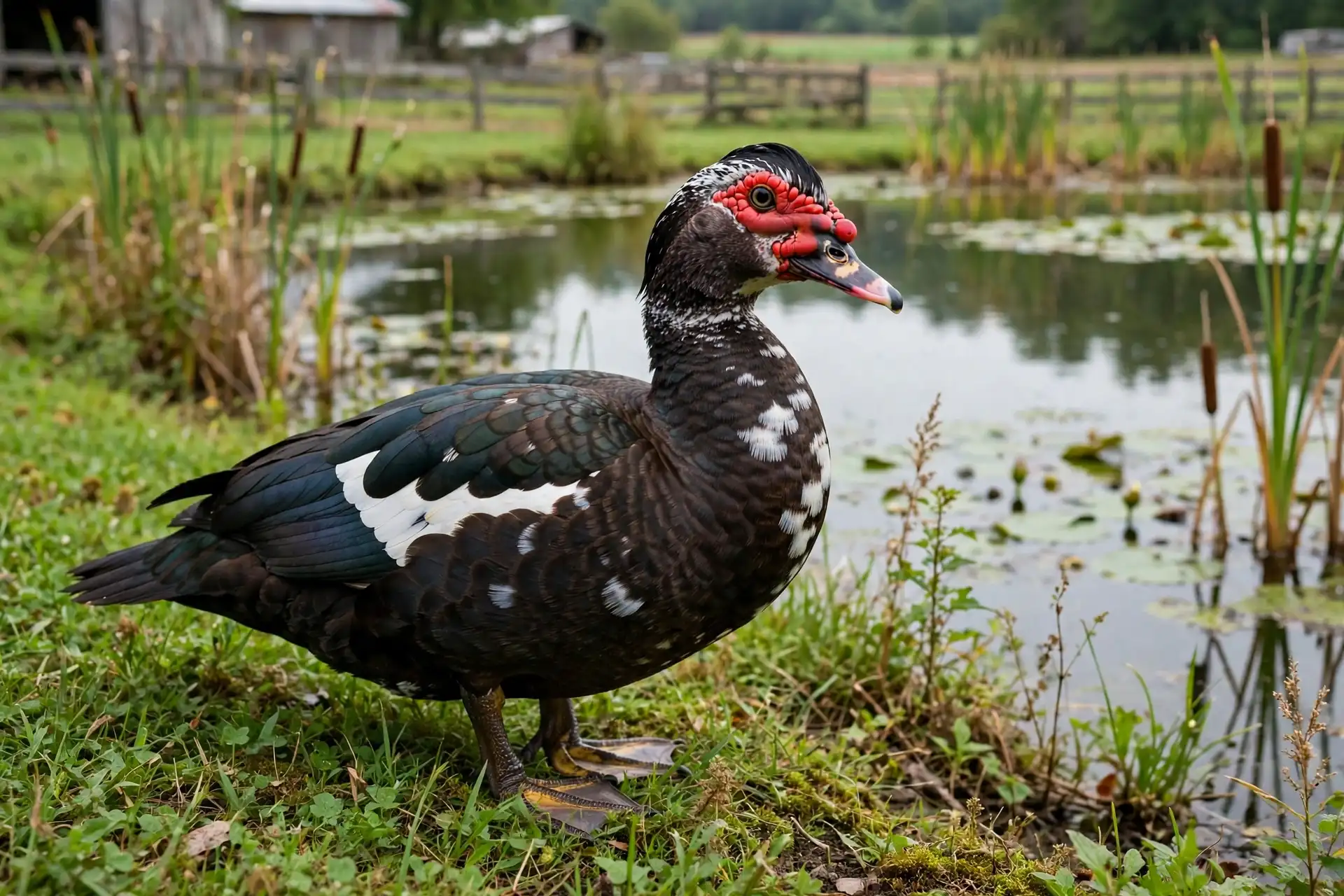
Muscovy ducks are the most famous silent ducks. They don’t quack at all. The females make a soft cooing or croaking sound, while the males make hissing and puffing noises during courtship. They are much quieter than a mallard. This makes them popular among smallholders who want ducks without the dawn chorus. Other species also have unique sounds. Wood ducks make whistling noises and squeaks, while teal make short peeping and whistling noises. Many sea ducks make low grunting and croaking noises that sound nothing like a quack.
Even among mallard-derived domestic breeds, there is variation. Pekin ducks are very noisy, and a flock of female Pekins is one of the noisiest additions to a backyard. Cayugas and Welsh Harlequins are much quieter. Calls have been bred to be small, but they are famously loud for their size. If noise matters to you or your neighbors, breed choice matters more than any training trick.
| Duck | Typical sound | Noise level |
|---|---|---|
| Female mallard | Loud decrescendo quack | High |
| Male mallard (drake) | Soft, raspy rattle | Low |
| Muscovy | Hiss, puff, quiet coo | Very low |
| Pekin | Loud quack (females) | High |
| Wood duck | Whistles and squeaks | Moderate |
| Call duck | High-pitched quack | Very high for its size |
When Ducklings Find Their Voice
They will start off by making noises that resemble peeps. The quacking will develop over time. Female ducklings will start to make recognizable quacks from around two weeks of age. However, it can take up to eight weeks before the sound is full and confident. Male ducklings will never progress to this stage: their voices stay softer and raspier as they mature, which is one of the earliest ways to tell the sexes apart before plumage differences appear.
This development window is also when imprinting matters most. Ducklings will follow the first moving, calling figure they bond with, and in the wild that is their mother. Her quacks become a beacon, and the ducklings will recognize her quacking as a guide. Experiments and everyday observation agree: separate a duckling from its mother’s voice and it becomes distressed quickly, and it calms just as quickly when the familiar call returns. The quack is not decoration. For a duckling, it is a lifeline.
Can You Keep a Duck From Quacking?
Short answer: no, not ethically and not reliably. Quacking is a natural behavior, and trying to suppress it with isolation, punishment, or surgery harms the bird and usually fails. What you can do is make an informed choice before you bring ducks home. For example, if you’re concerned about noise, choose a quiet breed like Muscovy. If local rules allow and you don’t want any eggs, choose only drakes. Make sure they have enough space, water, and company so they aren’t quacking from stress or boredom.
Stress will make them quack more. Ducks will quack more if they are alone, if they don’t have water deep enough to dip its head in, or if the flock has been disturbed by predators at night. Fixing the cause works better than fighting the symptom. A settled flock with clean water, shelter, and at least two or three companions is noticeably quieter than a stressed one, even in a naturally loud breed.
You may also want to check local rules before keeping ducks. Some towns and housing associations restrict poultry, and a neighbor complaint about noise is the most common reason people are forced to rehome ducks. By choosing a quiet breed and having a frank conversation with your neighbors before you buy, you will save more trouble than any after-the-fact fix.
Listening to Ducks Like a Birdwatcher
Duck calls can be used to help identify species, not just as background noise. If you hear a loud decrescendo quack overhead in autumn, then it is most likely to be a female mallard searching for company. A soft whistle from a wooded pond edge points toward wood ducks. If there are no calls coming from a farm pond with large, red-faced ducks, then they are likely to be Muscovies. Sound narrows the search before you ever raise binoculars.
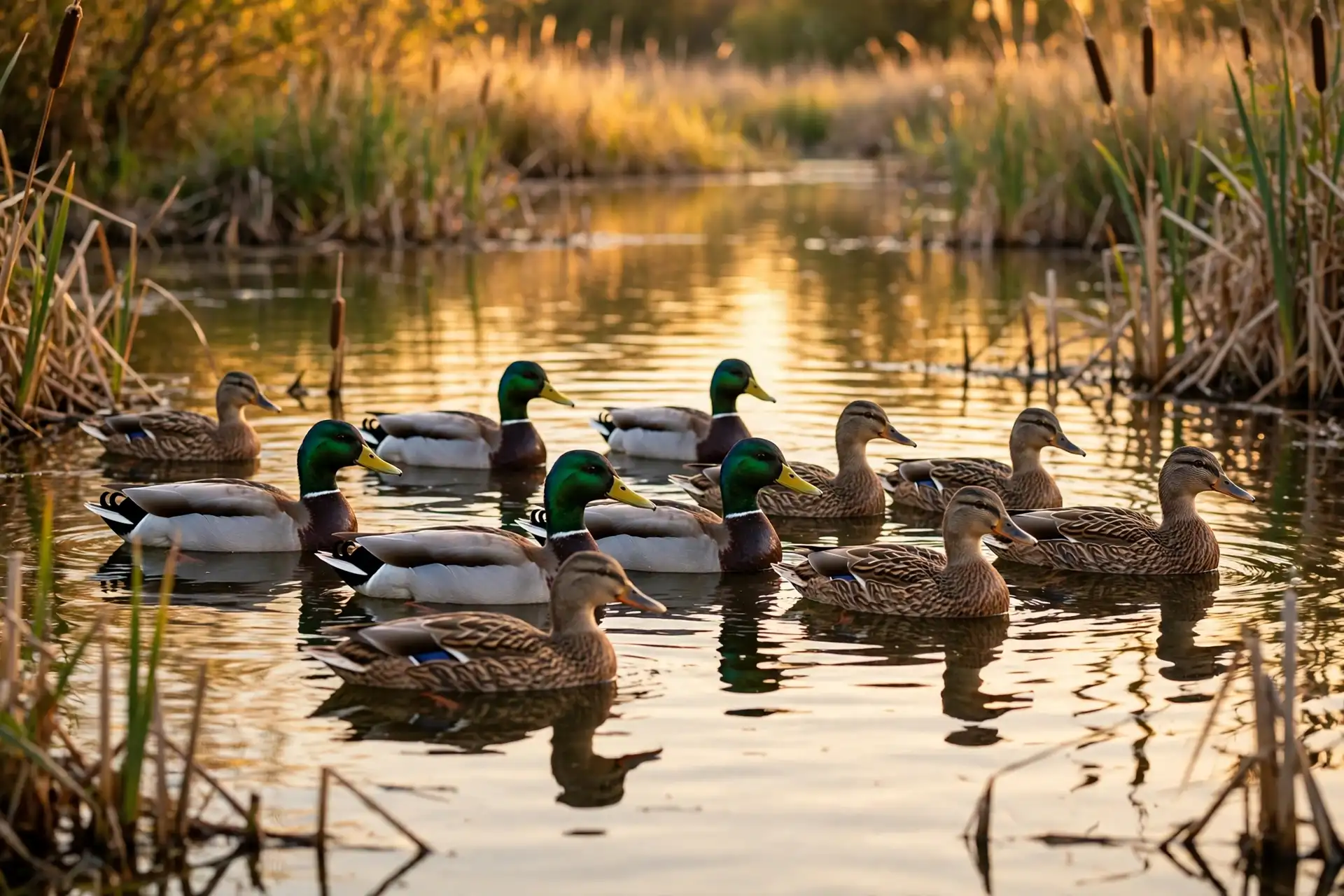
Practice in places where you can see the caller. A park with tame mallards is perfect. Watch which bird opens its bill when the quack sounds, and you’ll notice right away that it’s the loud brown, mottled females who are doing all the calling, while the green-headed drakes stay nearly silent. After seeing it a few times, you’ll start to notice it everywhere. You’ll never walk past a pond the same again!
Frequently Asked Questions
Do male ducks quack at all?
No, not in the classic sense. They do make softer, raspier noises, but they don’t have the same syrinx structure as the females, so they cannot make the loud, resonant quack. If you hear a loud quack, it came from a female.
Why do ducks quack at night?
Generally, quacking in the night is an indication of disturbance. This can be due to a predator, a sudden noise, or the settling and resettling of a group of ducks. Ducks will also quack at night during migration. Contact calls are used by flocks flying to keep them together in the dark. It is normal to hear quacking one night, but if they are quacking every night it could indicate that a predator is regularly visiting.
Do ducks quack when they are happy?
Just because your duck is quacking doesn’t mean they’re happy, like humans are when they talk! Ducks will quack when they’re excited, alarmed, hungry, lonely, or simply in contact with the flock. Read the context: if their body language is relaxed, and they’re feeding and preening, that suggests contentment, while pacing and frantic calling suggest stress.
Can a duck lose its quack?
A duck that suddenly falls silent may be unwell, stressed, or have a respiratory problem. If the change is sudden, or comes with other symptoms like lethargy, discharge, or decreased appetite, then a vet visit is warranted. Old age can also soften a call gradually. A quiet duck is not automatically a sick duck, but a sudden silence is worth attention.
What is the quietest duck breed to keep?
The Muscovy is the quietest of the common domestic ducks, as they don’t quack at all. Cayugas and Welsh Harlequins (both derived from mallards) are usually quieter than Pekins or Calls. However, individual birds vary, and even a quiet breed will call when startled or stressed.
Conclusion
Ducks quack because female mallards need a voice that carries across marshes, holds flocks together, and guides ducklings that can’t yet see their mother. Males never evolved that voice, because their job never required it, and most other duck species evolved completely different sounds. So next time you hear a loud quack, listen for what it actually is: not a generic duck noise, but a female mallard doing the social work her species depends on.
For more duck guides in this series, see Do Ducks Migrate?, Where Do Ducks Sleep at Night?, and How Do Ducks Stay Dry?. External references: Birdful, Why Do Only Female Ducks Quack?, Birdshow, 5 Female Mallard Calls, and Farmpertise, Why Do Ducks Quack?.