
Introduction
The biggest bird on our planet can’t fly, nor can the fastest runner, the bird that flies underwater or the parrot that only comes out at night. Flightless birds gave up flying and instead developed running, swimming, kicking and hiding behaviors. Many families of birds have evolved into flightless species including ostriches, emus, cassowaries, rheas, kiwis and penguins throughout the Southern Hemisphere. This guide will take you through why birds can’t fly, how evolution has taken away their ability, what species are still flightless, the giant species that are now extinct and how we’re trying to save the remaining species.
What Makes a Bird Flightless
Flight runs on one anchor point. In flying birds, the breastbone carries a deep ridge called a keel, and the powerful flight muscles attach to it.
Ratites, the group that holds most flightless birds, have no keel at all. Their breastbone is flat, their flight muscles are small, and their wings are too weak to lift them. The group name even points to the missing part: ratite comes from the Latin word ratis, meaning raft, a vessel with no keel.
As there was no need to fly, these birds evolved heavy, strong leg bones, large feet and bodies much larger than any flying bird could take off with. Most flying birds have toes on their feet, with one grasping toe, but ground birds lost this. Ratites do not have the opposing first toe that perching birds do as they have no branches to grasp with their feet designed for running.
The penguins took a different approach. They retained the keel and flight muscles, but modified their wings to become flat rigid paddles. The flight muscles are used for moving through water.
Why Birds Lose Flight
Every flightless bird alive today descends from ancestors that could fly. Scientists still debate the full story, but one leading hypothesis starts with safe ground.
On islands and other habitats without terrestrial predators, flight became redundant. Birds never needing to take flight would not benefit from having expensive wings so natural selection slowly favored other traits such as larger bodies, stronger legs and more energy for feeding and breeding.
There is also a strict weight limit as birds have to be light enough to be able to fly. Birds which abandon flying can become very heavy. Several flightless lines became giants.
This has happened more than once. Using DNA evidence the flying tinamous of South America are seen to be part of the same family as the ratites. This means that the ratites have not inherited flightlessness from a common ancestor, but have lost the ability to fly independently on different continents. This is strong evidence that flying birds will be attracted to the safety of the ground.
Later problems arose as the flightless birds could not protect themselves from predators brought by humans. Many species were killed off by the rats, dogs, pigs and hunters. Fast runners were able to survive.
The Ratites: Built to Run
The main flightless birds are the ratites (ostriches in Africa, rheas in South America, emus and cassowaries in Australia and New Guinea, and kiwis in New Zealand). They are all found in the Southern Hemisphere, or just above the equator in Africa (ostriches).
They share the flat, keel-free breastbone, loose feathers that do not lock together into a flight surface, and legs built for life on the ground. Within that shared frame, each species solved ground living in its own way.
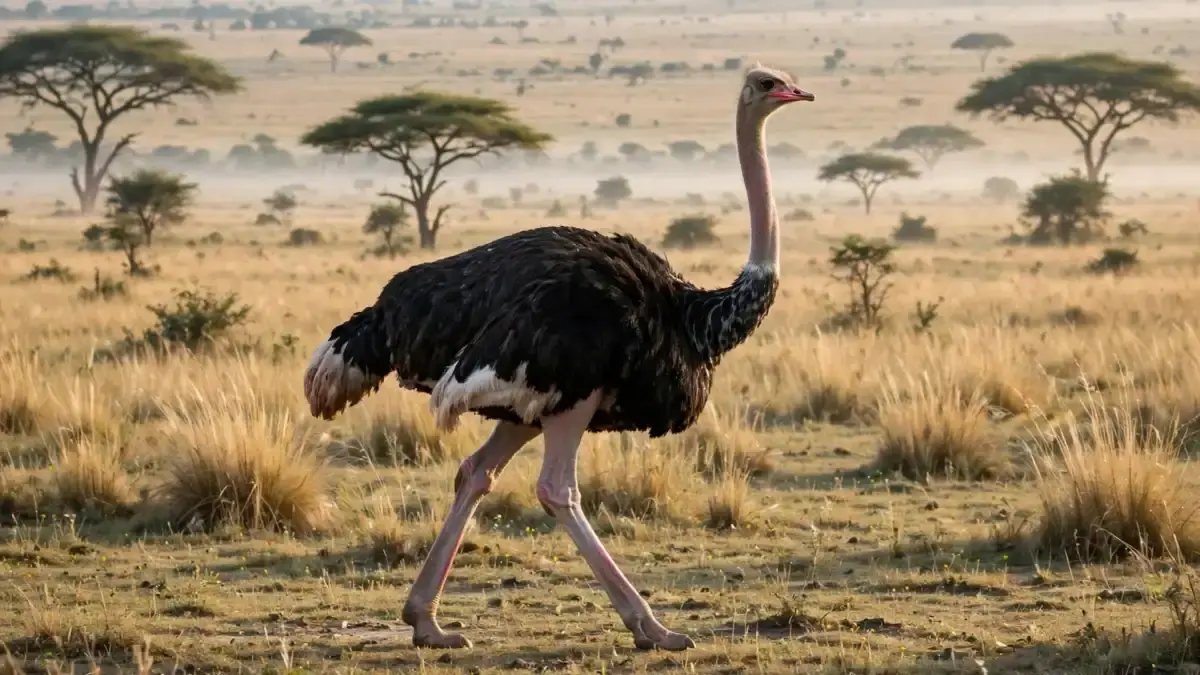
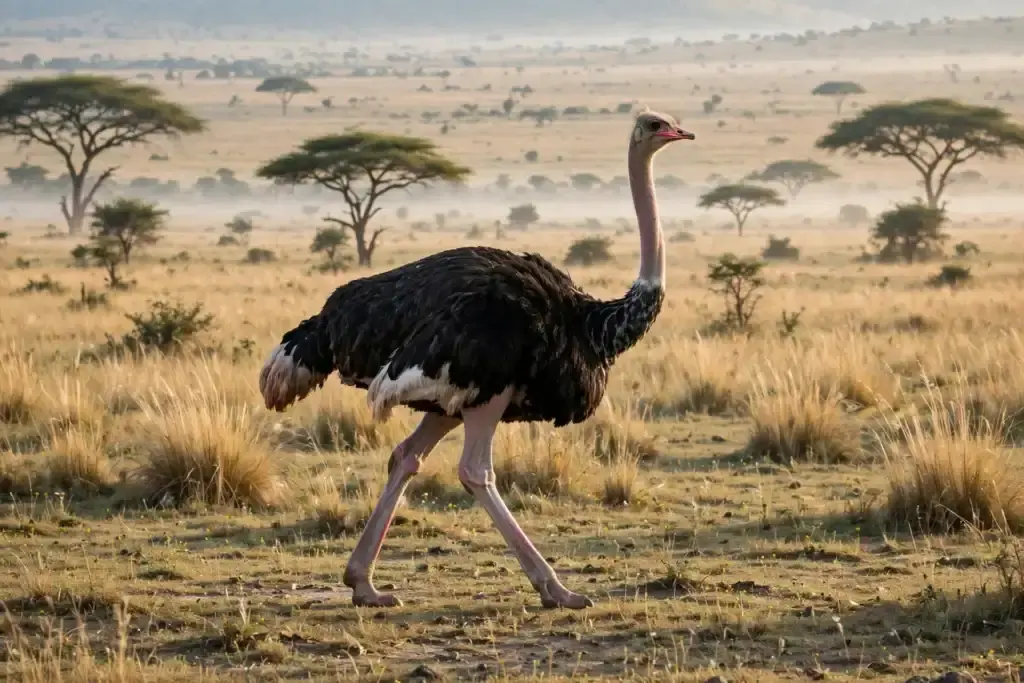
Ostrich. The common ostrich is the largest and heaviest living bird and can be found in savannas and deserts across Africa. They have long, strong, muscular legs which they use to run. Their legs are so strong they can take long strides of between 10-16ft (3-5m). They also have only two toes on each foot to help them run faster. Ostriches can run at speeds of up to 43mph (70km/h) however can maintain a constant speed of 31mph (50km/h). They still use their wings for balance when running and for showing off during mating. When cornered they can kick with their clawed feet with enough force to kill a lion. They have the largest eggs of any living bird, averaging around 3lbs (1500g). Ostriches are also very alert. They tend to feed in flocks of around ten and due to their long necks and good eyesight there is likely to be at least one bird in the flock that can see any danger.
Emu. The emu is the second-largest living bird, found across mainland Australia. Its wings are tiny and useless, but its legs sprint at 30 miles per hour (48 kilometers per hour) and can launch the bird 7 feet (2.1 meters) straight up. In a pattern shared with cassowaries and rheas, the male does the nesting: he incubates the eggs for about eight weeks, barely eating, and can lose a third of his body weight before the chicks hatch. Emus repay their grasslands as they wander, swallowing seeds whole and depositing them in their droppings, which makes the emu one of Australia’s great seed spreaders.
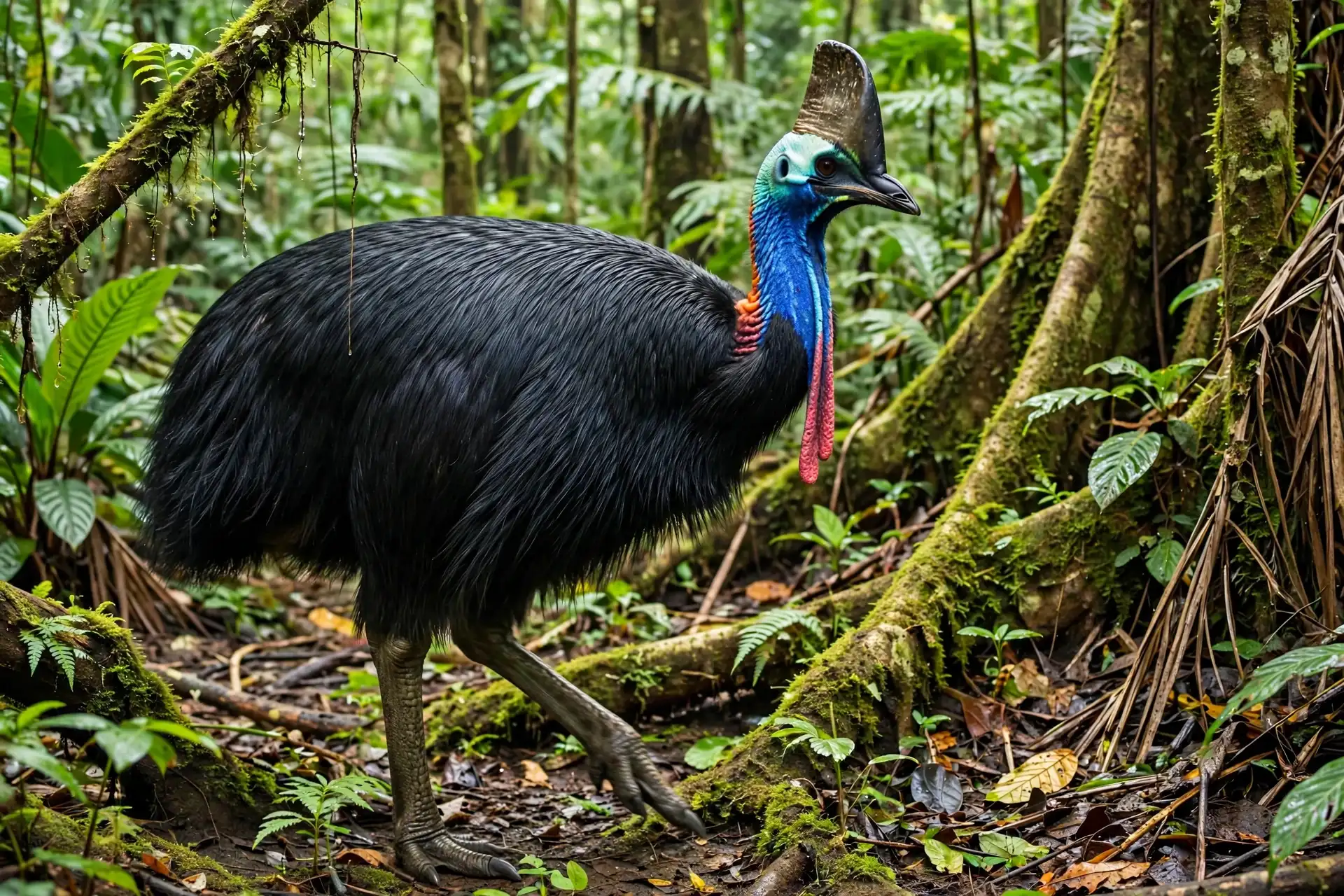
Cassowary. The southern cassowary is the largest of the three cassowary species, reaching 5.8 feet (170 centimeters) tall, with females weighing about 167 pounds (76 kilograms). It walks the rainforests of northeastern Australia and New Guinea under a tall, helmet-like casque, eating fallen fruit and spreading the seeds of hundreds of rainforest plants through its droppings. Its defense is serious: each foot carries a dagger-like claw about five inches long. The species is listed as Vulnerable, pressed by forest loss in Australia and hunting in New Guinea.
Greater rhea. The greater rhea is found in the grasslands of South America. This is the western ratite. It is a running grazing bird that has a similar build to an ostrich but is smaller. Males are responsible for looking after the nest, incubating the eggs and protecting the chicks after they have hatched.
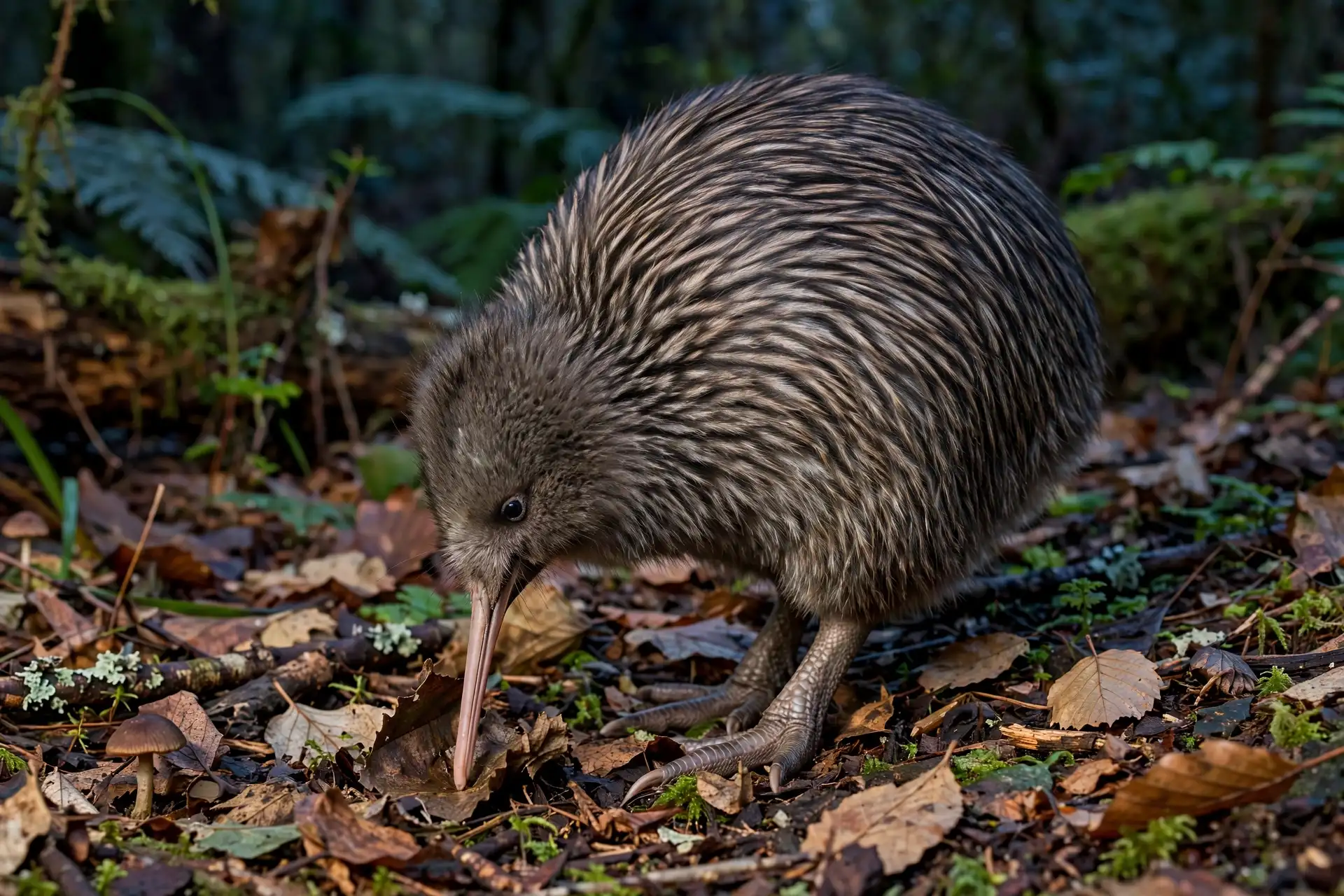
Kiwi. There are five species of kiwi native to New Zealand. They are the smallest ratites and are about the size of a chicken. They have gray-brown feathery covering and very short wings. Kiwis are unusual birds. They are nocturnal animals with poor eyesight. They hunt using their sense of smell. Their nostrils are the only place in the avian world to be located at the end of their long beak. The kiwi can sniff out worms and grubs living underground in leaf litter.
Penguins: Flying Underwater
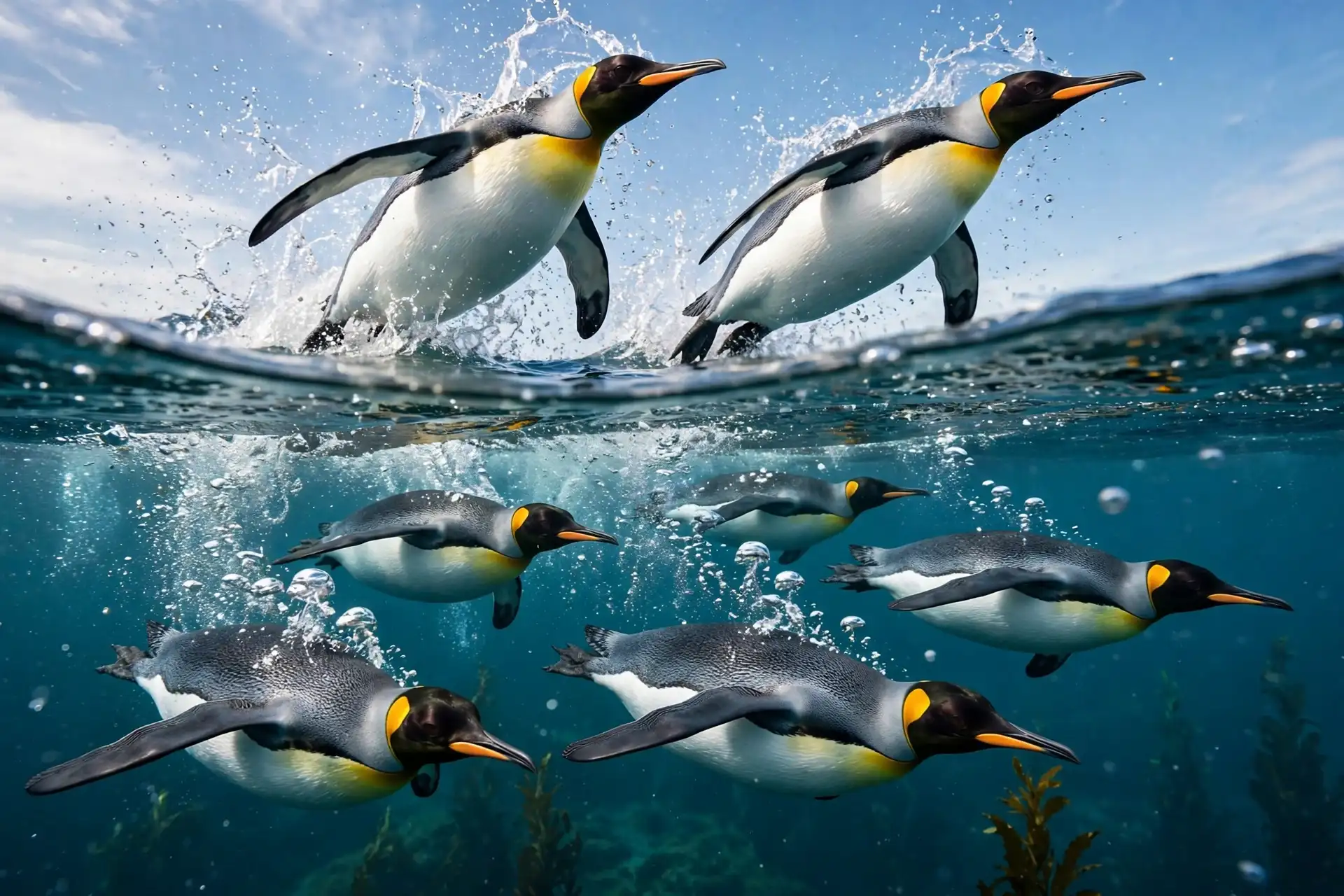
Penguins are flightless birds which have modified their wings. These wings are now rigid and flattened to form flippers. The keel and flight muscles are still large and the penguin is now a flying swimmer.
On land the penguins walk with their feet set well back on their body. This makes them stand upright and walk on the soles of their feet, unlike most birds that walk on their toes. They have a waddling gait due to their streamlined swimming body.
Penguins live almost entirely in the Southern Hemisphere, from Antarctic ice to the Galapagos penguin at the equator. There are far more kinds than most people realize, from the little penguin to the emperor, and our guide to the types of penguins covers each one in full.
Other Flightless Birds
Flightlessness also evolved outside the ratites and penguins, most famously in one very strange parrot.
The kakapo of New Zealand is the world’s heaviest parrot, with males weighing up to 4 kilograms (about 9 pounds). It is green, owl-faced, and fully nocturnal, and it may be the longest-lived bird of all, reaching 60 to 90 years. Males gather at display grounds and boom to attract females, a system called lek breeding, found in no other parrot. The kakapo cannot fly to escape danger, so it freezes and relies on camouflage, a defense that worked until mammalian predators reached New Zealand.
New Zealand also has flightless rails. These birds are very secretive birds found in wetlands and forests. They also lost their flight on predator free islands. The birds have followed the same pattern of being safe on land, having reduced wings and walking.
Extinct Flightless Birds
The lost flightless birds include the biggest birds that ever lived, and their stories share one ending: people arrived.
The moas of New Zealand were fast-running ratites, varying in size from around 1.6ft (0.5m) to over 6ft (1.8m). All 11 known species were hunted to extinction by the ancestors of the Maori between 1250 and 1350.
However, the elephant birds of Madagascar continued to grow in size. The largest of these, Vorombe titan, was around 10 feet (3 meters) tall and weighed an average of around 1,433 pounds (650 kilograms), making it likely the largest bird that ever lived. Even the more famous Aepyornis maximus weighed around 1,000 pounds (450 kilograms). Unfortunately this family became extinct due to hunting and deforestation. The last species survived in the central highlands until around 1,300-1,560 years ago.
The Mauritius dodo, a flightless pigeon-like bird some 50 pounds (23 kilograms) in weight, became extinct by 1690. The birds were hunted by sailors and their eggs devoured by ship-borne pigs and rats.
The great auk was the penguin of the North Atlantic. This flightless bird was nearly 3 feet tall. It bred in large colonies of hundreds of thousands. For centuries it was hunted for its meat, eggs, feathers and oil. The last pair were killed by fishermen on Eldey Island off Iceland in 1844. Today there are only about 80 stuffed specimens left in museums.
How Flightless Birds Survive
Speed. The fastest bird in the world is a flyer. But on land, no feathered creature can run as fast as an ostrich. Emus, rheas and cassowaries are also strong runners. They run away before fighting.
Fighting is the second answer. Ostriches can kick with enough force to kill lions. Cassowaries have dagger-like claws to slice with. Many predators are put off by their large size, which is why so many flightless birds are large.
Penguins are natural swimmers. The ocean provides a food source and a shelter. Their awkwardness on land is not an issue as they spend most of their time in remote areas. Cassowaries are also good swimmers. Although large birds they can swim well and often bathe in shallow water.
Camouflage and darkness cover the rest. The ostrich has a flattened neck that it can lay on the ground to hide in the soil. This is where the myth of them burying their heads in sand comes from. Kiwis and kakapos just feed at night and hide by day.
Flightless Birds Comparison Table
| Bird | Where it lives | Size | How it gets around |
|---|---|---|---|
| Common ostrich | Savannas and deserts of Africa | Largest and heaviest living bird | Runs, sprinting up to 43 mph (70 km/h) |
| Emu | Mainland Australia | Second-largest living bird | Runs and trots, sprinting at 30 mph (48 km/h) |
| Southern cassowary | Rainforests of northeastern Australia and New Guinea | Up to 5.8 feet (170 cm) tall; females about 167 lb (76 kg) | Walks and runs through the forest |
| Greater rhea | Grasslands of South America | Large ratite, smaller than an ostrich | Runs across open country |
| Kiwi | Forests of New Zealand | About the size of a domestic chicken | Walks, foraging on foot at night |
| Kakapo | Predator-free islands and fenced sanctuaries, New Zealand | Heaviest parrot, males up to 4 kg (about 9 lb) | Walks and climbs, active at night |
| Penguins | Coasts and oceans of the Southern Hemisphere | Varies widely by species | Swims with flipper wings, waddles on land |
Conservation: The Predator Problem
The main threat to flightless birds is the same issue that killed off the dodo. These birds have not evolved to defend themselves against predators such as rats, stoats, cats, dogs and pigs, which hunt adults, chicks, and eggs. There are not many ways a flightless bird can defend itself. The kiwis are now facing their biggest threat from invasive mammals preying on them. The little spotted kiwi couldn’t survive on the mainland due to introduced pigs, stoats and cats.
This has been effective. New Zealand has relocated its most vulnerable bird species to predator-free offshore islands and fenced sanctuaries, guarding those refuges closely. Most kiwi habitat on the mainland is now within large forest reserves and national parks. The kakapo has been a success story. It was nearly hunted to extinction by the mid-1900s but there are now 325 kakapos in intensive care by the Department of Conservation. Despite this it is still nationally critical. Kakapos suffer from disease and poor hatching rates. Conservation efforts have been ongoing since 1894 so it is one of the longest running rescue stories in the bird world.
Elsewhere, there are mixed stories. The southern cassowary is listed as Vulnerable due to deforestation and hunting. The ostrich and emu, large runners on large continents, are holding on much better. However, they all have the same trend. Flightless birds do well as long as ground is safe.
Frequently Asked Questions
What is a flightless bird?
A flightless bird is any bird which has evolved so that it can no longer fly, having developed to live on land or water. Examples of modern flightless birds include the ostrich, emu, cassowary, rhea, kiwi, penguins and the kakapo.
Why did some birds evolve to be flightless?
The leading hypothesis is safety. Birds living in areas with no ground based predators did not need to fly away from danger, so natural selection meant they had stronger legs and bigger bodies. However, scientists aren’t entirely sure why.
What is the largest flightless bird?
The common ostrich of Africa is the largest flightless bird. It is also the largest and heaviest of all living birds. The ostrich lays the largest eggs of any bird, averaging about 3 pounds (1,500 grams) each.
How fast can a flightless bird run?
The fastest of them all is the ostrich. They can sprint at speeds of up to 43 miles per hour (70 kilometers per hour) in short bursts, but can sustain speeds of 31 miles per hour (50 kilometers per hour) over longer distances. They can take strides of 10 to 16 feet in one go.
Are penguins really flightless?
Yes. Penguins can’t fly in the air, however, they have retained the keel and powerful flight muscles of flying birds. Their wings have evolved into flippers which they use their powerful flight muscles to swim with. This means they are essentially flying in water.
Do flightless birds still have wings?
Most do, in reduced form. Ostriches use their wings to help them balance when they run and during courtship displays. Emu wings are very small and are useless. Kiwi wings are so small they are hidden by their feathers. Penguin wings turned into flippers.
What was the largest flightless bird that ever lived?
The strongest contender is the elephant bird Vorombe titan of Madagascar. It stood around 10 feet (3 meters) tall and averaged a weight of around 1,433 pounds (650 kilograms), making it the heaviest bird known.
Why are so many flightless birds endangered?
Because they evolved without terrestrial predators, they cannot escape them. They are hunted by introduced species such as rats, stoats, cats, dogs and pigs, which eat their eggs and young and kill adults. They also suffer from hunting and habitat loss. Island species are most at risk.
Conclusion
Flightless birds are specialists, not failures. They have adapted to living on land and sea rather than flying in the sky. On safe ground, this adaptation has produced the largest living bird, fastest running bird and a moon navigating parrot. Their weakness is also their strength. They are fully adapted to their environment. If you keep their environments free of the predators they never learned to fear, they will remain the runners, swimmers and night walkers of the bird world.
Sources
- https://www.britannica.com/animal/flightless-bird
- https://animals.sandiegozoo.org/animals/ostrich
- https://animals.sandiegozoo.org/animals/emu
- https://animals.sandiegozoo.org/animals/southern-cassowary
- https://www.doc.govt.nz/kakapo/
- https://www.smithsonianmag.com/smithsonian-institution/with-crush-fisherman-boot-the-last-great-auks-died-180951982
- https://en.m.wikipedia.org/wiki/Kiwi_(bird)