
Halloween night is full of fun for us, and it can be a frightening night for birds. A stretchy fake web across a bush can trap a songbird. A bowl of chocolate left on a table can poison a parrot. A scented candle can damage lungs that are far more sensitive than ours. And a house full of costumed guests with a ringing doorbell can push a pet bird into real distress.
The good news is that every one of these risks is easy to avoid. This Halloween bird safety guide covers the four dangers that matter most for birds, wild and pet, with clear steps you can take before October 31. Every safety claim here comes from a named wildlife or veterinary source, including the National Audubon Society, the RSPB, Lafeber Pet Birds, and PetMD.
1. Fake Spiderwebs Can Trap Wild Birds
Stretchy fake spiderwebs are one of the most popular Halloween decorations, and one of the most dangerous for wild birds. The National Audubon Society warns against using the gauzy webs outdoors, and the U.S. Fish and Wildlife Service advises against them for the same reason. The problem is simple: unlike a real spider web, the synthetic fibres do not break easily.
Why the fibres are so dangerous
Birds dart in and out of bushes, rest on branches, and stop on porch railings. A layer of fake web turns any of those familiar landing spots into a trap. The thin strands catch feet, wings, and beaks. When the bird struggles, the strands tighten instead of snapping.
An animal that cannot pull free may die from exposure, starvation, or dehydration. The Canadian Wildlife Federation notes that animals caught in the synthetic fibres may be unable to free themselves, leaving them vulnerable to predators and exhaustion. The American Bird Conservancy warns that outdoor webbing can trap unsuspecting birds, particularly during fall migration, when many species are passing through unfamiliar gardens.
Injuries are not always obvious from the outside. The National Audubon Society notes that entanglement can restrict blood flow and cause tissue damage. BirdLife Australia adds that fake spiderwebs can cause serious injury or even death by strangulation or restricted blood flow. A bird that looks fine after being freed may still need a vet or wildlife carer to check it.
Real birds have been caught
This is not a theoretical risk. WildCare, a wildlife hospital in California, has treated birds caught in fake webs, from hummingbirds to screech owls. Raptor Rehabilitation of Kentucky told WHAS11 that three birds caught in fake webs were brought to the centre in one year, and two of them died. Bats get caught too: Bat Conservation International warns that the artificial strands do not break easily, and the organisation recommends keeping fake webs inside.
Safer swaps for your display
You do not have to give up the spooky look. Keep the stretchy webs indoors, for example inside a window, where the RSPB and Bat Conservation International both say they are safe. For the yard, use solid decorations that birds cannot get tangled in.
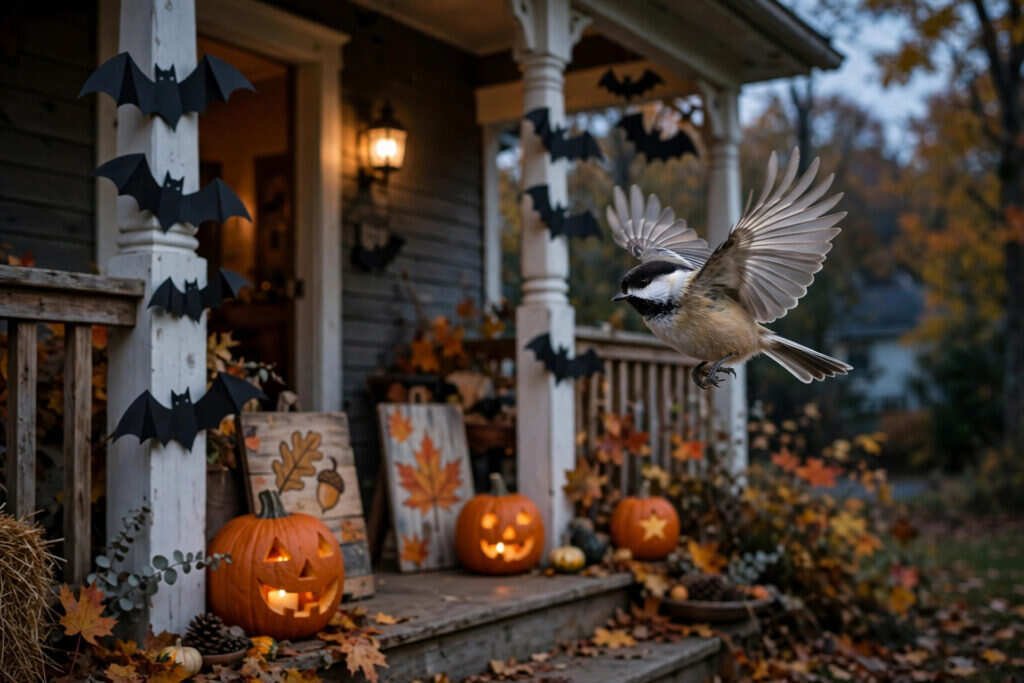
- Pumpkins and gourds: carve them, paint them, or stack them by the door.
- Painted signs and cardboard cutouts: bats, ghosts, and spiders cut from card look great and cannot trap anything.
- Window clings: webs, spiders, and silhouettes stuck to the glass give the same effect from the street.
- Solid garlands: paper chains and fabric bunting are safer than loose fibres, string, or fishing line.
Check your decorations every day while they are up. Pick up loose strands, secure anything that has come loose, and take the display down promptly after Halloween. If you find a bird or any animal tangled in a web, do not pull it free yourself. The strands can be wrapped tightly around wings and legs, and pulling can cause worse injuries. Call a local wildlife rehabilitator or vet instead.
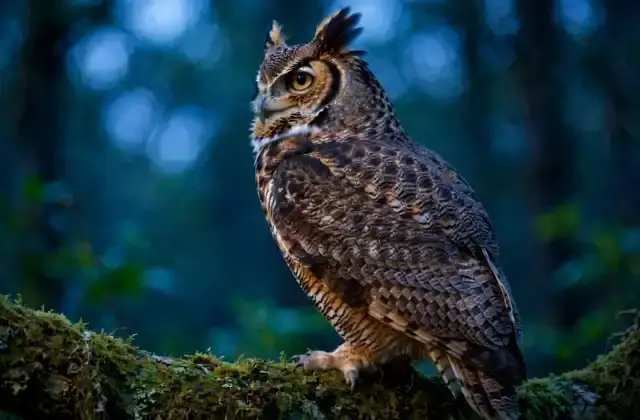
Halloween and birds have a long shared history, and the season is a good time to enjoy the real birds around your home too. Our guide to why owls are associated with Halloween explains the folklore behind the season’s most famous bird.
2. Chocolate Is Poison for Pet Birds
Halloween means chocolate in almost every house: bowls of candy by the door, treat bags on the table, and wrappers in coat pockets. For a pet bird, chocolate is not a treat. It is poison, and even a small amount can be dangerous.
Why chocolate harms birds
Chocolate contains two stimulants, theobromine and caffeine. PetMD explains that both compounds are toxic to birds because they overstimulate the brain and heart. Birds are small, with low body weight, so it does not take much chocolate to cause a problem. A crumb that would mean nothing to a person can be a serious dose for a budgie or cockatiel.
The darker the chocolate, the higher the amount of theobromine and caffeine, and the smaller the amount needed to cause harm. Cocoa powder and unsweetened baking chocolate contain the highest amounts, so only a very small quantity of those types can cause poisoning. Milk chocolate is less concentrated, but it is still dangerous, and white chocolate should still be kept away from birds.
Signs of chocolate poisoning
Symptoms can include vomiting, diarrhoea, hyperactivity, tremors, seizures, and an elevated heart rate. PetMD lists these signs and stresses that any exposure requires immediate veterinary guidance or a call to Pet Poison Helpline. Symptoms may not appear at once, so a bird that looks fine after eating chocolate still needs urgent advice.
What to do if your bird eats chocolate
- Remove any remaining chocolate: take the food away so the bird cannot eat more.
- Call your avian vet immediately: do not wait for symptoms to appear.
- Call Pet Poison Helpline on 855-764-7661: the helpline is listed by PetMD as the number to call for any chocolate exposure in birds.
- Do not try home treatment: never try to make a bird vomit, and do not give food, water, or medicine to fix it yourself. Follow the vet’s instructions.
Prevention is easier than treatment. Store chocolate in sealed containers inside closed cupboards, never in open bowls near the cage. On Halloween night, keep the candy bowl at the front door, far from the bird’s room. Tell guests and children the rule clearly: no sweets for the bird, not even a tiny piece. A well-meaning guest offering a chocolate drop is one of the most common ways a pet bird gets poisoned.
3. Candles and Scented Products Can Damage a Bird’s Lungs
Candles set the mood on Halloween night, and scented products are everywhere in autumn: pumpkin spice candles, plug-in air fresheners, wax melts, and essential oil diffusers. For a pet bird, all of them are a risk. Birds breathe differently from us, and that difference makes them far more vulnerable to what is in the air.
Why birds are so sensitive to air
Lafeber Pet Birds explains that birds have a highly efficient respiratory tract. That efficiency helps them fly, but it also means they can inhale irritating or toxic particles much more easily, and in much greater quantities, than mammals can. Lafeber’s holiday hazards guide gives a direct instruction: do not expose your pet bird to scented candles, potpourri, or room fresheners.
The same guide warns about cooking fumes, particularly from overheated nonstick pots and pans. The vapours from superheated Teflon (polytetrafluoroethylene) are known to be toxic to birds, and can cause serious respiratory distress or even death. Halloween often means a busy kitchen, so keep the bird’s room well away from cooking fumes too.
Which products to skip
- Scented candles: the fragrance chemicals and soot are the problem, not just the flame. ThatPetPlace notes that many long-burning candles contain a metal core inside the wick, which can send small metal particles into the air when burnt.
- Essential oil diffusers: essential oils are natural, but they are concentrated, and ThatPetPlace warns that the concentrated oils are usually too strong to be safe for birds.
- Incense: both the fragrance and the smoke itself can irritate a bird’s lungs.
- Air fresheners: aerosol sprays, wall plug-ins, and spray-on fabric fresheners are all unsafe around birds, according to ThatPetPlace.
- Potpourri and wax melts: these release fragrance into the air continuously, and Lafeber groups potpourri with scented candles as products to keep away from pet birds.
Warning signs to watch for
Birds hide illness for as long as they can, so visible symptoms mean the problem is already serious. Signs of breathing trouble include tail bobbing with each breath, laboured or open-mouth breathing, sneezing, discharge from the eyes or nostrils, lethargy, and fluffed feathers. If you see any of these after a candle or diffuser has been used, move the bird to fresh air at once and contact an avian vet without delay.
Safer ways to scent the season
You can still have a warm, festive home without putting your bird at risk. LED flameless candles give the flickering glow with no flame, no soot, and no fragrance. They are the simplest swap, and they are safer than any burning candle around birds.
For scent, skip anything that puts fragrance into the air. Open a window for fresh air when the weather allows, and keep the bird’s room free of sprays, plug-ins, and diffusers all year, not just on Halloween. If guests want to light a candle, keep it in a room the bird never enters, with good ventilation, and never in the same room as the cage.
4. Give Your Pet Bird a Quiet Room on a Noisy Night
Halloween night is loud. The doorbell rings again and again, guests talk and laugh, music plays, and excited children shout in costumes. For a pet bird, that noise and bustle is stressful, and stress in birds is not just discomfort. It can lead to real harm.
Why Halloween night stresses birds
Fox Creek Veterinary Hospital explains that birds are easily startled by loud noises and flashing lights. A frightened bird may injure itself while trying to escape its cage. The hospital also lists feather plucking, loss of appetite, and night fright as risks when birds are exposed to sudden loud noise. A bird that is used to a calm house can be badly shaken by one noisy evening.
Costumes add to the problem. A familiar person in a mask or a strange outfit can look like a stranger, or even a threat, to a bird. Add a ringing doorbell every few minutes, and the bird has no quiet moment to settle. If your bird has been screaming at night before, the stress of a noisy evening can make it worse. Our guide to why birds scream at night and how to stop it explains the common causes and the fixes that help.
How to set up the quiet room
Set the room up before the first trick-or-treaters arrive, not after the bird is already frightened. Fox Creek Veterinary Hospital recommends moving the bird’s habitat to a quiet room away from windows and exterior walls, such as a guest room or an interior room. Follow these steps.
- Pick an interior room: choose a room away from the front door, windows, and exterior walls. A spare bedroom or study works well.
- Move the cage early: set the cage up in the quiet room in the afternoon, so the bird has time to settle before the noise starts.
- Close windows, doors, and curtains: closed curtains deaden sound and block flashing lights from outside. Keep the room dim rather than bright.
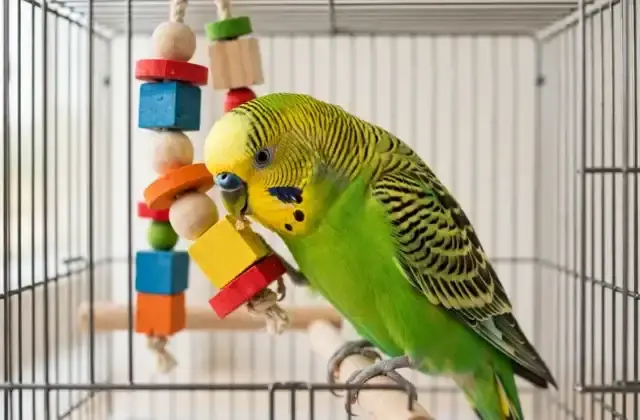
- Keep familiar things close: use the bird’s usual perches, toys, food, and water. Familiar objects are calming, and a favourite toy gives the bird something to focus on.
- Play soft, familiar sound: gentle music or white noise at a low volume can mask sudden bangs and doorbells. Use music your bird already knows rather than something new and loud.
- Cover the cage only if that is normal: if your bird is used to a cage cover at night, use it in the usual way and make sure air can still flow. Do not suddenly cover a cage if that is unfamiliar, as it can frighten the bird more. ExoticDirect gives the same advice for parrots on noisy nights.
Check in quietly every so often, but do not pull the bird out to show guests. A bird that is hiding or sitting quietly in its cage is coping in its own way. Let it stay there. Keep the bird’s routine as normal as possible: feed at the usual time, keep bedtime the same, and return the cage to its usual spot the next morning.
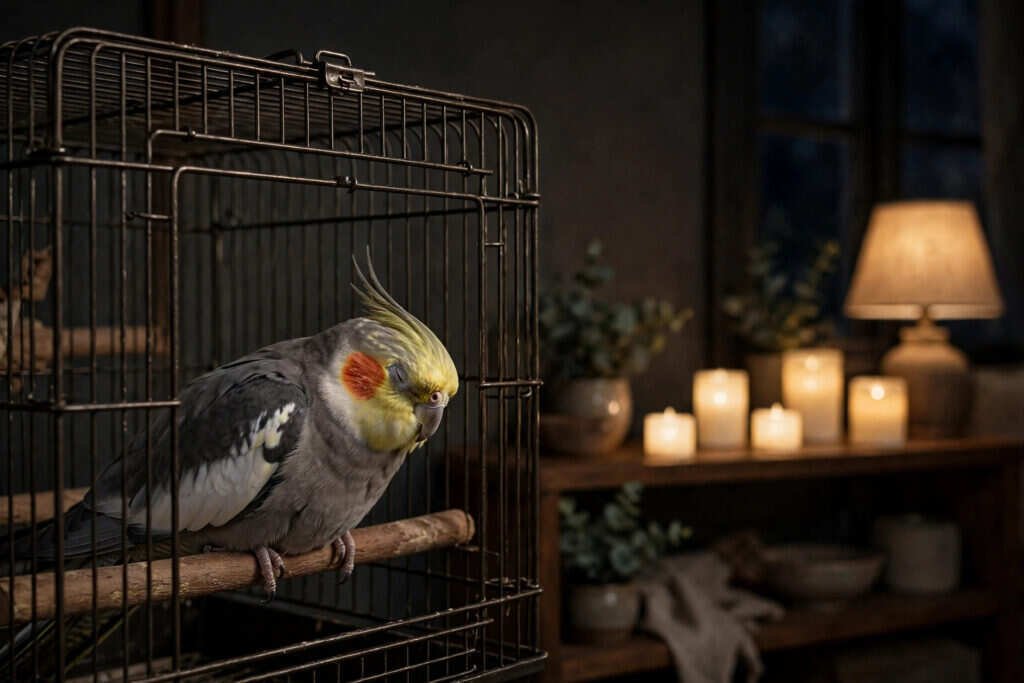
Signs your bird is stressed
Watch for screaming that goes on and on, frantic flying around the cage, flapping against the bars, fluffed feathers, hiding in a corner, or refusing food. These are signs of distress, not bad behaviour. Never punish a frightened bird. Stay calm yourself, speak softly, and give the bird space. If your bird becomes very distressed, or the signs last into the next day, consult your avian vet for advice.
Boredom makes stress worse, so a quiet room should still have something to do. A foraging toy or a simple puzzle feeder keeps a bird occupied while the noise goes on outside. Our article on whether birds get bored has ideas for enrichment that work well in a quiet room.
A Quick Halloween Safety Checklist
Run through this list on the morning of October 31, before the decorating and the doorbell start.
- Fake webs stay indoors: use them inside windows only, and use pumpkins, signs, and window clings outside.
- Check the yard: pick up loose strands, string, and fishing line, and secure any decoration that has come loose.
- Lock chocolate away: keep all candy in sealed containers in closed cupboards, and keep the treat bowl at the front door.
- Tell every guest: no sweets for the bird, not even a tiny piece, and no feeding the bird from the table.
- Skip scented products: no scented candles, diffusers, plug-ins, incense, or air fresheners in the bird’s room. Use LED candles instead.
- Set up the quiet room: move the cage to an interior room in the afternoon, with familiar toys, food, water, and soft background sound.
- Keep the kitchen clear: keep the bird away from cooking fumes, especially from overheated nonstick pans.
- Know who to call: keep your avian vet’s number and Pet Poison Helpline (855-764-7661) where you can reach them fast. For a wild bird in trouble, find your local wildlife rehabilitator.
Frequently Asked Questions
Are fake spiderwebs safe if I check them often?
No. Checking does not make them safe, because a bird can get tangled in minutes between checks. The National Audubon Society, the RSPB, and Bat Conservation International all advise keeping fake webs indoors. Use solid decorations outside instead.
Can a bird eat a tiny piece of chocolate?
No, there is no safe amount of chocolate for a bird. PetMD states that even tiny amounts can cause life-threatening poisoning because birds are small and cannot handle theobromine and caffeine. If your bird eats any chocolate, call your avian vet or Pet Poison Helpline immediately.
Are unscented candles safe around birds?
An unscented candle is less risky than a scented one, but any burning candle still releases soot and combustion products into the air. LED flameless candles remove the risk entirely, and they are the safest choice in a home with pet birds.
Should I cover my parrot’s cage on Halloween night?
Only if a cover is already part of your bird’s normal routine. ExoticDirect advises that covering the cage is not necessary unless it is something the bird is used to, and a sudden cover can frighten a bird more. If you do cover the cage, leave part of it open so air can flow.
What should I do if I find a wild bird tangled in a fake web?
Do not pull the bird free yourself. The strands may be wrapped tightly around wings and legs, and pulling can cause worse injuries. Call a local wildlife rehabilitator or vet, and keep pets and people away from the bird until help arrives.
Conclusion
Halloween should be fun for everyone in the house, including the birds. Keep fake spiderwebs indoors so wild birds can fly safely past your garden. Keep chocolate locked away so a curious parrot never gets a taste.
Skip scented candles and diffusers so your bird can breathe easily. And give your pet bird a quiet room with familiar toys and soft background sound while the doorbell rings.
None of these steps takes long, and each one removes a real risk. A little planning before October 31 means the only surprise on the night is how much fun everyone has, birds included.