
When do hummingbirds leave? Most hummingbirds will leave between late July and October. The main migration south is during August and September. By mid-November most of the migration south from the northern breeding grounds will have finished with the exception of some stragglers from the Gulf Coast, southern stragglers and a few species from the west who will winter in place. If your feeders go quiet during September this is usually not an issue as it is the end of the season and will start earlier than most people expect.
The Short Answer
There is no single departure date, because hummingbirds leave in waves, not all at once. Adult males will leave first and can leave as early as late July in the north. The females follow them once their young have fledged and finally the juveniles, many of whom will be making the journey alone for the first time. That staggered order is why a feeder can go quiet for a week, then suddenly fill again with a new bird passing through.
The main reason for migration is the amount of daylight, not the cold and not your feeder. After the summer solstice, days start to get shorter. This causes hormonal changes which make the birds restless and they eat a lot. They will start to put on fat stores for the journey. Taking the feeder away won’t make them leave any earlier. Leaving it out won’t make them stay. For a full fall timing guide by region, see when do hummingbirds migrate.
Who Leaves First, and Why It Matters
Adult males are the first to migrate since they do not contribute to raising the young. In the eastern United States, where the ruby-throated hummingbird (Archilochus colubris) is the only breeding hummingbird species, males can disappear from northern yards by late July. That early disappearance often worries new feeder watchers, who assume something went wrong. In most cases, nothing did. The male has simply completed his breeding and is beginning to migrate south.
The females will stay longer to feed the nestlings and show the fledglings how to find flowers and feeders. The juveniles are the last to leave, and they face the hardest trip, because they have never flown the route before. They have never traveled this route before, so they rely on their instincts, the sun, stars and landmarks to help them. They will stop to feed at flowers and feeders along the way. The juveniles you may see at your feeder in September may have hatched locally or be a migrant from hundreds of kilometers north.
This is why you often see a single male dominating your yard all summer, but then suddenly have lots of skittish juveniles with streaks in late summer. Those are not the same bird returning. They are the next wave.
Departure Dates by Region
| Region | First departures | Most birds gone by | Late notes |
|---|---|---|---|
| Southern Canada and northern tier | Late July, adult males first | Early to mid September | Any bird after mid October is worth reporting |
| Midwest and Mid-Atlantic | Late July to early August | Late September | Peak passage of northern migrants in September |
| Southeast | August, males mostly gone by late August | October | Heavy feeder traffic as northern birds pass through |
| Gulf Coast and Florida | August, passing birds | October into early November | Last departures, plus a few wintering birds on the coast |
| Pacific Coast and West | Mid August for many migrants | Early October for most migrants | Anna’s hummingbirds may stay year round in mild coastal areas |
These dates are approximate. A warm autumn with late blooming flowers can prolong the season, while an early cold snap can push birds out faster. Weather changes the speed of migration, but it does not set the calendar. Day length does.
In Arkansas, for example, ruby-throated hummingbirds begin leaving in late July, with peak migration occurring in September. Most are gone by mid-October, with occasional stragglers into November. In Maine and northern New England, most are gone by the first week of October. In Georgia and the Southeast, adult males are mostly gone by late August, but migrants from farther north keep feeders busy into October.
Signs Your Hummingbirds Have Left
Leaving is rarely a single dramatic goodbye. It is a gradual fade, and the signs are easy to miss if you only watch at one time of day.
- Feeder visits drop sharply: A feeder that needed refilling every few days suddenly lasts a week or more, even though the nectar is fresh.
- The dominant male disappears: The bird that chased every visitor away is gone, and no new male takes over his perch.
- Visits become brief and nervous: Late migrants feed quickly, often at dawn, then move on. They do not defend a territory.
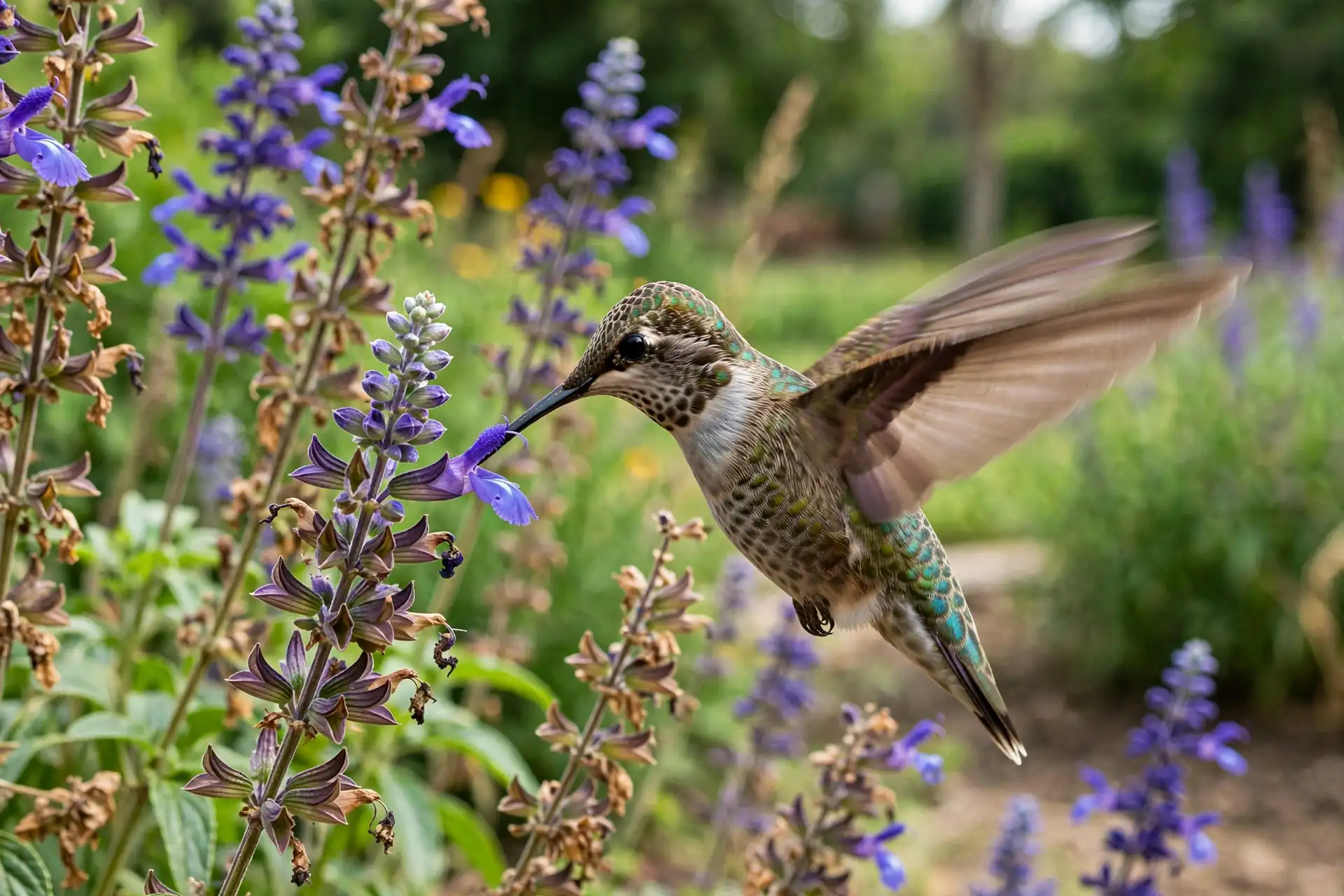
- Flowers go untouched: Trumpet vine, salvia and other late flowers that were busy in August sit quiet in September.
- Chatter stops: The high pitched chipping and chasing around the feeder ends, and the yard feels suddenly still.
Don’t assume just because your feeder has gone quiet for two or three days in August that the birds have gone. They may just be feeding on natural flowers, or a new migrant hasn’t found your yard yet. Wait for a full week of silence, and check first thing in the morning, when migrants often feed before moving on, before you conclude the season is over.
What to Do After the Last Sighting
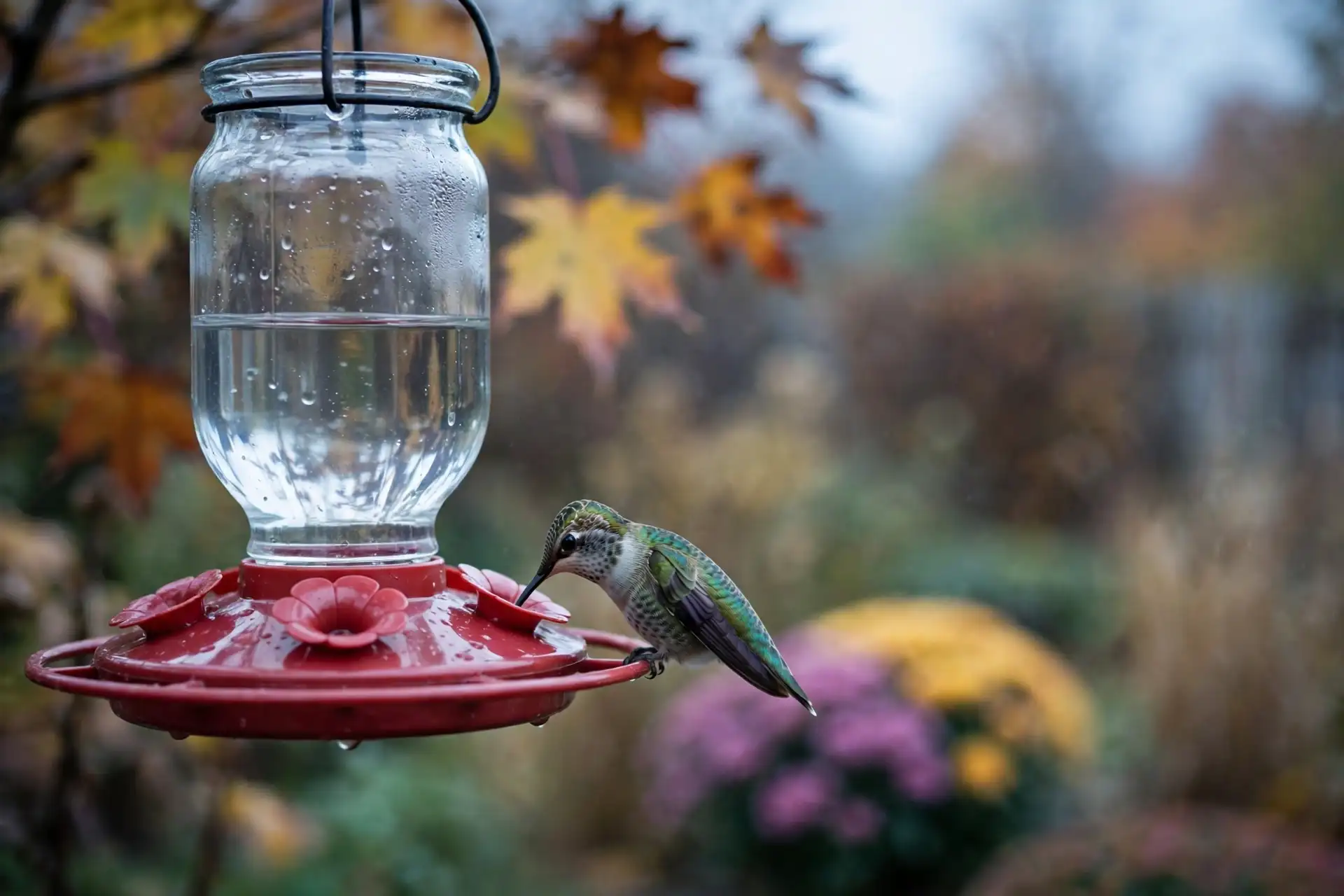
Don’t rush to remove the feeders. Leave them out and keep them fresh for around two weeks after your last sighting. This helps late migrants, juveniles that are still learning the route, and stragglers that need fuel. It does not delay departure, and it does not trap a bird in the north. For the full feeder rule, see when to take down hummingbird feeders in fall.
Change nectar regularly, even when visits are rare. In warm weather, change it every two to three days. In cool weather, every four to five days is usually enough, but discard any nectar that looks cloudy or moldy. Clean your feeders using hot water. Ensure they are thoroughly rinsed and free from any soap. A dirty feeder in late season can harm the very birds you are trying to help.
Leave late flowers standing where you can. Salvia, trumpet vine, bee balm and other nectar plants give migrants a natural refueling stop, and they also support insects that hummingbirds eat for protein. Hummingbirds do not live on nectar alone. They also eat small insects and spiders, especially when feeding their young, and protein matters before a long flight.
The Gulf Crossing, in Plain Terms
Many ruby-throated hummingbirds depart from the Gulf Coast and make a non-stop crossing of the Gulf of Mexico, a journey of about 500 miles that takes 18 to 22 hours, with no place to land, rest or feed. Other ruby-throated hummingbirds will follow the coastal route around the Gulf of Mexico, stopping to feed along the way. Both routes are normal, and the choice depends on weather, wind and the bird’s fat reserves.
Before that flight, a hummingbird can almost double its body weight in fat. That fat is fuel, and it is why late season feeding matters so much. If a bird leaves too thin, it is less likely to make it across. A bird that leaves fat has a buffer for headwinds and bad weather.
Once across, they spend the winter in southern Mexico and Central America, feeding in tropical forests, gardens and coffee plantations. In spring they will head back north, often to the same general area that they bred in the previous year.
If a Hummingbird Is Still Here in November
A hummingbird in November is not necessarily lost, and it is not necessarily a ruby-throated bird that missed its cue. Several things can explain a late bird.
- A late juvenile: A young bird hatched late in the season may still be travelling south in November, especially in the Southeast and Gulf Coast.
- A western species: In the Southeast and Gulf Coast, western hummingbirds such as rufous hummingbirds sometimes winter in the region, arriving in late autumn and staying through winter.
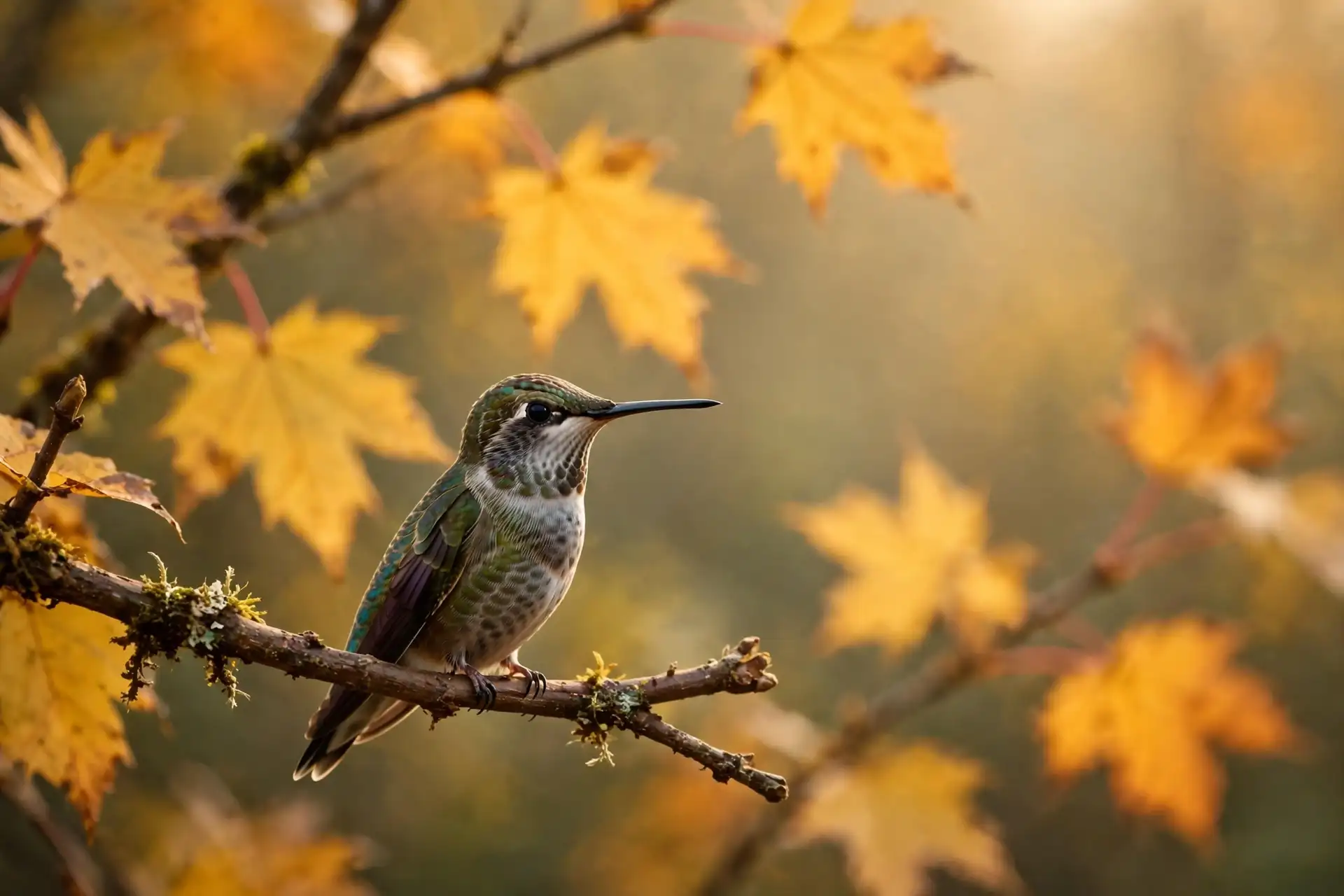
- A resident western bird: Anna’s hummingbirds are permanent residents along much of the coast of California and in parts of the Pacific Northwest. They may be seen at feeders in November as regular residents, not stragglers.
- A bird in torpor or resting: A hummingbird that appears to be motionless in the cool morning air may be in a short-term state of torpor, during which its body temperature and metabolism drop to conserve energy. Do not assume it is dead, and do not handle it unless it is clearly injured.
If you do see any hummingbirds after mid-October in the north, please record the date, place and ideally take a picture. Late sightings are very valuable for local bird clubs and migration monitoring projects to know which species are overwintering where and if their range is changing. Keep a feeder up, fresh and unfrozen, while the bird is present. If it is very cold please bring your feeders in at night and put them back out at dawn. You can also invest in a feeder heater for hummingbird feeders.
Do All Hummingbirds Leave?
No. While many North American hummingbirds migrate, some populations do not. Anna’s hummingbirds are the best known exception in the West, staying year round in mild coastal areas where flowers and feeders provide food through winter. In southern Florida and along parts of the Gulf Coast, a few ruby-throated hummingbirds may also winter, especially where feeders and flowering plants are available.
That does not mean a ruby-throated bird in Ohio in December is normal. It means geography matters. A bird that is a resident in California can be a rare winter visitor in Pennsylvania. Always judge a late bird by your region, not by a national rule.
Climate change has also caused slight changes in migration patterns, with some species arriving earlier in spring and migrating more slowly in fall, according to research summarized in recent migration guides. Those shifts are measured in days, not months, and they do not change the basic pattern: most birds leave in late summer and autumn, and most are gone by mid-November in the north.
How to Tell a Migrant from a Resident in November
In November, the most useful question is not just whether a hummingbird is present, but whether it is passing through or staying. Migrants will typically feed hard, then rest for a short time and move on within a day or two. They may visit your feeder at dawn, have a good drink and leave again by the afternoon. A resident western bird, by contrast, visits the same feeder at similar times each day, defends a small area, and returns day after day.
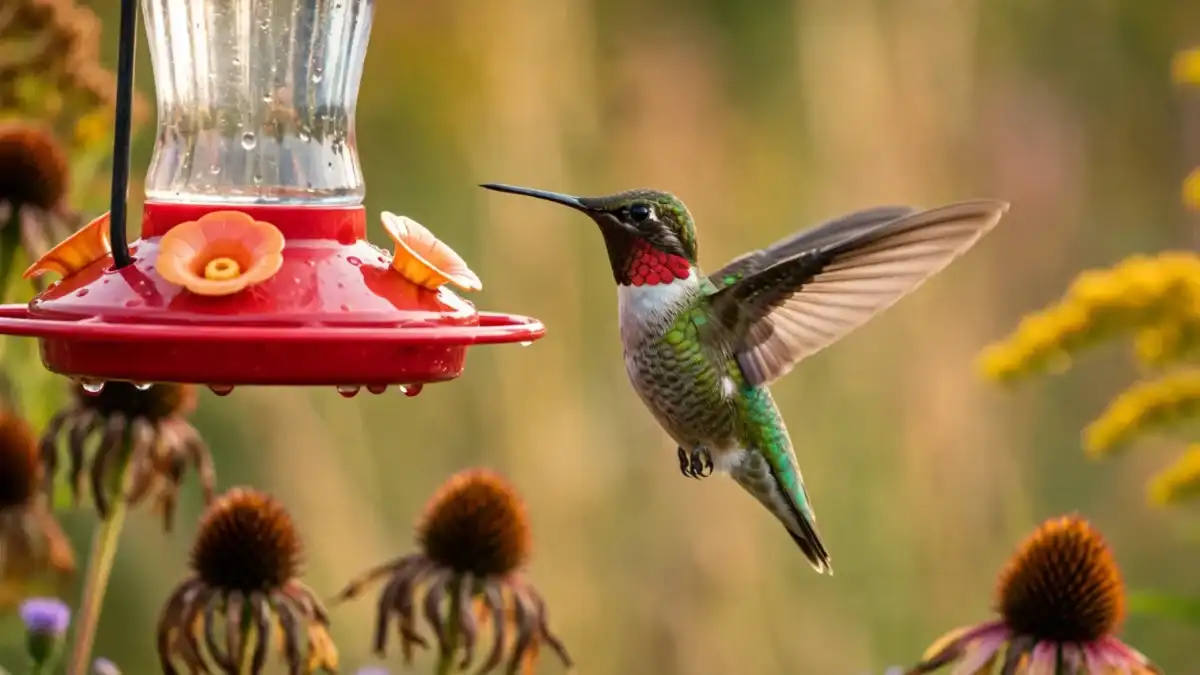
Plumage can be useful but is not proof on its own. Adult male ruby-throated hummingbirds have a striking red gorget, while females and juveniles have a plain white throat with light streaking. A streaked juvenile in November in the Southeast could be a late ruby-throated migrant, while a bird with a different gorget color or a longer bill in the same yard could be a western species. If you are unsure, try to get a clear photo (even with your phone) rather than guess based on what you remember.
Behavior is often the best clue. A migrant is usually nervous and focused on feeding, because it needs fuel for the next leg. A resident is more relaxed, perching, preening and chasing rivals from a favorite branch. If a bird stays for a week or more in November in a mild coastal area, and the weather stays above freezing, it may be wintering, not just passing through. Keep the feeder fresh either way, and let the bird’s own pattern tell the story.
FAQs
When do hummingbirds leave in the fall?
Most leave between late July and October, peaking in August and September. Adult males leave first, females next, and juveniles last.
Do hummingbirds leave at night?
Many species migrate during the day, feeding as they go, but some will also migrate at night, particularly across large bodies of water. The Gulf is often crossed at night to take advantage of calmer winds.
Should I take my feeder down to make hummingbirds leave?
No. Day length triggers migration, not food. Leaving a feeder up helps late migrants refuel and does not keep birds from leaving. For more on winter destinations, see where do hummingbirds go in winter.
How long after the last hummingbird should I keep the feeder up?
About two weeks after your last sighting, with fresh nectar. That covers late migrants and stragglers without wasting nectar all winter.
Why did my hummingbirds leave earlier than last year?
The timing can vary from year to year, depending on their age, sex and the availability of food and weather in the area. It is normal for males to leave early in July, even if your feeder was busy in August the year before. A full week of silence, checked at dawn, is a better sign than one quiet day.
What if a hummingbird stays into November?
Keep a fresh, unfrozen feeder up. Record the date and location. Try to get a photograph. It may be a late juvenile, a western species wintering in the Southeast, or, in the West, a resident Anna’s hummingbird.
Conclusion
When do hummingbirds leave? Earlier than most people think. They leave in waves, driven by day length, not by cold or by your feeder. Adult males leave first in late July. Females and juveniles leave in August and September. The majority will have left by October in the north and early November on the Gulf Coast. A quiet feeder in September is usually a sign of a normal departure, not a failure. Keep feeders fresh for two weeks after the last sighting, leave late flowers standing, and watch for November stragglers, because those late birds are often the most interesting sightings of the season.
Sources: Sparkbird hummingbird migration guide, including regional departure tables; Earth of Birds fall hummingbird migration guide; BirdsBuzz fall migration guide, linked above.