
Introduction
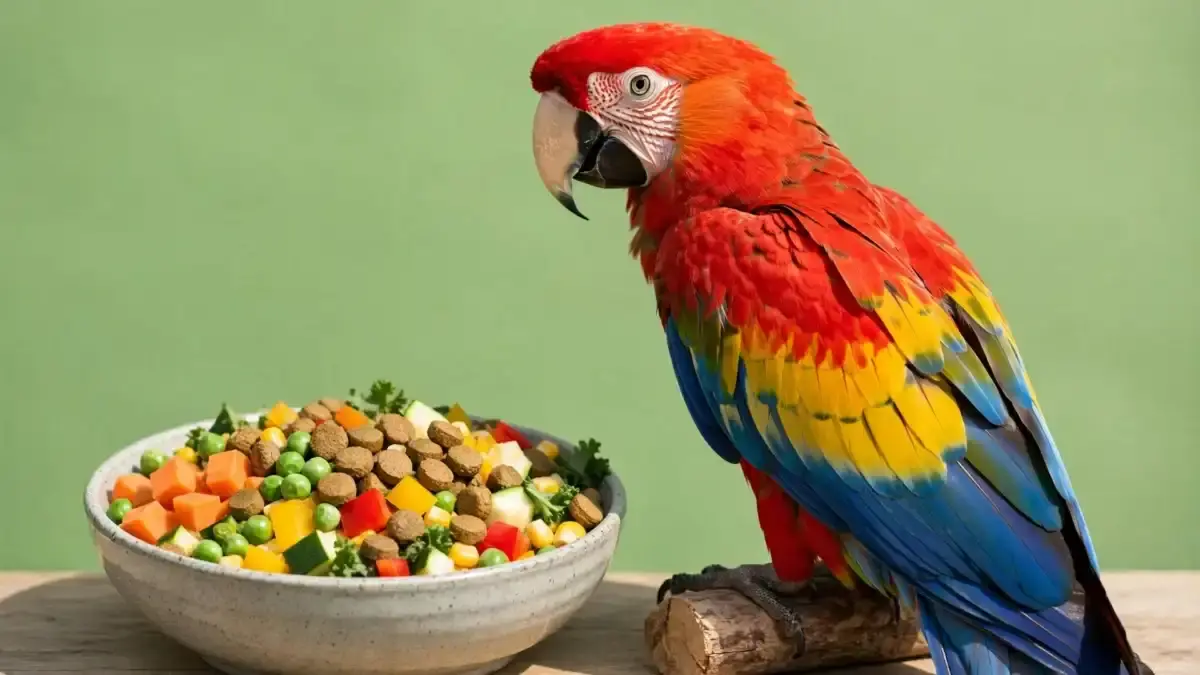
A seed mix can be quite misleading. While they can look like parrot food, they’re really just a bowl of treats. Seeds are high in fat but also low in vitamin A, calcium and protein. This means your parrot will be constantly eating but may still become malnourished. A good parrot diet should consist of a formulated pellet base. Fresh vegetables and leafy greens should be provided daily. Fruit will be limited to a small amount and seeds and nuts will be used as treats and training aids. This guide will help you to understand how much to feed them each day, what to feed them fresh and safely, how to convert a seed eater and what not to feed your pet birds.
The Daily Balance: Pellets First, Fresh Food Second
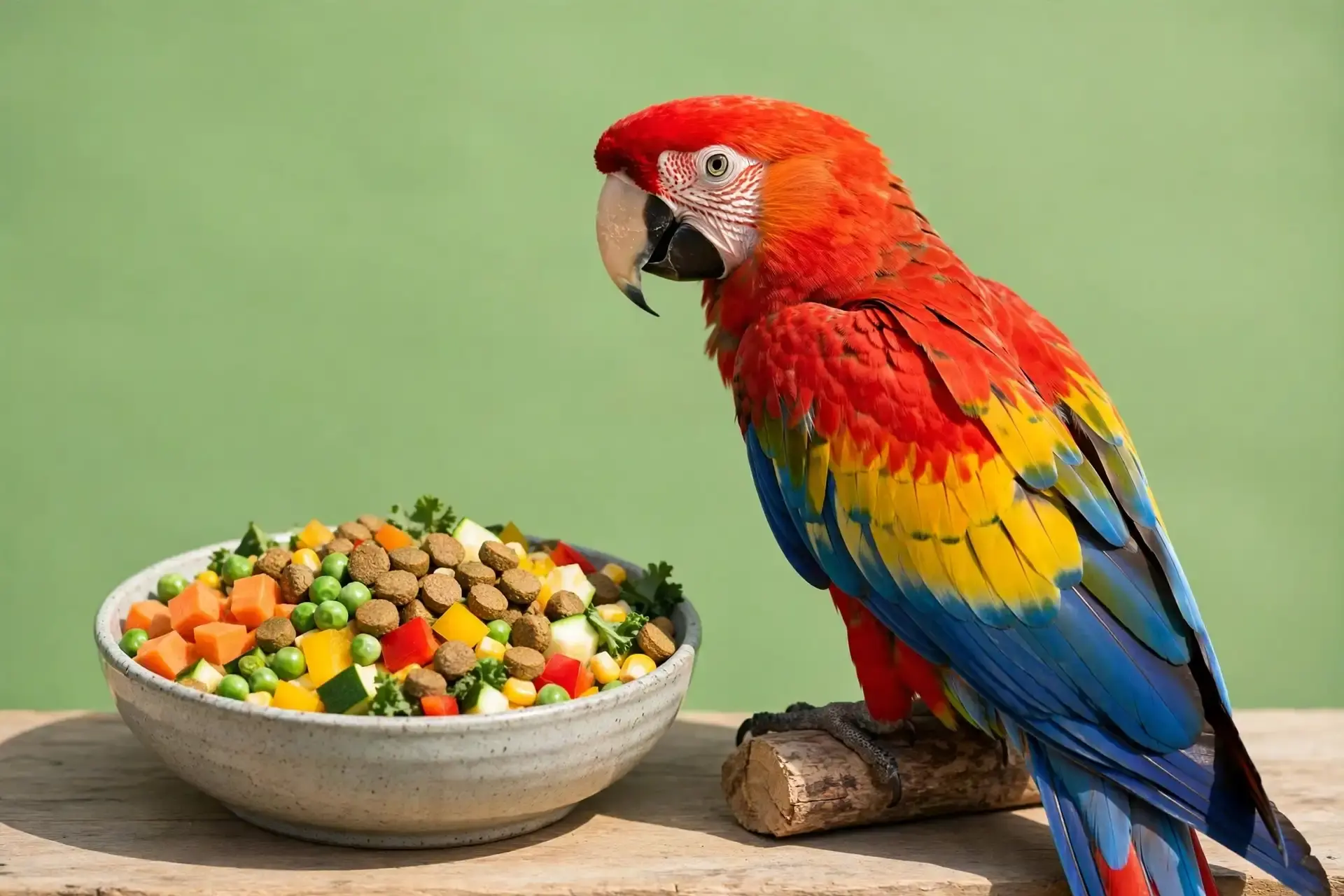
Most pet parrots should eat a diet containing between 60 and 80% formulated pellets. Amazon parrots should have a diet consisting of approximately 60-70% pelleted diet with the majority of the remainder coming from fresh fruits and vegetables (VCA Hospitals). The exact amount will depend on the species, size and health of your bird. Speak to an avian veterinarian to find out the correct amounts for your bird.
Pellets are the best option as they provide the same amount of nutrition in each mouthful. Seed mixes cannot guarantee this. Parrots will eat the seeds they like first. However, seed based diets are not optimal for psittacines regardless of what is added to the diet, as seeds are low in vitamin A, protein (especially lysine and methionine) and calcium (Merck Veterinary Manual).
Most of the space will be filled with fresh foods. Vegetables and leafy greens should be offered on a daily basis. Fruit should be offered in smaller amounts as it contains high amounts of sugar and water. VCA recommends that fruit should not exceed 10% of their diet for Amazon parrots and African greys.
Think of the bowl in three layers. Pellets are the foundation. Fresh vegetables are the daily side dish. Fruit, seeds, and nuts are the garnish: enjoyable, useful for training, but never the meal itself. Our wider guide to bird food covers how these same building blocks apply across other species.
Species will vary; however, there are a few that require extra consideration. African greys are more likely to suffer from calcium deficiencies when kept on a seed based diet compared to other large parrots (VCA). Hyacinth macaws can tolerate higher levels of fat in their diet due to a natural diet based around high fat palm nuts (Merck). Lories and lorikeets require a specialized nectar based diet and do not fall under this guide.
The Best Vegetables and Leafy Greens for Parrots
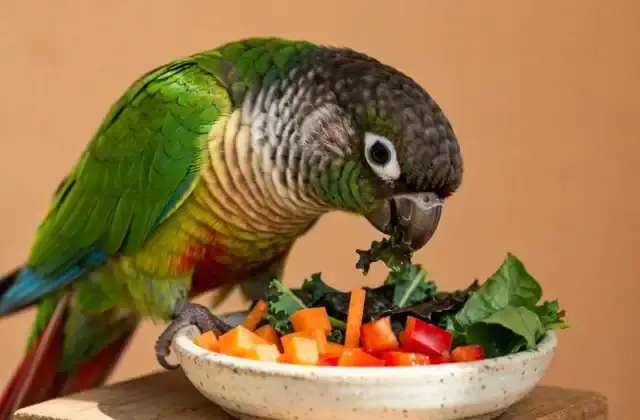
Vegetables do the heavy lifting among fresh foods. Dark leafy greens and orange vegetables are the standouts, because they supply the nutrients that seed diets lack most.
Orange, red and yellow vegetables like sweet potato, carrots, squash and peppers can provide nutrients that will help your bird’s intake of vitamin A. VCA states that vitamin A is an essential nutrient for a bird’s immune system, kidneys, skin and feathers. A vitamin A deficiency can be one of the classic issues with the all seed diet.
Kale, bok choy, dandelion greens, romaine lettuce and spinach are all leafy greens that can be cycled through. Broccoli, peas, corn, zucchini and green beans are all on VCA’s recommended lists of foods for parrots. It is more important to provide variety rather than one superfood. Rotate your choice of foods throughout the week.

Serve vegetables washed, chopped to a size your bird can handle, and offered in a separate dish from the pellets. The skin can stay on. If your bird fixates on one favorite and ignores the rest, VCA suggests reducing that item or pausing it for a while so the bird samples other foods.
Skip the pale, watery vegetables as a main offering. Iceberg lettuce and celery are mostly water and offer very little nutritional value, as VCA notes. They will not harm your bird, but they fill space that better foods should take.
Many owners serve vegetables as chop, a finely chopped mix of greens, vegetables, and a little cooked grain or legume. The small pieces are much harder for a parrot to sort, so favorites cannot be picked out so easily.

The Best Fruits for Parrots, in Small Amounts
Fruits are a tasty, beneficial and easy to overfeed item in the parrot’s diet. It is recommended that they should not make up more than 10% of the daily diet of Amazon parrots and African greys (VCA). They contain a lot of water and sugar compared to vegetables.
Good fruits are apples (with the core removed), bananas, mangoes, papaya, melons, berries such as blueberries and raspberries, grapes, kiwi, pears, peaches and plums (with the pit removed). VCA lists all of these as good foods for parrots.
Wash the fruit and cut into pieces that are suitable for your bird. Make sure you remove all seeds and pits. Apple seeds and cherry, plum, apricot and peach pits contain cyanide (Lafeber Pet Birds), so the flesh is safe but the center is not.
A small piece of fruit also makes a high value training reward. Because fruit is sweet and popular, save it for those moments instead of filling the fresh food dish with it.
Seeds, Nuts, and Treats: Small Portions Only
Seeds are not poison. They are simply incomplete. The real problem is the role they play: a treat food promoted to a staple.
Merck Veterinary Manual describes the pattern clearly. Sunflower seeds, the seeds parrots pick out first, are low in calcium, deficient in essential amino acids, and high in fat. Safflower seeds, often sold as the healthier option, are actually higher in fat than sunflower seeds. A parrot that fills up on either one misses vitamin A, calcium, and quality protein at every meal.
VCA’s guidance is consistent across its parrot feeding pages: seeds should be only a small part of a balanced diet and should never be the entire diet. Used that way, seed becomes useful again, as a foraging filler, a training reward, or a small daily extra scattered for enrichment.
Nuts are also a treat. Almonds, walnuts and Brazil nuts are all high in calories and popular. A couple of tree nuts a day are recommended for an Amazon parrot by VCA. Ask your vet about the correct amount for other species. Larger, active macaws are generally better at dealing with nuts than a sedentary species such as the Amazon, which is listed by Merck as being prone to obesity.
Commercial bird treats and seed sticks belong in this section too. Check the ingredients, keep portions small, and count them as part of the treat allowance rather than an extra meal.
One caution on peanuts. Lafeber notes that moldy peanuts and peanut products can be contaminated by a toxin producing fungus, and PetMD discourages peanuts for the same reason. If you offer peanuts at all, they should be fresh, unsalted, and human grade, and many avian veterinarians prefer that owners skip them altogether.
Sprouted Seeds and Cooked Foods
Sprouting is the one way seed genuinely improves. When seeds and legumes such as mung beans and lentils are soaked and sprouted, they become a fresh food rather than a dry one, and VCA includes sprouted seeds in the suggested food lists for both African greys and Amazon parrots.
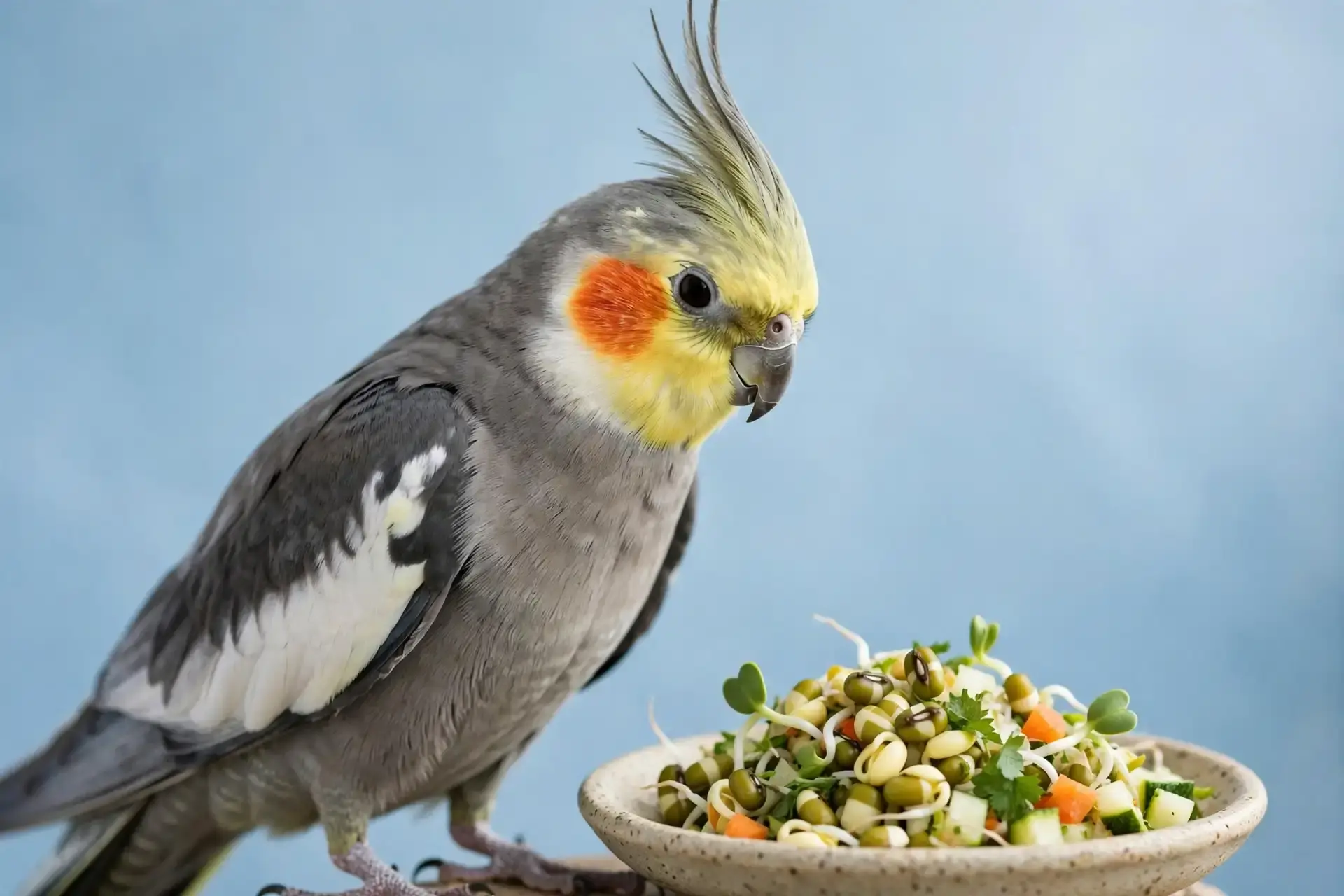
Sprouts spoil faster than any other fresh food, so hygiene decides whether they help or harm. Rinse sprouting seeds thoroughly, serve sprouts fresh, store any remainder in the refrigerator, and throw away a batch that looks or smells off instead of offering it. When in doubt, start a fresh batch.
Adding cooked pulses and grains will provide extra variety and will help the fresh dish to be more filling. VCA suggests adding cooked pulses like chickpeas, lentils, kidney beans and mung beans. Brown rice, corn and peas can also be added. Always cook beans and do not use raw/dried beans.
Small amounts of cooked egg, or lean cooked meat or fish can be offered occasionally as a treat for some parrots according to VCA guidelines. However, only small amounts should be offered and this is not a food group. Feeding carnivore diets to herbivores such as African greys is discouraged by Merck, as this can cause iron storage disease.
Fresh Water and Food Hygiene
Fresh, clean water must be available at all times. VCA advises cleaning food and water dishes daily with hot, soapy water and rinsing them thoroughly before reuse. If your tap water quality is poor, VCA suggests considering bottled water instead.
Fresh foods have a short shelf life in the cage. The VCA recommends removing any uneaten fruit and vegetables from an African Grey’s cage within 2 hours, especially in warmer conditions. If you are in a hot room, always go for the shorter time frame. Pellets can be left for the whole day, but anything wet should be treated as if it was on your own counter.
Wash all produce before serving, even food you plan to peel, and serve fresh food in its own dish so leftovers lift out in one go.
Supplements rarely need to enter this picture. VCA notes that birds eating a proper share of nutritionally complete pellets plus the recommended fresh foods generally do not need supplements, and that supplements dropped in water can degrade and encourage bacteria and yeast in the dish. Merck makes the same point about water additives. If you are weighing up bird vitamins, the honest first step is fixing the base diet, then asking your veterinarian whether anything extra is needed.
Converting a Seed Junkie to a Better Diet
Most parrots that eat only seed are not being stubborn. They simply do not recognize pellets or vegetables as food, and VCA warns that some birds will not eat a new food at first. Conversion takes weeks to months, and it works when it is gradual.
Pellets should be available in the main bowl at all times. Gradually increase the amount of pellets and fresh food by decreasing the amount of seed. Your veterinarian can help you determine how much to decrease. The VCA recommends that you do not change your bird’s diet overnight. You should not take away any familiar foods until you are certain your pet is eating enough of the new diet.
Weigh your bird daily during the change, on a digital scale that measures in grams. Weight is the early warning system. If your bird eats less or loses weight, contact your veterinarian rather than pushing on. Normal droppings are another good sign that the bird is actually eating.
Fresh food conversion runs on repetition. Offer small pieces of several vegetables daily, and expect a new food to be ignored, thrown, or shredded before it is eaten. VCA notes that it can take several exposures before a bird accepts something new. Eating alongside your bird, and mixing a favorite treat into chop, can both help a suspicious parrot start tasting.
Foods Parrots Must Never Eat
Some foods are not treats in smaller portions. They are off the menu entirely.
Avocado: Every part of the avocado plant contains persin, which Lafeber describes as a fungicidal toxin and a cardiac toxin in birds. Small birds such as budgies and canaries are considered more susceptible, but signs have been seen across species. PetMD notes that birds may show distress within hours of eating avocado and can die within one to two days. Never offer avocado or guacamole.
Chocolate: Chocolate contains theobromine and caffeine. These are both methylxanthines. Possible symptoms include hyperactivity, tachycardia, shivering, seizure and possible death (Lafeber). The darker and more bitter the chocolate, the more toxic it will likely be.
Caffeine and alcohol: All of these (coffee, tea, energy drinks and alcoholic drinks) are on the do not offer lists for VCA and Merck. There is no safe amount for a parrot to drink.
Onion and garlic: Lafeber explains that onion and garlic toxicity is well recognized in dogs and cats, that concentrated forms such as garlic powder and onion soup mix are more potent than the raw vegetables, and that fatal cases have been described in birds, including geese fed large amounts of green onions and a conure fed large amounts of garlic. PetMD adds that onions and garlic can affect blood cells, liver, and kidneys in birds. Keep them out of shared food entirely.
Xylitol: Xylitol is a sweetener found in sugar-free candies and gums. It has been linked to causing severe hypoglycemia and liver damage in dogs. While data is limited in most bird species (PetMD), it is assumed that it is unsafe for birds. Avoid giving anything sugar-free.
Salty and fatty human food: Chips, pretzels, crackers, fries, pizza, and fatty meats are not technically poisons, but Lafeber warns that table foods loaded with fat, salt, and sugar can cause serious health problems, and Merck includes junk food on its list of foods to avoid. A plain noodle, offered before the sauce goes on, is the safer way to share.
Fruit pits and apple seeds: As covered above, apple seeds and stone fruit pits contain cyanide. Core and pit fruit every time.
Dairy in quantity: Birds cannot digest lactose well. Lafeber and VCA both allow tiny, occasional amounts of lower lactose foods such as a little hard cheese or yogurt, but milk and creamy foods in quantity can cause diarrhea. Keep dairy rare and small.
Parrot Food at a Glance
| Offer regularly | Offer as treats | Never offer |
|---|---|---|
| Formulated pellets | Fruit pieces | Avocado |
| Leafy greens such as kale and bok choy | A couple of tree nuts | Chocolate |
| Orange vegetables such as carrot and sweet potato | Seed mix in small amounts | Caffeine and alcohol |
| Broccoli, peas, and peppers | Millet spray | Onion and garlic |
| Cooked beans and lentils | Commercial treats in small portions | Xylitol and sugar free candy |
| Sprouted seeds, served fresh | A small piece of cooked egg | Apple seeds and fruit pits |
| Fresh water, changed daily | Salty, fatty junk food |
Frequently Asked Questions
What should a parrot eat every day?
Formulated pellets as the base, roughly 60 to 80 percent of the diet depending on the species, plus fresh vegetables and leafy greens, a small amount of fruit, and fresh water. Seeds and nuts belong in the treat allowance, not in the main bowl.
Can a parrot live on seed alone?
It can survive on seed, but Merck Veterinary Manual is clear that strictly seed diets are suboptimal for parrots regardless of supplementation, because seeds lack vitamin A, calcium, and key amino acids. Merck also links primarily seed diets in sedentary pet birds with obesity and fatty liver disease.
How much fruit can my parrot have?
VCA advises keeping fruit at 10 percent or less of the daily diet for Amazon parrots and African greys, because fruit is high in water and sugar. Vegetables should take the bigger share of the fresh food dish.
Are sunflower seeds bad for parrots?
They are not toxic, but they are a poor staple. Merck notes that sunflower seeds are low in calcium, deficient in essential amino acids, and high in fat, and that safflower seeds are higher in fat still. Keep both at treat level.
Can parrots eat peanuts?
Carefully, if at all. Lafeber warns that moldy peanuts can carry a toxin producing fungus, and PetMD discourages peanuts because birds are susceptible to mold. Fresh, unsalted, human grade peanuts in small amounts are the lowest risk option, and many owners skip them entirely.
Do parrots need vitamin or mineral supplements?
Usually not, once the diet is right. VCA notes that birds eating nutritionally complete pellets with the recommended fresh foods generally do not need supplements. Avoid adding supplements to drinking water, where they can degrade and promote bacteria and yeast.
How long can fresh food stay in my parrot’s cage?
VCA advises removing uneaten fruits and vegetables within a couple of hours, especially in warm conditions, because they spoil. Wash food and water dishes daily and replace the water every day.
What should I do if my parrot eats avocado or chocolate?
Call your veterinarian or an emergency veterinarian immediately. PetMD stresses that birds cannot vomit, so never try to make your bird sick at home. Fast treatment gives the best chance of recovery, and a small amount eaten is not automatically a death sentence.
Conclusion
Parrot food is simpler than the pet shop shelf suggests. Pellets as the base, vegetables every day, fruit in small amounts, seeds and nuts as treats, and a short list of foods that never get offered. Make changes gradually, weigh your bird while you make them, and let an avian veterinarian check the plan for your species. A parrot fed this way is not just avoiding deficiency. It is getting the variety and foraging interest that fresh food adds to every day.