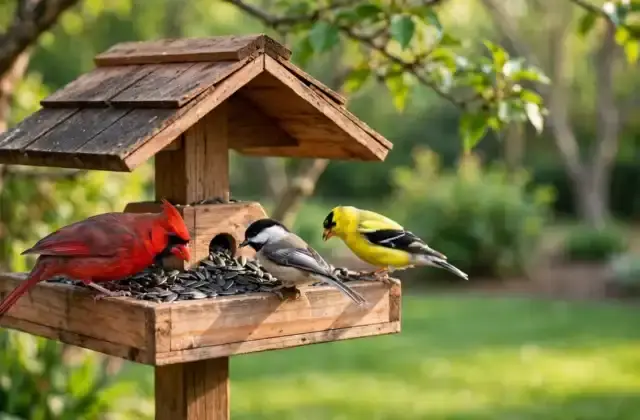


Native plants are clearly a great option for attracting and keeping backyard birds in your garden. They provide a constant source of food, insects, shelter, nesting areas and protection.
Feeders can also provide a constant source of food and attract birds to your garden while your plants are growing. The best gardens will combine both feeders and plants, with plants being the main focus.
This article will simply explain how feeders compare to native plants, what they can and cannot do and how to make the change from having just feeders to having a garden that will attract birds all year round.
Native plants vs feeders: the short answer
By using native plants instead of a feeder you are creating an ecosystem around your feeder. Your feeder will provide your birds with a bowl of food but by using native plants you will provide them with a whole ecosystem. Leaves, flowers, fruits, seeds, insects, shade and shelter.
A feeder will only provide food for one day; however, if the food runs out or goes off, it will no longer provide a food source. Native plants will provide food sources throughout the seasons. You can have a plant that provides insects in the Spring, a plant that provides fruits in the Summer and a plant that provides seeds until Winter. The shrubs will also provide shelter throughout the seasons.
This is why gardens with just feeders can often look very busy but feel empty. There isn’t much incentive for the birds to stay, nest or raise their young. Feeders are an important part of a garden; they can be used to fill in gaps, help new gardens and get close to the birds, but they cannot meet the needs of the birds.
What native plants give that feeders cannot
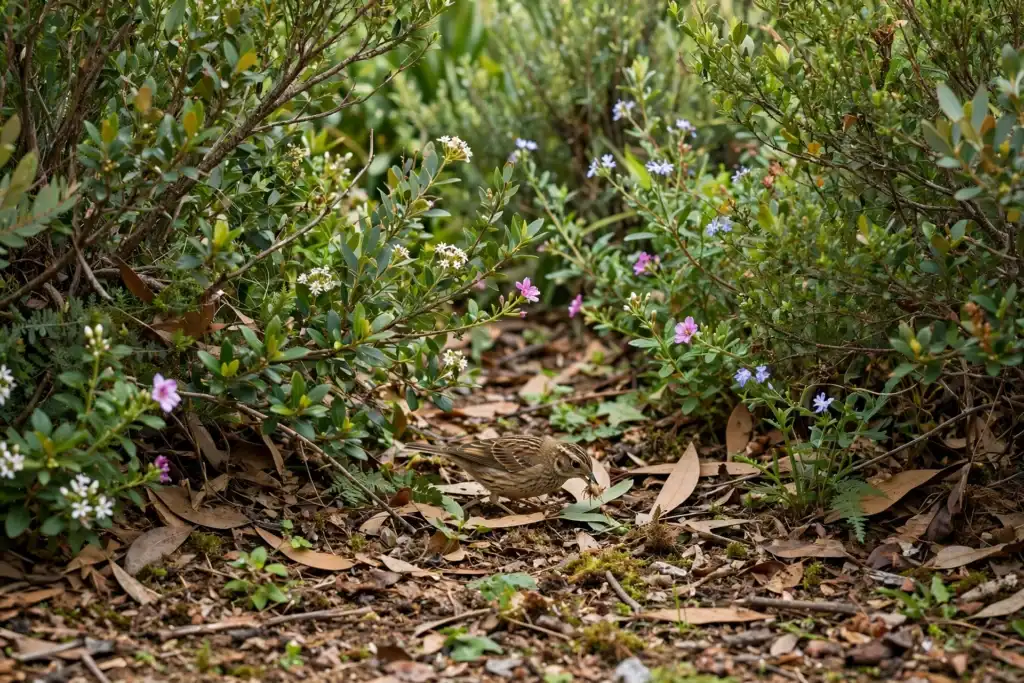
A feeder can help the bird know where to find seeds. Native plants will help the bird know where to find insects, shelter from predators, nesting areas, fruit, shade and safe areas to travel around the garden.
Insects for the chicks
Many young birds will need soft insects to eat in their first few weeks. Caterpillars and small insects are a great source of protein and moisture. Native plants will help the insects thrive as they would have been feeding off local plants for a long time.
If your garden only has a feeder there will be very few insects to eat. While the adult birds might be eating well, the parents will still have to go out to find food for the young. However, if you have planted your garden, there will be shorter searching times. As there will be insects on the leaves, leaf litter and flowers (close to the nesting area), the parents won’t be away for as long.
Multiple layers and nesting areas
If you let the native plants grow naturally, there will be different layers. This will provide ground cover for ground feeding birds, low shrubs for good cover and higher shrubs for nesting areas away from ground predators. Small trees will provide perch areas, singing areas and shade.
If you have a feeder, there will be no nesting areas. There will not be any material to build nests with, and there will be no cover for the nests. The birds may visit your feeder for years but will never nest in your garden.
A variety of plants will provide good nesting material. The birds will be able to use fine grasses, stems from plants, moss and twigs to create a good nest. A tidy lawn with a feeder will provide very little.
Seasonal food
Native plants will provide seasonal food sources throughout the year. In spring, the flowers will provide insects, in summer there will be fruit and more insects. In late summer and autumn, there will be seed heads and fruit. In the winter, there will be evergreen fruit, sheltered insects and seed.
Using a feeder will help, but it will not provide seasonal foods. If you only have one flowering period or one type of plant in your garden, there will be a lack of food. Using a variety of native plants will provide more food.
Using local advice on native plants will ensure you are using the right variety. The Cornell Lab of Ornithology and Audubon provide general advice on how to create a good habitat for your area. Local native plant groups will help you fine tune this.
Shade, water and quiet
Trees and shrubs will provide cover from the sun, help to protect from wind and keep the soil damp. Having lots of plants will provide cover and mean that the predator cannot see all of the feeding birds. Feeders in open areas of lawn often lead to quick, nervous visits. However, feeders placed next to some shrubs with a clear flight path will have longer, calmer visits.
What feeders give that plants cannot
Although using native plants will produce the best results in the long term, feeders can provide many benefits in the short term. Many bird-friendly gardens will therefore have a feeder alongside plants.
Consistent Food Source
If you regularly refill and clean your feeders, you can ensure a constant food source for the birds. This is especially beneficial during harsh winters and if there has been a storm. It can also be helpful if there is a period between blooming and fruiting.
Native plants cannot always ensure a constant food source. If there is a late frost, there may be less fruit, and during droughts, there may be less blooming. New plants may not even fruit for a few seasons. Using a feeder will help fill this gap.
Viewing Area
A feeder will give you a specific viewing area for the birds. If you have a window feeder, feeder on your porch or a small garden, you can get very close to the birds.
Using native plants can give you a good close up view, but using a feeder will give you a more focused area. If you have a small space like a balcony, patio or a narrow garden, you may not have much space for pots and will only have one feeder. This will give you a food source which the plants are not providing yet. It could be your main food source.
Getting Birds Into New Garden
When starting a new garden, there may not be much to attract birds. The soil may be empty, plants are small and shrubs may take a few seasons to grow some cover. By using a feeder, you can entice the birds to visit your garden while your plants grow.
This will get them into a routine. They will get used to your garden being safe and a good place to visit. As your plants grow, the birds may stay longer and nest. Using our guide to the best bird seeds for different types of birds in the USA will help you choose the best seeds for the birds visiting your new garden.
Native plants vs feeders at a glance
| Feature | Native plants | Feeders |
|---|---|---|
| Main strength | Food, insects, shelter, nesting, and cover across seasons | Reliable food in one spot, day after day |
| Food type | Seeds, fruit, nectar, and insects, in sequence | Seed or nectar, as filled, in one place |
| Young birds | Insects and soft food near the nest | Little help, unless parents also find insects nearby |
| Nesting | Sites, materials, and cover | None on their own |
| Shelter | Layers from ground to canopy | None, unless placed near cover |
| Season length | Across the year, with gaps that vary by plant mix | As long as filling and cleaning continue |
| Main weakness | Slow to establish, gaps in a new or narrow planting | Stops when empty, spoiled, or removed |
| Best use | The base of a bird-friendly yard | A supplement, a bridge, and a viewing spot |
| Best result | Plants first, with a feeder beside cover | A clean feeder used with plants, not instead of them |
This table shows that plants provide longer lasting and more complete coverage. Feeders provide excellent single coverage. If you use both feeders and plants in your yard, it will give you greater coverage than using just one of them.
Cost and effort over time
While there is some effort needed to plant them, once they are in the ground, they will look after themselves. However, feeding will require constant effort. There will be some planning, digging, watering and waiting involved when planting. New shrubs may need to be watered regularly in their first few seasons, and birds may not use your new planting immediately.
Native plants that are suited to your soil and water will often require less time to maintain. You will still need to prune and weed them, but you will not need to fill them as frequently as you would with a feeder.
Seeds will need to be bought, dried and topped up before they go off. Feeders will need to be cleaned regularly, especially in warmer or wetter weather. Damp seeds will need to be removed straight away. This can be found in our guide to cleaning bird feeders. However, this will still take time. Whereas planting will require more work upfront, feeding will require constant work week after week.
What happens when feeders stop
Taking away your feeders would tell you a lot about your yard. If there is planting in your yard, the birds will often still come to your yard, as they have food, insects, shelter and nesting material. But they may not come as much.
If your yard is feeder-only, then removing the feeders would have a bigger impact. As there is nothing to eat, the birds who relied on the feeders will have to find somewhere else to get their food. A lot of birds will stop coming to your yard completely. Although there is still a lawn and pole, there isn’t much to attract the birds.
Most birds in neighborhoods will have several food sources, so they will go elsewhere. However, if your yard has habitat, then you will have more birds staying in your yard when you take away the feeders. This is because the habitat provides for their needs which the feeders wouldn’t have. It will also depend on the time of year.
If you remove your feeders during a harsh winter when there isn’t much natural food, then it will have a bigger impact. If you have to take them away, then slowly reduce them while providing shelter and water. Try not to take them away completely during the worst of winter unless they have become unsafe due to disease or going off.
Combining both: plants first, feeders as backup
The best thing would be to have a good mix of planting and feeders. Your planting should be your main source of food, but having feeders will fill in any gaps and provide a close source of food. They will also help in new gardens and during harsh seasons.
Even a little planting can make a big difference to your garden. Adding a shrub border, a few native plants with different flowering and fruiting times, leaf litter in a quiet area and a small tree if you have space will all make your garden much better than adding an extra feeder.
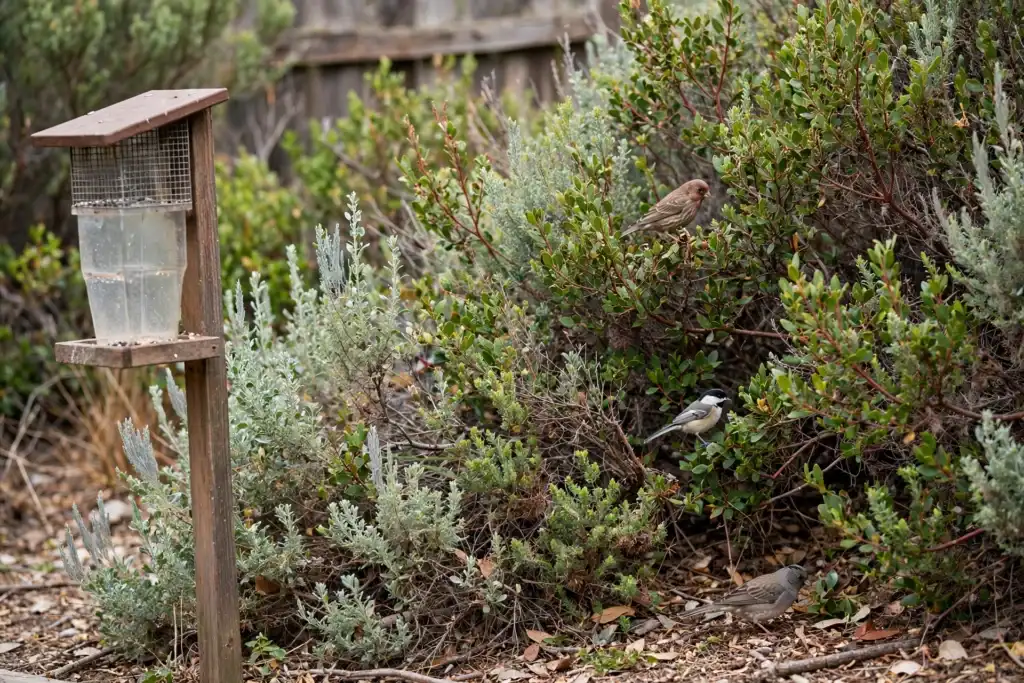
While your plants are getting established, it is a good idea to have a feeder in place. Try to place it close to some shelter. If you add your feeder close to some shrubs, your birds can fly to shelter quickly. They can also easily move from the feeder to your plants.
Feeder near cover
Once they have eaten, they need to be able to fly to somewhere safe. Having a shrub close by means they can easily fly to somewhere safe. Having a small tree close by means they can sing and rest. Ideally, you want them to fly to somewhere safe that has all the essentials — cover, water and food — in one place.
Seasonal plan
- You will need to plan the seasons to keep a good balance between planting and feeders.
- Spring – Main source of food will come from early flowering and insects. Have a clean feeder as a backup.
- Summer – Main source of food will be from your plants. They will provide fruit, insects and shelter.
- Autumn – Main source of food will come from seed heads and fruit. The feeder will help as plants run out of food.
- Winter – Main source of food will be cover and a constant food source from plants. The feeder will provide constant food.
This doesn’t require a large garden, but just make sure that your planting is not all flowering at the same time. Have one clean feeder near some cover.
A good example of this balance is a garden that supports cardinals well. The guide How to attract cardinals to your yard covers habitat and feeder placement that support regular visits, and the same mix of cover, water, and varied food helps many other species too.
A step-by-step transition workflow
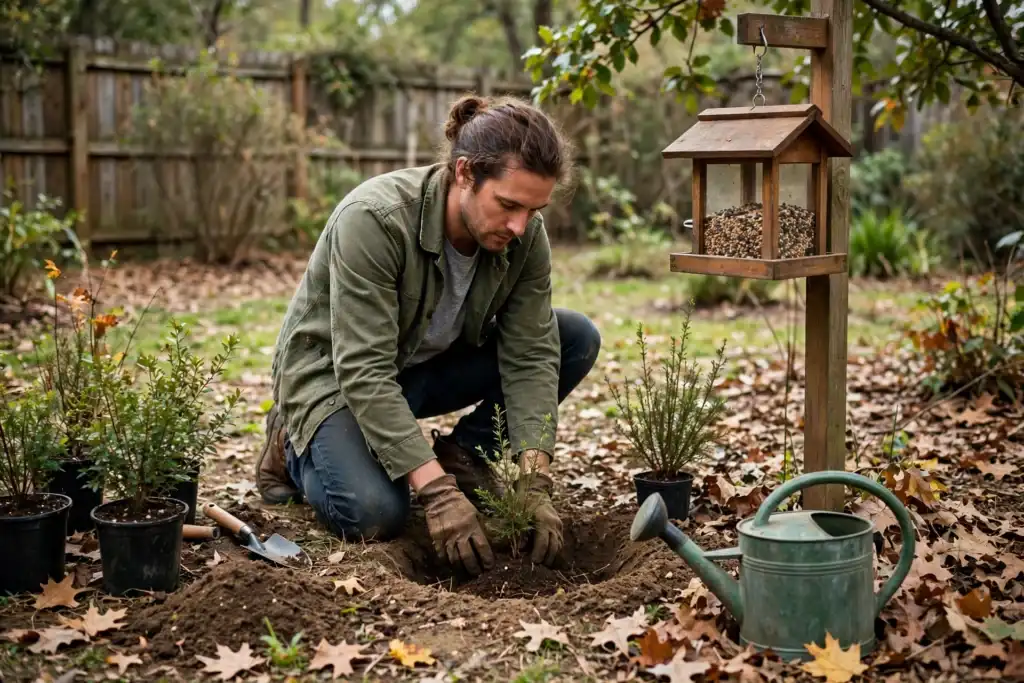
Use this process in order to create your planted yard. Complete each step before moving on. Keep one feeder running while the plants are getting established.
- Undertake an audit of your yard, noting all layers (ground cover, low shrubs, tall shrubs, small trees, canopy trees).
- Note what food you will have throughout the year: spring insects, summer fruit and insects, fall seeds and fruit, and winter shelter and food.
- Identify the area with the largest gap in your yard and plant accordingly (usually low or medium shrubs around existing trees).
- Plant in a border or clump rather than individual plants around your lawn. This will provide feeding, shelter and movement for your birds.
- Leave some leaf litter and a quiet area where it is safe to do so.
- Keep one feeder close to your new plants. Keep it clean and full so that birds will visit regularly while your plants are growing.
- Provide a shallow, clean, fresh water source nearby. Ensure there is somewhere safe for small birds to stand.
- Observe the area for a season. Take note of which species visit, which nest, and which food gaps remain.
- Add more plants to fill the next biggest gap. Once the plants start filling the first gap, then reduce the amount of food in the feeder.
- Reduce feeder dependence gradually, and never suddenly take away feeders in a harsh winter. Ensure there are other sources of food and cover available.
This workflow keeps birds fed while the habitat grows, and it avoids a sudden break that leaves birds with neither feeder food nor plant food. If you see a new bird while you are making changes, then the Bird Finder can help compare candidates by size, shape, and behavior.
Common mistakes
You will only have plants in your yard. This means it will be some time before you get fruit, seeds and cover. You may not get many birds coming to your yard because there are no feeders.
You will only have feeders. Feeders can attract birds but if there is no habitat (cover, insects and nesting sites) they may not stay. They will help you provide habitat but won’t replace it.
Avoid plants that provide few insects. They may look green but will not provide much food for local insects. This means there is less to eat for insect-eating birds. Invasive plants can be even worse as they will spread and take over native plants. Try to avoid invasive plants by checking your local invasive list. Choose native plants that are suitable for your area.
Removing feeders in a harsh winter with no cover. Winter is the most important time to provide a reliable source of food and shelter. If you have to remove feeders, try to reduce the amount you are providing. Ensure there is still shelter and water available. Wait until a season where there will be more natural sources of food from plants and insects.
Only one tree. Although this will provide some shade and perching areas, it won’t provide any levels, insects or nesting cover. Having a shrub border, ground cover and small tree will provide much more than just one tree on a lawn.
Frequently asked questions
Will planting native plants provide longer term feeding for birds?
Yes! You will be able to provide food, insects, shelter and nesting materials. This will be available all year round, whereas a feeder will only provide food if it is stocked and kept clean. A feeder can help with filling in the gaps but will not provide all the factors that native plants will.
Can a feeder only yard still help birds?
Yes! If you have a small space, brand new garden or a harsh winter, then having a clean feeder with shelter nearby will provide you with reliable feeding and great viewing. Having your feeder close to your shrubs, water and appropriate plants will help most.
How long will native plants help?
This will depend on what plants you use, soil and water. Some flowers will produce insects in the first year. Shrubs may take a little longer to produce good shelter and fruit. Trees will take the longest. However, having a feeder will help. It is best to be patient.
Should I stop feeding once my plants are established?
Many established yards will have a clean feeder with good shelter nearby. While your plants will produce food in the long run, a feeder will help to fill in any gaps and give good viewing. The best results will be achieved by slowly stopping feeding.
I only have a balcony or small patio?
Do the best you can! A few native plants in pots, a small shrub if you can, and a shallow water dish. Keep the feeder clean, make sure there is somewhere for the birds to perch and shelter nearby. Make sure they don’t fly straight into the glass. Providing any amount of habitat will be better than just providing a feeder.
Do I need to remove all my non-native plants?
No! It is most important to prevent invasive plants spreading. Add native plants so that local insects and birds can feed. If you have a non-invasive non-native plant which provides feeding for birds, then it is fine to leave it, but make sure the non-native isn’t replacing the layers of native plants. Local advice can help with this.
When is the best time to view birds?
There will often be more activity early in the morning. Find out the best time of day to view birds. Try to watch at the same time every season to make it easier to see any changes.
Conclusion
Overall, the native plants will provide ongoing feeding for your birds. A feeder will provide consistent feeding, great viewing and help in new yards and harsh seasons.
The native plants will provide sequential feeding, insects for young birds, multiple levels of shelter, nesting spots and materials, shade and safe routes. The feeders will provide consistent feeding in one place, good viewing and help in new yards and harsh seasons. But they will stop providing once empty and will never provide nesting.
In practice, you want to have native plants. A clean feeder with shelter nearby, multiple levels, try to use local natives, leave some leaf litter if safe to do so, add water and only use one feeder while your plants are growing.
Gradually decrease the amount of reliance on your feeder. See which species are staying, nesting and coming back. By having a balanced yard, you will no longer have a reliance on one bowl of seeds. Your yard will provide all the reasons why birds will stay throughout the year.
Sources and Further Reading
The facts in this guide were checked against these authoritative sources: