Introduction
Birds need only small amounts of vitamins. Deficiencies can cause poor feathering, lowered immunity and increased infection. Common deficiencies include vitamin A which many parrots are deficient in because they eat a seed-based diet. This guide will help you understand what the essential vitamins do, how they can be provided through diet, when to supplement and when it can be harmful. As a general rule, aim to provide as much as possible through diet, then consider supplementation. Always consult a vet before changing a sick bird‘s diet. Most healthy birds on a good diet will not need any vitamin supplements.
Why Birds Need Vitamins
Vitamins are organic compounds that are essential for normal physiological functions within the bird. They are required in small amounts and most cannot be synthesized, therefore must be supplied in the diet.
Each vitamin has a specific function and all are used to help maintain the immune system, vision, growth, reproduction, blood clotting, nerve function and healthy skin and feathers. Deficiencies will rarely develop suddenly but will happen over a period of months. This can cause recurrent infections and poor feather quality.
Vitamins can be divided into two groups. Fat-soluble vitamins (A, D, E and K) are stored in the liver and fat of the body. As they are fat soluble, they are not excreted as quickly between meals. However, if too much is consumed, they can become toxic. Water-soluble vitamins (B complex and C) are not stored. Any excess is excreted. However, if they are on a poor diet, they can become deficient quicker.
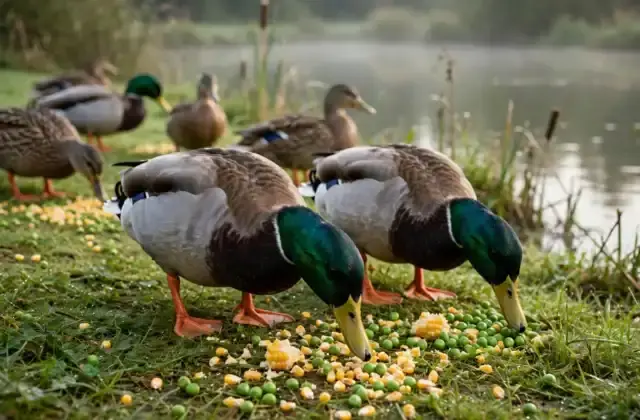
Wild birds do this by eating a variety of foods. They will have plenty of different seeds, fruits, greens, insects and nectar to choose from. Most pet birds only have one bowl of food, so it will be down to you to give them a variety of foods.
The Key Vitamins, One by One
Vitamin A: One of the most commonly mentioned vitamins in avian care is vitamin A. It is essential for the health of the respiratory, intestinal and urinary tract linings. It is also important for eyesight, growth, reproduction and immunity. In the wild, birds will not usually eat vitamin A but will eat carotenoids. Carotenoids are the pigments found in plants. They can be found in orange and dark green foods. Some of these carotenoids will be converted into vitamin A when needed. This is a good safety measure.
Vitamin D3: The partner vitamin for minerals. This is responsible for controlling the amount of calcium and phosphorus absorbed from the diet. This will determine whether the calcium is stored in the bones or excreted. Birds can obtain this from their diet or by synthesizing it in the skin when exposed to ultraviolet B light. It is the most active form of vitamin D for birds and the form used in formulated diets.
Vitamin E: This is best known for its antioxidant properties which help protect cells in the body from free radicals. It also helps with the immune system and reproduction. Seed mixes are often low in vitamin E and other fat-soluble vitamins.
Vitamin K: The clotting vitamin. This is used to manufacture proteins that enable normal blood clotting after an injury. Some is manufactured by the healthy bacteria in the gut and more can be found in leafy green vegetables. Birds on a varied diet rarely suffer from a deficiency.
B complex: A family of water-soluble vitamins, including thiamine, riboflavin, niacin, and B12, that help release energy from food and keep the nervous system and red blood cells working. Because they are not stored for long, a bird needs a steady supply. A varied diet of whole foods, greens, egg, and pellets normally covers the group.
Vitamin C: The exception. Most birds are able to produce this vitamin internally. It is not an essential nutrient in the diet of common pets. However, it is an antioxidant. The veterinary literature also states that vitamin C will increase iron absorption. This can cause problems in species that are sensitive to iron such as mynahs and toucans. Excess iron can cause disease.
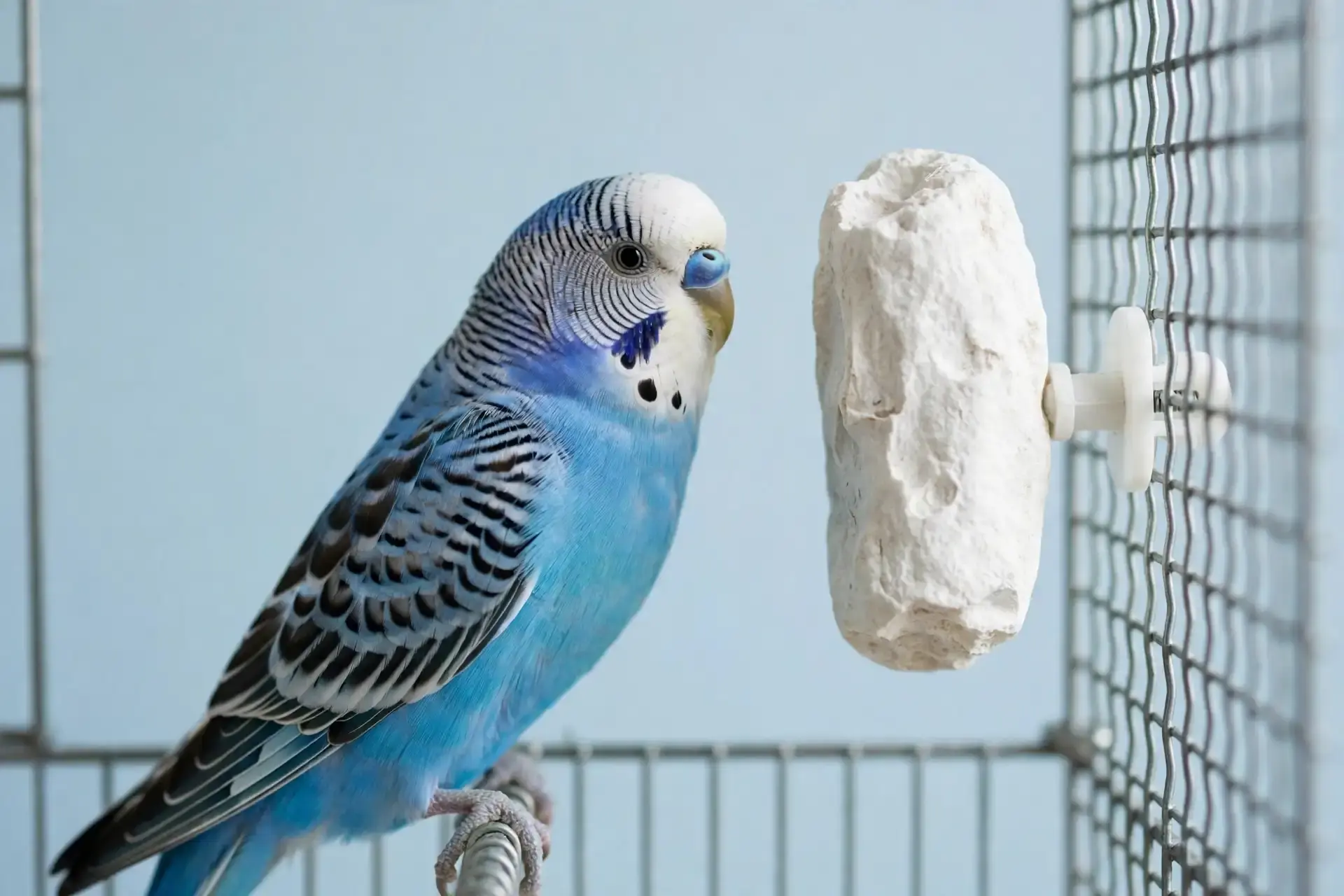
Calcium: Although not a vitamin, without calcium none will work. Calcium and Vitamin D3 work together. Calcium is the main mineral found in bones; it makes up the shell of all eggs and is required for muscles and nerves. It is not a great source in seeds and seed-based diets are known to have an inverted calcium to phosphorus ratio. Cuttlebone, oyster shell and mineral blocks can be provided to allow your bird to supplement their calcium intake. Laying hens will benefit most from this.
Vitamin A Deficiency: The Classic Problem in Seed-Heavy Diets
If an avian vet had to name one nutritional disorder above all others, it would be vitamin A deficiency, called hypovitaminosis A. The Merck Veterinary Manual notes that it has historically been seen in parrots on all-seed diets, because seeds are deficient in vitamin A and its precursors.
Birds are selective eaters. Offered a mix, many parrots pick out the fatty favorites, such as sunflower seeds, and leave the rest. Even a bowl that is half seed and half pellets can end up vitamin A deficient if portions are not controlled, because the bird eats the seed first.
The deficiency damages the body lining first. Without enough vitamin A, the soft lining of the mouth, sinuses, airways, and gut changes into a tougher, drier surface that cannot do its job, a change vets call squamous metaplasia. Barriers fail, and bacteria and fungi get in.
The signs build slowly. Watch for nasal discharge, sneezing, swelling around the eyes, conjunctivitis, and labored breathing. White plaques can appear in and around the mouth, eyes, and sinuses. Feathers lose quality, some birds start feather picking, and appetite drops. Because the immune system depends on vitamin A, deficient birds often suffer infections that return again and again, especially of the sinuses and airways.
Treatment is a vet job, not a home fix. It means treating any secondary infection, correcting the shortage under veterinary direction, and converting the bird onto a good quality formulated diet. Prevention is far easier: build the diet so the deficiency never starts.
Food First: Getting Vitamins From the Diet
The safest vitamin program is a menu, not a bottle. A bird eating a balanced diet gets its vitamins in the right proportions.
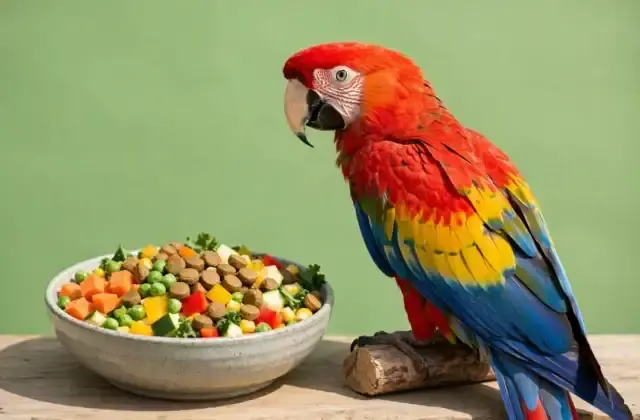
Formulated pellets are the foundation for most pet parrots and many smaller birds. Each pellet carries the full spread of vitamins and minerals in a fixed balance, so the bird cannot pick out only the fatty parts. Depending on the species, vets commonly suggest pellets make up roughly 60 to 80 percent of the diet, with fresh food making up most of the rest. Our guide to bird food works through the full daily menu.
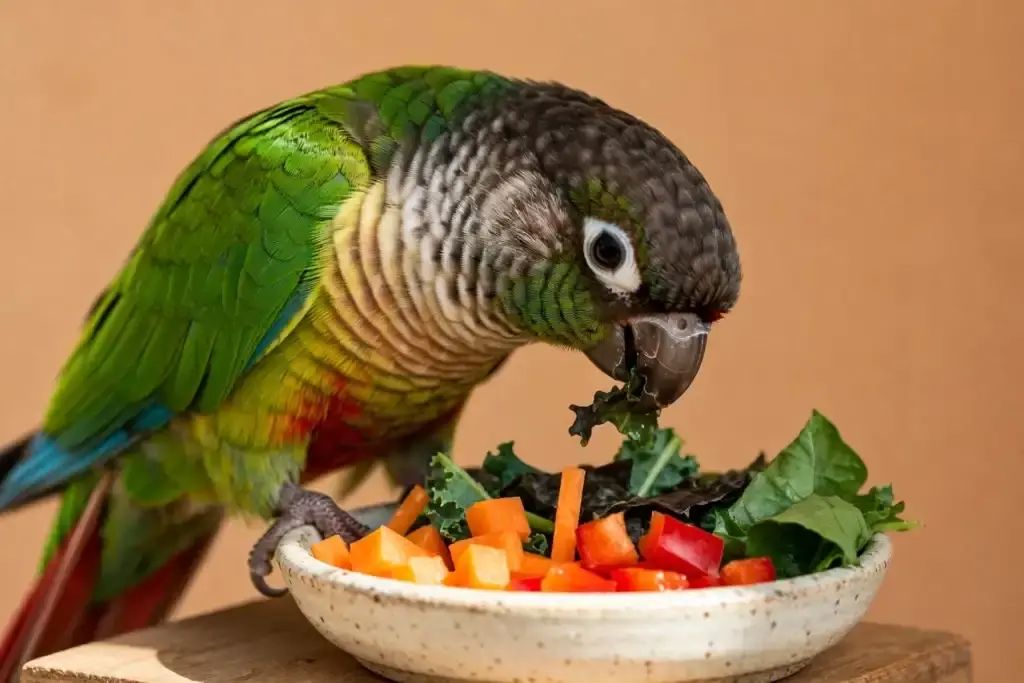
Fresh vegetables do the heavy lifting for vitamin A. Orange, red, and yellow vegetables, such as sweet potato, carrot, squash, and peppers, are rich in the carotenoids birds convert to vitamin A. Dark leafy greens add more carotenoids plus vitamin K and calcium. Offer them daily, chopped small enough to eat.
Fruit plays a supporting role. Berries and other fruits bring vitamin C, vitamin K, and protective plant compounds, but fruit is sugary, so it stays the smaller share of the fresh bowl. Pale, watery produce such as iceberg lettuce and celery offers very little, so it should not crowd out the colorful foods.
Seed still has a place, as a treat and a training reward rather than the main course. Used in small amounts it does no harm; the problem is only proportion. Our bird seed guide breaks down what each common seed actually provides, so you can see where the gaps are.
Many birds accept new foods faster when they arrive as bird treats during training or foraging play, which turns vitamin rich food into enrichment instead of a chore.

Bird Vitamins at a Glance
The table below sums up the pillar nutrients, their jobs, their best food sources, and the signs of a shortage.
| Vitamin | What it does | Best food sources | Deficiency signs |
|---|---|---|---|
| Vitamin A | Keeps body linings, vision, and immunity healthy | Sweet potato, carrot, dark leafy greens, red and orange peppers | Sneezing, nasal discharge, swollen eyes, white mouth plaques, poor feathers |
| Vitamin D3 | Controls calcium and phosphorus absorption | Formulated pellets, direct sunlight or UVB light | Weak bones, tremors, thin shelled eggs, seizures in severe cases |
| Vitamin E | Antioxidant, supports immunity and reproduction | Leafy greens, formulated pellets, small amounts of seeds and nuts | Poor breeding results, muscle and nerve problems |
| Vitamin K | Needed for normal blood clotting | Leafy greens, gut bacteria, formulated pellets | Slow clotting, though rare |
| B complex | Releases energy from food, supports nerves and blood | Whole foods, greens, egg, formulated pellets | Poor growth, weakness, nerve signs in severe cases |
| Vitamin C | Antioxidant, made by most birds themselves | Berries and fruit | Rarely an issue in common pet species |
| Calcium | Builds bone and eggshell, drives muscles and nerves | Cuttlebone, oyster shell, leafy greens, formulated pellets | Soft or thin shelled eggs, weak bones, tremors, egg binding |
Vitamin Supplements: Forms and When They Make Sense
Supplements exist for a reason. The mistake is treating them as a daily insurance policy for a healthy bird on a good diet. VCA Hospitals gives the general rule plainly: birds eating a mostly pelleted diet with fresh produce generally do not need supplements.
The forms you will meet are few. Powders are sprinkled over food, and they work best on moist food, where they stick instead of sifting to the bottom of the bowl. Drops are liquids given directly or added to food. Water additives are sold for the drinking bottle, and they are the weakest option of the three.
Veterinary sources are blunt about water additives. Vitamins in water degrade quickly, some promote bacteria and yeast growth in the dish, and the taste puts many birds off drinking. The Merck Veterinary Manual adds that supplements added to water are often unpalatable and ineffective, and can cut water intake enough to risk dehydration. If a supplement is used at all, on food is the better route, and only as a vet directs.
There are times when a supplement makes genuine sense. A bird still eating an all-seed diet may need a powdered supplement as a bridge while it converts to pellets. Egg laying hens may need extra calcium. Birds molting heavily may need vitamin support. A bird recovering from illness may need short term help chosen by its vet. Every good case is specific, temporary, and tied to a diet gap or a life stage.
The Risks of Too Much: When Vitamins Turn Harmful
More is not better with vitamins, and with the fat-soluble group it can be dangerous. Because vitamins A, D, E, and K are stored in the body, intake above need does not wash out. It accumulates.
Vitamin A shows the trap clearly. The same vitamin that seed fed birds lack can poison a pellet fed bird whose owner adds a supplement on top. The Merck Veterinary Manual warns that excessive vitamin A can be as harmful as deficiency, and that heavy supplementation can also block absorption of the other fat-soluble vitamins and carotenoids.
The most dangerous is vitamin D3. Over-supply causes too much calcium to be deposited in the soft tissues such as the kidneys, causing permanent damage. Some species are more sensitive than others, and macaws are known to be very sensitive to overdose of vitamin D. It is never advisable to double up calcium and D3 products.
Quality can also be an issue. Vitamin A fortification is not well controlled and there are documented issues related to quality control. Therefore, the amount of vitamin A in the food may not be exactly as stated on the label.
The practical rule is simple. In practice, do not give any general supplements on top of a fortified pelleted diet unless requested by a vet. Do not give vitamins to a sick bird instead of a diagnosis. Deficiency and overdose can look alike from the outside, and guessing wrong makes both worse.
Wild and Backyard Birds: Do They Need Vitamin Supplements?
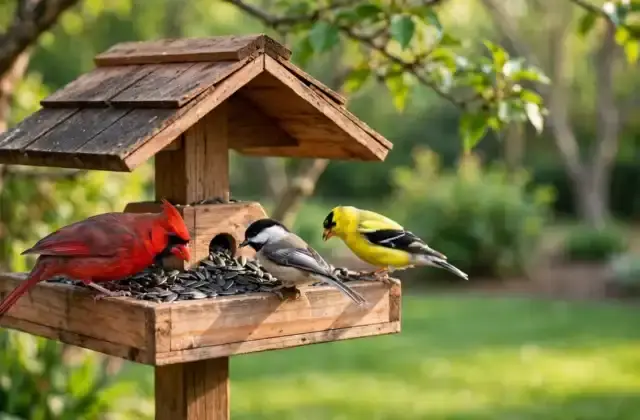
The honest answer is no. Wild birds eat dozens of different foods throughout the day: seeds, berries, insects, greens and grubs. Each of these foods provides different vitamins. That variety is the supplement, and it is why healthy wild birds do not develop the deficiencies seen in seed fed pets.
Supplementary feeding should not be seen as a complete diet. Wildlife charities make it clear that feeding wildlife in this way can never provide all the nutrients they require. The RSPB points out that the foods provided on feeders can never provide all the natural proteins and vitamins that birds require. A wildlife friendly garden with lawns, shrubs, and flowerbeds matters as much as the feeder itself.
Do not bother adding vitamins to the water in your bird baths or feeders. No wildlife authorities recommend this and birds just need clean water. Any dissolved substances in outside water will feed bacteria faster than they feed birds, so change your bird bath water frequently and clean your feeders regularly. Focus on providing a varied diet.
What genuinely helps is range: different seeds, suet, mealworms, and fruit across the seasons, plus berry bearing plants that attract insects too.

When to See a Vet
Vitamins are a vet topic sooner than most owners expect, because deficiency signs overlap with infection and other disease. If your bird shows any of these signs, then book a visit to your avian vet.
Repeated sneezing, nasal discharge, swollen or watery eyes and white patches in the mouth can be signs. Any breathing difficulties deserve a prompt visit. A lack of appetite, weight loss, dull or frayed feathers and new feather picking also deserve a prompt visit.
Urgent intervention is required for breeding birds. Birds showing thin shelled or soft eggs, egg binding, tremors, weakness, or seizures point to the calcium and vitamin D3 partnership failing, and those cases cannot wait.
Bring a copy of their current diet, including brand names, ratios, treats and any supplements they are on. This will allow a vet to make an instant judgment on their vitamin intake. If there is a suspected deficiency, they can run some blood tests to confirm this before treatment starts.
Frequently Asked Questions
Do pet birds need vitamin supplements?
Not normally, if they are on a pelleted diet and eating fresh vegetables and fruit. Supplements are usually only given to birds that are converting from all-seed diets, egg laying hens requiring calcium, heavy molts, and birds recovering under veterinary care.
What is the most common vitamin deficiency in pet birds?
Vitamin A deficiency. Seeds are very low in vitamin A, so parrots fed a seed-based diet are typical cases. Its signs include sneezing, nasal discharge, swelling around the eyes, white plaques in the mouth, and recurrent infections.
Can a bird get too many vitamins?
Yes. Fat-soluble vitamins such as A and D3 are stored in the body and can become toxic. Excess vitamin D3 can cause deposition of calcium in the kidneys and other soft tissues.
Are vitamin drops in the drinking water a good idea?
No. A vet would not recommend this. Vitamins can break down in water, encourage bacteria and yeast to grow in the dish, and the taste may make a bird drink less. If they are recommended by your vet, they will usually be added to wet food.
How do birds get vitamin D?
Birds can obtain vitamin D3 from sunlight (UVB) and formulated diets. Natural sunlight through windows is not sufficient as the glass will prevent the UVB rays from reaching the skin. Indoor birds need to have it in their diet or have access to a UVB lamp.
Do wild birds need vitamin supplements?
No. Wild birds obtain all the vitamins they need from a varied diet of natural foods. The best thing you can offer them at your feeder is a variety of seeds, suet, mealworms and fruit, along with clean, plain water with nothing added to it.
Which foods give birds the most vitamin A?
Orange and dark green foods. Sweet potato, carrot, squash, red and orange peppers, and dark leafy greens are high in carotenoids. These are plant pigments that can be converted by birds into vitamin A when required.
My bird eats only seed. Where do I start?
Start with the diet, not a supplement. Offer a quality formulated pellet alongside the seed, and add chopped orange vegetables and leafy greens daily. See your avian vet to check if there is any current deficiency. Your avian vet will be able to advise you on what to give in the short term while converting.
Conclusion
Bird vitamins follow one pattern from start to finish: the diet decides. Most pet birds can have a formulated diet as a base, with brightly colored vegetables, some fruit and a little seed as a treat to provide all the vitamins they need. Wild birds will get them naturally by eating a varied diet. Supplements have a narrow, useful role as a bridge during diet conversion, breeding, molting or recovery, but they can be dangerous if they are used on an already complete diet. Food first, and a vet whenever the signs suggest a shortage.
Sources
- https://www.merckvetmanual.com/management-and-nutrition/nutrition-exotic-and-zoo-animals/nutrition-in-psittacines
- https://www.merckvetmanual.com/exotic-and-laboratory-animals/pet-birds/nutritional-diseases-of-pet-birds
- https://www.merckvetmanual.com/management-and-nutrition/nutrition-exotic-and-zoo-animals/nutrition-in-passerines
- https://vcahospitals.com/know-your-pet/amazon-parrots-feeding
- https://vcahospitals.com/st-marys/know-your-pet/lovebirds-feeding
- https://www.petmd.com/bird/lovebirds-care-sheet
- https://shopping.rspb.org.uk/page/birdfood