
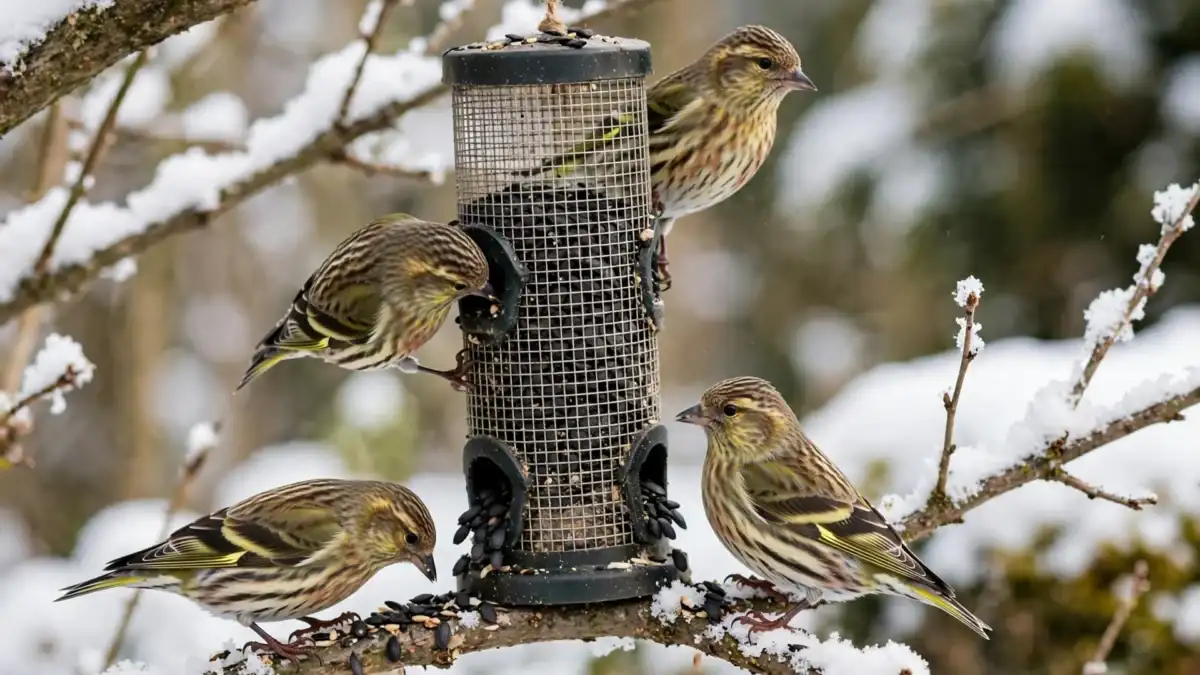
The winter finch forecast 2026-27 looks busy in the Northeast and around the Great Lakes. Pine siskins, evening grosbeaks and crossbills are on the move south, and food is the reason. Seed crops have failed across much of the central boreal forest, so birds are pushing into eastern Canada, the Great Lakes and the northeastern United States. Crops are better in the east and far west, which is holding some birds further north for now.
What Is a Winter Finch Irruption
An irruption is not a normal migration. It does not happen on the same dates every year. It is an irregular push south by northern finches, and in some winters it hardly happens at all. Pine siskins, crossbills, redpolls and grosbeaks may simply stay put in the boreal forest of Canada and Alaska. In other winters, large numbers travel far south and turn up at feeders where people rarely see them.
Food drives it. Finches follow cone, seed and berry crops. When spruce, pine, fir, birch and alder have a good year in the north, the birds stay where the food is. When those crops fail over a wide area, they have to travel to find food, and that journey can take them hundreds of miles south. Cold weather on its own does not cause an irruption.
Each fall, the Finch Research Network puts out a winter finch forecast based on crop surveys across Canada. The forecast for 2026-27 came out on September 25, 2026. It describes poor crops in the central boreal forest, good crops in the east and far west, and a pine failure in the interior mountain west. For background, read Winter Finch Irruption Explained, and compare finches in the finch species guide.
Winter Finch Forecast 2026-27 at a Glance
Here is the forecast in short form. The sections below go through each bird in more detail.
| Bird | Forecast for 2026-27 | Where to look |
|---|---|---|
| Pine Siskin | Sizable irruption in the Northeast, small to moderate flight to the Southeast possible | Nyjer and black oil sunflower feeders |
| Evening Grosbeak | Small to medium flocks in the Northeast and Great Lakes | Black oil sunflower feeders |
| Red Crossbill | Significant irruption already underway, moving west to east | Spruce and pine stands, gravel roads |
| White-winged Crossbill | Small to moderate push into the east | Spruce and tamarack stands |
| Purple Finch | Many staying north, southern flight possible but small and late | Black oil sunflower feeders |
| Common Redpoll | Small flight possible, mainly western Great Lakes, no big flight expected | Nyjer feeders, birch and alder stands |
| Pine Grosbeak | Not expected to move south much | Mountain ash and fruit trees in the north |
| Bohemian Waxwing | Not expected to move south much | Mountain ash and berry shrubs in the north |
Treat this as an expectation, not a promise. The When to Bird guide to the winter finch forecast 2026-27 turns it into a practical plan, species by species. The Global Birding Initiative guide to the winter finch irruption 2026-27 does the same job, with identification notes for the eight birds most likely to arrive.
Pine Siskin: The Finch Most Likely to Reach Your Feeder
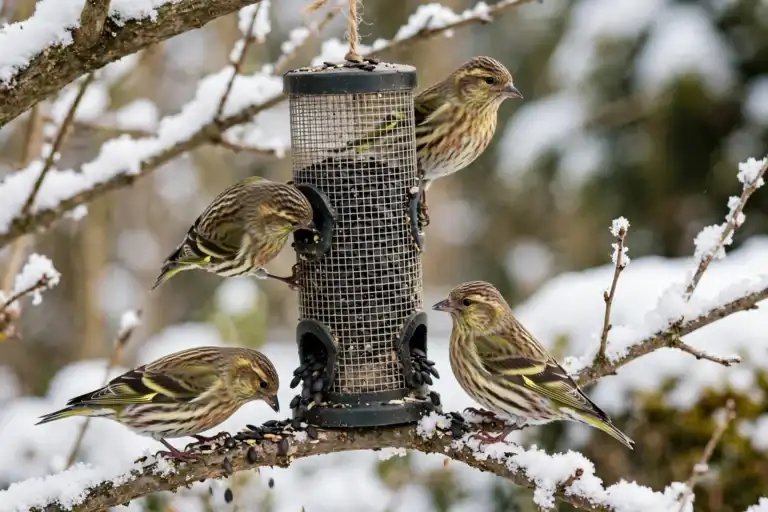
If one finch reaches your feeder this winter, it will probably be a pine siskin. The forecast expects a sizable irruption into the northeastern states, with a small to moderate flight into the Southeast also possible. Siskins are the finch most likely to show up well south of their usual range, and they often arrive in flocks.
A pine siskin is a small, heavily streaked brown finch, about the size of an American goldfinch. It has a thin, sharply pointed bill and a short, notched tail. Look for the yellow patches in the wings and at the base of the tail. That is the quickest way to separate it from a sparrow or a female finch.
Its call is a rising, buzzy zreeee, often given by flocks flying overhead. At a feeder, siskins prefer nyjer seed in a silo or sock feeder, and they also take black oil sunflower seed. They can store seeds in a throat pouch, and they can raise their metabolism to get through very cold nights. Siskins are vulnerable to salmonella at crowded feeders, so clean feeders often during an irruption.
Evening Grosbeak: Big, Bold and Hungry
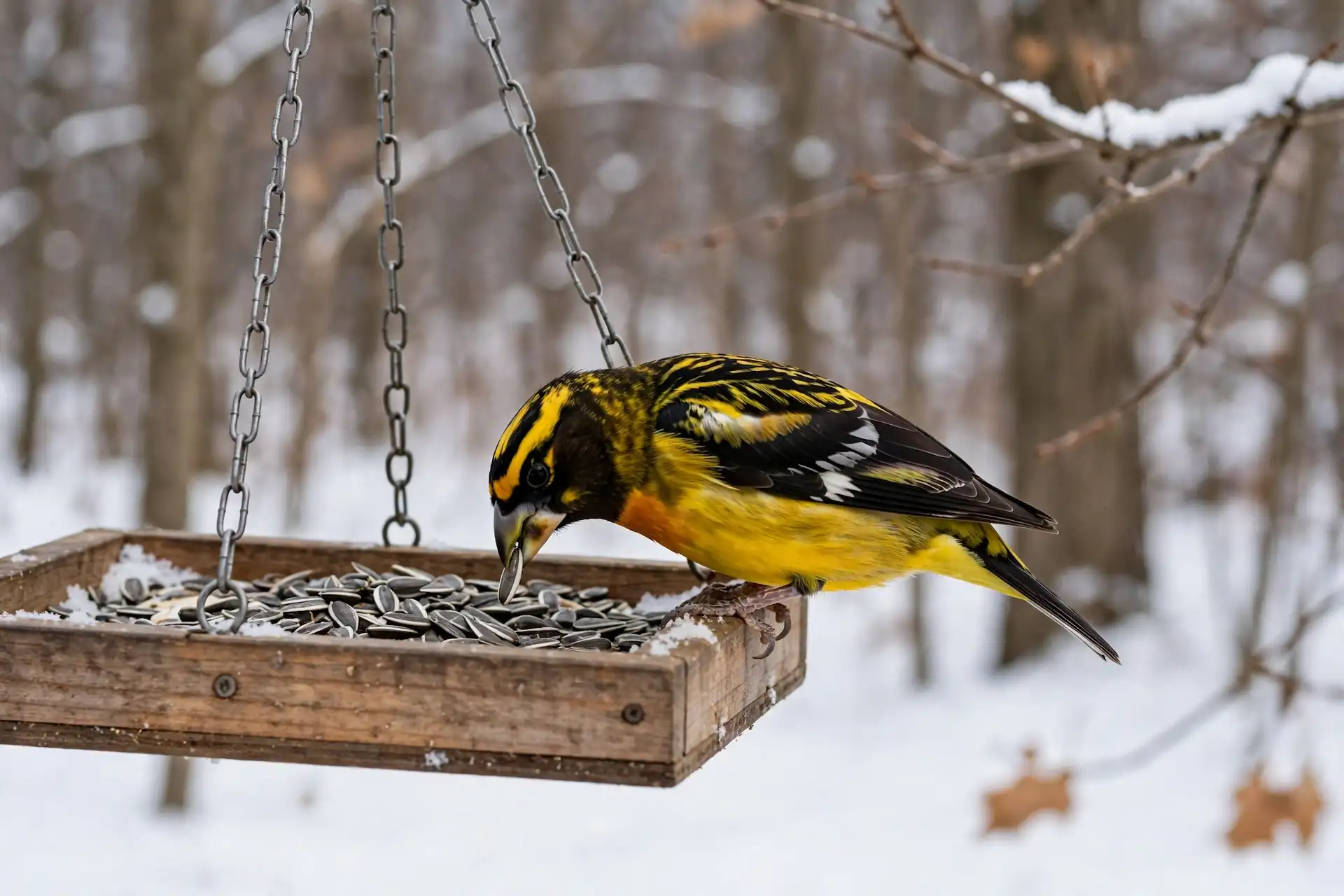
The evening grosbeak is the showiest bird in this forecast. Small to medium flocks are expected in the Northeast and Great Lakes, with a small movement south into New York, Pennsylvania and Massachusetts also possible. If you have never seen one, this could be your year. A flock of evening grosbeaks will empty a tray of sunflower seed in an hour.
An evening grosbeak is large and heavy billed, much bigger than a goldfinch or a purple finch. The male has a black head, a bright yellow forehead, a black and white wing pattern, and a yellow body. The female is softer gray and yellow, with the same heavy bill and black and white wings. The call is a loud, clear, ringing note, often given in flight. At a feeder, black oil sunflower seed is the best draw. Offer it in a large tray or platform feeder, because grosbeaks are big birds and they feed in groups. They are nomadic in winter, and they may stay in one place for a week and then disappear.
Red Crossbill: The Irruption Already Underway
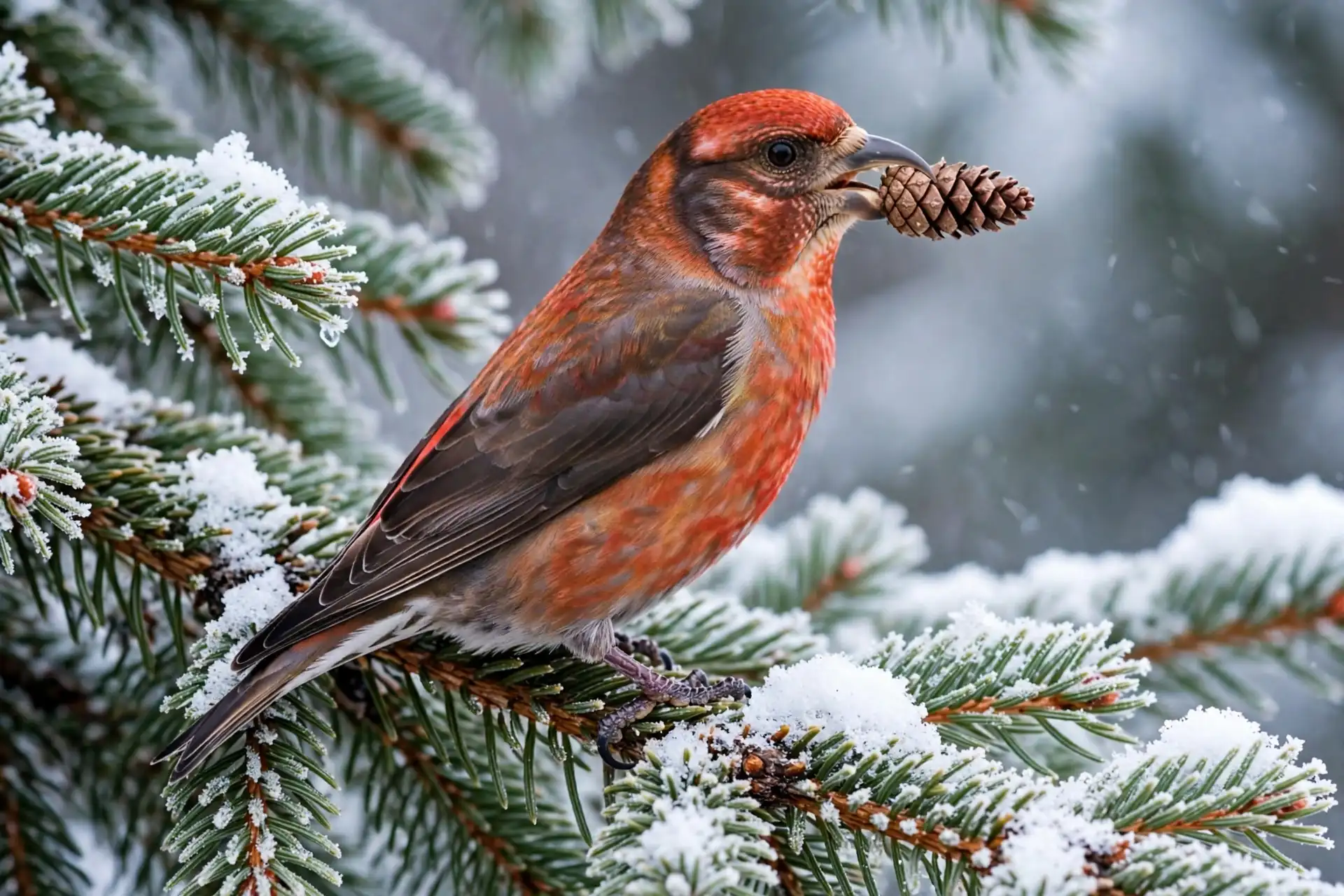
The red crossbill is the one bird in this forecast that is already moving. A significant red crossbill irruption is already underway, and it started earlier than most finch movements. A widespread pine failure in the interior mountain west started red crossbills moving from west to east as early as July and August. That early movement is a strong sign of a big winter for this species.
A red crossbill is a medium sized finch with a crossed bill. The bill tips cross over each other, which lets the bird pry open spruce and pine cones to reach the seeds inside. The male is red, with darker wings and tail. The female is yellow green, with the same crossed bill. The call is a sharp, dry jip jip, often given in flight by a flock. Crossbills feed in conifers, so look for them in spruce and pine stands. They also visit gravel roads, where they pick up grit and salt. At a feeder, crossbills are less regular than siskins or grosbeaks. Read the Red Crossbill Irruption Alert 2026-27 for how to find and record them this winter.
White-Winged Crossbill and Common Redpoll: Smaller Flights to Watch
The white-winged crossbill is the other crossbill in this forecast, and its outlook is smaller than the red crossbill. The forecast expects a small to moderate push into the east. White-winged crossbills are smaller and slimmer than red crossbills, with two bold white wing bars that give the species its name. The male is pinkish red, the female is yellow green, and both have the crossed bill. Look for them in spruce and tamarack stands, often in mixed flocks with red crossbills.
The common redpoll is a small, streaky finch with a red forehead and a tiny black chin. The male has a pink wash on the breast. Redpolls eat birch, alder and weed seeds, and they visit nyjer feeders in winter. The forecast expects a small flight possible, especially in the western Great Lakes, but no big flight is expected. Redpolls may appear in the northern Midwest, but they are unlikely to flood feeders farther south.
Purple Finch: Staying North, With a Late Southern Push Possible
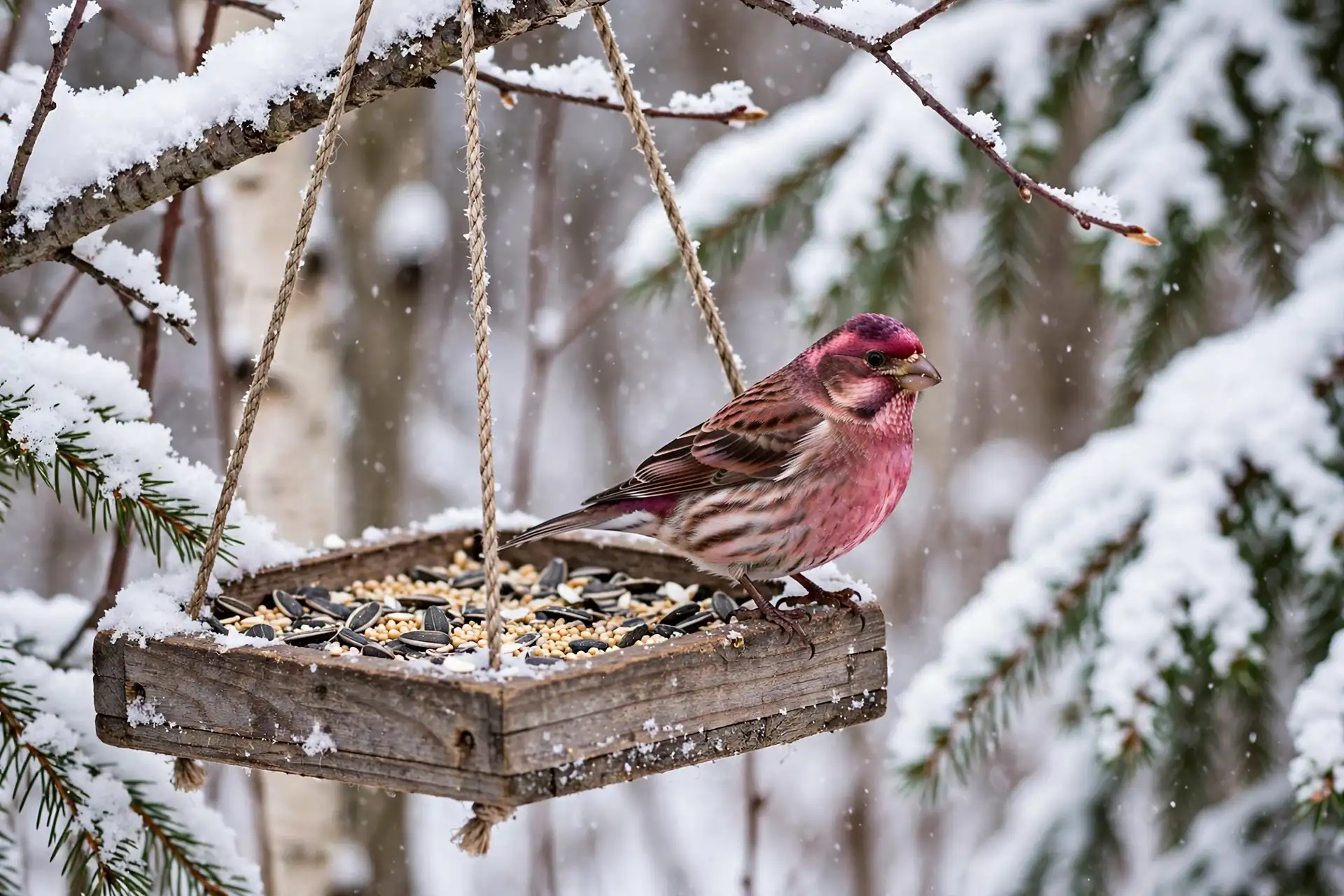
The purple finch is a bird that many people confuse with the house finch. The forecast for 2026-27 says many purple finches are expected to stay in eastern Canada, the Great Lakes and the Northeast. A southern flight is possible, but it would be small and late. That means purple finches may still reach your feeder, but later in winter than pine siskins or crossbills, and in smaller numbers.
A male purple finch looks dipped in raspberry. The color covers the head, breast, back and rump, with no brown cap and no streaking on the breast. The female is brown and heavily streaked, with a bold white eyebrow and a dark cheek stripe. A male house finch has red only on the forehead, breast and rump, with a brown cap and streaked flanks. A female house finch is plain brown. At a feeder, purple finches take black oil sunflower seed, and they are less likely to visit nyjer feeders than siskins or redpolls.
Pine Grosbeak and Bohemian Waxwing: Likely to Stay North
Not every northern bird is moving south this winter. The forecast says pine grosbeaks and Bohemian waxwings are not expected to move south much. A good mountain ash crop gives the waxwings a reason to stay north, and the same good food supply is holding pine grosbeaks in the boreal forest.
A pine grosbeak is a large, tame finch with a short, stout bill. The male is pinkish red on the head, breast and back, with gray wings and two white wing bars. The female is gray and yellow. A Bohemian waxwing is a large, gray, crested bird with a black mask, a cinnamon face, and bold white and yellow wing markings. It is bigger than a cedar waxwing, with rusty feathers under the tail where a cedar waxwing has white feathers. Bohemian waxwings form large, noisy flocks and feed on mountain ash, crabapple and other berries. Most birders in the lower United States are unlikely to see one this winter.
Red-Breasted Nuthatch and Blue Jay: The Non-Finch Part of the Forecast
The winter finch forecast also covers two birds that are not finches, because they move with the finches in many winters. The red-breasted nuthatch is a small, active bird that climbs down tree trunks headfirst. It has a black cap, a white eyebrow, a black eyeline, and a rusty breast. It visits sunflower and suet feeders. The forecast says no large nuthatch flight to the Southeast is expected this winter.
The blue jay is a large, noisy, blue and white bird with a crest and a black necklace. It eats acorns, seeds, nuts and insects, and it visits feeders for peanuts and sunflower seed. The forecast says above average blue jay flights are expected along the north shores of Lakes Ontario and Erie. That is a local movement, not a continent wide irruption, but it is worth watching if you live near those lakes.
What to Put in Your Feeder for Winter Finches
Feeder food is simple for winter finches. You do not need a special mix for each species. Black oil sunflower seed is the best all round food. It draws evening grosbeaks, purple finches, pine siskins, redpolls and blue jays. Offer it in a tube feeder, a hopper feeder or a large tray. Hulled sunflower seed, sold as sunflower chips, is even easier for small finches to eat. Dark-eyed juncos also visit feeders in winter, feeding on the ground below.
Nyjer seed is the best food for pine siskins and common redpolls. Offer it in a silo feeder with small ports, or in a sock feeder. Nyjer seed goes stale quickly, so buy it in small amounts and replace it if it gets wet. Suet gives finches extra fat in cold weather. Water is also important in winter. A heated bird bath will keep water open on freezing days. For a full guide, read What to Feed Birds in Winter: The Complete Guide. Do not put out old seed, moldy seed or seed that has been wet for a long time.
How to Tell Winter Finches Apart at a Glance
Winter finches can be hard to tell apart at first, because many of them are brown, streaky and quick. Four marks will help you sort them out. First, look at the bill. A crossbill has a crossed bill, a grosbeak has a very thick pale bill, a purple finch has a short stout bill, and a pine siskin has a thin pointed bill.
Second, look at the wings and breast. A white-winged crossbill has two bold white wing bars. A pine siskin has yellow flashes in the wings and tail. An evening grosbeak has black and white wings. A male purple finch has a clean, raspberry washed breast with no streaks, while a pine siskin and a common redpoll have streaked breasts. Third, listen. A pine siskin gives a rising, buzzy zreeee, a red crossbill gives a sharp jip jip, and an evening grosbeak gives a loud, ringing note.
Keep Your Feeders Clean During an Irruption
An irruption brings many birds to a small area, and that makes feeder cleaning more important than usual. Siskins are vulnerable to salmonella at crowded feeders, and other finches can also get sick when feeders are dirty. Clean tube and hopper feeders every two weeks in winter, and more often during an irruption. Take the feeder down, empty the old seed, wash it with hot soapy water, rinse it well, and let it dry before you refill it. Clean the ground under the feeder too, and space feeders out, so birds are not feeding shoulder to shoulder.
If you see a sick bird at your feeder, take the feeder down for a week or two. A sick finch may look puffed up, sleepy or slow to fly away. Do not handle a sick bird. Take the feeder down, clean it, and wait until the birds have moved on before you put it back up. This is responsible general care, not veterinary treatment. Wash your hands after you handle a feeder, and keep seed dry.
How to Record What You See
A winter finch forecast is only useful if birders record what they see. Your notes help the next forecast, and they help other birders know where the birds are. Note the date, the place, the species, and the number of birds. A count of 12 pine siskins is more useful than a note that says siskins were present. Note the food they were eating, and whether they were in a mixed flock.
If you use eBird, submit a checklist for each visit. If you do not use eBird, keep a simple notebook by the window and write down what you see each day. Share your sightings with a local bird club. A report of no finches is also useful, because it shows where the birds are not.
Frequently Asked Questions
Will pine siskins reach my feeder this winter?
Pine siskins are the most likely finch to reach your feeder in 2026-27. The forecast expects a sizable irruption into the Northeast, with a small to moderate flight into the Southeast possible. Offer nyjer seed and black oil sunflower seed, and watch for streaky brown flocks with yellow wing flashes. Clean feeders often, because siskins are vulnerable to salmonella at crowded feeders.
What is the best food for winter finches?
Black oil sunflower seed is the best all round food for winter finches. It draws evening grosbeaks, purple finches, pine siskins and blue jays. Nyjer seed is best for pine siskins and common redpolls, and suet gives extra fat in cold weather. Offer sunflower seed in a tube, hopper or tray feeder, and nyjer seed in a silo or sock feeder.
Are evening grosbeaks coming south in 2026-27?
Evening grosbeaks are expected to move south in small to medium flocks in the Northeast and Great Lakes. A small movement into New York, Pennsylvania and Massachusetts is also possible. They are large, heavy billed birds that eat black oil sunflower seed, and a flock can empty a tray feeder quickly. Keep your sunflower feeder full and listen for their loud, ringing call.
Why do red crossbills move in winter?
Red crossbills move in winter in search of cone seeds. A widespread pine failure in the interior mountain west started red crossbills moving west to east as early as July and August 2026. Their crossed bills let them pry open spruce and pine cones. A significant red crossbill irruption is already underway, so look for them in spruce and pine stands and on gravel roads.
How do I tell a purple finch from a house finch?
A male purple finch looks dipped in raspberry, with color on the head, breast, back and rump and no streaks on the breast. A male house finch has red only on the forehead, breast and rump, with a brown cap and streaked flanks. A female purple finch has a bold white eyebrow and dark cheek stripe, while a female house finch is plain brown. The purple finch is also a little larger and heavier billed.