
Introduction
You see a small brown bird at your feeder. House finch, purple finch, pine siskin, and female goldfinch can all be similar looking, but with a few seconds of observation you will be able to easily identify the bird. This guide will teach you how to identify, what they sound like, what they eat, and how to attract the most commonly seen finch species in North America. You will also learn why some years there is an influx of northern finches, and other years there isn’t. By the end of this guide you will know what features to look for, what songs to listen for, and what to put on your feeders to turn a confusing brown bird into a named species.
What Makes a Finch a Finch
True finches are in the family Fringillidae. There are a total of 238 recognized species of finch in the world, in 50 different genera (International Ornithological Committee). Some examples of finches in North America are the house finch, purple finch, American goldfinch, pine siskin, redpoll, evening grosbeak and crossbills.
All finches have similar features. They have a thick, cone-shaped bill which helps them break open seeds. They have a small body and a notched tail. Their flight is bouncy and involves quick flaps and short glides. They are strictly granivorous, so seeds are the core of their diet. They also eat buds, berries, and insects when feeding young.
Finches are social birds that travel in flocks and feed together.
How to Tell Finches Apart at a Glance
The first thing to look for is the bill. A finch bill is thick at the base and comes to a sharp point, while sparrows have smaller, neater bills and warblers have thin, pointed bills. If the bill looks like a seed cracker, you are probably looking at a finch.
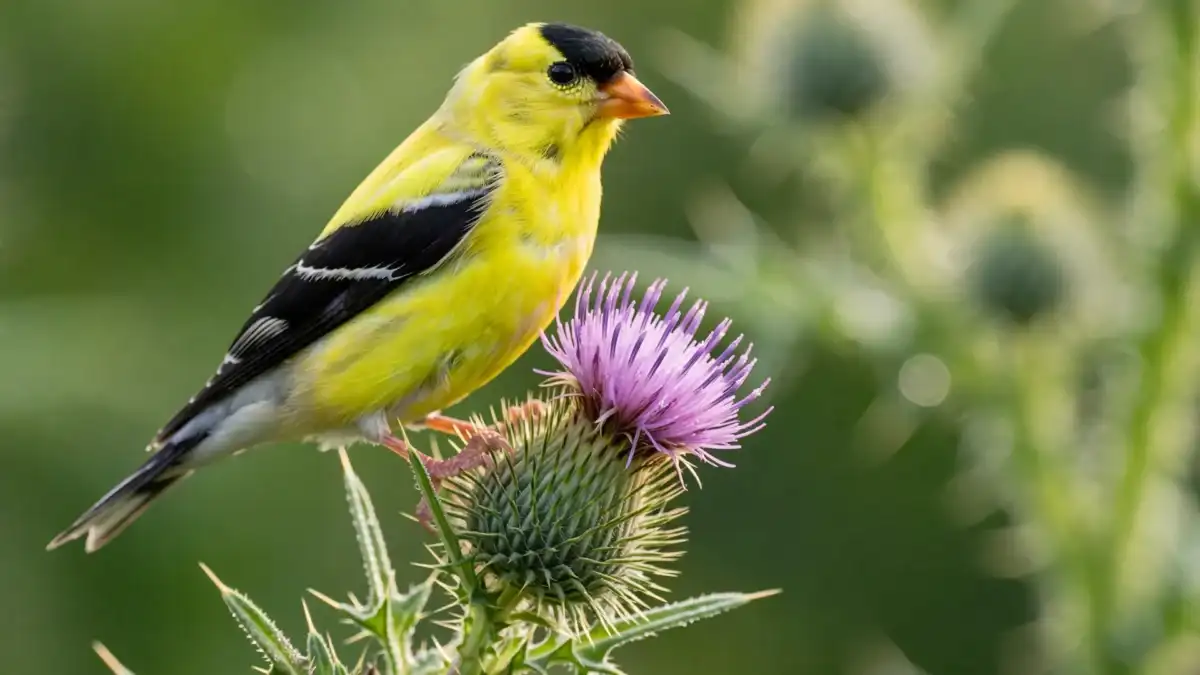
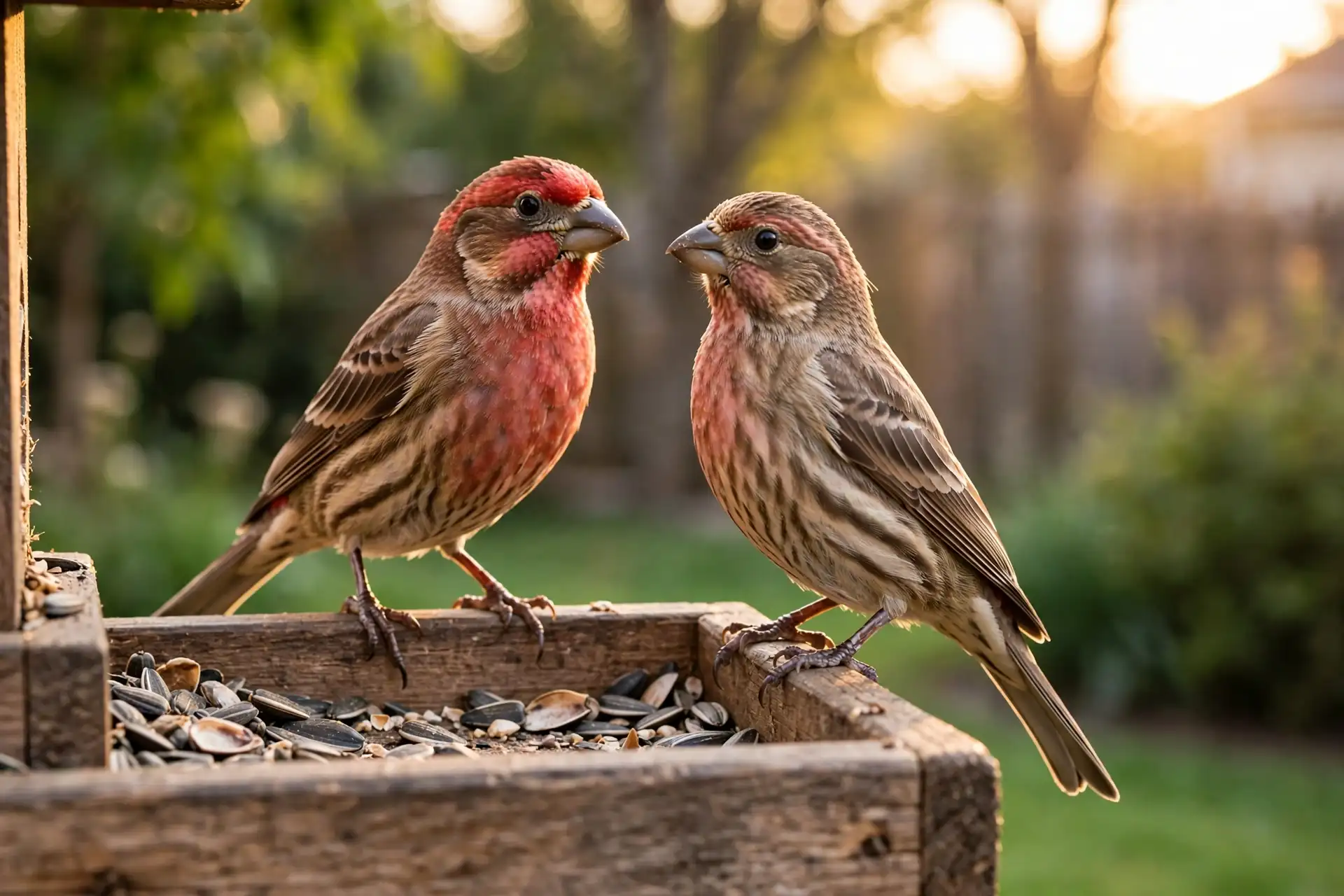
The next thing to look at is the pattern. On a male house finch, the red is only on the head, breast, and rump. He has heavy brown streaking on the flanks. The male purple finch has a raspberry color wash on the whole of the head, back, and breast. His flanks are much cleaner. A breeding male goldfinch is bright yellow, with a black cap and black wings. The pine siskin is streaky brown all over, with a sharp pointed bill and a hint of yellow in the wings and tail.
Size and voice can also help to identify a bird. Goldfinches and siskins are the smallest, about 4.3 to 5.5 inches, while house and purple finches are larger, about 5 to 6 inches. The redpoll is small and pale, with a red forehead and a black chin. Goldfinches sing a long, warbling song in flight. House finches sing a cheerful, jumbled warble from a rooftop. Pine siskins give a rising, buzzy note that sounds like a zipper.
Finch Species Comparison Table
| Species | Size | Key field marks | Best feeder food |
|---|---|---|---|
| House finch | 5 to 6 inches | Male rosy red on face, breast, rump; heavy flank streaks | Black oil sunflower, safflower |
| Purple finch | 5.5 to 6 inches | Male raspberry wash over head, back, breast; clean flanks | Black oil sunflower, millet |
| American goldfinch | 4.3 to 5.5 inches | Breeding male bright yellow, black cap and wings; undulating flight | Nyjer, black oil sunflower |
| Pine siskin | 4.3 to 5.5 inches | Streaky brown, yellow wing markings, sharp pointed bill | Nyjer, black oil sunflower |
| Redpoll | 4.8 to 5.5 inches | Red forehead, black chin, pinkish breast in males | Nyjer, millet, sunflower |
| Evening grosbeak | 6.5 to 8.5 inches | Large pale bill, yellow forehead, black and white wings | Black oil sunflower |
| Red crossbill | 5.5 to 6.5 inches | Male brick red, crossed bill tips, no wing bars | Conifer seeds, sunflower |
House Finch
The first finch you are likely to see is the house finch. The male (Haemorhous mexicanus) is 5 to 6 inches long, with rosy red on the head, breast, and rump, and a streaky brown back and flanks. The female is plain brown and heavily streaked, with no red at all.
House finches were originally native to the western United States and Mexico. In the 1940s, a small number were released near New York City, and from that foothold they spread across the whole continent. Today they are one of the most common feeder birds in North America, singing from rooftops, wires, and backyard trees all year.
They will eat seeds, buds, and fruit. They will come to tube feeders, hopper feeders, and platform feeders. Their favorite choices are black oil sunflower and safflower. To find out how this western bird conquered the east, and to see the classic comparison between the two birds, take a look at our guides to the house finch vs purple finch identification challenge.
Purple Finch
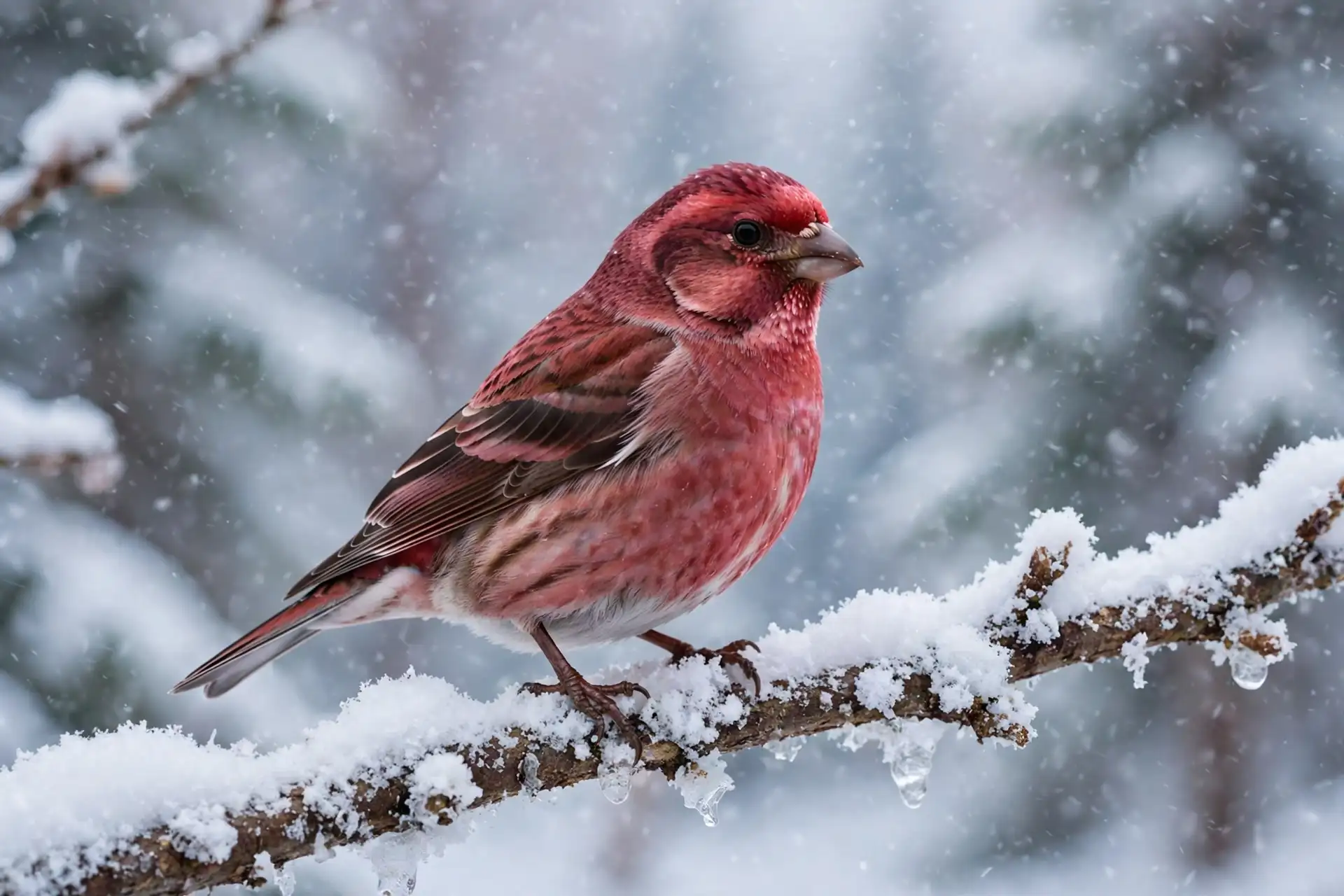
The purple finch is the prettier, shyer cousin of the house finch. The male (Haemorhous purpureus) is 5.5 to 6 inches long, with a raspberry red wash over the head, back, and breast, as if the whole bird had been dipped in juice. Roger Tory Peterson famously described it as looking like a sparrow dipped in raspberry juice. The female is brown with bold face marks, a pale stripe above the eye, and a dark cheek patch.
Purple finches live in the northern forests and mountain woodlands. They most commonly visit feeders during the winter. They are less common than house finches, but more likely to appear in a quiet, wooded yard than in a busy city garden. Their song is a rich, warbling melody, softer and more musical than the house finch’s cheerful jumble.
These two species cause more confusion than any other pair in North America, so keep the marks in mind. If there is just red on the face, breast, and rump, with heavily streaked flanks, then you have a house finch. If it has the raspberry wash on the head and back, with clean flanks, then it is a purple finch. We have a complete guide to the purple finch, including its range, song, diet, and how to attract it in winter.
American Goldfinch
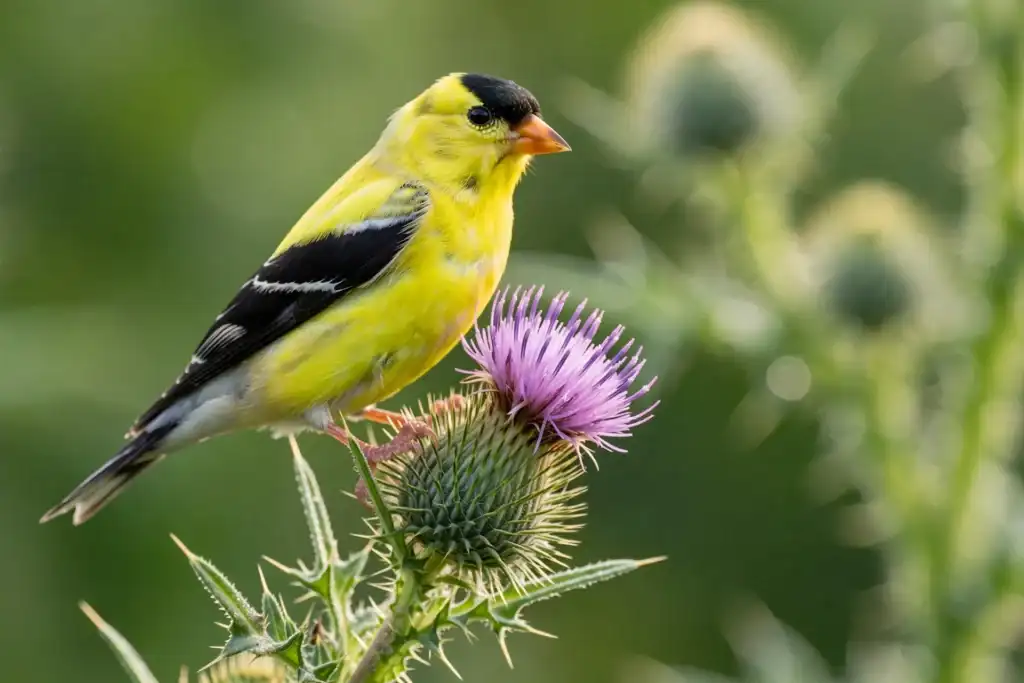
The American goldfinch (Spinus tristis) is often referred to as the wild canary. This species is 4.3 to 5.5 inches long. In breeding season, the male is brilliant yellow, with a black cap, black wings, and white marks on the wings and tail. Females and winter males are olive brown, with no black cap, and they look like a different bird entirely. That seasonal change fools many beginners.
Goldfinches fly with a deep, undulating bounce, rising and falling as they cross the yard, often calling as they fly. Their song is a long, sweet warble, sometimes given in flight. They are late nesters, waiting until thistle and other late summer seeds are ready, so they can feed their young on fresh seed.
Nyjer seed is their favorite food, offered in a thistle feeder with tiny ports, and they also love black oil sunflower. To learn how their diet changes from breeding season to winter flocks, read our guide on what goldfinches eat.
Pine Siskin
The pine siskin (Spinus pinus) is a small, streaky brown finch, 4.3 to 5.5 inches long, with a sharp pointed bill and subtle yellow markings in the wings and tail. At first glance it looks like a sparrow, but the bill is finer and sharper than a sparrow’s, and the yellow wing bars give it away in flight.
Siskins are feisty and nomadic. They travel in flocks, argue loudly at feeders, and cling to nyjer feeders upside down without a care. They breed in northern conifer forests, and in some winters they irrupt south in huge numbers. In other winters they barely appear at all.
Their call is a rising, buzzy note, like a zipper being pulled up, and their song is a wheezy, twittering mix. If a flock of small streaky birds suddenly appears at your nyjer feeder in winter, check for the yellow wing marks. You have found pine siskins.

Redpoll
The redpoll is a northern species of bird, and it is the finch most people meet only in an irruption year. In 2024, the common, hoary, and lesser redpolls were lumped into one species, the redpoll, after genetic analysis showed they were a single species. The bird is small, pale, and frosty, with a bright red forehead, a black chin, and, in males, a pinkish wash on the breast.
Redpolls breed in the Arctic tundra and boreal forest and winter in northern Canada and the northern United States. They travel in large, chattering flocks and are fearless at feeders, often letting people walk close. Nyjer, millet, and black oil sunflower all attract them, and they will also pick at seeds scattered on the snow.
They have a dry, rattling chatter for a call and a buzzy trill for a song. If you see a small pale finch with a red cap at your feeder in a cold winter, you are looking at a redpoll, and you should enjoy it, because it may not return for years.
Evening Grosbeak, Crossbills, and Other Finches
Not all finches are small. The evening grosbeak is 6.5 to 8.5 inches long, with a huge pale bill, a yellow forehead, and bold black and white wings. It arrives in noisy flocks, empties a sunflower feeder in minutes, and leaves just as suddenly. It lives in northern conifer forests and irrupts south in winters when cone crops fail.
The crossbills are specialist birds. They have crossed bill tips, similar to pliers, which allow them to pry open conifer cones and extract the seeds inside. The red crossbill male is brick red with no wing bars, while the white-winged crossbill has bold white wing bars. Both are nomadic, following cone crops across the continent, and both can nest in any month when food is plentiful.
Other finches of North America include the Cassin’s finch, gray-crowned rosy-finch and Lawrence’s goldfinch, but the seven species shown in the table above are the most likely to be encountered.
Finch Bills and Seed Eating
A finch bill is a precision tool. The thick, conical shape gives the bird the leverage to crack a sunflower shell, and the sharp tip lets it pick out the kernel inside. Different finch species have different bills because they eat different seeds. The evening grosbeak has a massive bill for large seeds. The pine siskin has a fine, pointed bill for tiny nyjer and alder seeds. The crossbill has crossed tips for prying open cones.
Finches feed carefully on seeds. They will take a seed, crack it, remove the shell, and eat the kernel, which is why the ground under a busy feeder is covered in empty husks. They will also store food in bark crevices and leaf litter, but nowhere near as much as the jays and chickadees.
In spring and summer, finches add insects, buds, and berries to their diet. Insects are fed to the nestlings to give them more protein. Goldfinches are the exception, feeding their young mostly on seeds, which is one reason they nest so late in the year, when thistle seed is ripe.
Songs and Calls
Their songs add to the enjoyment. The house finch sings a cheerful, jumbled warble from a rooftop or wire. It can sing for many minutes. The purple finch sings a richer, more musical warble, with a soft, rolling quality. The American goldfinch sings a long, sweet warble, often while flying, and its flight call is a lilting “potato chip” pattern.
Pine siskins give a rising, buzzy “zreee” like a zipper. Redpolls chatter in a dry, rattling chorus when they feed in flocks. Evening grosbeaks give a loud, ringing “clee-ip” that carries across a yard. Crossbills give a sharp “jip-jip” in flight.
The quickest way to learn to find finches is to learn their sounds. Oftentimes, an unseen bird will be heard. Start with the goldfinch flight call and the house finch rooftop song, and the rest will follow.
Winter Finch Irruptions
Some winters, northern finches flood south in huge numbers. Other winters, they stay home. The reason is food. Finches that breed in northern conifer forests depend on cone crops, birch seeds, and alder seeds. When those crops fail, the birds must fly south to find food. When the crops are good, they stay put.
These movements are called irruptions, and they are one of the great spectacles of birding. A winter with redpolls, siskins, crossbills, and evening grosbeaks at feeders is a winter to remember, and a winter without them is normal too. The Finch Research Network publishes a Winter Finch Forecast each autumn, predicting which species will move and how far south they will go. Our guide to winter finch irruptions explains how the forecast works and which finches to watch for.
Feeder Setup for Finches
Finches are easy to attract if you offer the right food in the right feeder. Goldfinches, siskins, and redpolls all feed on nyjer seed. Offer it in a thistle feeder with tiny ports or fine mesh, because nyjer falls straight through a normal tube feeder. Keep it fresh, since it loses its oil and appeal if stored too long, and buy small amounts.
The best all-round seed for house finches, purple finches, and evening grosbeaks is black oil sunflower, offered in a hopper feeder or a large-port tube feeder. Safflower works for house finches too, and squirrels mostly leave it alone. Millet, scattered on the ground or a platform feeder, brings in redpolls and ground-feeding finches.
Place feeders near shrubs or small trees, so finches can dart to safety when a hawk passes. Clean feeders every two weeks with hot soapy water, and replace wet or moldy seed at once, since finches crowd together and a dirty feeder spreads disease fast.
Common Mistakes
Avoiding these mistakes will make your finches much healthier!
- Stale nyjer. Finches will not eat old nyjer, it is the most common reason why goldfinches will stop coming.
- Wrong feeder. Nyjer will spill out of a normal tube feeder, and a hopper feeder will waste it.
- Not cleaning feeders. Finches feed in tight flocks, so disease spreads quickly at a dirty feeder.
- Assuming all brown streaky birds are sparrows. Check the bill first.
- Assuming you will get irruptive finches each winter. Redpolls, crossbills, and evening grosbeaks come only in irruption years.
- Only one seed type. Using a mix of nyjer, sunflower, and millet will attract more species than any single seed.
- Feeders in the open. Finches need shrubs close by to escape hawks.
Frequently Asked Questions
What is the most common finch in North America?
The house finch is the most common and most widespread. They can be found in cities, suburbs, and farms from coast to coast, and will visit feeders all year.
How do I tell a house finch from a purple finch?
Look at where the red is and how streaky the flanks are. A male house finch has red only on the face, breast, and rump, with heavy brown streaks on the flanks. The males of the purple finch have a raspberry wash across their entire head, back, and breast. Their flanks are much cleaner.
What seed do finch species like best?
Nyjer seed is the favorite of goldfinches, siskins, and redpolls. Black oil sunflower is the best all-round seed for house finches, purple finches, and evening grosbeaks. Offer both to attract the widest range of species.
Why do finches disappear in summer?
Many finches migrate to northern forests for breeding, leaving fewer to feed at feeders as they eat more insects and natural seeds. Goldfinches nest late and will therefore also be around feeders throughout the summer.
Do finches migrate?
Some are and some aren’t. House finches are mostly resident, staying in one place all year. Goldfinches, siskins, redpolls, and crossbills are nomadic or irruptive, moving to where there is plenty of food.
What is a finch irruption?
An irruption is a sudden, large movement of northern finches south in winter, caused by a failed cone or seed crop in the north. Irruption years can bring redpolls, siskins, crossbills, and evening grosbeaks to feeders far south of their normal range.
Can finches eat sunflower seeds?
Yes, black oil sunflower is one of the best foods for finches. The thin shell is easy to crack, and the kernel is rich in fat and protein. Offer it in a hopper or large-port tube feeder.
How do I attract goldfinches to my yard?
Feed nyjer seed in a thistle feeder and black oil sunflower in a tube or hopper feeder, place the feeders near shrubs for cover, and keep the seed fresh. Goldfinches are also drawn to thistle plants, coneflowers, and sunflowers left standing in the garden.
Conclusion
Finches reward the watcher who learns their marks. The house finch sings from the rooftop, the purple finch glows raspberry in the winter woods, the goldfinch flashes yellow over the garden, the siskin zips at the nyjer feeder, and the redpoll brings a touch of the Arctic to a cold morning. Each one has a bill built for seeds and a song worth learning. Start with fresh nyjer and black oil sunflower, keep the feeders clean, and watch the streaks, the wing bars, and the red. The finches will tell you the rest, one visit at a time. Keep a small notebook by the window and write down what you see, because the first redpoll or crossbill of an irruption winter is a moment worth remembering.