Introduction
Small but very destructive in large numbers. They can cause a budgie to have a scaly, deformed beak, cause a hen to be restless and anemic all night, or cause a whole brood of nestlings to become weak. The good news is that they all have patterns to them and knowing where they live and what they feed on makes them very easy to identify. This guide will tell you about the most common types of bird mites (red mites, northern fowl mites, scaly face and leg mites, feather mites and air sac mites). It will also explain how to check your bird, how to treat them, and how to clean and isolate to prevent re-infestation.
What Are Bird Mites?
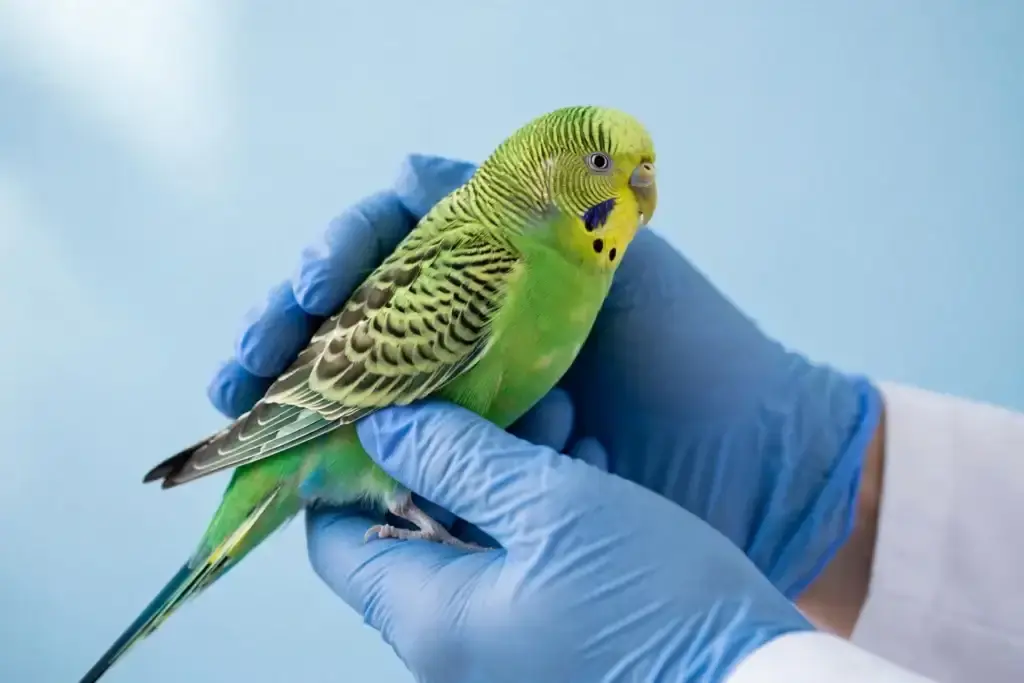
Bird mites are tiny parasitic arachnids. Most are smaller than 1 millimeter long and have eight legs. They are close relatives of ticks and spiders and can be easily overlooked.
There are many species of parasites. Each species has its own location on the bird. This will affect what clinical signs are seen and the treatment given.
Some species of bird mites feed on blood. For example, the red mite and northern fowl mite. They can cause small birds to lose large amounts of blood quickly. Other species feed more quietly. Feather mites feed on oils from feathers, dead skin flakes and debris. Burrowing mites burrow through skin, beak or leg scales.
One group lives inside the bird. Air sac mites spend their life in the windpipe, lungs, and air sacs, so their signs are breathing problems, not itching.
Mites are usually transmitted by direct contact and pass from bird to bird and move on common perches, nesting material, crates and clothing. They become more active in warm weather and many common species have a rapid life cycle of one to two weeks, so an infestation can rapidly become a problem in the summer months.
The Main Types of Bird Mites
Five mite types account for most of the trouble in pet birds, backyard poultry, and wild birds, and each one hides in a different place.
Red Mites
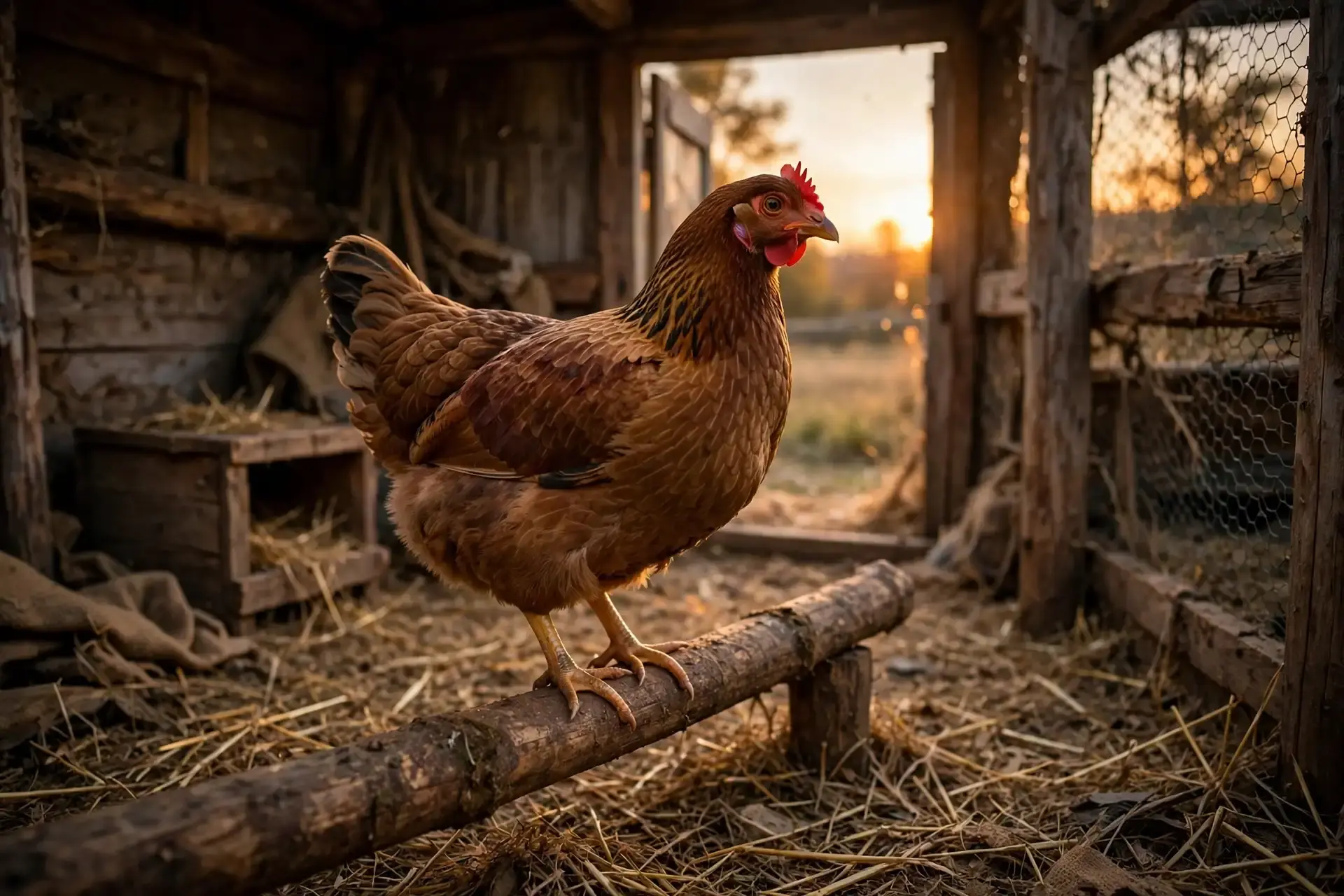
The red mite, Dermanyssus gallinae, is also called the chicken mite or roost mite. It infests chickens, turkeys, pigeons, canaries, and wild birds around the world.
The mite does not live on the bird but shelters under droppings, on roosts, nest boxes and cracks and crevices. At night it climbs onto the bird to feed on its blood.
That habit explains the classic signs: restlessness at night, lost condition, and, in heavy infestations, pale anemia. Egg laying drops, and young birds can die.
Red mites are very resilient. Their life cycle can be completed in around a week in warm conditions. An emptied poultry house can stay infested for up to 9 months after the birds are removed.
Northern Fowl Mites
The northern fowl mite, Ornithonyssussylviarum, takes the opposite approach. It spends its life on the bird, feeding on blood day and night.
It is the most important mite parasite of laying and breeding chickens in the United States and a serious pest across temperate regions worldwide.
Look for it around the vent. Parting the feathers there can reveal thick, crusty skin, heavy scabbing, and soiled feathers, with eggs laid in the fluffy feather growth.
Its life cycle takes 5 to 12 days. Away from a bird it can survive for up to about 4 weeks, depending on temperature and humidity.
Heavy infestations cause a reduction in egg production and feed efficiency. Severe infestations can lead to anemia. The mites may appear on newly laid eggs. A close relative of this species is the tropical fowl mite. This species has similar effects in warmer areas. It is found on chickens, pigeons, sparrows and starlings.
Scaly Face and Leg Mites
Scaly face and leg mites belong to the genus Knemidocoptes. Unlike the blood feeders above, these mites burrow into skin and spend their entire life cycle there.
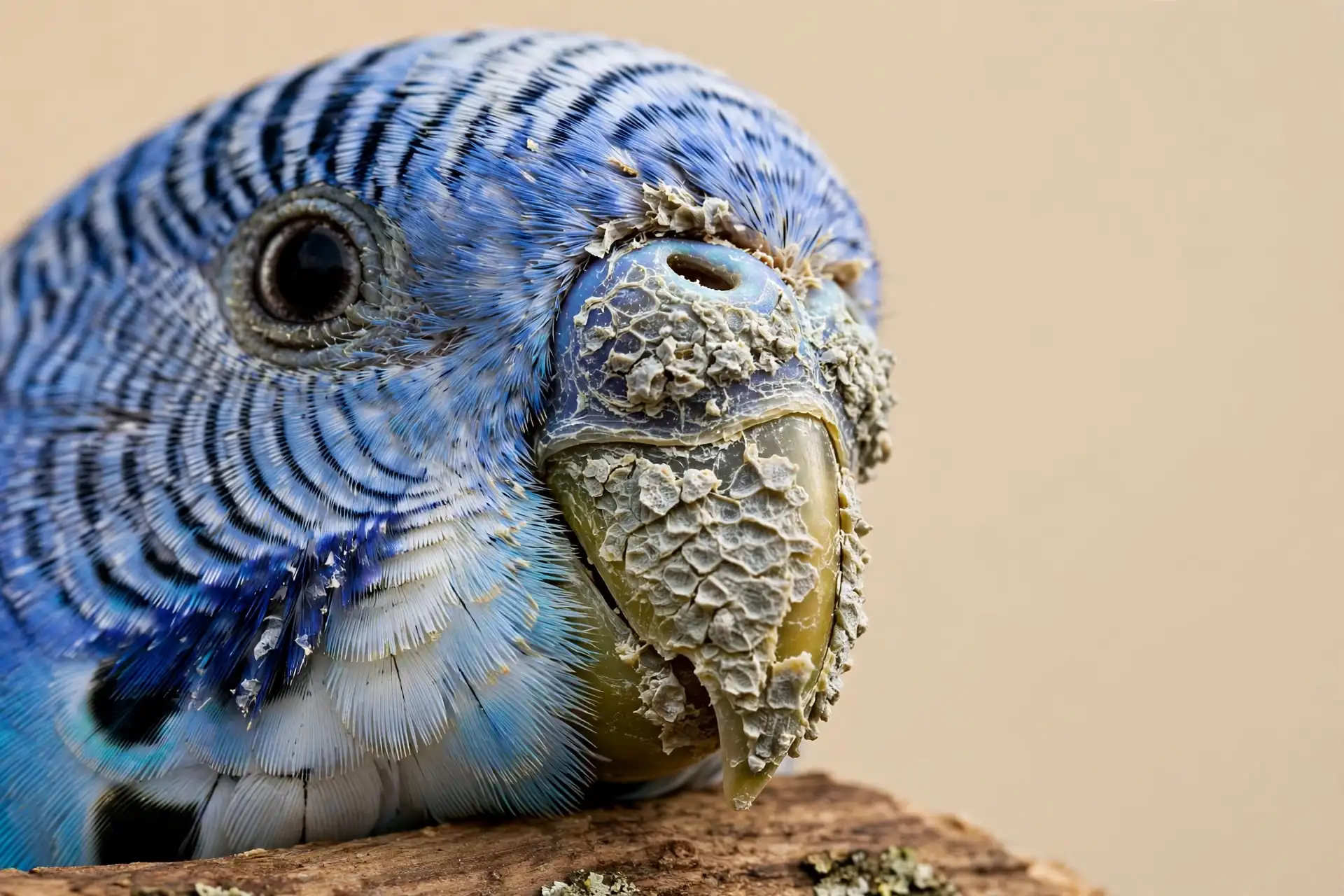
Budgerigar scaly face is caused by the species Knemidocoptespilae. The typical picture is a white, porous, crusty growth around the corners of the mouth, the cere, and the beak. This can also affect the area around the eyes, legs, and vent.
Left untreated, the burrowing can distort the beak as it grows, and the crusts have a distinctive honeycomb look from the tunnels the mites leave as they feed.
In canaries and other finches, the same mite family crusts the legs and toes instead. Keepers call this tassel foot, after the ragged, tassel-like growths on the feet.
A related mite, Knemidocoptesmutans, causes scaly leg disease in chickens. The mites burrow beneath the scales on the legs, causing the scales to protrude, giving the legs a thick, crusted appearance. In severe cases, the birds will suffer lameness.
These mites spread by close contact, often from a parent bird to its unfledged young. Infections can sit quietly for months and flare up when a bird is stressed.
Feather Mites
Feather mites are the quietest of those listed. They tend to live on the surface of the feathers and eat oils, skin scales, debris and fungi rather than the bird itself. Many wild and pet birds have small numbers of these mites with no issues.
Problems can be caused by the high numbers or burrowing relatives. The depluming mite will burrow into the skin at the base of the feather shafts, and cause extreme irritation, leading to feather picking and loss. Other feather mites live in the hollow quills of the feathers and feed off the tissue.
Air Sac Mites
The air sac mite, Sternostoma tracheacolum, lives inside the respiratory system, in the windpipe, voice box, lungs, and air sacs.
Canaries and Gouldian finches are the birds most often affected. All stages are found within the respiratory tissues, and its life cycle is still poorly understood.
The infection can be very mild and not cause any symptoms. However, severe infection can be fatal. Symptoms include high-pitched noises, clicking noises, sneezing and a tail bob on each breath. The birds will also breathe with the beak open.
Signs get worse with handling, exercise, or stress. A finch that was singing and goes quiet, then starts clicking, is a bird that needs a vet quickly.
Bird Mites at a Glance
| Mite type | Where it lives | Birds most affected | Main signs |
|---|---|---|---|
| Red mite | Coop cracks, roosts, and nest boxes, on the bird only at night | Chickens, turkeys, pigeons, canaries, wild birds | Night restlessness, pale comb, anemia, drop in laying |
| Northern fowl mite | On the bird full time, mostly around the vent | Laying and breeding chickens | Crusty, scabbed skin and soiled feathers at the vent |
| Scaly face and leg mites | Burrowed into beak, cere, skin, and leg scales | Budgerigars, canaries, finches, chickens | Honeycomb crusts on the face, tassel foot, lifted leg scales |
| Feather mites | On feather surfaces and inside quills | Wild birds, poultry, some pet birds | Often none, heavy loads can mean irritation and feather damage |
| Air sac mite | Inside the windpipe, lungs, and air sacs | Canaries and Gouldian finches | Clicking breath, sneezing, tail bobbing, open-beak breathing |
Bird Mites on Pet Birds
Pet birds meet a shorter list of mites than poultry do. Owners of pet birds mostly deal with three problems.
Scaly face is a typical problem with budgerigars. It is common in budgies but uncommon in other parrot species. The crusty cere and beak growths are typical of this condition and often a vet will be able to recognize it visually.
Canaries and finches have their own pair of risks. Air sac mites attack their airways, while Knemidocoptes crusts their legs and toes into tassel foot.
Red mites reach pet birds mainly outdoors. Birds kept in outside aviaries can pick them up, especially around nest boxes, where the mites hide by day.
Feather mites are rarely a problem for indoor parrots. In fact, feather loss is very rarely due to mites in pet parrots. Feather damage is mostly due to habits, diet and health issues. Therefore, treating your parrot for mites when they are not present wastes time while the real cause goes unchecked.
Bird Mites on Wild and Backyard Birds
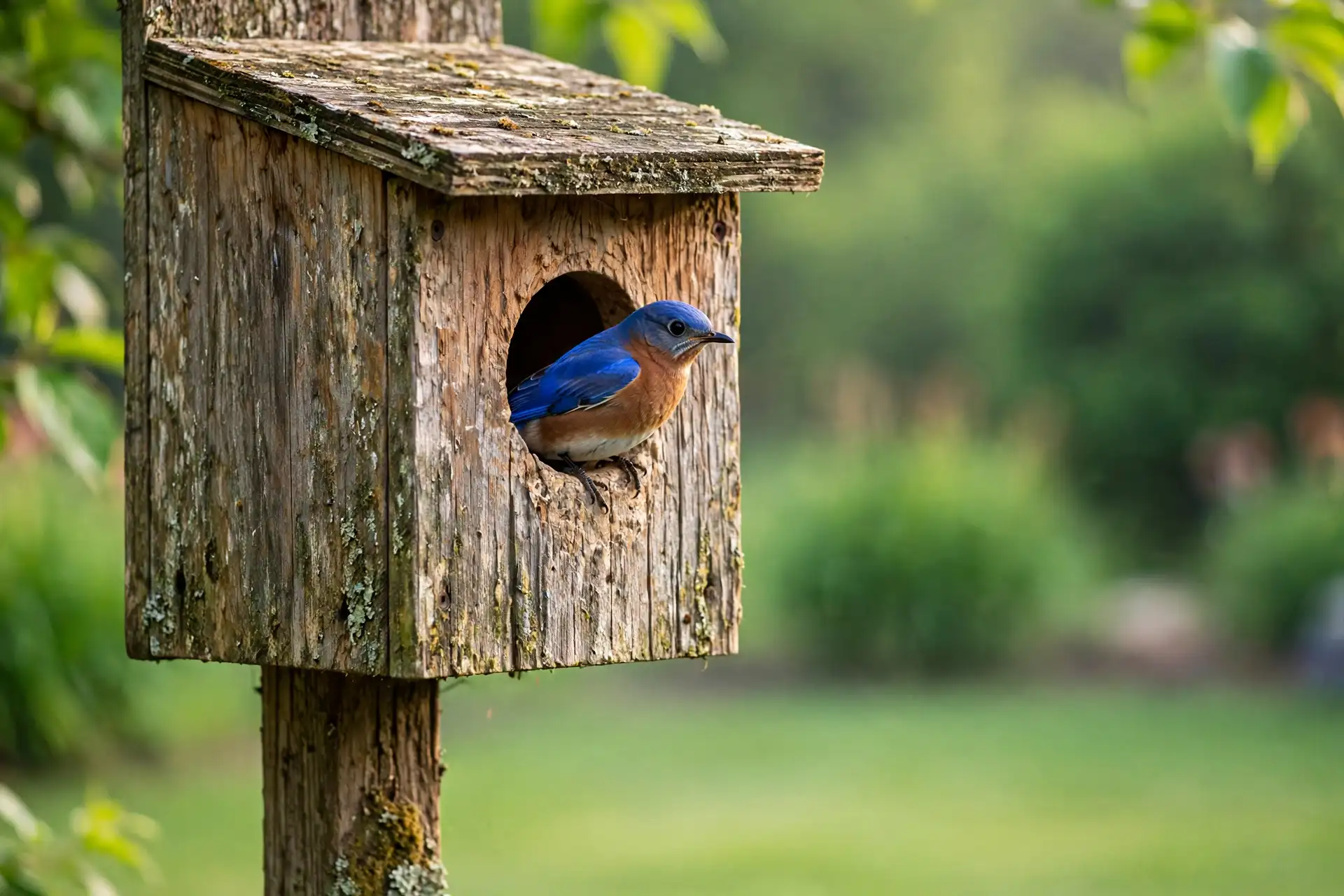
Wild birds carry mites as a normal part of life, and problems start where birds crowd together: coops, aviaries, and nest boxes.
Backyard chickens can be affected by all of these. The most common are red mites and northern fowl mites. Scaly leg mite is not unusual in backyard flocks but is rare in commercial housing.
Nest boxes are the other hotspot. Nest mites build up in old nest material and feed on nestlings that cannot escape.
Most broods tolerate a light load, but rare, severe infestations can leave nestlings weak, and some do not survive.
The fix is housekeeping, not chemicals. Clean nest boxes out after the young have fledged, remove the old nest material, and let the box dry before the next season.
The same routine applies around the rest of the backyard setup, and our guide on how often to clean bird feeders covers the feeder side of that hygiene habit.
Many indoor infestations of mites are due to wild birds. Nests in eaves, chimneys, and roof spaces can accumulate large numbers of mites which will seek a new host as the young birds leave.
Can Bird Mites Bite Humans?
Yes, they can bite humans, however, they are unable to live on us. They can only complete their life cycle on a bird host. Red mites can bite humans but cannot survive on them or infest them.
A typical scenario starts with a nest. Sparrows, starlings, pigeons or poultry will have nested in a building. Once the young birds have fledged, mites will be moving around inside looking for a blood meal during the first few weeks.
People find them on walls, ceilings, and bedding. The bites can cause real irritation: itching, swelling, and raised reddish spots where the mites inject saliva as they feed.
Bird mites do not burrow into human skin, and their bites are not related to infectious disease. In the absence of a host (bird), they generally die off within about 3 weeks.
The problem of bird mites in the house is self-limiting. Once the nest has been emptied and can be moved, then removing it will be a permanent solution. All gaps should be sealed to stop birds nesting again.
Wear gloves and a mask when removing old nest material. For large or hard-to-reach infestations, a licensed pest controller is the safer call.
How to Check a Bird for Mites
Start with the vent on poultry. Part the feathers and look for the crusty skin, scabbing, and dirty feathers that point to northern fowl mites.
Check faces and legs on small pet birds. A budgie’s cere and beak corners, and a canary’s legs and toes, show Knemidocoptes crusts early if you look regularly.
Look for red mites in the housing, not just on the bird. Run your finger over the ends of the roosts, the joins of the nest boxes and cracks to look for small clumps of gray or red dots.
Then check after dark. A flashlight visit to the coop, or a look at roosting birds, is when red mites are out feeding and easiest to spot.
Watch behavior too. Night restlessness, repeated scratching, and changes in normal bird preening routines can all be early clues, though none of them proves mites.
You should know the limits of a home check. A vet can take a skin scrape and sometimes can see the air sac mites by shining a light through the windpipe of a small bird.
Treatment Principles and Prevention
Principle 1: Diagnosis should be done. Different species of mite will have different habitats. Red mites, burrowing mites and air sac mites may be left almost unaffected by a product, routine, or treatment.
The vet will confirm the type of mite and prescribe an anti-parasitic medicine to treat the specific mite. The medication will be measured to the exact weight of your bird and incorrect dosing can cause severe side effects in small birds.
More than one dose may be needed. Vets will give repeated doses to match the life cycle of the mites, because eggs and young stages can survive the first treatment. All birds in an area may need to be treated at the same time.
Treat the bird and the home. Follow the advice of VCA and clean and disinfect the cage, perches, toys, food bowl and water bowl while treating your bird.
Wooden nest boxes that are infested are best discarded and replaced, because porous wood gives red mites endless hiding places.
For coops, aim at the hiding places: cleaning out litter and treating cracks, crevices, roost joints, and nest boxes matters more for red mites than treating the birds alone.
This is a natural way of helping. Studies cited by the Merck Veterinary Manual have shown that hens provided with dust boxes containing washed sand and food-grade diatomaceous earth had far fewer northern fowl mites.
Quarantine is the cheapest prevention of all. Keep new birds separate, check them closely for a few weeks, and only mix them with your flock once they are clear.
If you can’t clean your cage or wooden components thoroughly then it’s best to replace them. Our guide to bird cages covers designs and materials that are easier to scrub down.
When to See a Vet
Respiratory symptoms come first. If your bird, especially a canary or finch, is clicking, wheezing, breathing with its beak open, or bobbing its tail, then visit your vet the same day. Air sac mites can be lethal, and handling will cause stress.
Pale combs, weakness, and sudden weight loss are signs of blood loss. High infestations of red mites or northern fowl mites can cause anemia. Nestlings and young birds will deteriorate the quickest.
A changing beak is another clear trigger. If scaly face crusts thicken or the beak shape changes, early treatment protects the beak’s growth; advanced cases leave permanent deformity.
Lameness from scaly leg deserves a visit. Lifted, encrusted leg scales are painful, and badly affected birds can stop feeding.
If you’re ever unsure, then a visit to your vet is always a good idea. Many conditions including lice, fungi and nutritional problems can look like mites. Getting the correct diagnosis will ensure the correct treatment.
Frequently Asked Questions
What do bird mites look like?
The vast majority of bird mites are small, measuring less than 1 millimeter in length, and have eight legs. They are pale or translucent when unfed but become more obvious when seen with a magnifying glass. After feeding on blood they turn reddish to dark.
Can bird mites live on humans?
No. While bird mites can bite people, particularly if there has been an abandoned nest close by, they cannot survive on humans as they cannot complete their life cycle on human blood. They will die off within about 3 weeks if they are not on a bird. They do not burrow into skin.
How do birds get mites?
Mainly by contact. The mites move from infested birds via common perches, nesting material, crates and clothing. Red mites can be introduced via wild birds in outdoor aviaries. Introducing new birds is the most common way of introducing mites into your home or coop.
Are feather mites dangerous?
Usually not. Most feed on feather oils and debris and live on healthy birds without causing any visible harm. Problems can occur if the mites become numerous or if they are burrowing relatives, such as the depluming mite. These cause irritation to the skin at the base of the feathers, causing feather pulling.
Can bird mites kill a bird?
Yes. In severe infestations, blood-feeding red mites and northern fowl mites can cause anemia and death in nestlings and young birds. Severe air sac mite infestations can be fatal in canaries and finches.
How do I know if my budgie has scaly face mites?
Check the cere, corners of the mouth and beak. The skin on the face is scaly and produces white, porous, crusty growths with a honeycomb texture. This can also occur around the eyes, legs and vent. Usually a vet can diagnose based on appearance or a gentle scraping.
Do I have to treat the cage and coop too?
Yes, depending on the type of mites. The red mites do not live on the bird but in the housing. You need to wash and disinfect the cages, perches, toys and bowls. Any wooden nest boxes that are infested should be replaced. Also clean out cracks and crevices in the coop.
Can my pet bird catch mites from wild birds?
This may occur mainly outside. Red mites may be found in outdoor aviaries, particularly in nest boxes. The mites can be transmitted by contact with infested birds or their housing. Keeping pet birds inside and quarantining any new birds will reduce the risk.
Conclusion
Bird mites are a group of pests. You need to identify where they are on your bird (skin, beak, feathers, airways and housing) so you can target the appropriate treatment. Make sure you know what kind of mite you have by consulting a vet. Treat your bird and its home together. Include quarantine and cleaning in your routine. Do that, and mites become an occasional check on your list, not a recurring crisis.
Sources
- https://www.msdvetmanual.com/poultry/arthropods-in-poultry/mites-of-poultry
- https://www.merckvetmanual.com/exotic-and-laboratory-animals/pet-birds/parasitic-diseases-of-pet-birds
- https://vcahospitals.com/cascade/know-your-pet/topics/parasites
- https://www.sahealth.sa.gov.au/wps/wcm/connect/f1b94d804570ebc48d78ef4ba88a01d5/FACTSHEET Bird Mites Prevention and Treatment 2024.pdf?MOD=AJPERES&CACHEID=ROOTWORKSPACE-f1b94d804570ebc48d78ef4ba88a01d5-p6dfbVk