
Introduction
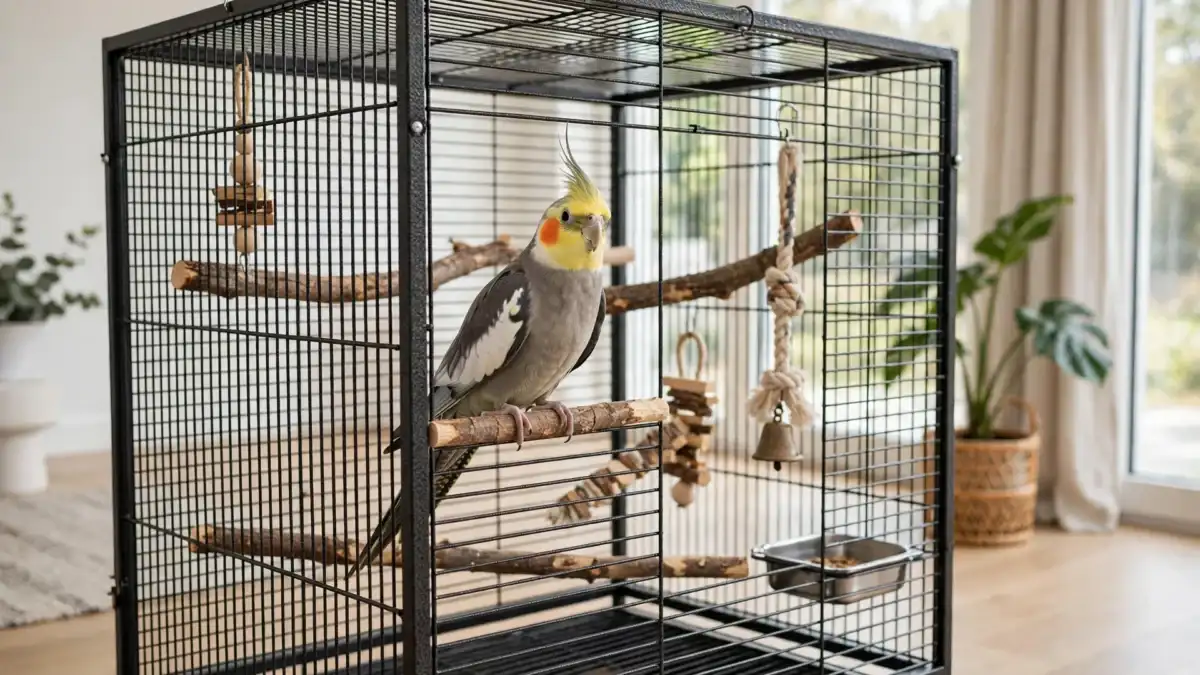
A cage isn’t just an accessory; it’s your bird’s home, exercise area, eating area and secure area. If you get the wrong cage, your bird will have issues such as head entanglement, tail clipping, foot pain and stress leading to feather picking and screaming. However, if you choose the right cage, everyday maintenance will be easy. This article will guide you through choosing the right size, bar spacing and material. You’ll learn what the minimum sizes are that vets use, why a wide cage is better than a tall one, what metals are safe and what finishes can be toxic. No matter what type of bird you have, whether it’s a budgie, cockatiel or large parrot, this will help you to make an informed purchase.
Why Cage Size Matters
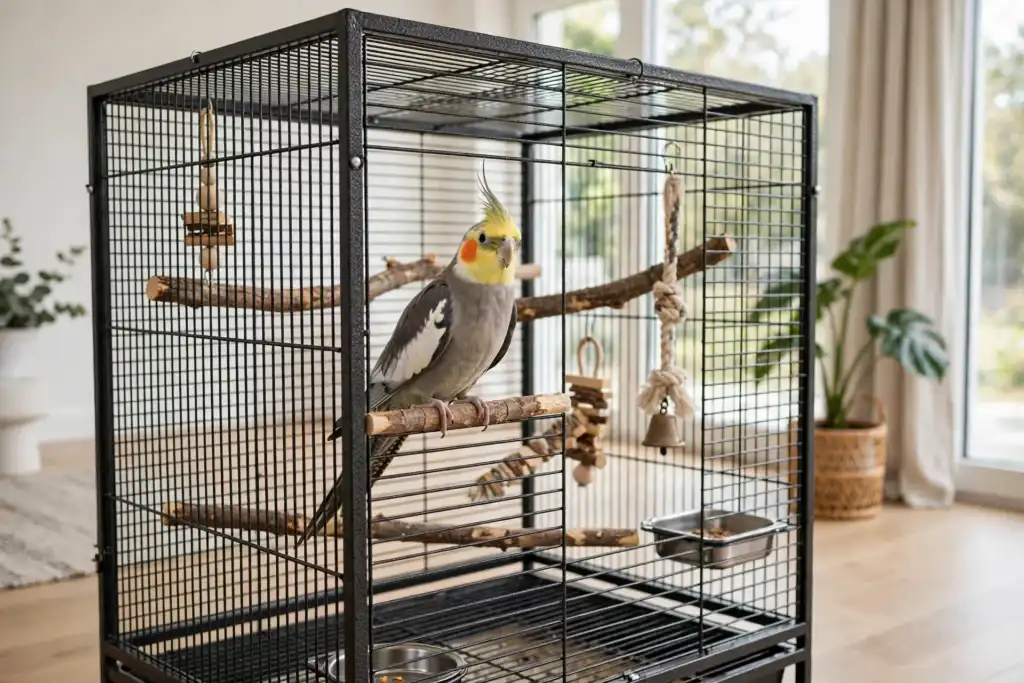
A stressed bird will be unable to stretch. In the cage your bird should be able to stretch its wings fully, flap its wings without knocking into bars, perches, toys, climb, jump between perches and turn around ensuring its tail does not knock into bars.
The Merck Veterinary Manual suggests that the cage should be at least 1.5 times the wingspan of the bird in length and width, and at least the length of the body and tail. This results in the cage being much larger than most people would expect. As the parrot can stretch its wings, it will have room to move around. If the cage is only the length of the body there will be no room for the wings. Using this as your minimum size, if the bird has a long tail then add extra height. If the bird is a climber or flyer then add extra width. If the bird can fly or is kept in pairs then add extra floor space.
Time is also an important factor. As recommended by the RSPCA, if your bird is spending most of their time in their cage they will need more space. A cage that seems large enough for a bird that spends a lot of time outside their cage may be too small for a bird that rarely leaves their cage. They recommend up to 2x wingspans in each direction.
Small cages can be very limiting. There needs to be plenty of space to fit in a few perches, food and water cups, toys and allow them to climb, play and forage. The space that may seem like plenty on the shop floor actually gets filled up very quickly.
If you are still deciding which bird fits your life and your space, our guide to pet birds walks through the common species and what each one needs.
Width Beats Height: Flight Cages
Birds fly side to side, not straight up. A tall, narrow cage wastes most of its volume, because birds perch near the top and ignore the lower half.
The wider the cage, the better. Long cages allow small birds to fly short distances between perches providing them with exercise. Larger birds will be able to move around, climb and flap their wings without having to tuck their wings around a perch.
To do this, they will need a flight cage. These are long rectangular cages that allow the bird to move horizontally. For finches, canaries and budgies, it is much better to have a wide flight cage rather than a tall decorative cage at the same price.
When you compare two cages, compare the footprint first. Length and width decide how much of the cage your bird can actually use. Height comes third.
Minimum Cage Sizes by Bird
This is a safe place to start with the veterinary recommendations. The minimum cage size from the Merck Veterinary Manual has been used below. The bar spacing comes from the same source and PetMD for the smallest birds.
Use these as a minimum size per bird. More space will be needed for a pair of birds and also for an active bird who will spend a lot of time indoors. If ever unsure, go for the larger size as you can never have too large a cage.
Bar Spacing by Species
The bar spacing is an important safety feature. The spacing should be tight enough so that your bird cannot get its head through the bars or wriggle out using their wings or feet. If they can fit their head through then they are in serious danger. If you are unsure which spacing to go for, always go for the tighter spacing. It is better to take a little more care now to avoid a trip to the vet.
Measure the actual open space between the bars, not the width of the bars themselves. Then match it to your bird:
- Finches and canaries: 3/8 inch or less, per PetMD guidance for canaries
- Budgies, lovebirds, and parrotlets: 1/2 inch
- Cockatiels: 1/2 inch
- Conures, caiques, and similar medium parrots: 3/4 inch
- African greys, Amazons, and small cockatoos: 3/4 inch
- Macaws and large cockatoos: 1 1/2 inches
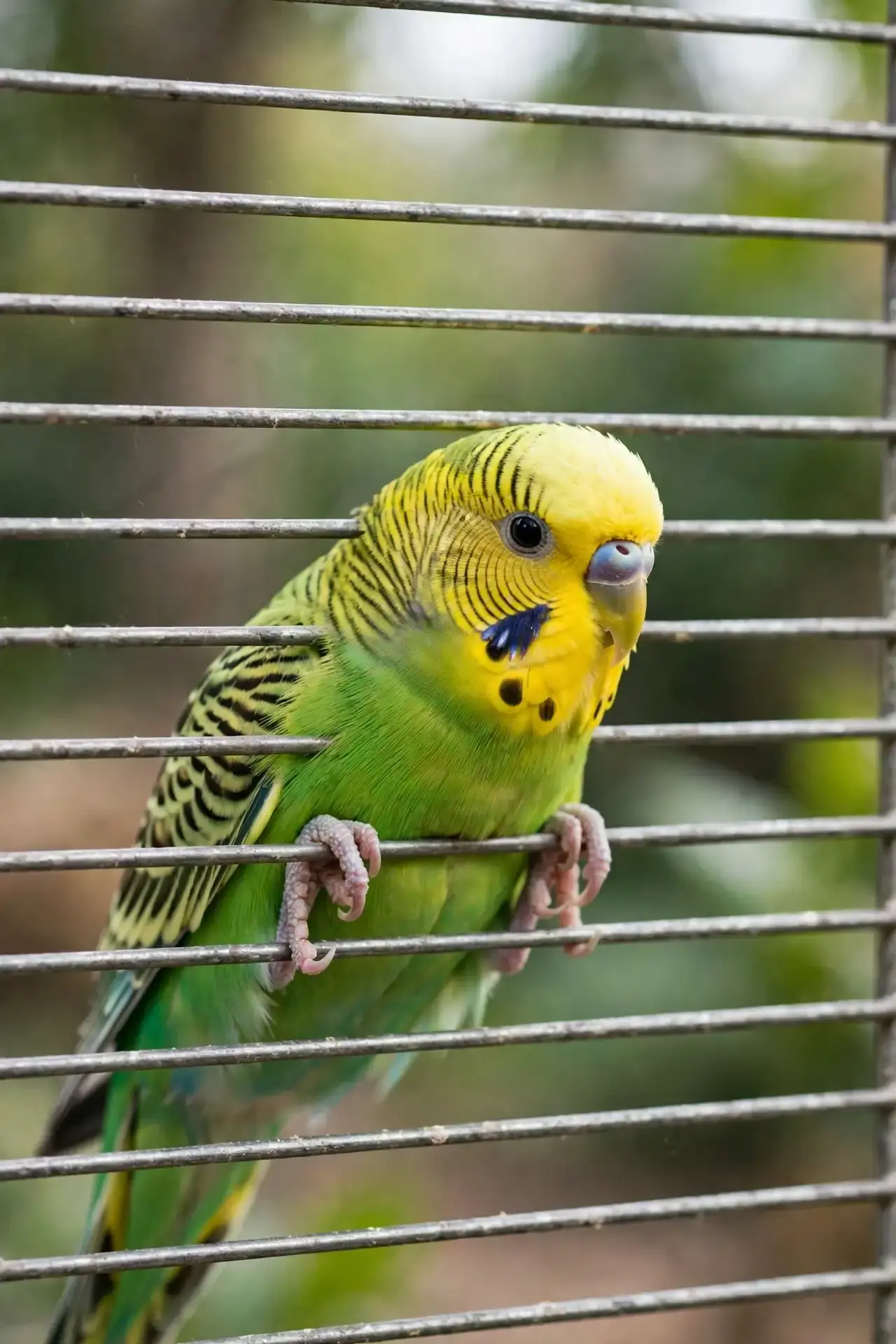
Also, horizontal bars are better. Having horizontal bars on at least some sides makes a great ladder for climbing birds. Many parrots like to climb rather than fly. Vertical bars may look neater but aren’t as good for the feet. If your bird likes to climb having horizontal bars on at least two sides will help.
Ensure that the spacing is appropriate for the bird. If you are keeping two different species together or a young bird with an adult, ensure that the spacing is suitable for the smaller headed bird.
Cage Size and Bar Spacing Table
| Bird type | Minimum cage size, L x W x H | Bar spacing |
|---|---|---|
| Finch and canary | 12 x 12 x 24 inches basic floor, wider flight cage preferred | 3/8 inch or less |
| Budgie, lovebird, parrotlet | 20 x 20 x 30 inches | 1/2 inch |
| Cockatiel | 20 x 20 x 30 inches | 1/2 inch |
| Conure, caique, Poicephalus, mini macaw | 36 x 24 x 48 inches | 3/4 inch |
| African grey, Amazon, small cockatoo | 40 x 30 x 60 inches | 3/4 inch |
| Macaw, large cockatoo | 48 x 36 x 66 inches | 1 1/2 inches |
Safe Cage Materials
Stainless steel is the safest option. It’s non-toxic, won’t rust and has no coating which could flake into their food. It is heavy, expensive but will last for years. If you can afford it then go for stainless steel especially if you have large parrots who like to chew.
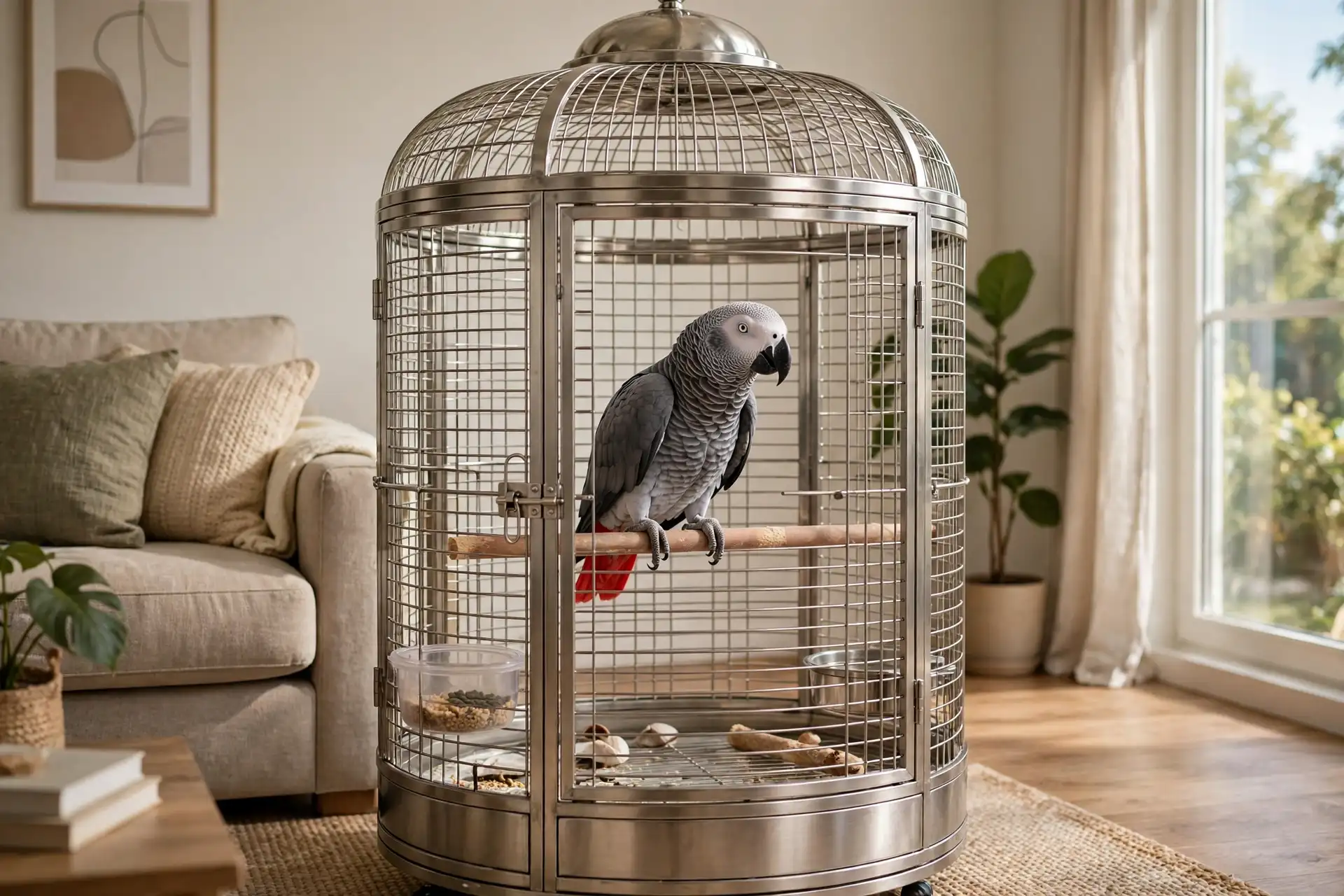
Powder-coated steel and wrought iron are the most common middle range option. A good quality powder coat will have a tough coating which will be resistant to flaking and rusting. Ensure you purchase a reputable brand and check for any cracking, bubbling or exposed metal.
Whatever finish you go for, make sure that the surface is smooth and even with no bubbles, cracks or exposed areas. The welds should also be clean and smooth with no sharp edges or loose ends in the cage.
Materials and Finishes to Avoid
Zinc is a major problem. Galvanized wires and hardware are covered in zinc. Birds chewing the bars swallow the zinc. This is one of the most common metal poisonings in caged birds. It can result in a gradual build-up of zinc in the body and can cause an emergency.
The other danger is lead. Lead can be found in old cages, cheap imports and decorative cages which were not intended to hold live birds. The solder, paint and fittings can all contain lead. If you have an old secondhand cage with peeling paint it can present a risk.
Rust is also an indicator of a problem. If your powder-coated cage is rusty then the coating has broken down and you can see the metal. If your cage is galvanized then it means that the zinc coating is deteriorating. Any bars that are rusty should be sanded or replaced. Any cages that have a lot of rust should be retired.
If you can’t ask the seller what the cage is made from and what is in the finish, don’t buy it. Don’t buy any hardware either. Even if the cage is safe, chains, clips, bells and quick links can still contain zinc.
Cage Shapes to Avoid
Avoid round enclosures. They do not provide any corners for the bird to hide. The curved shape means that the bars are not evenly spaced and can cause problems with the bird getting its toes and tail feathers caught in the tight bars at the top.
Rectangular cages are the right shape. The corners give the bird defined safe zones, the spacing stays even, and perches and cups fit neatly along straight walls.
The dome and play tops can be used on a rectangular cage because the area for the bird to live in will still be a square. The shape of the area the bird lives in is more important than the shape of the roof.
Avoid overly ornate cages. Many of these are decorative and have large or irregularly spaced bars, weak locking mechanisms and could contain lead in the paint. You should buy a cage that is designed to house a bird.
Doors, Locks, and Escape Artists
The cage door should be easy for you to open but impossible to open for your bird. Parrots will quickly learn how to open a latch that you are using. Small birds learn to open a simple sliding door.
Look for a large entrance door to allow access to all areas of the cage and make it easier to remove your bird. Small feeding doors are also a bonus as you won’t have to open up the whole cage to change the cups.
Do not use guillotine doors which will slide up and down. These can be easily raised by a bird and can cause injury if they fall at the wrong time.
Use a lock that can’t be accessed or operated by a clever parrot. Use a latch that requires squeezing and lifting. Or add a simple clip. If they have escaped once, they will know how to do it, so make sure you upgrade your lock.
Perches, Cups, Tray, and Grate
Birds need a variety of perches to stand on throughout the day. Try to provide several perches with varying widths, textures and materials. If they are only stood on one perch all day then they will only be using the same muscles in their feet which will cause sore feet and bumblefoot.
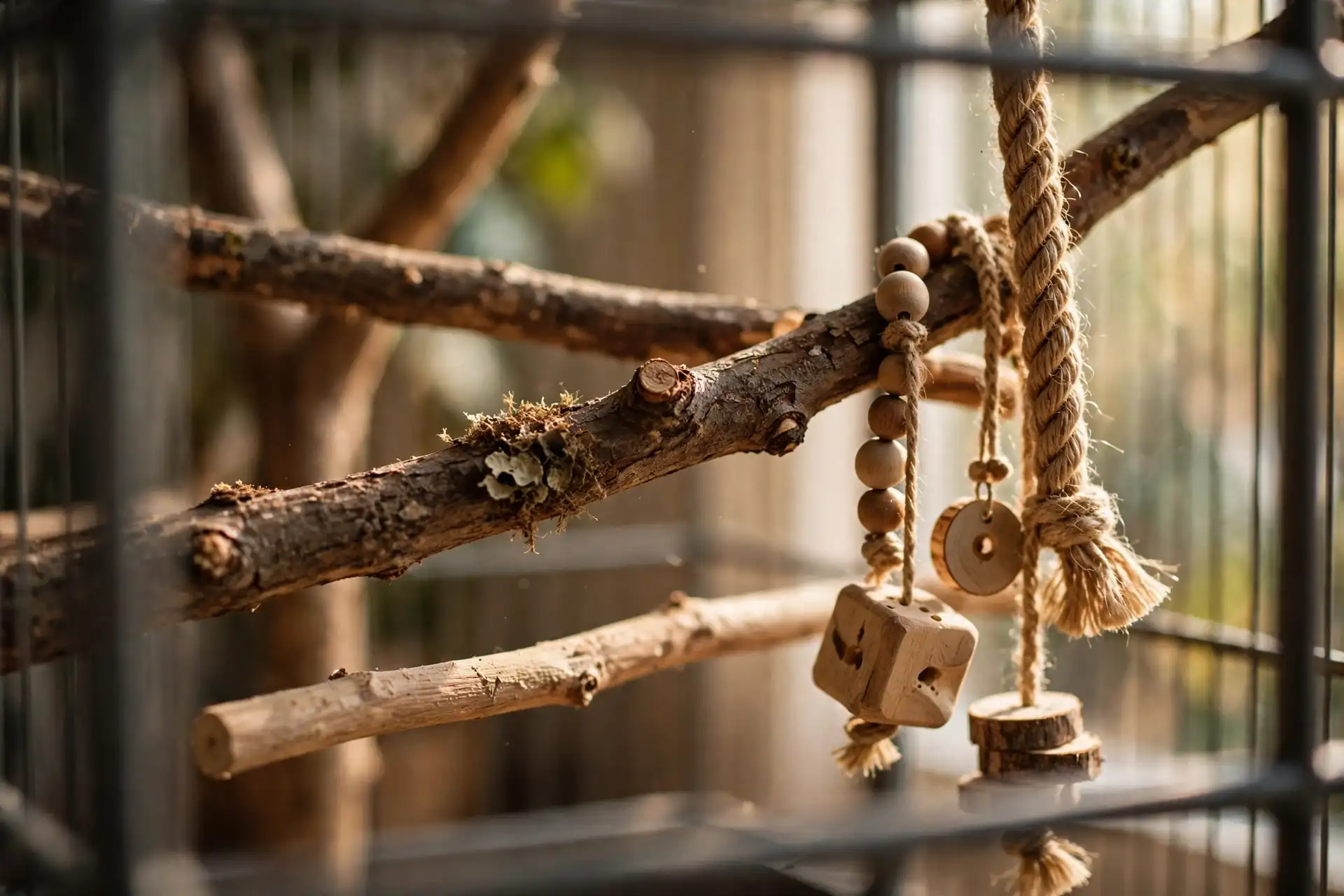
Don’t rely on the polished dowel perch that most cages come with. Using a perch of a single diameter will result in the same pressure on their feet throughout the day. Use this as one option but always provide natural branches or rope perches too.
Provide perches at various levels, avoiding placing them directly above the food/water cups so that droppings are not caught in the cups. Allow space for flying between perches.
The food/water cups should be durable, easy to remove and difficult to knock over. Stainless steel or heavy crock cups are easy to clean and difficult for the parrot to throw.
Look for a pull-out tray and a floor grate. The grate will stop the bird sitting in its own droppings and the tray will allow you to change the liner daily without opening the cage or disturbing the bird.
Setting Up the Cage
To make things simple, add perches at different heights, hang a few toys, add the cups, line the tray and leave enough space in the middle of the cage for wing movement.
Don’t overfill their new cage, as this can cause stress to your new bird. Give them room to fly and start simple. Add toys over the course of the first week to help them get used to their new home.
We’ve got you covered. We have a whole guide on how to set up a bird cage. This includes placing perches, arranging toys and what to do on day one.
Where to Place the Cage
Keep the cage in a room that is used. This will make the bird feel safe with the wall behind and they will get the social interaction they need as pet birds. If they are kept in an empty room they will become lonely and noisy.
Don’t keep the cage in the kitchen. Smoke and fumes from cooking can be harmful to birds (Merck Veterinary Manual). A nonstick pan that has become very hot is the biggest danger. PTFE coatings can release a colorless, odorless gas when overheated. This can be dangerous for your bird as it can be fatal to a small bird with little warning. The temperature should not go above around 536 degrees Fahrenheit (280 degrees Celsius) (Merck). An empty pan can easily reach this temperature on a high heat setting.
Do not place your cage in a drafty area, or near air conditioning vents or windows where it will be directly exposed to sunlight. Merck recommends placing your cage in an area where your bird will not become too hot or cold.
Light is important for sleep. A good night’s sleep is essential for your bird. Covering the cage can help with regulating the light. However, covering your bird’s cage will not help if it is placed in a noisy room or if it is left uncovered during the day. Our guide will tell you whether you should cover a bird cage at night.
Place the cage so that your bird can see the room. You don’t want the cage too high or too low. Most birds and most rooms will suit having a cage on a stand so it reaches chest height.
Cleaning Routine
A clean cage is a health measure, not housework. Droppings, old food, and damp liner grow bacteria fast in a warm room.
Daily, replace the tray liner, clean the food and water cups and ensure your pet has fresh water. This can be done in 2 minutes with the easy sliding tray.
Wipe the bars, perch and grate weekly and clean the tray. If you take the time to check for any damage while cleaning you’ll notice any chipped coating, rust spots or bent bars.
Disassemble the cage as far as it goes every month and give it a good scrub down. Allow it to dry completely before putting your bird back into the cage. Having a second small cage or travel cage will give you somewhere to put the bird during a deep clean.
Good cage care sits inside good bird care as a whole. Our bird care tips for first-time bird owners pull the full routine together, from feeding to health checks.
Frequently Asked Questions
What is the best material for a bird cage?
The safest choice is stainless steel. This material is non-toxic, rust resistant and will have no chipping or flaking. A great alternative would be powder-coated steel, as long as the coating is still intact and you can trust the manufacturer.
What bar spacing does a budgie need?
Budgies require 1/2 inch spacing between bars (Merck Veterinary Manual). This should be checked by seeing that the space is too small for the budgie to put its head through. Finches and canaries require even less bar spacing of 3/8 inch or less.
How big should a cockatiel cage be?
The Merck Veterinary Manual minimum for a cockatiel is 20 x 20 x 30 inches, with 1/2 inch bar spacing. This can be used as a floor. A wider flight cage is better, as cockatiels make use of horizontal space and need enough room to move their long tails when turning.
Are round cages bad for birds?
Yes. Rounded cages don’t have any corners for your bird to hide in. The bars are also curved so they won’t be even. The top is also narrower which can catch their toes and tail feathers. Rectangular cages have even bars and clear corners for your bird to hide in.
Is a galvanized cage safe for birds?
No. Galvanized wire has zinc coating. It can cause poisoning as zinc is toxic to birds that chew it. This is a well-known hazard and can be slow to accumulate before it turns into an emergency.
Can I keep a bird cage in the kitchen?
This is a bad idea. Cooking produces smoke and fumes which are bad for birds. Nonstick pans when overheated produce a gas that can quickly kill a small bird. Often the only sign will be sudden death. Place the cage in a room that is lived in but not the kitchen.
How often should I clean a bird cage?
Change the liner in the tray daily. Wash the food and water cups daily. Wipe the bars, perches and grate weekly. Give it a full deep clean about once a month. While cleaning, check for any signs of rust, chipped coating and bent bars.
Tall cage or wide cage, which is better?
Wide is usually better. Birds that fly horizontally will have more usable space to fly and exercise in a long cage. A tall narrow cage will mean they spend most of their time on the top and ignore the space below. Compare footprints first when you shop.
Conclusion
Choosing bird cages comes down to three checks. The cage should be as big as possible, but at least the veterinary minimum for your species. It should be long and not high. The bars should be close together so that the bird cannot stick their head through. The bars should be sized to the smallest bird in the cage. If possible choose a stainless steel cage but if not choose a good quality powder coated cage. Never choose galvanized wire or old unknown paint. The cage should have secure locks, lots of different perches, a slide-out tray and a spot against a wall away from the kitchen. This will ensure your bird is safe, active and calm for years.
Sources
- https://spectrumcare.pet/birds/care/bird-cage-bar-spacing
- https://frompawtotail.com/blogs/pet-care-and-animal-stories/how-to-choose-the-right-cage-size-for-your-bird
- https://www.furrycritter.com/pages/articles/birds/cage_material_safety.htm
- https://markhamfeatherandnest.ca/tips/choosing-right-bird-cage-setup.html
- https://iloveveterinary.com/blog/can-birds-eat-10-foods-that-are-poisonous-to-birds/