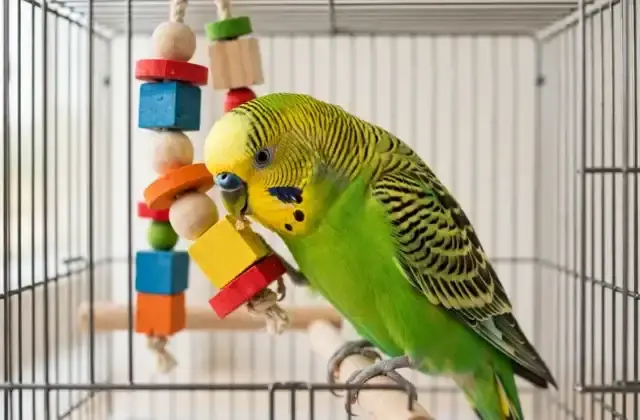

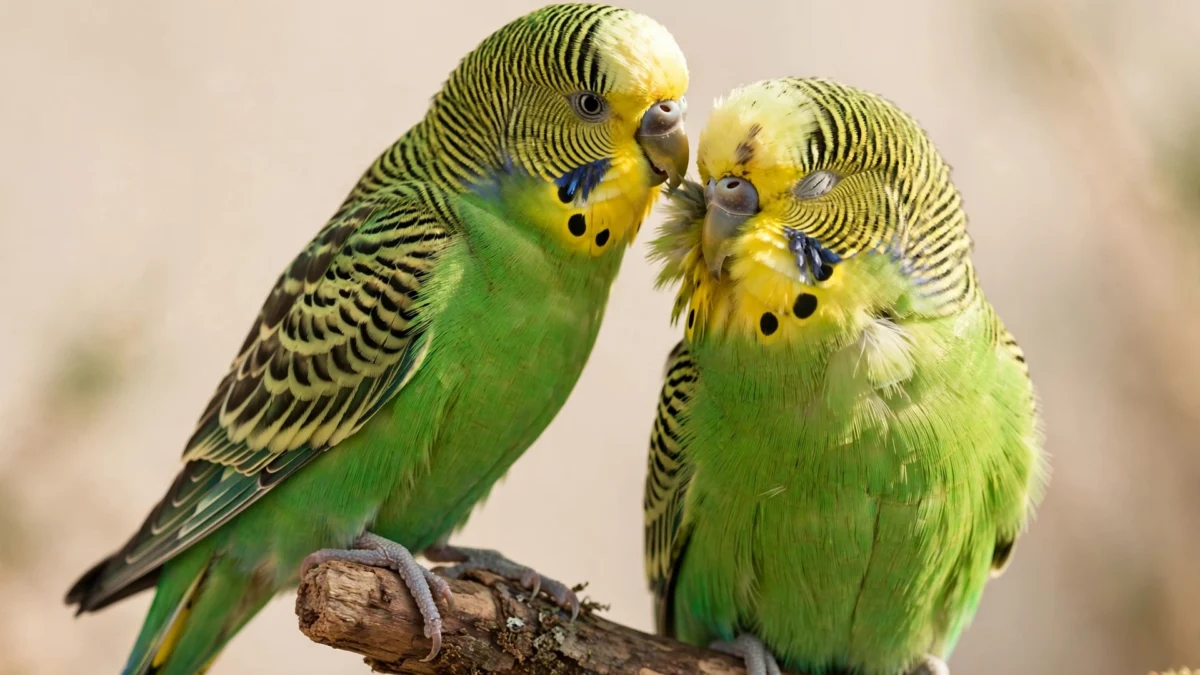
Two parakeets sit side by side on a perch, and one leans in to nibble gently at the feathers on the back of the other’s head. The second bird closes its eyes, fluffs its cheek feathers, and holds perfectly still.
To a casual watcher, it looks like affection, and it often is. But this quiet ritual, called allopreening, carries far more meaning than a simple show of fondness. It is hygiene, diplomacy, courtship, and social glue, all delivered through the tip of a beak.
Scientists use the term allopreening for any grooming one bird performs on another. The word comes from the Greek “allo,” meaning other, and it separates social grooming from autopreening, the self-grooming every bird does alone.
Allopreening occurs in species as diverse as penguins, crows, finches, parrots, and doves. It is one of the most widespread social behaviors in the bird world.
And it tells you a great deal about the relationship between the two birds involved. This guide explains why birds preen each other, what each reason looks like in practice, and when the behavior signals a problem.
What Is Allopreening?
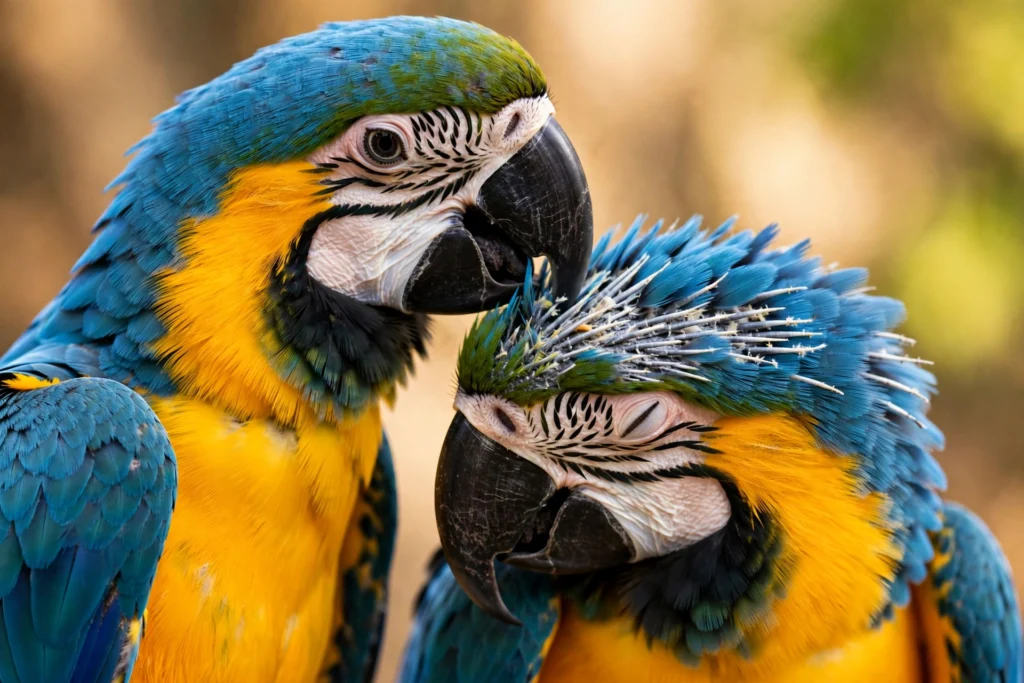
Allopreening is the act of one bird using its beak to clean, straighten, and tend the feathers of another bird. The grooming bird runs its beak through the feathers, nibbles at the base of emerging pin feathers to crack the hard keratin sheath around them, and picks away dirt, feather debris, and parasites. The recipient usually sits still, often with its feathers slightly fluffed and its eyes half closed, and may tilt its head to expose the spots it cannot reach itself.
The behavior focuses overwhelmingly on the head and neck. That is no accident. A bird can preen almost its entire body with its own beak, but the top of its head, the back of its neck, and the skin around its eyes and ears are physically out of reach.
Those same areas are also where feather mites and lice tend to concentrate, because the bird cannot easily groom them away on its own. Allopreening fills that exact gap, and studies of gregarious species have found that ectoparasite loads are highest on the head and neck, precisely the zones a partner can reach.
Allopreening is almost always reciprocal, though not always in the same session. In bonded pairs, partners take turns. In flocks, birds are selective. Research on parrots and corvids shows that birds do not groom others at random.
They favor mates, close relatives, and familiar flockmates, and they often direct grooming upward toward dominant individuals. Who a bird chooses to preen, and who it allows to preen it, is a small map of its social world.
The 5 Reasons Birds Preen Each Other
Allopreening is never just one thing. A single grooming session can serve several purposes at once, and the balance shifts with the species, the season, and the relationship. These are the five functions researchers agree matter most.
1. Hygiene in Hard to Reach Places
The most basic function of allopreening is practical: it keeps feathers clean where the bird itself cannot. Feathers are a bird’s flight system, insulation, and waterproofing all in one, and they only work when every barb and barbule lies neatly in place. A partner’s beak can reach the crown, the nape, and the skin around the eyes, removing loose feather sheaths, dried skin, and parasites that self-preening misses.
This is why allopreening matters most in species that live in close physical contact. In dense colonies and tight flocks, parasites spread easily from bird to bird, and regular mutual grooming is one of the main defenses.
In macaroni penguins, for example, researchers found that unpaired birds carried higher parasite loads than paired birds that allopreened regularly. The grooming is not cosmetic. It is pest control with a direct effect on health.
Preening also helps distribute preen oil. The uropygial gland at the base of the tail produces an oil that conditions feathers and helps them stay flexible and water resistant.
A grooming partner spreads that oil into places the bird cannot easily reach, which keeps the plumage in working order across the whole body. When feathers look ragged for other reasons, our guide to molting vs feather plucking explains how to tell a normal molt from a real problem.
2. Strengthening Pair Bonds
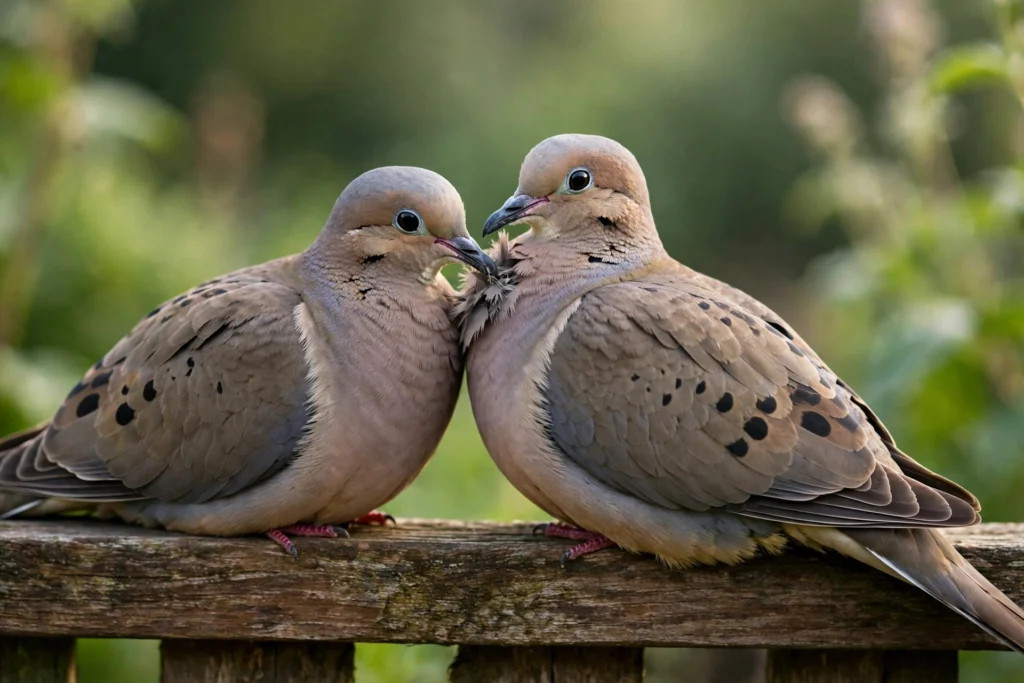
Allopreening is most frequent and most intense between mated pairs, and it is one of the clearest signs that a pair bond is strong. In parrots, doves, finches, and many seabirds, partners preen each other during quiet moments, before nesting, and after reuniting.
The gentle, rhythmic contact appears to lower stress for both birds, and researchers compare its bonding role to social grooming in primates, where grooming partners build trust through repeated, calm physical contact.
The bond-building effect also shows up in parents and chicks. Parent birds preen their nestlings, and as fledglings grow, siblings often begin preening each other.
In species that mate for life, like swans, cranes, and albatrosses, mutual preening continues for years and forms part of the daily routine that keeps the partnership stable. When you see a pair preening each other, you are watching the maintenance work that keeps the relationship intact.
3. Calming Stress and Reducing Conflict
Allopreening works as a social reset button. Birds often begin grooming each other after a disturbance, such as a predator alarm, a squabble, or a stressful event. In colonial species like guillemots, researchers have documented allopreening serving as a mechanism for reducing aggression between neighbors that nest beak to beak. The behavior says, in effect, that the moment of tension is over.
The calming effect is visible in body language. A bird receiving allopreening typically relaxes, fluffs its feathers slightly, and may close its eyes. In doves, a bird may allopreen a partner after a minor spat, functioning much like an apology or reassurance. In a flock, this tension-releasing role helps large groups live together without constant fighting, which is why allopreening is so common in the most social species.
4. Building and Keeping Social Rank
Allopreening is not always between equals. In species with clear dominance hierarchies, subordinate birds often preen dominant ones, and the dominant bird receives the grooming without returning it.
Green woodhoopoes show this pattern clearly: lower-ranking group members direct preening upward to the birds above them in the hierarchy. In this context, grooming functions as a form of tribute and a way for a subordinate bird to stay in the group’s good graces.
Young, unmated parrots in captive flocks show a related pattern. They form preferred grooming partnerships, sometimes called “buddies,” and researchers suggest these early bonds help establish social order before the birds pair up for breeding. Watching who grooms whom in a flock can reveal the hierarchy faster than watching who wins fights.
5. Courtship and Mate Assessment
Allopreening also plays a role in courtship. Before a pair forms, mutual preening lets two birds test compatibility at close range. It requires trust: the grooming bird works with its beak inches from the other bird’s eyes, and the recipient must sit still and allow it. A bird that tolerates preening is signaling acceptance, and a bird that preens gently is demonstrating control and care.
In many species, courtship allopreening increases as the pair bond forms, and it continues into the nesting season, when partners preen each other between incubation shifts. It is one of the earliest signs that two birds are pairing up, and birdwatchers who learn to spot it can often predict which birds will nest together.
Which Birds Allopreen Most?
Nearly all social birds allopreen, but some groups do it far more often and more conspicuously than others. The table below covers the most common examples a backyard birder or pet owner is likely to see.
| Bird group | Who preens whom | Typical setting |
|---|---|---|
| Parrots and parakeets | Mated pairs, flock buddies, parent and chick | Perches, cage bars, communal roosts |
| Finches and canaries | Mates, siblings, flockmates | Feeder perches, nest areas, roosting clusters |
| Doves and pigeons | Mated pairs, parent and squab | Ledges, nest sites, quiet roosting spots |
| Corvids (crows, ravens, jays) | Mates, family members, allies | Family groups, communal roosts |
| Penguins and seabirds | Mates, colony neighbors | Nest sites, dense colonies |
| Woodhoopoes and cooperative breeders | Subordinates groom dominants | Family groups, roost cavities |
Solitary species allopreen far less, simply because they have fewer social partners. But even species that are usually territorial will allopreen with a mate during breeding season. The behavior tracks social life, not taxonomy: the more a bird’s life depends on other birds, the more it grooms them.
Allopreening vs Aggression: How to Tell the Difference
Not every beak-to-feather contact is friendly. A bird that is plucking a mate’s feathers, grabbing and pulling hard, or chasing the other bird afterward is not allopreening. Learning to tell the two apart matters, especially for pet bird owners who need to know when to intervene.
- Gentle allopreening: soft nibbling, slow rhythmic beak movements, recipient relaxed with fluffed feathers and half-closed eyes, no vocal protest.
- Aggressive pecking: fast hard jabs, pulling at feathers, recipient flattens feathers, leans away, squeals, or flees, aggressor may chase after.
- Over-preening: one bird focuses obsessively on the same spot on its partner, often around the head or neck, and the partner’s feathers start to look thin, broken, or bald in that area.
- Barbering: a bird trims or chews the ends of its own or its partner’s feathers, leaving ragged feather tips. This is a stress behavior, not normal grooming.
Context is the best guide. Allopreening happens during calm moments, between birds that choose to sit together. Aggression happens during disputes over food, perches, or territory, and the recipient clearly wants to leave. If you are unsure, watch what happens next: allopreening ends with both birds relaxed and close together, while aggression ends with distance between them.
What It Means When Pet Birds Preen Each Other
Pet parrots, parakeets, cockatiels, and lovebirds allopreen just like their wild relatives, and the meaning is largely the same. Two birds that preen each other are bonded and comfortable. For owners, it is one of the most reliable signs that a pair is compatible and that the birds feel secure in their environment.
Single pet birds often redirect the behavior toward their human. A parrot that bows its head, fluffs its cheek feathers, and rubs against your fingers is asking you to act as its grooming partner.
In Dr. Irene Pepperberg’s lab at Harvard, even her research African grey parrots learned to solicit head scratches from their trainers, and many pet parrots learn words like “scritch” to request the same treatment.
If your bird solicits head scratches, keep your touch to the head and neck, which is the area a grooming partner would naturally reach. Stroking a parrot’s back or wings can trigger hormonal behavior and is best avoided.
Pet birds that live alone may also develop compensatory habits, such as rubbing their heads against cage bars or toys, because they have no partner to groom them. Regular, gentle head scratches from a trusted owner can fill that gap and reduce the frustration that sometimes leads to feather-destructive behavior.
When Allopreening Stops: Warning Signs
A change in allopreening is often one of the earliest signs that something is wrong. Healthy bonded birds preen each other regularly, so a sudden stop deserves attention.
- Illness: sick birds usually stop preening altogether, both self-preening and allopreening. Feathers look ruffled, unkempt, or dirty, and the bird may sit fluffed and quiet.
- Stress or a new environment: a recent move, a new cage mate, construction noise, or a change in routine can suppress grooming behavior until the bird settles.
- Pair bond breakdown: if one bird stops allowing the other to preen it, or begins driving the partner away, the bond may be failing. This sometimes happens when a new bird is introduced or when hormones shift outside breeding season.
- Pain or injury: a bird with a sore spot may refuse to be touched there, or may stop preening a partner because the posture itself hurts.
In wild birds at a feeder, a bird that sits alone with unkempt feathers while others preen nearby may be unwell. It is worth watching from a distance and, if the bird appears weak or stays put when others flee, contacting a local wildlife rehabilitator rather than handling it yourself.
What to Do If Your Pet Birds Over-Preen Each Other
Over-preening between cage mates is a real problem in pet birds. One bird, usually the more dominant or more anxious one, grooms its partner so intensely that feathers break, thin out, or disappear entirely, most often around the head, neck, and face. The victim often sits still and allows it, which makes the behavior easy to miss until bald patches appear.
The first step is a veterinary check for both birds. Over-preening can be triggered by skin irritation, parasites, nutritional deficiencies, or illness in either bird, and those causes must be ruled out before assuming the problem is behavioral.
If both birds get a clean bill of health, look at the environment: boredom, a cage that is too small, lack of foraging opportunities, and insufficient sleep are the most common behavioral drivers.
Adding foraging toys, rotating enrichment, increasing out-of-cage time, and giving the birds a full dark, quiet night of sleep often reduces the behavior.
If the over-preening continues and the victim’s skin is being damaged, the birds may need to be separated, at least temporarily, with cages placed side by side so they can still see and talk to each other.
Reintroduce them gradually and watch the first grooming sessions closely. Some pairs simply cannot live together safely, and in those cases permanent side-by-side housing is kinder than repeated feather damage.
Frequently Asked Questions
Do birds preen each other only when they are mates?
No. Mated pairs allopreen most often, but the behavior also appears between parents and chicks, siblings, flockmates, and, in hierarchical species, between subordinates and dominant birds. Any close social relationship can include allopreening.
Why does my parakeet preen my hair or ears?
Your parakeet is treating you as a flock member. Birds preen the head and neck of their grooming partners, and when a pet bird sits on your shoulder, your hair, ears, and glasses are the closest available equivalents. It is a sign of trust and bonding.
Is it normal for one bird to preen the other more often?
Yes. Allopreening is rarely perfectly even. In many pairs, one bird does most of the grooming, and in hierarchical groups, subordinates groom dominants far more than the reverse. An imbalance only becomes a concern when feathers start to break or bald patches appear.
Why do birds preen each other after a fight?
Allopreening after a conflict appears to function as reconciliation. It lowers tension and reaffirms the social bond, which helps the birds return to normal flock life. In colonial species, it keeps neighbors that nest inches apart from escalating disputes.
Do wild birds preen birds of other species?
It is rare but it happens. The best-known examples involve mixed-species flocks and cooperative breeding groups where different species share territory. Most allopreening, however, happens between members of the same species.
Can allopreening spread disease?
Yes, close beak-to-feather contact can transmit parasites and some infections, which is one reason feeder hygiene matters so much. In healthy wild populations the benefits of grooming outweigh the risk, but at crowded feeders, diseases can spread quickly. Regular feeder cleaning and disinfecting helps keep visiting birds healthier.
Conclusion
When one bird preens another, it is doing several jobs at once: cleaning feathers the owner cannot reach, controlling parasites, calming nerves, and maintaining the social bonds that hold pairs and flocks together.
The behavior is ancient, widespread, and remarkably consistent across species, from penguins on an Antarctic colony to parakeets on a living room perch. Its meaning depends on context, and the difference between gentle grooming, courtship, and dominance tribute lies in who is doing it, who is receiving it, and what happens next.
For birdwatchers, allopreening is a window into relationships that are otherwise invisible. For pet owners, it is one of the most reliable indicators of how their birds actually feel about each other.
Watch for it at your feeder, in your aviary, or at the park: two birds sitting close, one leaning in with a careful beak, the other still and trusting. That quiet moment is one of the most honest behaviors in the bird world, and now you know how to read it.