Most people can only name one duck; the green headed mallard that can be seen on every pond in parks. However, there are a whole dozen different species that can be found on a lake in winter and some very colorful ducks can be found on a wooded creek.
Knowing how to identify different species of duck will change the way you look at any water walks. Instead of just seeing a brown duck you will see a gadwall, pintail or female mallard, each with their own unique bill, wing patch and behavior.
This guide will show you the most common duck species you are likely to see in North America, the difference between dabbling and diving ducks and how to identify them using field marks in seconds.
What Makes a Duck a Duck
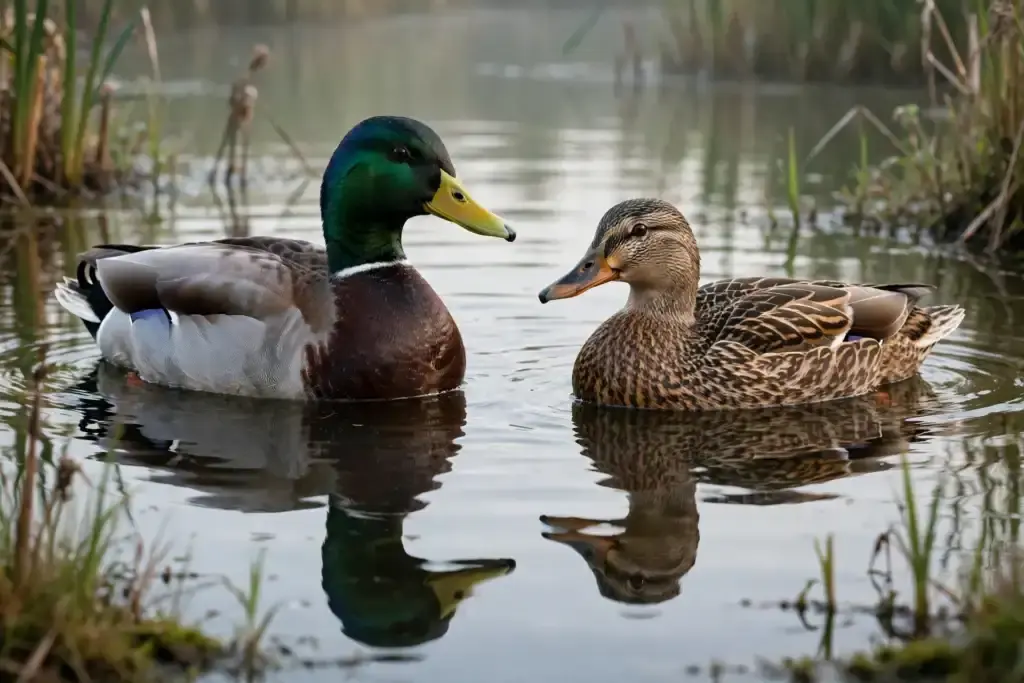
Ducks belong to the Anatidae family of water birds. They have a large flat bill with a nail-like tip and fine comb-like structures around the edge known as lamellae. This helps filter food from water and mud. Ducks have webbed feet, a streamlined body for floating and an oil gland near their tail that oils their feathers to keep them waterproof.
Despite the similarities there are many differences between the duck species. They range in size from tiny green-winged teals, just slightly bigger than a pigeon, to large common eiders of the northern coasts.
Dabbling ducks feed on the surface of the water or tip up in shallows. Diving ducks dive underwater to feed. Sea ducks are a type of diving duck that live mainly in salt water. Mergansers are fish-eating ducks with slender serrated bills.
Dabbling Ducks vs Diving Ducks
Watch how they feed. A dabbling duck will dip their head down and balance on their tail. They will feed just below the surface. Whereas a diving duck will dive underwater for a few seconds and come up somewhere else, often with food in their bill.
Body shape gives the same answer. Dabbling ducks have a high body sitting on top of the water due to their raised tail. Their legs are positioned centrally to allow them to walk quite well on land.
Diving ducks are lower and have a more streamlined body shape, the legs are set further back making them excellent swimmers but poor walkers. Dabblers prefer shallower areas such as marshes, flooded fields, ponds and slow rivers whereas divers prefer deeper lakes, reservoirs, estuaries and coastal water.
How to Identify Ducks
The best way to identify is by using a quick list. Go through each point in order. Size and shape, bill, head, wings, behavior and habitat. Finally colors as these can vary depending on sex, season and light. A female mallard can look similar to a female gadwall in poor light, however, their bills and wing patches will give them away.
Identification by Bill
This is the most useful feature. Both females and eclipse males can be identified using the bill. Mallards have a large flat bill. The male has a yellow bill and the female an orange brown bill with dark spotting.
Northern shovelers have a very wide bill which is spoon-shaped making them easily identifiable from any distance. Northern pintails have a thin gray bill. Gadwalls have a dark gray bill with orange margins on the female. Wood ducks have a short and thin bill. The male has a red and white bill. Mergansers have a long thin bill with serrated edges to help them grip fish.
For a wider look at how bill shape matches diet across birds, see our guide to bird beak types explained: https://birdsbuzz.com/bird-beak-types-explained/
Identification by Head
The head pattern can help to distinguish between many similar looking ducks. The male mallard will have a glossy green head with a white neck ring. The male wood duck will have a glossy green and purple head with bold white stripes and a crest that sweeps back.
The male northern pintail will have a chocolate brown head with a white stripe going up the neck. The male gadwall will have a dull gray brown head without any bold patterning.
The male green winged teal will have a chestnut head with a green stripe sweeping back from the eye. The male common merganser will have a dark green head with a clean white body. The female will have a rusty brown head and a shaggy crest.
Identification by Wing
The speculum is a bright patch on the outer part of the wing. It can be difficult to see for beginners. When the bird is sitting on the water it is covered up but when flying or stretching it can be seen.
Mallards have a blue purple speculum with white edges. Gadwalls have a white speculum. Green winged teal have a green speculum which is how they get their name. Wood ducks have a blue speculum with white and black edges. Northern pintails have a green speculum with a white outer edge.
Identification by Habitat and Behavior
It is important to know where and what a duck is doing. Wood ducks perch in trees and nest in hollows in trees close to wooded streams. They are almost the only duck to do this. Scoters raft on the open sea and dive in deep water. Mergansers swim low and look under the water before diving for fish.
Teal fly up from shallow margins of marshes in small fast flocks. Gadwalls feed very quietly in marshes and ponds on plants often with coots. If the duck is upending in ankle deep water it is a dabbler. If it dives for 20 seconds it is a diver.
Mallard
The mallard is the most familiar type of duck in North America and is the ancestor of nearly all domestic ducks. The male in breeding plumage has a distinctive glossy green head, a white neck ring, chestnut breast, gray body and yellow bill. The female is a mottled brown with an orange brown bill with dark spots. Both males and females have a blue purple speculum with white edges.
They have the typical dabbling duck body shape with long bodies and raised tails. Mallards can be found in nearly all areas of water such as ponds in parks and flooded fields. They eat plants, seeds, insects and small aquatic animals.
Cornell Lab of Ornithology covers the mallard in detail, including its eclipse plumage and measurements, at its Mallard Identification page: https://www.allaboutbirds.org/guide/Mallard/id
Wood Duck
The wood duck is the most colorful of all ducks found in North America and is likely to give any novice pause for thought. The male has a glossy green head with white streaks, a chestnut breast with white spots, buff sides, red bill and red eyes.
The female has a warm brown body with a white teardrop around its eye and a white border to its blue wing patch. Both have a boxy, crested head, a slender neck and a long, wide tail. Wood ducks live in wooded ponds and slow flowing streams. They nest in holes in trees and perch in trees. They eat acorns, seeds, berries and insects.
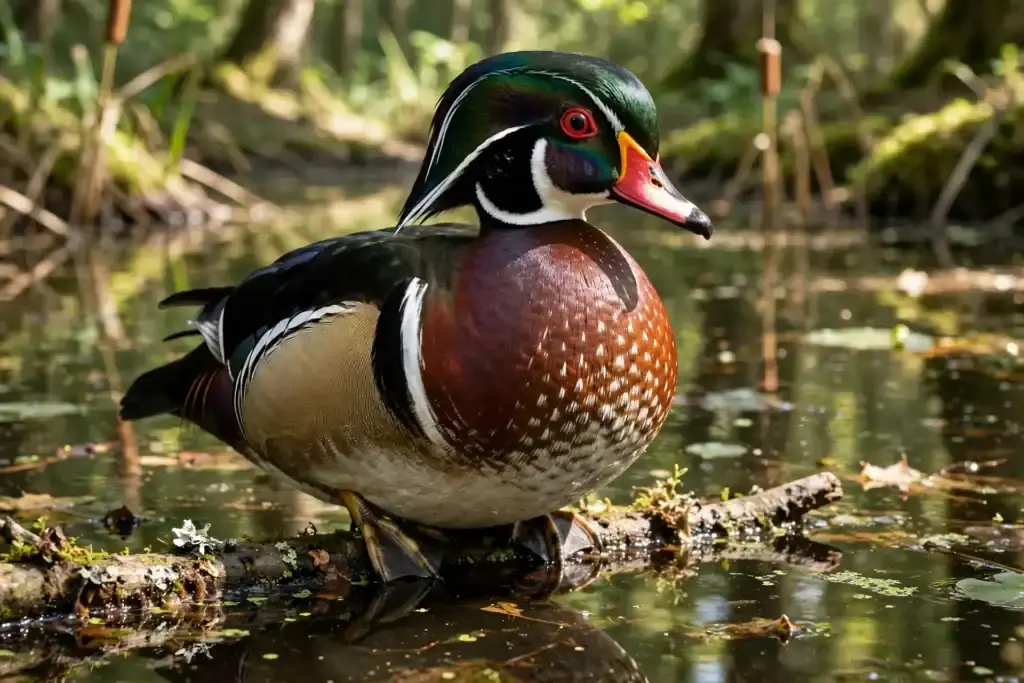
Cornell Lab of Ornithology describes the wood duck shape, size, and habitat at its Wood Duck Identification page: https://www.allaboutbirds.org/guide/Wood_Duck/id
Northern Pintail
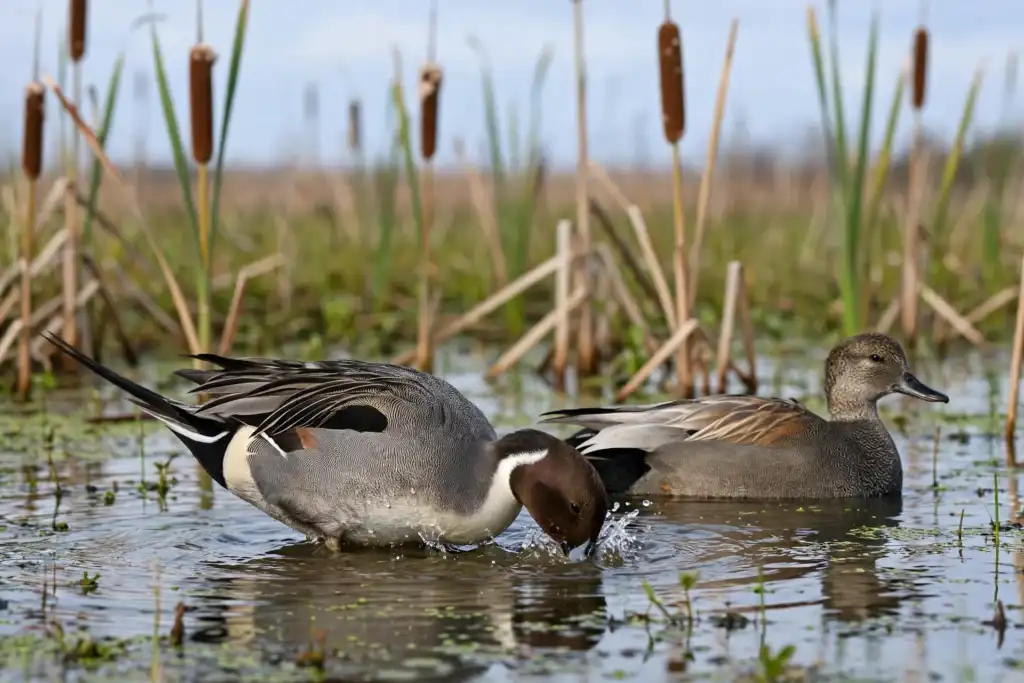
The northern pintail is the most stylish duck on this list. The male has a chocolate brown head, a white neck stripe running up from a gleaming white breast, gray sides, and a long, pointed tail that gives the bird its name. The females are slim and drab with markings of tan brown. They also have long necks and tails which are not as long as the males but still quite prominent.
The pintail has long slim wings and a slender gray bill. They like to live in open wetland areas, shallow lakes, flooded fields and coastal marshes. They feed by dabbling and tipping up. The pintail will always look long and slim.
Gadwall
The gadwall is a great teacher of patience. They are not very flashy. The male has gray plumage with a black rear end, gray bill, and white speculum. The females are a mottled brown like a female mallard, with an orange edged dark gray bill and white speculum.
A gray brown duck with a black rear end and white wing patch is a gadwall. They live in marshes, ponds, lakes and slow rivers. They mainly eat plants such as pondweed and algae but often pilfer food from diving ducks at the surface.
Teal
Teal are small, quick ducks that live in shallow marshes. The green winged teal is the smallest duck on the continent. The male has a chestnut head with a green stripe from the eye, gray body and green speculum. The female is a small, mottled brown duck with a green speculum, which is the best mark.
The male blue winged teal has a gray blue head with a white crescent in front of the eye and a large pale blue patch on the wing. The male cinnamon teal is a rich reddish brown with a red eye. Teal prefer shallow marshes, flooded fields and pond margins. They feed by dabbling in only a few inches of water.
Mergansers
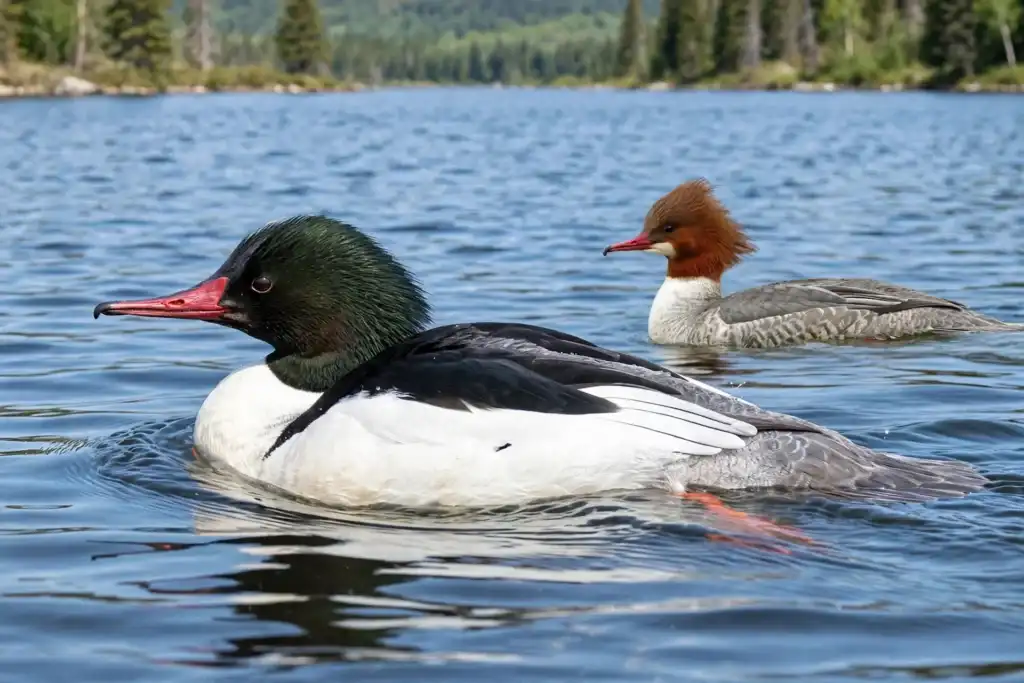
Mergansers are fish eating ducks. They have long slender bills with serrated edges to help catch the slippery fish. They have a different bill to dabbling ducks as they are longer and narrower. The common merganser is quite large. Males have a dark green head, white body and red bill.
The females have a rusty brown head with a fluffy crest and white chin. The hooded merganser is small. Males have a fan shaped white crest. Mergansers dive for fish in rivers, lakes and coastal waters.
Scoters and Other Sea Ducks
There are three common scoters. They are sea ducks and are well adapted to living in cold, open waters. The males are mostly black, so the bill and the head patches do the work. The surf scoter has a black body, a white forehead patch and an orange, white and black large bill.
The white winged scoter has a black body, a white patch around the eye and a white wing patch. The black scoter has a totally black body, but has a bright yellow knob on its bill. The females are dark brown with pale cheeks. They breed in northern lakes but spend the winter at sea. They form large rafts of birds and feed by diving for mussels and shellfish.
Seasonal Plumage: Breeding, Eclipse, and Juvenile
Ducks have different plumage throughout the year, which can cause confusion as to what species of duck you have in late summer. During the breeding season males will have bright plumage. Once they have finished breeding they will molt all of their flight feathers at once meaning they are flightless for 3-4 weeks.
During this time they will have eclipse plumage, which is a duller female like plumage to help them hide. Male mallards will have a mottled brown plumage similar to females but will have a yellow bill and blue speculum. A good tip to remember is not to go by bright plumage between July and October. Look at the bill, wing patch, shape and behavior.
Where to See Ducks
The best way to find ducks is in shallows with cover. Look around your local ponds, marshes, reservoirs and slow flowing rivers. Try to find a pond in a park with mallards as they will help you learn about size, shape and behavior.
Next look at a wildlife refuge or wetland reserve. These have shallows, mudflats and open pools which attract dabbling, diving and wading ducks. The best place to see the most variety of ducks is somewhere with a range of different habitats.
From a distance is best. Stay on paths and viewing platforms. Keep your voice low and don’t disturb any flocks. Bring binoculars, even a modest pair, because most ducks sit far from the bank. Ducks move with the seasons, and migration shapes where and when each kind appears. For the timing and routes of that movement, see our guide on do ducks migrate. For how they choose those spots, see our guide on where ducks sleep at night.
Duck Comparison Table
| Duck | Group | Male field marks | Female field marks | Best habitat |
|---|---|---|---|---|
| Mallard | Dabbling | Green head, chestnut breast, yellow bill | Mottled brown, orange brown bill | Ponds, marshes, rivers |
| Wood duck | Dabbling | Green head, white stripes, red bill, crest | Brown, white teardrop around eye | Wooded ponds, streams |
| Northern pintail | Dabbling | Brown head, white neck stripe, long pointed tail | Slim, tan, long neck and tail | Open wetlands, flooded fields |
| Gadwall | Dabbling | Grey body, black rear, white speculum | Mottled brown, grey bill, white speculum | Marshes, ponds, lakes |
| Green winged teal | Dabbling | Chestnut head, green eye stripe | Small, mottled brown, green speculum | Shallow marshes, pond edges |
| Common merganser | Diving, fish eating | Green head, white body, red serrated bill | Rusty head, shaggy crest, white chin | Rivers, lakes |
| Surf scoter | Sea duck | Black body, white forehead patch, orange bill | Dark brown, pale cheeks | Coastal sea, bays |
Common Identification Mistakes
Most incorrect identifications can be put right by remembering a few points. Firstly, all brown ducks should not be identified as female mallards. Female mallards, gadwalls, pintails and teal all look brown at first glance but look at the bill and speculum.
Secondly, bright colors should not be taken as a clue. Eclipse males will look very female like in late summer. Thirdly, do not rely on size. If possible, compare with a mallard or coot in the same flock. By following the checklist you will get the correct identification. Look at the bird in size and shape, then bill, head, wings, behavior, habitat. Use color as a confirmation.
Frequently Asked Questions
What is the most common duck species in North America?
The mallard is the most common and widespread duck of North America. It can be found on ponds, marshes, rivers and lakes throughout North America. Once you know a little bit about the mallard duck you can compare all other ducks to this one.
How can you tell a dabbling duck from a diving duck?
Look at the feeding habits. Dabbling ducks will tip forward, keeping their tail up in the water but never go completely under. Diving ducks go completely under the water for seconds at a time. Dabblers also sit higher on the water and take off straight away whereas divers sit lower and have to run along the surface.
What is the colorful duck with a crest that lives in wooded ponds?
This is the wood duck. The male has a shiny green head with white stripes, chestnut breast and red bill. Both males and females have a crested head and long tail. Wood ducks nest in holes in trees near wooded streams and ponds. They perch in trees.
Do ducks stay in one place all year?
Many ducks are migratory. Some will only travel short distances between breeding and wintering grounds, while others such as mallards will remain in areas with open water and food. Pintails, teal and sea ducks will travel further distances. For the timing and routes, see our guide on do ducks migrate.
Why do ducks quack?
Only female mallards will produce the typical loud quack and use this to communicate with their ducklings and other ducks. Males make softer and raspy noises. Other types of duck will whistle, grunt or be almost completely quiet. For more on duck calls, see our guide to why ducks quack.
How do ducks stay dry in cold water?
Ducks are able to stay dry due to their thick layer of overlapping feathers which are covered in an oily substance produced by a gland near the tail. They also have a soft layer of down feathers which traps warm air and helps to keep them warm. The oil keeps water from soaking through. For the feather structure and preening routine in full, see our guide on how ducks stay dry.
Conclusion
Duck identification is a skill you can learn. Start by learning to identify dabbling ducks and diving ducks. Learn to identify mallards, wood ducks, pintails, and gadwalls based on their shape and bill. Then add the teal, mergansers, and scoters one group at a time. Use the speculum and habitat to help identify these ducks as the colors will only give you an indication.
It can be an amazing shift in perspective. Rather than just a lake with a flock of brown ducks, you will see a variety of different ducks, including gadwalls, teals, and pintails, all with their own stories. Head out early with your binoculars, watch from a distance, and let the birds show you who they are. The next duck you see will have a name, a bill, a wing patch, and a home range you now recognize.