
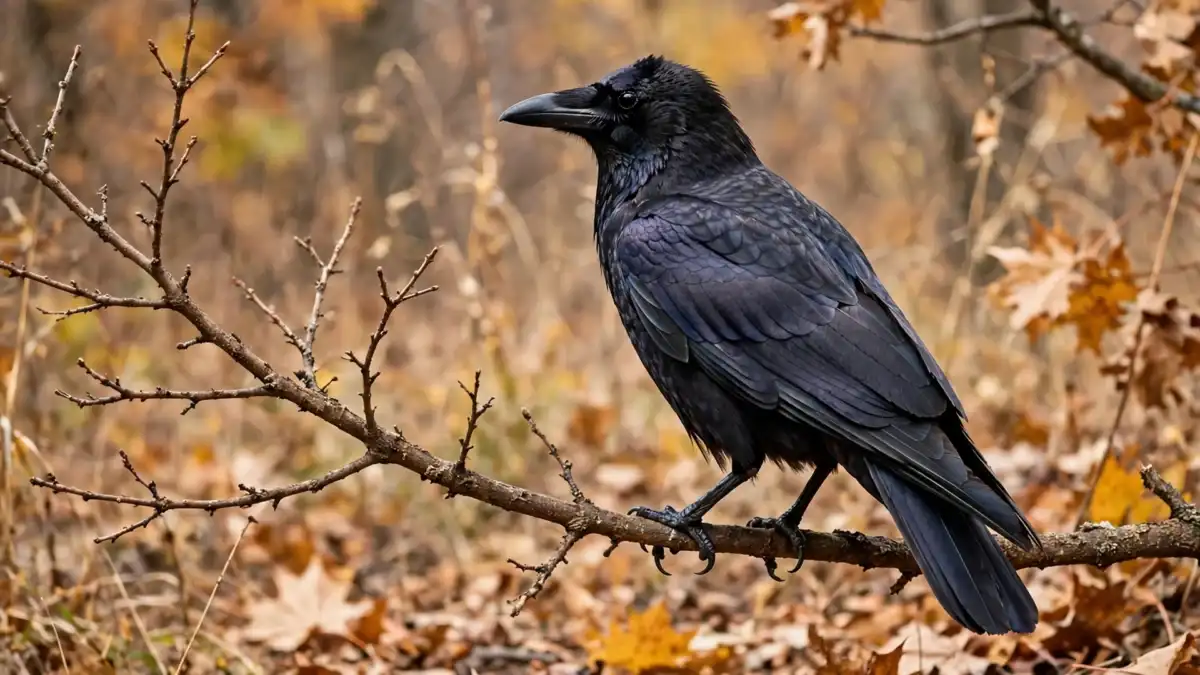
Do crows migrate? Some do and some don’t. American crows are partially migratory, meaning that lots of them in the north will migrate to the south but not the ones in the south and lots of urban crows.
This is why you might see thousands of crows together at a roost throughout the winter months. Or maybe just a pair of crows that live in your local area all year round. Whether crows migrate depends on where they breed, how cold their winter will be and if they have migrated before.
The Short Answer
The American crow (Corvus brachyrhynchos) is a partial migrant. Individuals breeding in the extreme north, Canadian prairies and northern Great Plains will migrate during the autumn. However, individuals in the southern USA, mild coastal areas and many urban areas will not migrate.
18 American crows were tracked using satellite technology. Approximately 78% of these crows were migratory and traveled between 177-1095 km from their winter roosting sites to their breeding areas. The other crows did not migrate, and stayed within a 25km radius of their breeding area throughout the year.
It was also found that once a crow began migrating they would do so every year. They would return to their breeding grounds in the spring. Crows do not migrate randomly but follow a pattern.
Which Crows Leave, and Which Stay
Crows also avoid the coldest parts of their range. They are almost completely absent from the prairie provinces, Nevada and the far north. Many move away from northern Ontario, Quebec, Newfoundland and Labrador, the interior of New Brunswick, Maine, most of Montana and Idaho, Wyoming and central and western North Dakota. Crows further south may only exhibit minor changes in behavior. Crows breeding in mid latitude areas may not migrate at all.
For example, in Connecticut most of the crows stay in the area during the winter. In Pennsylvania some of the breeding crows will move south in late September/early October but are replaced by crows from the north, meaning that the same flock can be seen during the winter.
Older crows are less likely to migrate. The older crows will be resident on their territory throughout the year. This makes sense because the older crows will know where they can find food and roosting sites. They are less likely to migrate due to less incentive to take a risk. The younger crows will have less knowledge of the area so are more likely to migrate with the flock.
When Crows Migrate
| Stage | Typical timing | What to expect |
|---|---|---|
| Fall departure begins | September, northern birds first | Birds stay near breeding territory through September, then move south |
| Peak fall movement | October and November | Large groups moving through, staging roosts forming |
| Winter roosting | December through February | Thousands of crows gathering in towns, farms and city roosts at dusk |
| Spring departure from winter areas | Mid February to late March, peak | Roosts thinning, birds heading north in smaller groups |
| Arrival on breeding grounds | February to April, often late March to early April | Pairs returning to the same territory as the year before |
Crows are diurnal migrants. One study showed that in the spring radio tagged crows flew about 300km on the first day of migration. They also stopped to eat twice for about 35 minutes. Most of the time they would have been flying with others. Crows are very social, so they tend to travel during the day.
The northern species are some of the earliest to return. They’ll leave their winter quarters between mid-February and late March. Crows will arrive at their breeding grounds between February and April. If you see them in your yard in February they could be early migrants.
How Far Do Crows Travel
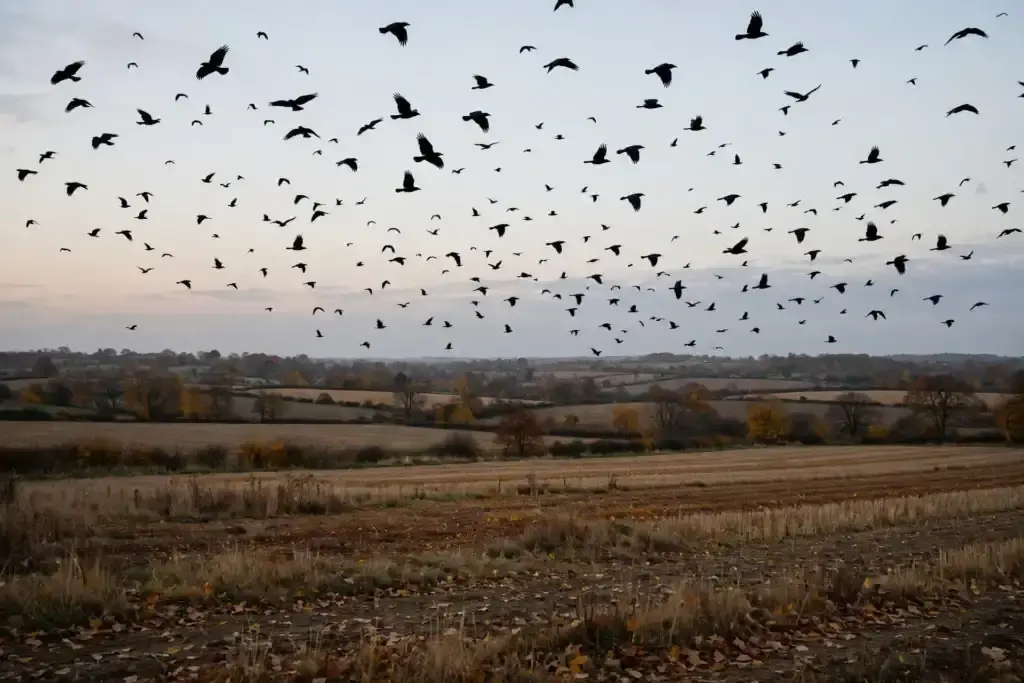
Most migrating crows do not travel very far. West coast migrants traveled roughly between 280-1100 km. The average distance traveled was 590 km. East coast migrants traveled roughly between 180-800 km. The average distance traveled was 460 km. This is still a long way but not as far as many warblers and shorebirds who migrate continent wide.
Long distance migrants. The Canadian prairie crows migrate to Nebraska, Kansas, Oklahoma and Texas. The maximum distance traveled from banding recoveries was approximately 2800 km. However, this is an exception. Usually long distance migration occurs because the crows are migrating from the northern areas of their range to spend the winter in the southern plains.
How far they travel will depend on what coast they are from and how far north they breed. Those breeding in northern Ontario will travel further than those in Pennsylvania as they have to move further away from the harsher winters. Crows from California may only travel to a lower altitude or warmer valley.
Winter Roosts: Why Thousands Gather
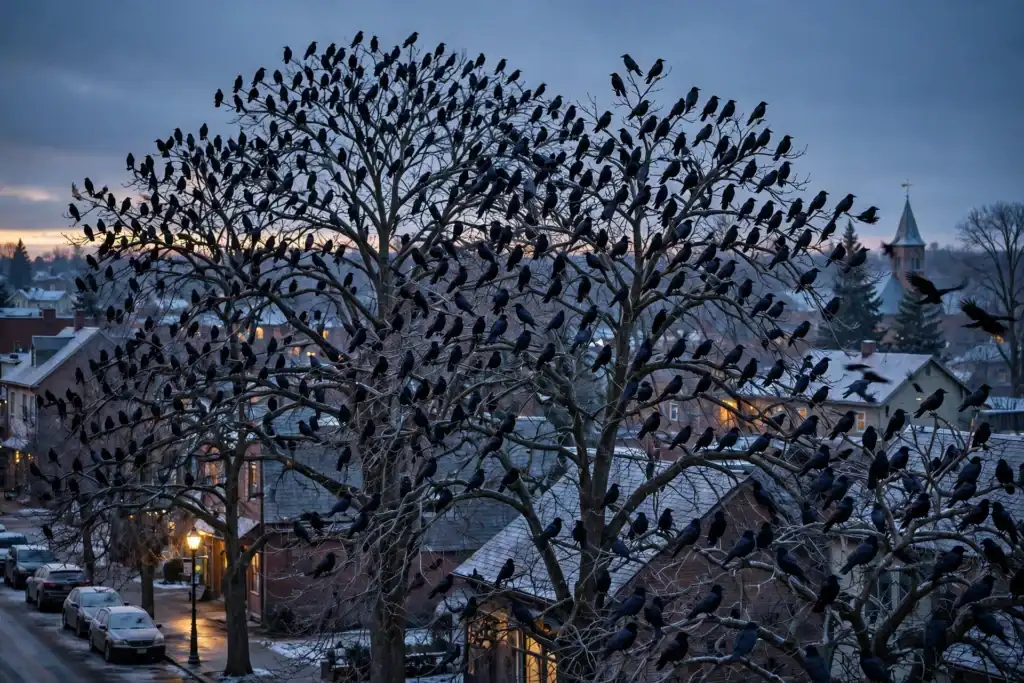
One of the most noticeable signs of migration is the winter roosts. Although not all the crows in a town roosting in large numbers indicates that they have migrated to the area, it does indicate that migrant and local crows come together.
Roosting is a safe place for crows to stay warm and gain information. It means they have lots of eyes to spot predators. They can follow successful foragers to find food the next day. They often roost in towns as it is warmer than out in the open. There are lots of heated buildings, streetlights and trees to provide shelter. They often roost near farms, landfills and other sources of food.
The size of roosts can vary from year to year and from place to place, and some well known roosts can have up to tens of thousands of crows in them while others can have only a few hundred. Roosts can also move locations. This could be moving just a few km due to tree trimming, light changes and increased disturbances. You may not see a roost in your town anymore as they could have moved to a new area nearby.
The roosts can be quite noisy at times of dusk and dawn as the crows come and go. However, this is normal behavior and they are not stressed. Crows are very chatty birds and the roost sites are social places. Family groups will gather together after going out foraging.
Why Some Crows Stay
Crows benefit from staying in their territory as they will know where to find food and will be able to breed earlier in the spring. They will also avoid the dangers of migration such as storms, predators and unfamiliar territory. In urban areas it is easy to stay as there is plenty of human food available, warm buildings and safe roosting areas.
The main reason for this is food. Crows are omnivores, which means they eat insects, carrion, grain, fruit, nuts, eggs, and human food scraps. This means that they can easily survive the winter by staying in one place as they can eat a range of foods.
The main problem is that the ground freezes, meaning it is hard to find insects and grain. If the ground freezes for a few weeks then crows in the north will need to migrate but crows in the south are still able to eat.
The climate and habitat of the crows also has an effect. Crows living in a mild area such as a coastal city with open water, farms and towns nearby will have a completely different winter compared to the crows in the Canadian prairies. As a species they will be partially migratory. Some will migrate while others will not. Overall the population will survive in both the mild and harsh winters.
Other Crows Around the World
However, not all crows migrate. Carrion crows in Britain (Corvus corone) are not very migratory and stay within the same area throughout the year. Some hooded crows (Corvus cornix) are also resident in parts of Europe.
However, only some hooded crow populations migrate to the south during the winter. This means that they are not all migratory but will migrate depending on the local conditions in the winter.
Common Ravens (Corvus corax) are closely related to crows; they are largely sedentary within most of their range. They are able to survive the winter months by feeding on large carrion in the colder northern regions. American crows are more likely to migrate as they feed on smaller, scattered foods.
Do robins migrate provides an example of other partial migrants. The reasons why some robins are resident and others migrate are very similar to crows.
What Crows Eat in Winter
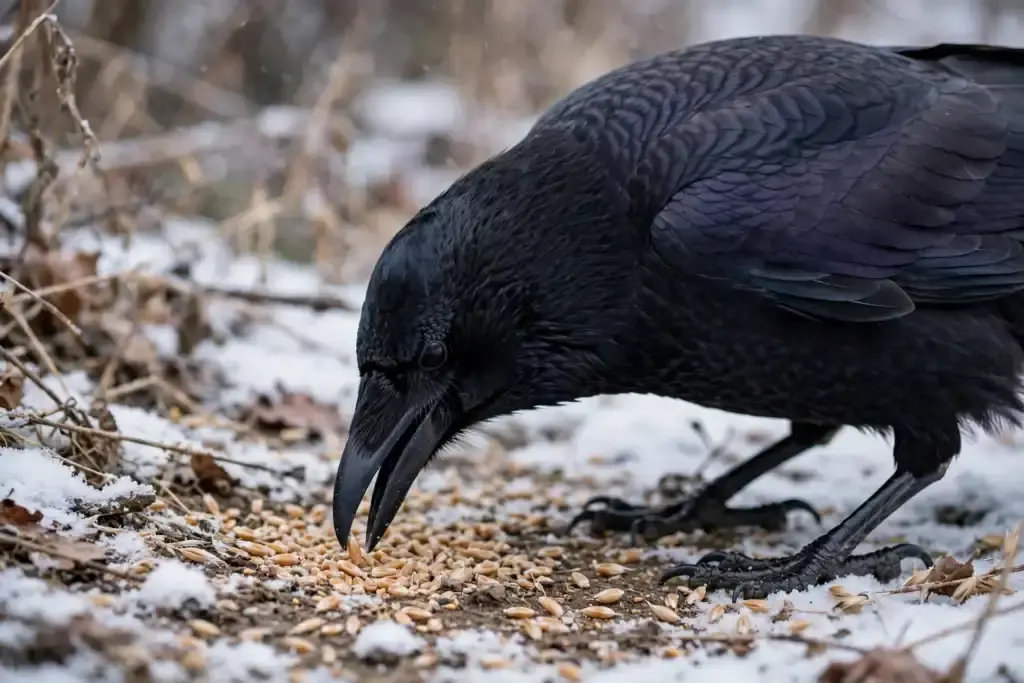
Crows will migrate depending on what they are eating during the winter months. During the winter months crows eat grain from farms, fruits that have been left on trees, nuts, carrion, insects from leaf litter and human waste. They can also be seen feeding from feeders, however, due to their large size they will not fit in most of the small feeders. They prefer to feed on the ground or on platform feeders.
Crows are also highly intelligent and use tools. They drop nuts onto roads to let cars crack them open. They use tools to get insects out and have amazing memories so they know where they can find their food. Find out more about how intelligent they are and what they eat by reading why do crows dip their food in water.
To help the crows over the winter, please provide a platform feeder or ground feeder with unsalted peanuts, cracked corn or other grains. Don’t just feed them bread as they will not have a balanced diet. Please remove any uneaten food to avoid attracting rats.
How to Watch Crow Migration in Your Area
Crow migration can be easy to watch as they are quite big, loud and active during the day. The best time to watch crows is early in the morning and later in the evening in October and November. Find a place that is open and has little noise from traffic. Watch for big, loose lines of crows moving in the same direction and making noise.
Try to get an approximate number. Although 20, 200 or 2000 crows are very different amounts, it is okay to give an approximation. Try to record when you saw them (date, time) and which direction they were flying in and the weather. This helps local birding groups to see if the roost is increasing, decreasing or moving. If you notice that there are more crows in October and a large evening roost then you are likely to be seeing migrating crows.
Try to stay back and not cause any disturbance. Don’t shine lights on the trees, play recordings or attempt to flush any birds. This can cause the roost to move as it will be constantly disturbed. Try to watch them from a road, park path or garden. Let the crows settle naturally. In spring you can watch the numbers reduce from mid February to late March. The pairs will start to return to their breeding territories. They can often be very noisy from the same trees they were in last year.
You can help researchers by noting down what you see. We still don’t know everything about crow migrations. You can record roost counts and observations of crows migrating by using local birding apps and citizen science projects. It is best to record regular counts from the same location. Knowing when you see your first large flock and final roost night during spring will also help you learn about the partial migrations happening in your area.
FAQs
Do crows migrate south for winter?
Some do. Northern American crows migrate south, while southern and many city crows stay. The species as a whole is a partial migrant.
Do crows migrate at night?
No, crows migrate by day, usually in groups, stopping to feed along the way. That is different from many songbirds, which migrate at night.
Where do crows go in winter?
To towns, farms and big communal roosts, often in the same region or a few hundred kilometres south. For more on winter routines in general, see where birds go in winter.
Why are there so many crows in winter if some migrate?
Winter roosts are a mixture of local and migrant birds. Although some local birds may leave to go to the south, some new migrants will come from the north. Overall the total number of birds may increase even though the individual birds have changed.
Do crows return to the same place every year?
Migratory crows return faithfully to the same breeding grounds each spring, often in late March or early April, while being more flexible about where they winter.
Are crows that stay all winter the same birds I saw in summer?
Sometimes yes, sometimes no. Older, resident birds often stay, while younger birds and northern migrants move. Without bands or tags, you cannot tell an individual migrant from a resident by sight alone.
Conclusion
Crows do migrate depending on the species. Northern American crows will leave their area in September and reach their peak in October and November. They will travel an average distance of a few hundred km. They will then form large winter roosts. From February to April they will return to their breeding area.
Southern and urban crows are non-migratory due to their mild winters, varied diet, and human food sources. This means the crow population is partially migratory, making studying crows during winter very interesting. However, if you only look at crows in your own yard you may be deceived.
[Note: Birdfact – Do Crows Migrate. 18 American crows were tracked using satellite tracking. Biology Insights – When Do Crows Migrate. Summarises the tracking study.]