Introduction
If your feeders are getting picked clean by squirrels by midday and songbirds are being chased off the feeder by starlings, then changing to safflower seeds can help. These tiny white seeds have a hard shell which makes them easy to crack open for cardinals, chickadees and titmice. Starlings, grackles and most squirrels won’t bother with them once they’ve had a taste. The slight bitterness and tough shell means they act as a sieve at your feeder. This guide will explain which birds will eat safflower seeds, which will avoid them, which feeders work best with them, and how to convert your birds from sunflower without having an empty feeder for a week. Once you’ve read through you’ll know when safflower is the right seed for your garden and when sunflower is the winner!
What Are Safflower Seeds
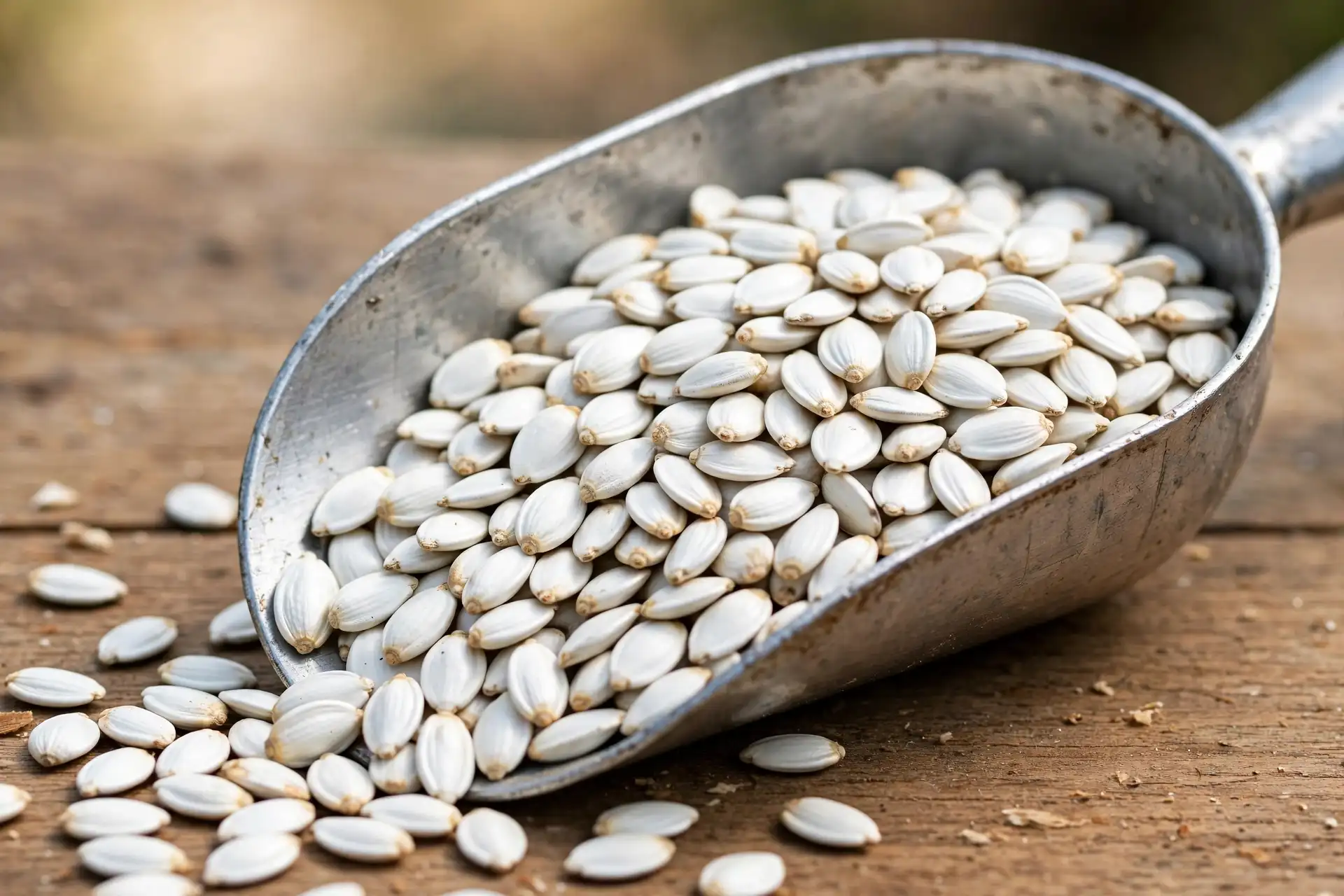
Safflower seeds are derived from the safflower plant (Carthamus tinctorius). This is an annual thistle-like plant that has been grown in the Middle East, Asia and the Mediterranean for thousands of years. The plant has vibrant orange and yellow flowers which produce small white oval seeds.
Each seed has a tough, hard white shell that not only protects the kernel but also helps to keep the seed fresh for longer when in storage. This determines what birds can eat the seed and what birds will give up.
It has a slight bitter taste. Humans can tell, but so can animals. Squirrels and a few bully bird species don’t like the taste, however the songbirds that most people want in their yard will happily eat the seeds. This combination of a hard shell and bitter taste is uncommon in bird seed, which is why safflower is so different from sunflower.
Safflower Seed Nutrition
Safflower is a high calorie seed. As mentioned in the BirdsBuzz seed guide, safflower contains around 30% fat and 16% protein. This makes it a great source of calories. The fat content means that it provides the most energy per mouthful, so a hard working chickadee will get plenty of reward for cracking open a safflower seed.
Protein is also needed for growing feathers during molting and maintaining muscle during the breeding season. A seed that provides both fat and protein will prove invaluable during the winter, spring and at stopover sites during migration when birds are using a lot of energy and feeding frequently.
The tough shell is not a problem as it means the seeds are slow to eat. Safflower can be cracked and so will be eaten steadily, one seed at a time. The birds designed for cracking will visit regularly.
Where Safflower Fits Among Seed Types
Safflower is one type of seed. There are many different types of seeds. Black oil sunflower is the popular choice. Nyjer is a small seed, great for finches. Millet is good for birds that feed on the ground and peanuts attract jays and woodpeckers. Safflower is a good choice if you want to be more selective with your seeds.
For a full guide to all types of seeds including mixes and storage please see our pillar post on bird seed. Safflower is briefly covered here, but we will go into detail in this one.
Seed is only one part of feeding, too. Suet, nectar, fruit, and mealworms all play a role across the year. Our overview of bird food sets out the safe foods, and the ones to avoid, in one place.
Birds That Eat Safflower Seeds
The following birds will be the main attraction for any backyard birder. These are the same across North America. They can be found in our guide to feeder birds. Here are the safflower regulars:
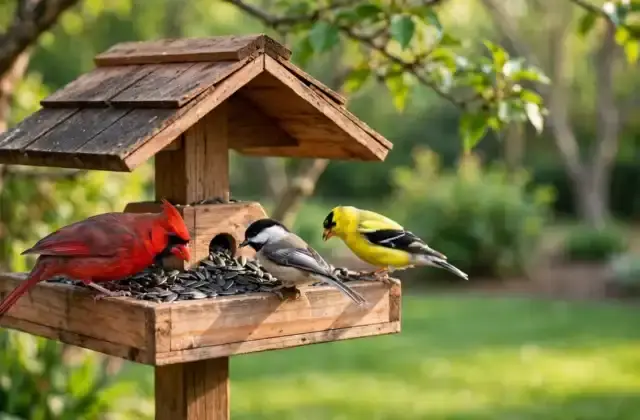
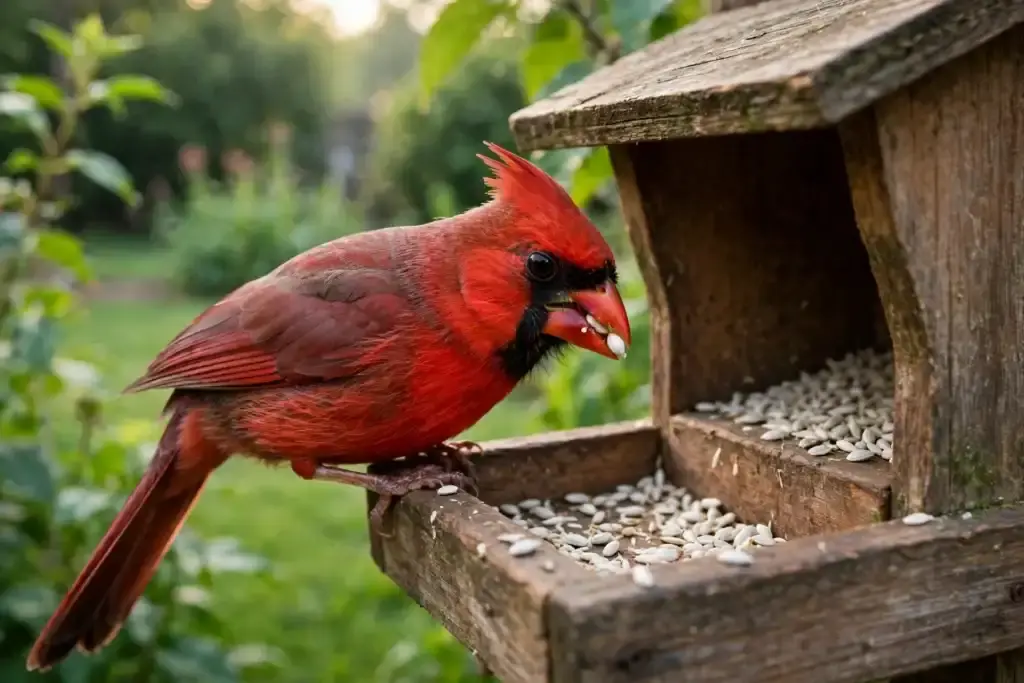
- Northern cardinal: The classic safflower bird, at the feeder year-round
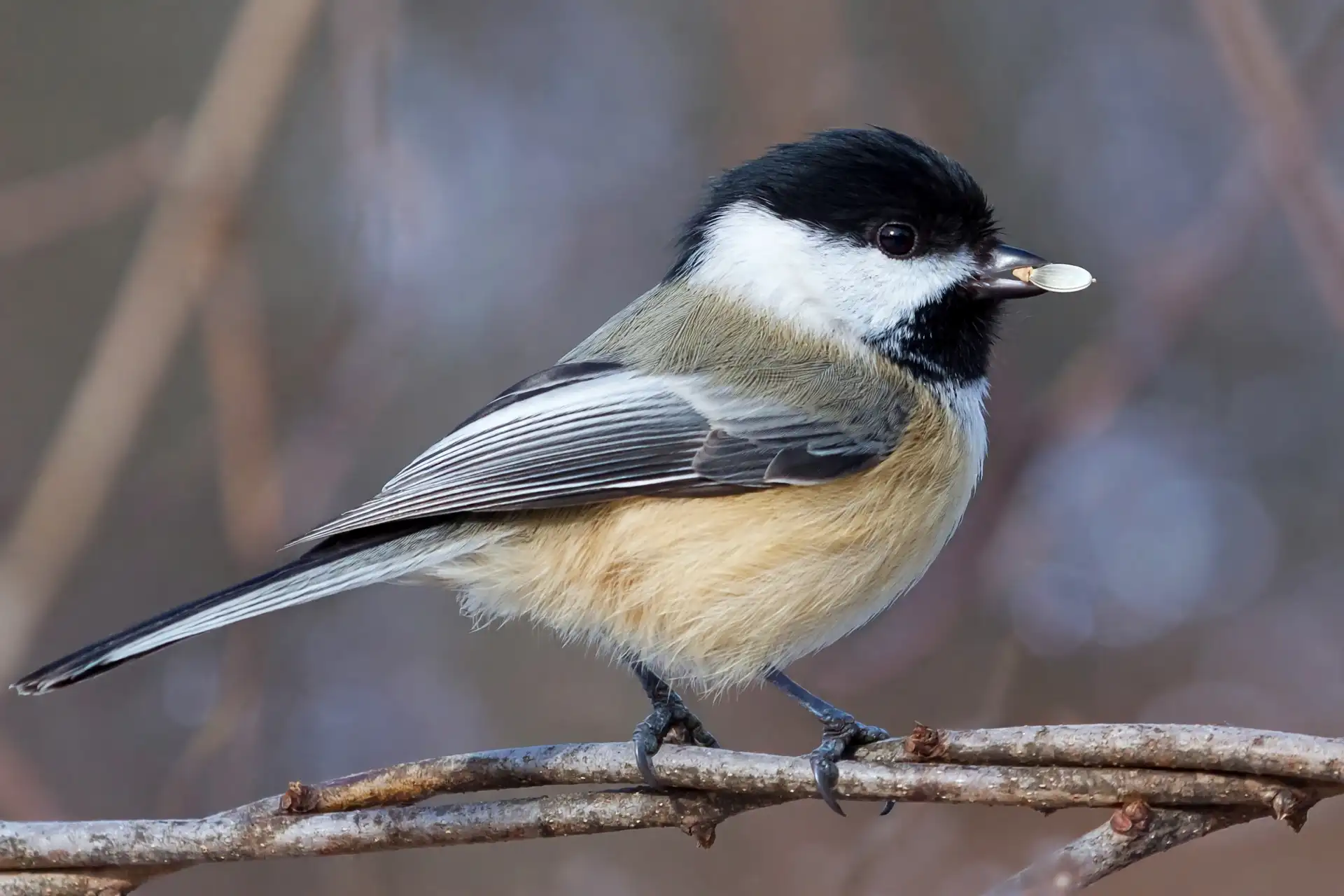
- Black-capped and Carolina chickadees: Small, quick, and persistent
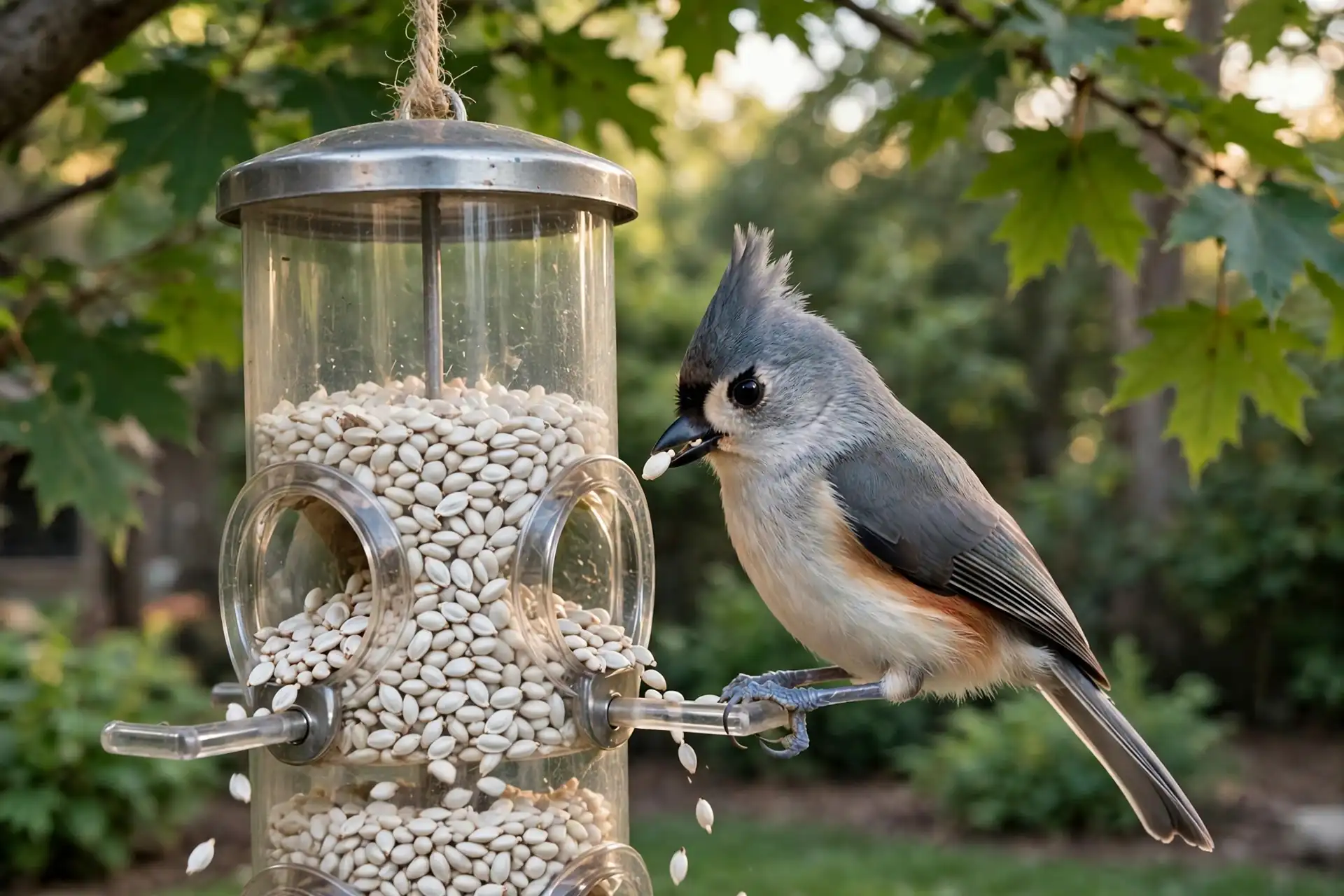
- Tufted titmouse: Bold, early, and usually with the chickadees
- House finch: A strong bill and a taste for the seed, often in small flocks
- Mourning dove: A ground feeder that picks up fallen seed below the feeder
- White-breasted nuthatch: Wedges the seed in bark and hammers it open
- Grosbeaks: Rose-breasted, black-headed, and evening grosbeaks take it readily when they are in the area
Purple finches also come in the winter especially in the north and east states. Blue jays will eat safflower but prefer peanuts and sunflower. Downy woodpeckers will occasionally eat safflower in the winter.
How These Birds Crack the Shell
There is a clear trend with the regulars. Cardinals, grosbeaks and finches have large, conical beaks for cracking open seeds. The cardinal has the classic example of a large beak which shuts down onto the hard white shell to crack it open.
Chickadees, titmice, and nuthatches use a methodical approach. The chickadee or nuthatch will hold one seed at a time in their feet while perched on a nearby branch. They then hammer open the seed. The nuthatch will also wedge the seed into a crevice in the bark. Although the seed shell can be a hindrance, they will never be completely stopped.
Birds with slender bills get nothing from safflower. Warblers and flycatchers eat insects, and their bills are built for catching, not cracking, so they ignore the seed completely.
Birds That Usually Leave Safflower Alone
The other half of the guest list is just as consistent. European starlings, common grackles, and blackbirds usually pass safflower by. House sparrows avoid it in many areas, though some local flocks learn to eat it. Brown-headed cowbirds show little interest. These are the birds that crowd trays, scatter seed, and empty a feeder in an afternoon when sunflower is on offer.
No seed is a perfect solution. Safflower is not perfect. Each bird is different, and an animal may be very hungry in a harsh winter and try seeds they would never try in October. But it is a very good filter. It will dramatically reduce visits from aggressive species, and for most gardens this will change the whole atmosphere around the feeder.
Why Starlings and Grackles Struggle With Safflower
Although the starling appears strong, its bill is built for probing soil and snapping up insects, not for cracking open hard, shiny shells. When presented with safflower seeds these birds struggle to open the seeds quickly and move onto easier foods. Grackles also struggle to crack open the hard shell of the seed. The bitter kernel inside means they have no incentive to try again.
This is the good news. With this problem there is no need to use special feeders or weighted perches to put starlings off. Using the right seeds will do the trick. For information on feeder types, seed types and strategies you can use, see our guide on how to keep starlings away from bird feeders.
Squirrels and Safflower
Squirrels do not like safflower because the kernel has an unpleasant taste. Most gray squirrels do not eat safflower. They will try a kernel but not continue eating them. Retailers say that within days of switching from sunflower to safflower you will see a drop in squirrel activity.
Also note that this is not completely foolproof. Some squirrels (including many red squirrels and chipmunks) are able to tolerate this taste and will eat safflower if they don’t have much else to choose from. A determined squirrel may even get through it during a lean period. If you are still getting squirrels raiding your safflower feeder, then fitting a pole baffle and putting it in a good position will complete the job. Try to put your feeder around ten feet away from fences, branches and edges of your roof that squirrels can use to jump from.
Safflower vs Sunflower
Black oil sunflower is the most popular bird seed in North America. It has a thin shell which most seed eating birds can crack open. They are also high in fat which most birds like. However, this means many birds will be attracted to this seed. Starlings, grackles, cowbirds, house sparrows and squirrels all love sunflower seeds. This can cause problems with smaller birds being outcompeted and the seed being eaten quickly.
Safflower will be less popular with birds, but there are fewer species that will eat it. The feeder will also be less active. Cardinals love both seeds so you won’t lose out if you have a cardinal friendly yard. It is usually a bit more expensive than black oil sunflower but the feeder will be less active meaning less waste due to thieves.
Sunflower will give you the most variety of birds but is prone to pests. Safflower is great if you have squirrels or bully birds at the feeder or if you want to attract cardinals. Many birders have both sunflower and safflower feeders. One for variety and another for the songbirds to have a peaceful feed.
Safflower vs Sunflower at a Glance
| Feature | Safflower seeds | Black oil sunflower seeds |
|---|---|---|
| Shell | Thick, hard, white | Thin, easy to crack |
| Taste | Slightly bitter | Mild |
| Birds that eat it | Cardinals, chickadees, titmice, house finches, doves, nuthatches, grosbeaks | Nearly all seed-eating birds |
| Usually leaves it | Starlings, grackles, blackbirds, most squirrels | Very few species |
| Fat and protein | About 30 percent fat, 16 percent protein | About 28 percent fat, 16 percent protein |
| Best feeders | Hopper, tube with large ports, tray | Hopper, tube, platform |
| Feeder mood | Calm and selective | Busy and crowded |
Best Feeders for Safflower Seeds
Safflower works in the same feeders as sunflower, so a switch rarely needs new equipment. Three styles cover most yards:
- Hopper feeders: The most versatile choice, with a roof that shelters seed and a tray where cardinals can sit and feed
- Tube feeders with large ports: Right for chickadees, titmice, and finches, as long as the ports are sized for sunflower-sized seed
- Tray and platform feeders: Good for mourning doves and cardinals, with one limit to respect
The problem with open trays is that they can be raided by squirrels and bully birds. If you have to use a tray, then try to put only small amounts in them, and mainly use your hopper. Trays can also be used under your hopper to catch any spillage, and doves will then come and help themselves to any spillage from the ground.
Cage feeders provide a physical barrier to prevent the most persistent squirrels and large bully birds. Chickadees, titmice, and finches can still get through. Using a cage with safflower is the best possible combination for a small yard.
Feeder Placement and Care
Mount the safflower feeder so birds have a clear view of any danger and can get out of sight quickly. Mounting the feeder around ten feet from a shrub, hedge or small tree will increase the confidence of your birds to feed. The height of the feeder isn’t as important as you may think and mounting your feeder between 4-6ft off the ground will make it easy to keep an eye on and refill. Cardinals and titmice will use feeders of various heights.
It’s very simple. Seed can go moldy if left damp. Even seed with a hard shell can go moldy. Empty your feeder every week or two in dry weather, or more often if it has been raining, or there has been high humidity. Give it a good scrub, and rinse. Make sure you let it dry completely. Throw away any clumpy, moldy or discolored seed.
How to Switch Birds From Sunflower to Safflower
Birds are creatures of habit. The new white seed on offer in the feeder will probably just sit there for a while. However, this is perfectly normal, and it is not a verdict. To overcome this you can gradually introduce the new feed:
- Week one: Mix about a quarter safflower with three quarters sunflower
- Week two: Move to half safflower and half sunflower
- Week three: Raise safflower to about three quarters of the mix
- Week four: Serve safflower on its own
Often cardinals and chickadees will adjust within days. Most will make a habit of the new seed within 1-3 weeks. Two quick tips can help. Place a small amount of safflower in an open tray for birds to check out and also leave a second feeder with their usual seed so no bird goes hungry while they learn. Once they are confident eating the safflower then a specific feeder is better than a mix. The birds will avoid the seed they don’t like from the mix.
Safflower Through the Seasons
Safflower is a winter favorite. Active cardinals visit and resident chickadees, titmice, and nuthatches rely on feeders when the temperatures dip and their natural food is covered with snow and ice. The high fat content of the seed keeps them coming back on the coldest nights.
Finches will often visit during the spring as they are preparing to breed. Cardinals will also visit to eat between their singing. During the summer there will be less birds visiting the feeders as natural foods such as insects and seeds become more available. However, cardinals may bring their young to a safflower feeder. During humid weather provide less food to ensure the seeds are eaten before they spoil.
Fall means movement. Depending on where you live, rose-breasted and black-headed grosbeaks may stop by safflower feeders while migrating. While you can always be sure of a full feeder any month of the year, you will reap the greatest reward during winter.
Storage and Freshness
Safflower is a good storing seed with its hard shell protecting the kernel. As long as you store it properly you should have no problems. Store your seeds in an airtight tin, off the ground in a cool dry place out of the sun. Galvanized steel will help prevent mice and squirrels chewing through the bags and thin plastic in one night.
Buy enough seed to last your birds a few weeks or months. Write the type of seed on the can and the date. Heat makes oily seed go rancid more quickly and moisture will encourage mold so storing in a warm moist area will mean the seeds won’t last very long in their shells.
Never add fresh seed to old seed. Empty the can, clean and fill with fresh seed. If the seed is clumping, has a bad smell, or is moldy or discolored, it is stale.
Common Problems and Fixes
Three problems account for almost every safflower complaint, and all three have simple fixes:
- Birds ignoring the feeder: Normal in the first days, solved by the gradual mix and a little patience
- Squirrels still visiting: Add a pole baffle and check the ten-foot jump distance from fences and branches
- Seed clumping in wet weather: Choose a feeder with a roof, put out smaller amounts, and clean more often
If your feeder hasn’t been visited after three weeks, consider the location. If your feeder has nowhere to hide or is watched by a neighborhood cat, then any seeds in the feeder will be ineffective. So get your location right, leave your safflower, and give it time.
Frequently Asked Questions
Which birds eat safflower seeds?
The regular eaters are northern cardinals, black-capped and Carolina chickadees, tufted titmice, house finches, mourning doves, white-breasted nuthatches, and grosbeaks. Purple finches come in winter, blue jays and downy woodpeckers occasionally eat some. All can crack or hammer open the hard white shell.
Why do starlings leave safflower seeds alone?
The starling’s beak is built for probing soil and catching insects, not for cracking open the tough glossy shell. They try to crack the seed open but are unable to do so quickly so move on. Since the bitter kernel inside provides no incentive to continue trying, starlings tend to leave safflower alone.
Do squirrels eat safflower seeds?
Safflower is a standard answer to feeder raids. Most gray squirrels dislike the bitter taste and leave safflower alone. However some squirrels including many red squirrels and chipmunks will still eat the seed so it is still good to have a baffle on the pole.
Is safflower better than sunflower seed?
Neither seed wins outright. Sunflower will attract the greatest variety of birds. Almost every seed eater can open its thin shell. Safflower will attract a smaller variety of birds, but it will attract most people’s desired birds. It will leave starlings, grackles and squirrels out in the cold. Many yards will have one of each feeder.
How long does it take birds to accept safflower?
Be patient. You may need to wait for days before cardinals and chickadees begin visiting. Full transition will take weeks (1-3 weeks). The best way to do this is to increase the seed gradually. Start with 25% safflower and increase over a period of 3-4 weeks. In the first few days your feeder may not be used at all, which is normal, not a failure.
What feeder is best for safflower seeds?
The hopper feeder is the most versatile as the seeds are protected by the roof and the tray is suitable for cardinals. Tube feeders with large ports (the size of sunflower seeds) are good for chickadees, titmice and finches. Open trays are good for doves and cardinals but squirrels have easy access so only offer small amounts.
Can I mix safflower with other seeds?
Yes. The best way to introduce the seed is to mix with black oil sunflower and increase the proportion of safflower each week. Once they are eating it with confidence you can offer it as a single seed in its own feeder. In a permanent blend, many birds pick around the seed they like less.
How should I store safflower seeds?
Keep the seeds in an airtight tin in a cool, dry and shaded place off the ground. The hard shell means that they will last for months. Never mix new seeds with old ones and discard any that have formed clumps, have gone smelly or are moldy.
Conclusion
This is a great little seed for a problem solver. Cardinals, chickadees, titmice, finches, doves, nuthatches and grosbeaks love the tough white shell and bitter kernel of safflower. Starlings, grackles, blackbirds and most squirrels ignore it. Just make sure you use a hopper feeder and slowly introduce it to your birds. Also keep it in a cool, dry place in an airtight container. If your feeder has felt like a battleground, this one seed can change who shows up, and how calmly they feed.