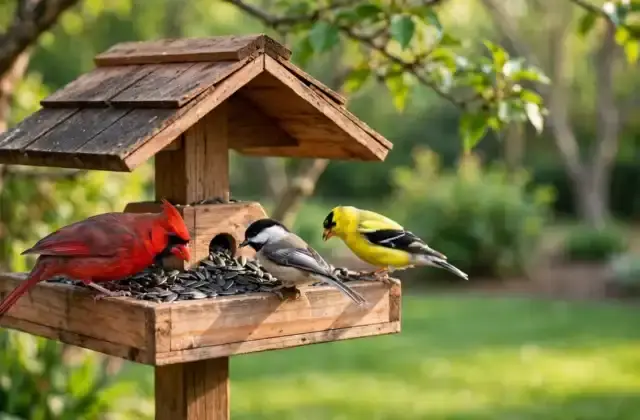

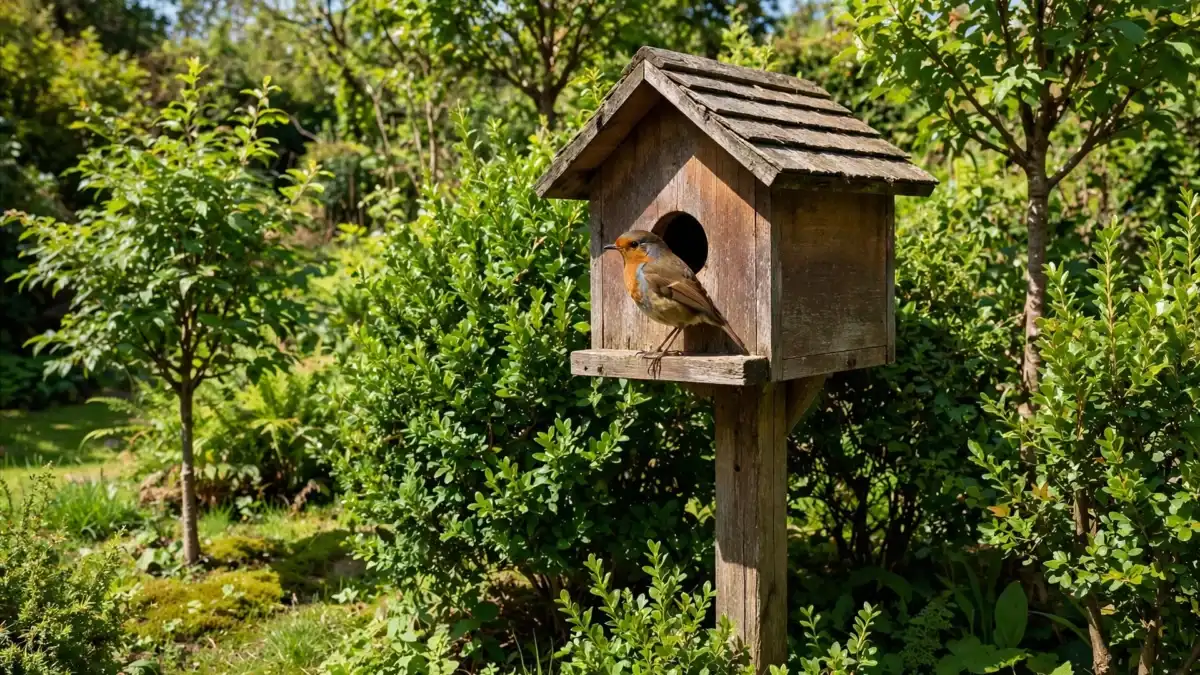
Short answer: Nesting habitat. Long answer: No, not really. Nesting habitat is all the living things found in the area around the cavity. This includes shrubs, trees, ground cover, leaf litter, insects, food, water, and safe routes between these items.
Without nesting habitat, there would be no nest. The birdhouse provides a place for a bird to attempt to nest. They work best when placed within nesting habitat. This article will explain how they compare, what they are for, and how to create a simple layout in your yard using both, so you don’t waste your time putting up birdhouses that no birds will use.
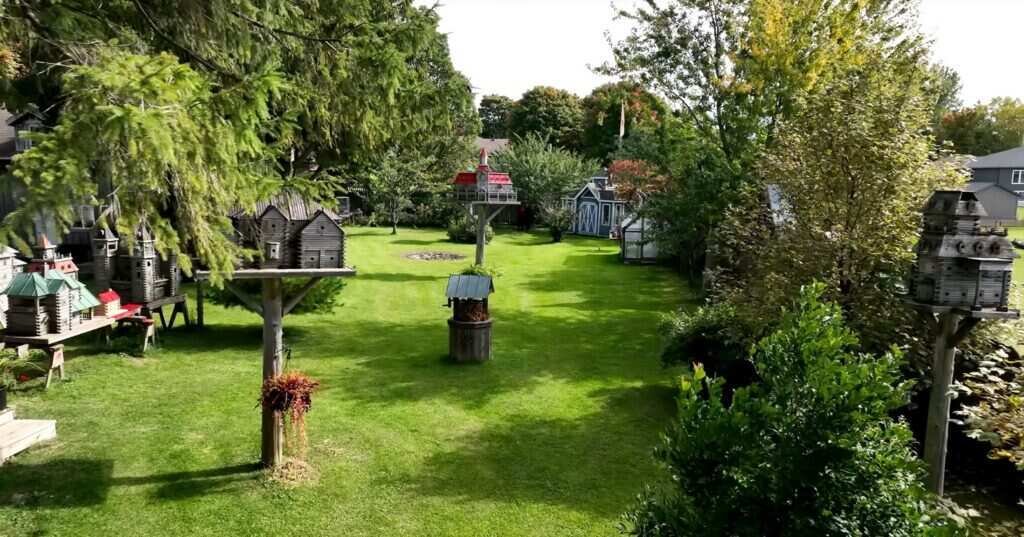
Birdhouses vs nesting habitat: the short answer
Birdhouses provide a room for the birds. The birds need to have access to food, protection from predators, building materials, insects to feed their young, and a safe place to sleep between feeds. This is provided by nesting habitat. Birdhouses just provide the room.
A yard with lots of birdhouses and just grass can be very quiet. The birds will investigate the birdhouses but will then move on as they don’t have all the requirements. If there are shrubs, trees and leaf litter in the yard, there may still be nesting birds without birdhouses. Many birds will nest in dense shrubs, branches and existing natural cavities.
Birdhouses can help. If there are few old trees, natural cavities or new planting, then a correctly placed birdhouse can offer a good opportunity for cavity nesting birds. Don’t rely on birdhouses though. Ensure you have some nesting habitat and provide birdhouses where there is a lack of natural cavities.
What a birdhouse does well
A birdhouse provides a cavity nesting bird with an instant and clear purpose. It provides them with a dry cavity, providing protection for their eggs and young.
Providing a cavity
Natural cavities can take a long time to form in old trees. Many clean gardens will not have any. New housing developments, small gardens or gardens where trees have been removed for safety will provide plenty of food and perch sites but no cavities. A house will instantly provide this.
The entrance hole, cavity size and position can be suited to a specific bird species. This gives a limited amount of control as it will not provide a habitat for an empty garden. It will also not benefit shrub, ground and open cup nesting birds.
Control, inspection and observation
You can clean the birdhouse, check that it is in good condition, prevent chewing and move it to a better spot. Natural cavities are harder to clean. This ensures that the cavity will be safe year after year.
Your nests will be close enough to watch from a distance. Find out the best times of day to watch the birds here. Often the busiest times in your garden will be in the mornings, but you will have clear observations of the birds visiting your birdhouse.
What a birdhouse cannot do
The size of the house will also affect how successful it is. Even if it looks perfect, think about whether it can provide food, shelter and insects.
No food, shelter or insects
If you have a cavity-nesting bird, you need to make sure they have access to insects, seeds, fruits or other forms of food nearby. Many young birds will require soft insects which can be provided by growing plants, leaf litter and soil. If the house is in an area of large lawn then the parents will have to fly further to feed their young which will take time and energy.
Shelter is also very important. If your bird is flying out of the house, you need to have some shelter nearby. Shrubs, small trees or dense planting would work. Without this, your fledgling won’t have anywhere to land safely on its first flight. The predators will also be able to see when the bird comes and goes. If you don’t have any shelter nearby, then your house will be in an open area. Many birds won’t use your house.
One house, one pair and one season
The house can only be used by one pair of nesting birds. The entrance and interior will only be used by the right species. If the birds you have do not nest in cavities (like robins, cardinals and sparrows), then the house will be of no use.
The house will also require some maintenance. If you don’t clean it out it will become filled with old material, dampness and mites. If it becomes damaged it can begin to collect rain or draughts. If you let it rot it will be worse than not having a house at all. It could attract a bird but disappoint it. Habitat will need some tidying but won’t need to be emptied every year.
What nesting habitat does well
Nesting habitat provides feeding, shelter and camouflage throughout the nesting season for multiple species of birds.
Multi-layered habitat
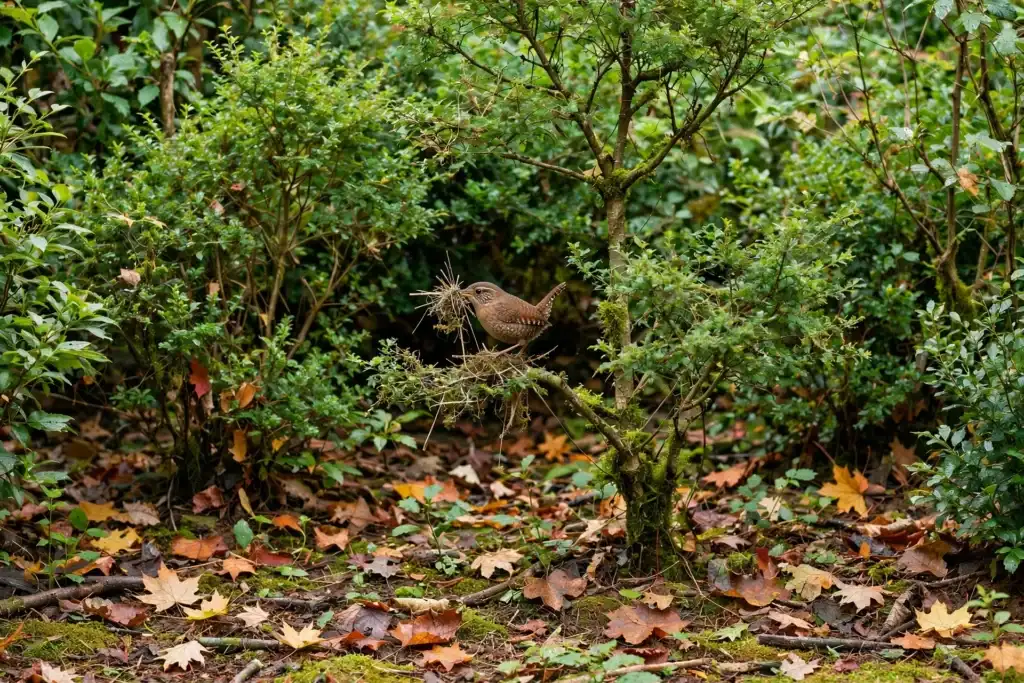
There are multiple layers to good nesting habitat. Ground cover can provide shelter for ground nesting/feeding birds. Low shrubs can provide dense cover and nesting sites for ground feeding birds to hide from predators.
High shrubs provide extra nesting areas and singing perches. Small trees provide perches, shade and overhead cover. Insects and nesting material can be found in leaf litter underneath.
Each layer can provide benefits to different birds. A shrub border can provide multiple nesting sites while a house can only provide one. Having a variety of native plants will provide the perfect insects for the young birds to eat as they will be specific to the soil and water in the area.
General guidelines can be found from the Cornell Lab of Ornithology and Audubon to help you choose plants for your area. A local native plant group can also help.
Provides nesting materials and feeding
Habitat provides nesting materials. A diverse garden with lots of fine grasses, plant stems, twigs and moss will give birds plenty of good materials to build strong nests. A clean lawn with a house will give very little.
Camouflage
If you provide lots of dense planting, then your birds will have less chance of being seen by predators, as they will not be able to see all their nests and feeding trips. They can travel from their nest to their food source and back to cover without having to travel long distances on open ground. A house alone will not give this level of protection.
What nesting habitat cannot do
Habitat is a strong foundation but not an instant fix. Knowing its limitations helps you plan realistically.
It takes time to develop
New shrubs can take several seasons to create a good amount of cover, and new trees will take even longer to create cavity nesting sites. This means that even if you do have good soil, good light and lots of good intentions, you may not have much for your birds to nest in during their first year. A house can help fill this gap by providing you with one cavity nesting bird.
Habitat can have gaps. You may not have any old trees and just have shrubs, or vice versa. If your neighborhood is very dense, then you may not have much space for multiple layers. Habitat is just a direction and won’t be a magical solution. Even small areas can help.
It doesn’t provide cavity nesting
Some species will require a cavity. Even if you have lots of shrubs, you will not be able to provide a cavity for these birds. Wood ducks, bluebirds, tree swallows, chickadees and wrens all use cavities. If there are no natural cavities available, you will need to provide them with a man-made house. This is the one gap that clearly needs a house.
Birdhouses vs nesting habitat at a glance
| Feature | Birdhouse | Nesting habitat |
|---|---|---|
| What it provides | One cavity, dry and defensible | Food, insects, cover, nesting sites, and material across the yard |
| Birds served | One cavity nesting pair at a time | Many species at once, including shrub and ground nesters |
| Food for young birds | None on its own | Insects, fruit, and seed from plants and leaf litter |
| Shelter | None beyond the box itself | Layers from ground cover to small trees |
| Speed | Works on the day it goes up | Takes seasons to form dense cover |
| Yearly care | Clean, check, and repair between seasons | Prune, weed, and let leaf litter lie where safe |
| Main weakness | No food, no cover, no insects | Slow to establish, and no cavity where old trees are absent |
| Best use | A supplement where cavities are scarce | The base of a bird-friendly yard |
The table makes the balance plain. Habitat covers more needs for more birds. A house covers one need very well. A yard that uses both covers more ground than a yard that uses either one alone.
When a birdhouse belongs
A house is suitable where there is a lack of cavities.
A house is appropriate for a small garden with potential for a shrubby hedge but no old trees. A house is appropriate for a new garden during establishment.
A house is appropriate for an area with one common cavity nester and few natural cavities. A house is appropriate if it can be cleaned between seasons. It should have an entrance that cannot be chewed. The house should be on a pole with a baffle and no perch.
A house is not suitable to replace habitat. Five houses in an area of short grass will not replace a shrubby hedge. A house without any nearby shelter (in an open area) is unlikely to be successful no matter how good it is. If you don’t have any cover or food in your garden, plant up first. Only use one trial house to see if birds will stay and feed in it.
When nesting habitat belongs
Every yard, however small, should have some nesting habitat. This can be in the form of a strip, patch, quiet area or a few native plant pots.
Identify what you’re missing. If you lack shrubs, then planting some will help. If you have shrubs but lack ground cover and leaf litter, leave a patch of your yard untouched, creating a quiet area.
If you have a lot of lawn, adding a row of shrubs to your fence line will change your yard more than adding a second house. Make sure there is a source of fresh shallow water, and if you have a house, ensure it is near to some cover.
Habitat can also be included in yards with existing houses. Often, houses which once had a bare lawn will get more visitors when shrubs are added around them, as they are now part of a system that provides food and shelter.
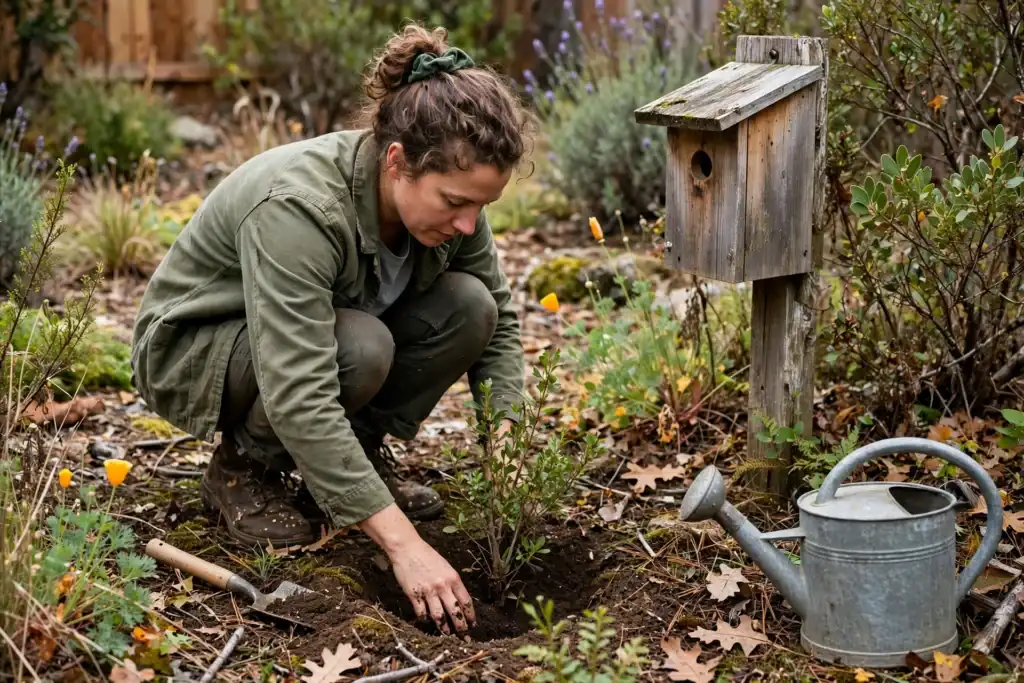
Combining both: a house inside habitat
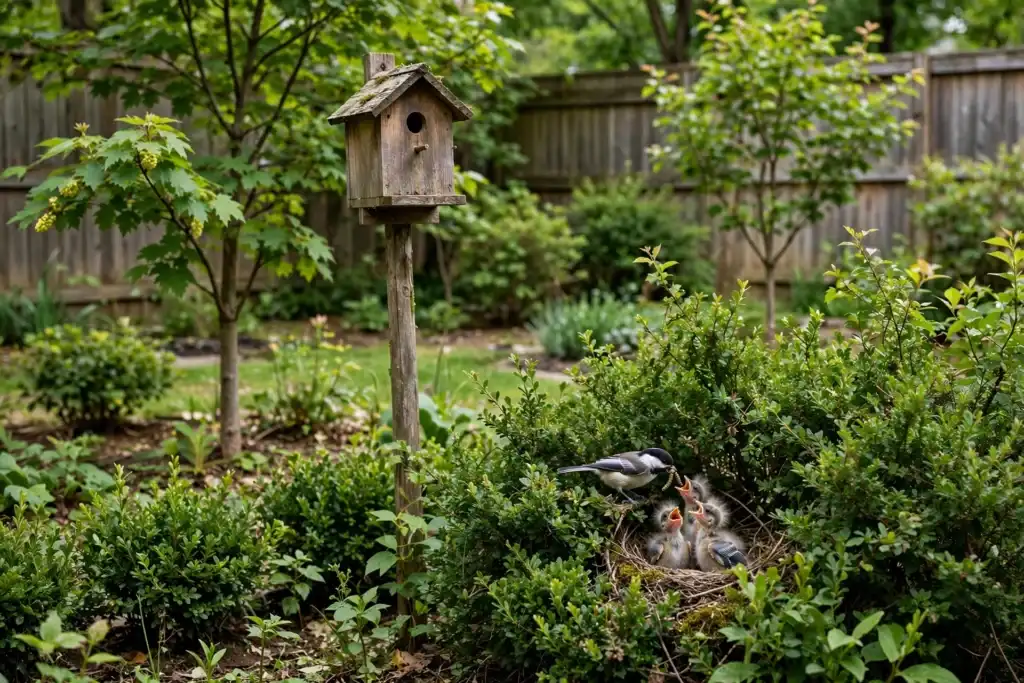
Ideally, you want the house to be the center of your habitat. Your habitat will have shrubs, trees and groundcover, which will provide food, shelter and nesting materials, and the house will provide the one cavity.
Ensure the house is placed so that there is a safe place for the birds to land once they have left. A short hop into the nearby shrubs will give fledglings a quick escape and give parents somewhere to rest. Place the entrance of the house facing away from the prevailing wind.
Where possible, avoid placing the house so that when the birds fly out, they are flying into bright afternoon sunlight or large reflective windows. This will cause them to become panicked and fly into the glass. (See our guide on why birds peck windows for more information).
Start with one house. Watch over the course of a season to see which birds come to investigate, enter and whether any get chased away. If you spot a new bird that you are unsure about, our Bird Finder can help.
Compare birds based on their size, shape and behavior. Once your first house is successful, try adding a second house. Place them a good distance apart so it is not easy for a pair to defend both.
Clean and protect your house. Clean between seasons. Check there is no damage to the entrance (chewing, widening). Make sure the protection is tight. If the house is leaking or rotting, then repair or replace. See our guide on cleaning bird feeders. Make sure you clean it well. Empty, brush and leave to dry completely before using again.
A step-by-step yard plan
Go through the following steps in order. Complete each step before moving onto the next. This will work for your first yard or a yard that already has houses but little habitat.
- Audit the yard and note every layer: ground cover, low shrubs, tall shrubs, small trees, and canopy trees.
- Note what is missing for nesting: food plants, insects, cover, nesting material, water, and natural cavities.
- Plant the biggest gap first, usually a shrub border near existing trees or along a quiet fence.
- Leave leaf litter and a quiet corner where it is safe to do so.
- Add water nearby, shallow and fresh, with a safe footing spot for small birds.
- Choose one target cavity nester, if any, and check a trusted species guide for its opening and placement needs.
- Place one house inside the new habitat, on a pole with a baffle where practical, with cover a short flight away and no perch.
- Watch for a season and note which birds visit, which nest, and which food or cover gaps remain.
- Add plants for the next biggest gap, and add a second house only after the first succeeds.
- Clean and check the house between seasons, and adjust only one thing at a time, such as spot, guard, or planting, so the result can be judged fairly.
This plan keeps the order right: habitat first, house as a supplement, and no sudden change that leaves birds with neither food nor cover.
Common mistakes
Having no plant cover. This means the nest will have no area to interact with the local area. Once the fledglings come out they will have nowhere to go. Plant cover or place next to existing shrubs.
Too many houses with no habitat. A row of boxes won’t provide any food, insects or nesting materials. There will be competition between birds for limited resources. Although you may have several empty houses, it will appear as if you are successful when in reality your yard is very quiet. One house in a habitat is better than 5 in the lawn.
Not cleaning the house will cause your house to get dirty with old materials, damp and mites, meaning they won’t attract new tenants. It can also harm young birds. Clean between seasons, check the entrance and fix the guard.
Removing shrubs. Shrubs provide insects with food, nesting and shelter for the fledglings. By removing them and adding more boxes, you’re removing an entire system for just a few rooms. You will lose more than you gain.
Only having one tree. One tree will provide some shade and a perch but will not provide any layers, insects with food or nesting shelter. Having a shrub border, ground cover and a small tree will do much more than just one tree in the lawn.
Frequently asked questions
Should I put up a birdhouse or plant habitat first?
Give them somewhere to live, even if it is just a small strip of habitat. They will need somewhere to feed, shelter and hide during the season. If there are not many natural cavities, then give them a house within their habitat. This will grow with them. However, just a house on its own is unlikely to succeed in an empty garden.
Can a small yard have nesting habitat?
Yes. A shrub hedge, a few native plants that flower and fruit at different times of the year, a leafy area and a small tree (if there is enough space) will create useful habitat. Pots of native plants, a shallow bowl of water and one clean house with some shelter can be placed on a balcony or patio.
Do I need a birdhouse if I already have shrubs and trees?
This is not always the case. Many birds will use shrubs and trees as a nesting site. The house will only be useful for cavity nesting species. If there are lots of old trees with natural cavities or shrub nesting birds already using your yard then you may not need to add a house. You can rely on natural habitats. If you know you have a target cavity nesting bird that does not have a cavity, then adding a house may be useful.
Will a birdhouse harm birds if the yard has no habitat?
A poor nest box can cause issues. If your nest box is placed in an open bit of your lawn and has no protection or baffles, or isn’t cleaned out, then there is a risk that birds nesting there will be vulnerable, be predated or become damp. If, however, your nest box is placed in habitat with protection and baffles and cleaned out, the risk is much lower. The location and maintenance of the nest box are just as important as the actual nest box itself.
How many birdhouses should a yard have?
Start with just one house, and if you see success with this, and you have another target bird that would benefit, add another house, making sure to leave a large gap between both. However, if there is a lack of food, insects and shelter, then adding more houses will not help. The number of birds you can attract to your yard depends on the habitat, not the number of houses.
What if a bird I did not plan for moves into the house?
If it is an indigenous bird and the house is providing a safe environment for them, then leave them be. The house is still providing a useful service by attracting an unintended indigenous bird. It can be harmful to remove nesting birds. Find out what bird it is and look up their requirements in the species guide. Maybe provide another house with the correct entrance for your intended bird next season.
Conclusion
Overall, you would be better off providing nesting habitat, but if you do choose to provide a birdhouse, you can still provide a good service. Nesting habitat will provide your birds with a reliable source of food, high in insects for their fledglings, multiple levels of shelter, nesting areas and materials, shade and safe routes. A birdhouse will provide one dry, defensible hole. If there aren’t many natural holes around or if you are starting a new yard and want to attract a particular cavity nester, this can be useful.
The best option is to provide nesting habitat and place a clean, protected birdhouse inside. Provide multiple layers, use native species where possible, leave leaf litter and add water. The birdhouse should be placed close to shelter, baffled and have no perch.
Monitor for a season, clean between seasons and make changes one at a time. This will create a balanced yard that no longer relies on just a wooden box. The yard will provide all the reasons for birds to stay, nest, and return.