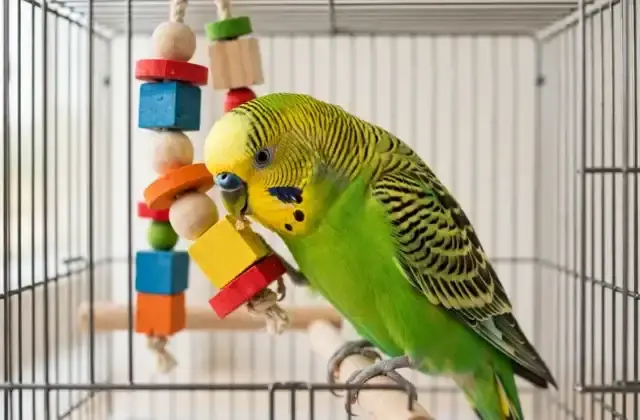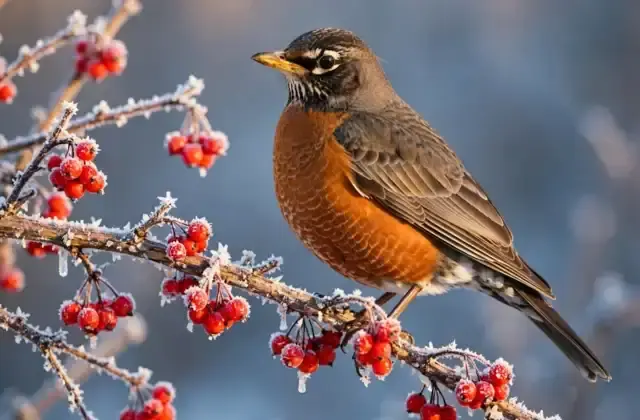


A robin lands on your lawn, cocks its head sharply to one side, and freezes. A moment later, it pulls a worm from the soil. A parakeet on your finger does the same thing when you speak, tilting its head as if it is listening hard. A hawk on a fence post does it while scanning a field.
The head tilt is one of the most familiar bird gestures in the world, and it is also one of the most misunderstood. It looks like curiosity, and sometimes it is. But the real reasons run deeper, into the structure of bird eyes, the physics of depth perception, and, in some cases, a warning that a bird is unwell.
Birds tilt their heads mainly to see better. Unlike humans, most birds have eyes on the sides of their heads and eyes that barely move in their sockets.
A tilt brings an object into the sharpest part of one eye’s view and helps the brain judge distance. Hearing plays a smaller supporting role. Once you understand the mechanics, the tilt stops looking like a quirk and starts looking like precision engineering.
The Short Answer
Birds tilt their heads because their eyes are built differently from ours. Human eyes sit at the front of the face and move freely, so we can glance sideways without moving our heads.
Most bird eyes sit on the sides of the head and are nearly fixed in place. That placement gives birds a huge panoramic field of view, close to 360 degrees in some species, which is excellent for spotting predators.
The trade-off is poor depth perception straight ahead, because the two eyes see largely separate scenes with only a narrow zone of overlap.
A head tilt solves that problem. By cocking the head, a bird brings one eye to bear directly on an object of interest and lines it up with the sharpest part of its retina. Small head movements also create motion parallax, meaning the brain compares views from slightly different angles and uses the shift to estimate distance.
The tilt is, in effect, the bird aiming its best vision at something worth a closer look. A second, smaller reason is hearing: turning the head can help a bird localize a sound by exposing one ear more directly to it.
How Bird Vision Actually Works
To understand the head tilt, it helps to know what a bird’s eyes can and cannot do. Three features matter most.
Eyes on the sides of the head
Most birds are prey animals, and evolution gave them eyes positioned to detect danger from almost any direction. A pigeon, for example, sees nearly all the way around its head without moving.
The cost is a small binocular field, the zone where both eyes see the same thing, directly in front of the beak. In many songbirds that zone is only about 20 to 30 degrees wide, compared with about 120 degrees in humans.
When a bird wants a detailed, depth-rich look at something, it must move its head so the object lands in that narrow zone or in the high-acuity region of one eye.
Eyes that barely move
Human eyes swivel in their sockets thanks to six muscles each. Bird eyes are much more fixed. Some birds can move their eyes slightly, but most compensate with head movements instead. This is why birds do not just glance at things. They turn, tilt, bob, and flick their heads constantly.
Each movement repositions the visual field, and the brain stitches the sequence together into a working picture of the surroundings. The rapid head flicks you see in a foraging sparrow are its version of scanning a room with its eyes.
The fovea, the eye’s sharp spot
The retina of a bird’s eye has one or more foveae, small pits packed with light-sensing cells that deliver the sharpest vision. Many birds have two foveae per eye: a central one for the side view and a temporal one that serves the forward binocular field.
When a bird tilts its head and stares at you with one eye, it is very likely pointing one of those high-resolution spots straight at you. Some raptors have such dense foveae that their visual acuity is estimated at roughly two to three times that of a human, which is why a hawk can spot a mouse from hundreds of feet up.
The 4 Reasons Birds Tilt Their Heads
1. To judge distance
Depth perception is the biggest reason for the tilt. A bird about to snatch a seed, land on a swaying branch, or strike at prey needs to know exactly how far away the target is.
Because the binocular zone is narrow, the bird tilts its head to bring the target into it, then makes tiny head movements that let the brain compare views and triangulate distance.
This is the same principle behind motion parallax: hold a finger in front of your face, move your head side to side, and nearby objects appear to shift against the background. Birds do this constantly, with fast, precise head movements that look jerky to us but deliver reliable distance information to them.
2. To get a sharper look
Even when distance is not the issue, a tilt helps a bird inspect detail. Tilting brings the object into the fovea, the sharpest part of the retina, rather than leaving it in the blurrier periphery.
A chickadee examining a new feeder, a crow studying an unfamiliar object, or a parrot looking at your face is using the tilt to switch from wide-angle awareness to close inspection.
Birdwatchers often notice that a bird tilts its head right before it decides to approach, flee, or attack. That pause is the bird gathering the high-resolution information it needs to choose.
3. To scan for predators
Head tilting also serves vigilance. Research on shorebirds such as Baird’s sandpiper and the puna plover has found that birds adopt extreme head postures to scan the sky with their high-acuity lateral vision, and that tilting increases the chance of detecting an aerial predator.
The tilt may also help reduce glare by directing the sun’s image onto the pecten, a structure in the bird eye that is less sensitive to light, which would keep the bird’s vision sharper while it watches for danger.
On the ground, a foraging bird that keeps tilting its head upward is splitting its attention between food and survival, and the tilt is part of how it watches both at once.
4. To hear better
Hearing is the secondary reason, and it matters most in a few specific cases. Birds have ear openings hidden under feathers on the sides of the head, and turning the head can expose one ear to a sound source or help the brain compare the timing and loudness of a sound between the two ears.
Owls take this to an extreme, with asymmetrically placed ears that let them pinpoint prey by sound alone in total darkness. For most songbirds, though, the tilt is primarily visual, and hearing is a supporting player rather than the star.
How Head Tilts Differ by Species
Not all birds tilt the same way. Eye placement and hunting style shape the gesture, and the differences are easy to spot once you know what to look for.
| Bird group | Eye placement | Typical head tilt |
|---|---|---|
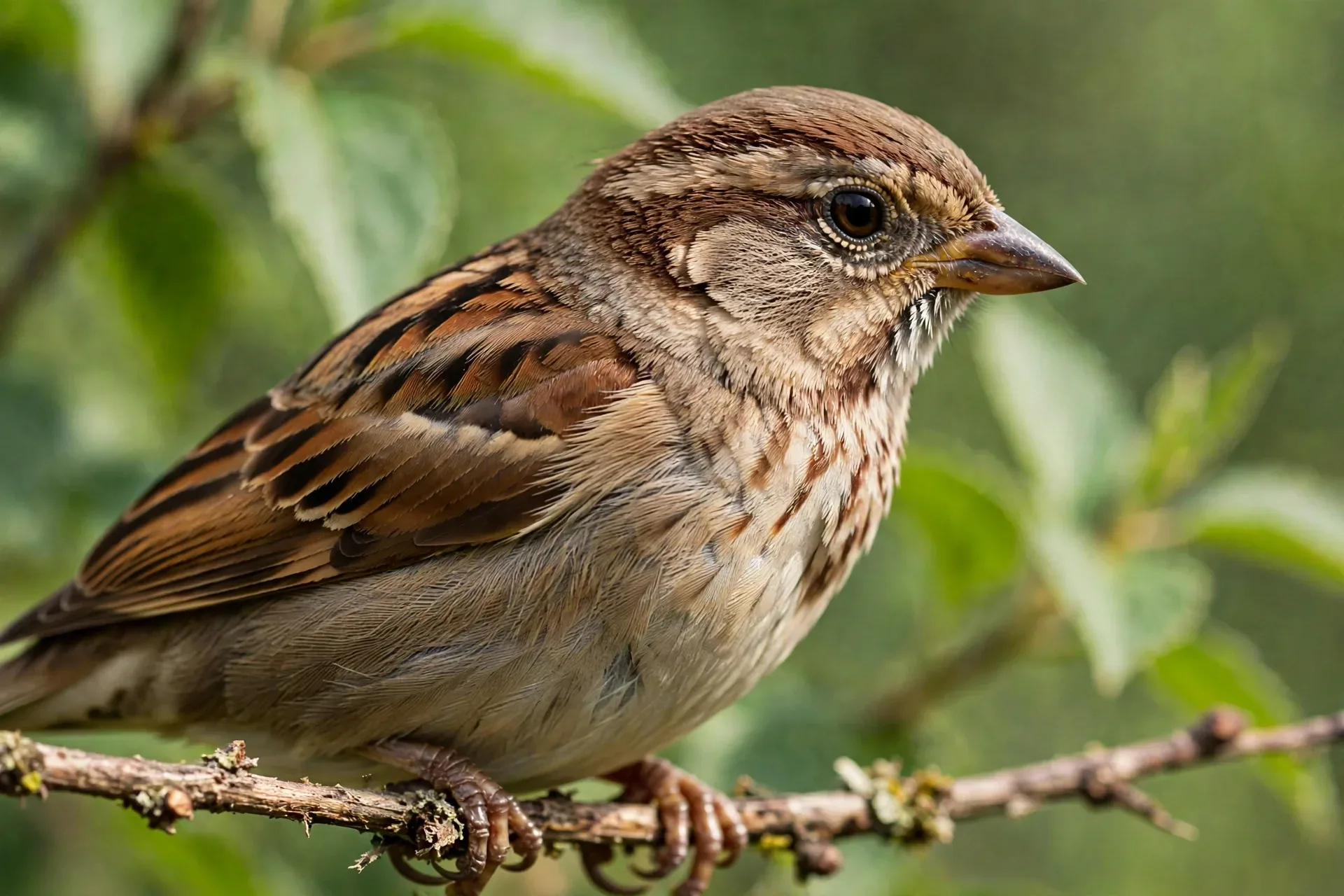
| Songbirds (robins, sparrows, chickadees) | Sides of the head | Frequent sharp tilts while foraging and inspecting |
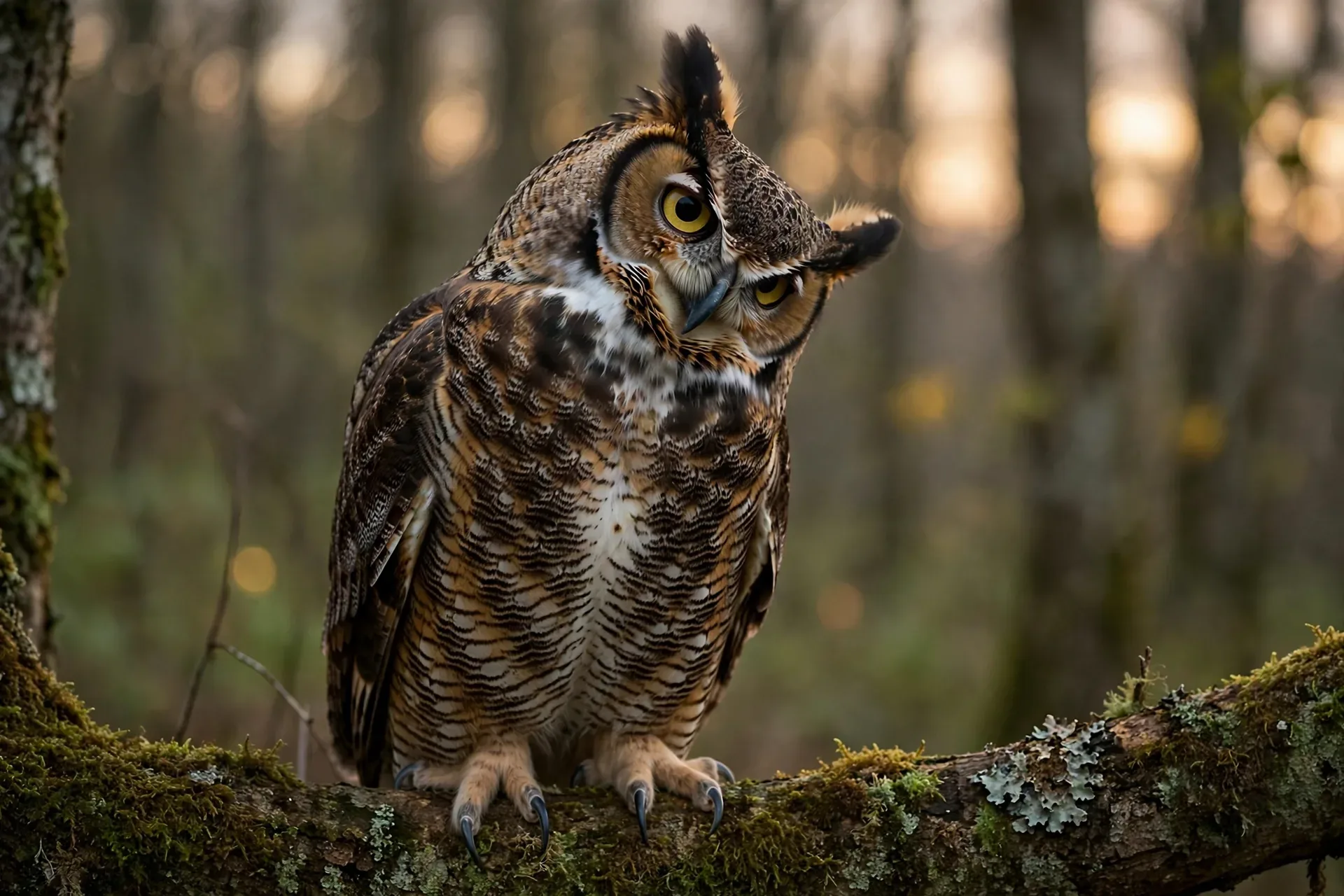
| Owls | Forward-facing, in bony tubes | Slow deliberate tilts and full head rotations, up to about 270 degrees |
| Hawks and eagles | Forward and slightly to the side | Subtle tilts while scanning from a perch |
| Pigeons and doves | Sides of the head | Quick tilts paired with head bobbing while walking |
| Parrots | Sides of the head | Exaggerated tilts at people and new objects, often with eye pinning |
| Shorebirds (sandpipers, plovers) | Sides of the head, high on the skull | Extreme tilts to scan the sky for raptors |
Owls deserve special mention. Their eyes are locked in bony tubes, so they cannot move their eyeballs at all. To compensate, owls rotate their heads dramatically, and their famous head tilt is a slow, deliberate movement that brings their powerful binocular vision and asymmetric ears onto a target. An owl tilting its head at you is aiming its entire sensory system in your direction.
The Robin Worm Myth: Hearing or Sight?
The classic example of the head tilt is the robin on the lawn, head cocked, apparently listening for worms underground. Generations of birdwatchers have assumed the robin is listening. The truth is more interesting, and it shows how a good story can outrun the evidence.
Robins do have excellent hearing, and experiments have shown that they can respond to the faint sounds of worms moving underground. But researchers who have tested the question carefully, including controlled studies in which robins hunted on lawns, found that the head tilt is primarily visual.
The robin is using its tilted eye to spot the subtle movements of soil, a worm’s cast, or a tiny disturbance on the surface. Vision, not hearing, appears to do most of the work in worm hunting, and the tilt is the robin lining up its sharpest vision on the ground.
Hearing may help the bird notice that something is there, but the eyes make the final decision. The head tilt is a sighting tool that happens to look like listening.
That does not mean birds never tilt to listen. A bird that freezes and cocks its head toward a sudden rustle in a bush is very likely localizing a sound. The point is that the same gesture serves both senses, and vision is the usual driver. When you see a robin tilt on your lawn, you are watching it aim its eyes, not cup an ear.
Why Pet Birds Tilt Their Heads at You
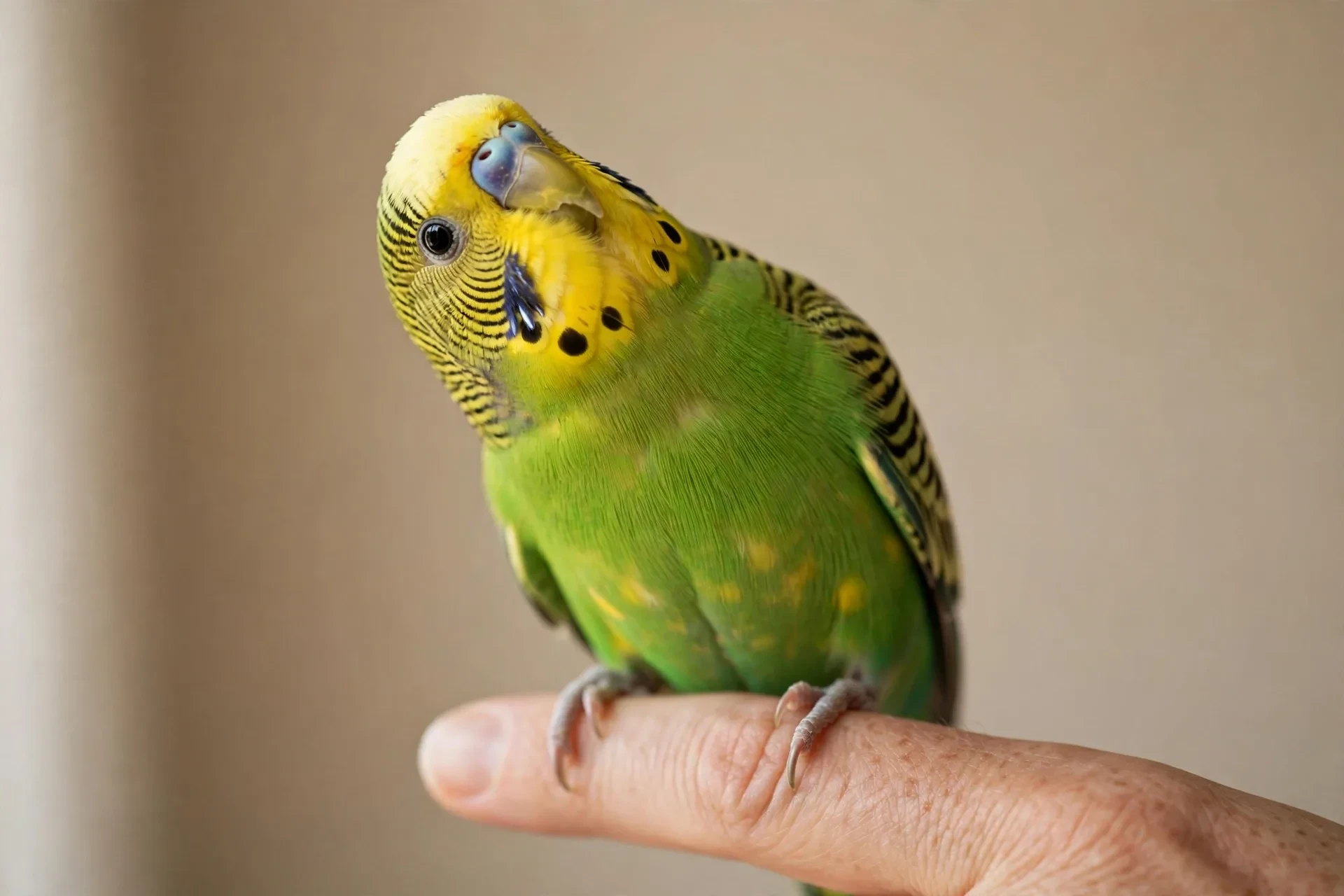
If you keep a parrot, parakeet, or cockatiel, you already know the head tilt as a social gesture. A pet bird that cocks its head at you is usually doing three things at once: getting a better look at your face, listening to your voice, and showing engagement. Parrots are intensely social, and a head tilt aimed at a person is often a sign of curiosity and attention, not confusion.
Pet birds also tilt when they hear a new sound, see a new object, or watch something move. Many owners notice that their bird tilts more when they speak in a high voice, whistle, or show the bird a phone screen. The bird is switching its best vision and hearing onto something novel.
A related behavior is eye pinning, where the pupil rapidly shrinks and grows, which in parrots often signals excitement or arousal. A head tilt plus eye pinning usually means the bird is highly interested, and it can precede either playful interaction or a nip, so read the rest of the body language too.
Parrots also learn that a head tilt gets a reaction. Owners laugh, talk back, or offer a treat when the bird tilts, and the bird quickly learns that the gesture is rewarding. That is not manipulation. It is a smart social animal learning what works in conversation with its human flock.
When a Head Tilt Means Illness
Most head tilts are normal, healthy behavior. But a head tilt that is constant, one-sided, or paired with other symptoms is a warning sign, and it is one of the earliest visible clues that a bird is unwell. The key difference is persistence. A healthy bird tilts, looks, and moves on. A sick bird holds the tilt, or tilts the same way over and over, and cannot straighten its head normally.
Watch for these red flags:
- A permanent or frequent tilt to one side: a constant tilt can indicate an ear infection, a neurological problem, or head trauma, and it needs a vet visit promptly.
- Loss of balance or circling: a bird that stumbles, falls off its perch, or walks in circles alongside a head tilt may have a neurological or inner-ear problem.
- Discharge or swelling around the ear or eye: the ear openings sit under the feathers behind and below the eyes. Crust, discharge, or swelling in that area points to infection.
- Changes in appetite, droppings, or energy: a tilt combined with fluffed feathers, quiet behavior, or reduced eating is a general sign of illness, not just an eye or ear issue.
- One eye closed or cloudy: an eye problem can cause a bird to tilt to favor its good eye. A cloudy, swollen, or discharging eye needs prompt veterinary attention.
If your pet bird shows a persistent tilt, keep it warm, quiet, and away from other birds until you can reach an avian veterinarian. Do not try to treat an ear or eye infection at home with human medications, which can be toxic to birds. For wild birds, a bird that cannot hold its head straight, cannot fly, or stays put when approached should be reported to a local wildlife rehabilitator rather than handled directly.
Frequently Asked Questions
Do birds tilt their heads because they are curious?
Curiosity is part of it, but the mechanism is visual. A bird tilts to aim its sharpest vision at something new, which is why the tilt appears whenever a bird encounters something unfamiliar. The tilt is the bird gathering information, and curiosity is the motivation behind it.
Why does my parrot tilt its head when I talk?
Your parrot is focusing its best eye and ear on you. Parrots are social and vocal, and a head tilt during conversation signals attention and engagement. Many parrots tilt more for high-pitched voices and novel sounds.
Can birds see in color?
Yes, and their color vision is better than ours in some ways. Most birds see four color channels, including ultraviolet light that is invisible to humans, which is why feathers that look plain to us can be vividly patterned to another bird. Our guide to can birds see color explains bird vision in full detail.
Why do birds bob their heads when they walk?
Head bobbing is a separate behavior from tilting, and it stabilizes vision while the bird walks. Pigeons and chickens hold their heads still while the body moves forward, then snap the head ahead, which keeps the visual image steady. Our article on why birds bob their heads covers the mechanics.
Do birds tilt their heads at night?
Yes, and for the same reasons. Birds that are active at night, like owls, tilt to aim their vision and hearing. Daytime birds roosting at night may tilt if disturbed, since the gesture is part of how they assess any new stimulus. For more on how birds handle darkness, see can birds see in the dark.
Is a head tilt ever a sign of a stroke?
A sudden, severe head tilt with loss of balance can indicate a neurological event, including a stroke, especially in older pet birds. This is an emergency. Keep the bird safe and warm and contact an avian veterinarian immediately.
Conclusion
The head tilt is not a quirk, and it is not really about listening. It is a precise visual tool, evolved over millions of years, that lets a bird aim its sharpest vision at whatever matters most: food, a predator, a mate, or your face.
Side-placed eyes and nearly fixed eyeballs give birds a panoramic view of the world, and the tilt is how they switch from that wide awareness to a focused, depth-rich look. Hearing supports the gesture, and in owls it plays a starring role, but for most birds the tilt is about sight first.
That makes the tilt one of the easiest bird behaviors to read. A quick tilt followed by action means the bird has gathered its information and made a decision.
A slow, repeated tilt at you means a pet bird is engaged and interested. And a tilt that never goes away, especially with balance problems or a closed eye, means the bird needs help. Watch for it next time you are at the feeder or the park. You will see the whole world through a bird’s eyes, one careful tilt at a time.