

On a cold morning, suet cakes will attract woodpeckers to your feeders before the seed feeders get busy. They are simple blocks of rendered fat mixed with seed, nuts, fruit, or insects. The fat provides concentrated energy for small birds during the cold winter, when insects are scarce and nights are long.
Put out a good cake in the right feeder, keep it fresh, and you will likely see clinging birds that rarely sit on a seed tube. This guide covers what the cakes are, which birds use them, how shop bought and homemade versions compare, and how to stop melting, spoilage, squirrels, and bullying birds from ruining the setup.
What Suet Cakes Are and Why Birds Need the Energy
A suet cake starts with rendered beef fat. Rendering means the raw fat has been melted, cleaned, and hardened again, which makes it firmer and far less likely to turn rancid than raw fat straight from a butcher. Makers press it into a firm block with binders and extras. Most cakes weigh about 10 to 12 ounces.
Rendered Fat, Binders, and Extras
The binder holds the block together so birds can peck pieces off instead of smearing soft fat everywhere. Common binders include cornmeal, a little flour, and ground seed, used in small amounts so they add texture without diluting the fat.
Extras decide which birds a cake suits best. Peanuts and sunflower seeds add protein and extra calories, and mealworms and other dried insects suit birds that hunt live prey for most of the year. The base idea never changes: fat first, useful food second, and very little that birds will simply drop and waste.
Why Fat Matters Most in Cold Weather
Fat carries more than twice the energy of the same weight of seed or grain. A small bird that loses heat all night needs to replace that energy fast at dawn, and a few beaks full of suet can do work that would take many trips to a seed feeder.
Cold also changes what food is available outdoors. Insects hide or die back, berries get stripped, and frozen ground cuts wrens and creepers off from much of their normal hunting. Suet puts a rich, insect like food back within reach.
Which Birds Eat Suet Cakes
The classic suet visitors are birds built to cling, climb, and hammer bark, used to finding insects in wood, so a block of fat in a cage feels like a rich version of a meal they already know. Our guide to regular feeder birds shows how these species overlap with seed feeder regulars.
Woodpeckers, Nuthatches, and Creepers
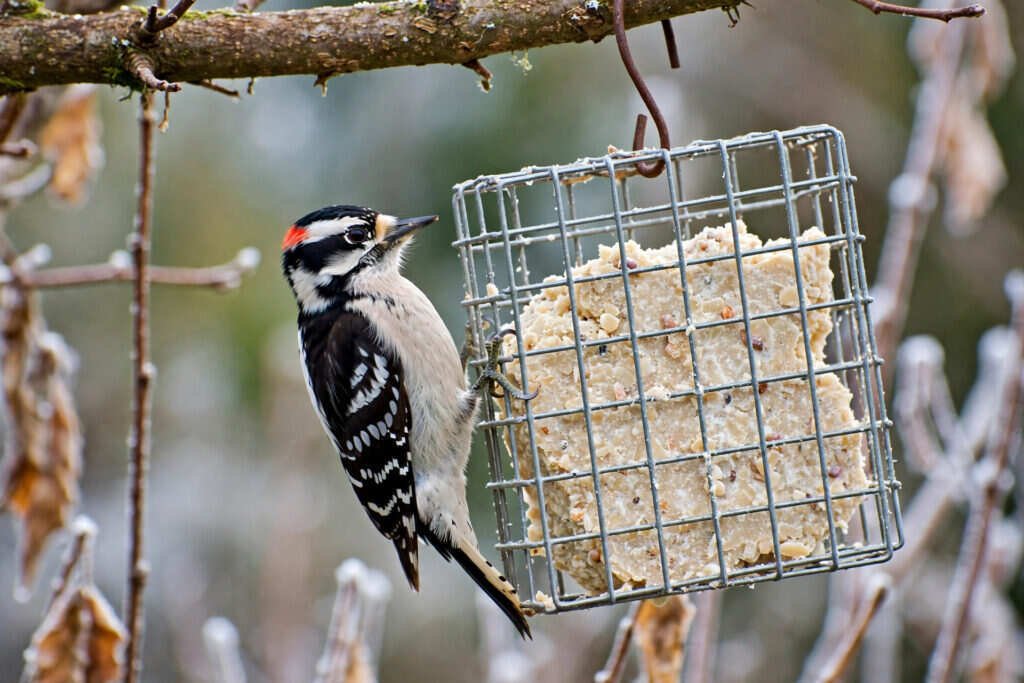
Downy and hairy woodpeckers will often visit first, followed by red bellied woodpeckers, flickers and other larger species if the feeder is robust and trees are nearby. Our woodpecker species guide will help you identify the similar black and white species by size, bill length and markings.
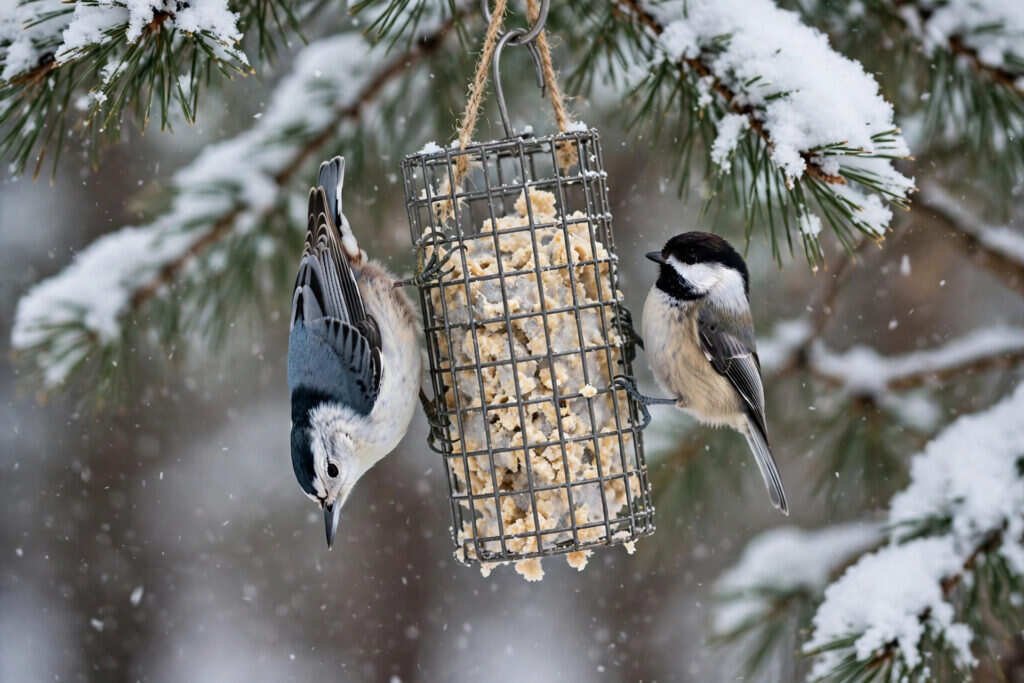
White breasted and red breasted nuthatches work a cake head down, take a chunk, and fly off to wedge it in bark for later. Brown creepers spiral up a nearby trunk and take small bites. A cage fixed firmly to a trunk, pole, or bracket suits them best, because larger woodpeckers feed longer when the feeder does not spin.
Chickadees, Titmice, and Wrens
Black capped and Carolina chickadees visit in quick bursts throughout the day, often carrying pieces away to cache in bark and seed heads. Tufted titmice behave in much the same way, only bolder and stronger at pulling pieces free.
Carolina wrens and house wrens take suet eagerly. They are not as good at clinging as woodpeckers, so it helps to have a cage with a small ledge, or crumbs caught in a tray below. All of these small birds need the feeder close to shrubs or a tree, because they cross open lawn reluctantly.
Jays, Warblers, Orioles, and Occasional Visitors
Blue jays find suet fast and can dominate a cage if they can get a good grip, so a cage that only small birds can enter keeps the balance better.
In spring, pine warblers and yellow rumped warblers sometimes take soft suet and small crumbs, and orioles may sample fruit blends early in the season. Kinglets, thrashers, and even robins pick at fallen crumbs under a busy feeder in hard weather, so keep that ground patch raked clean, because old crumbs can spread disease.
A Note on Starlings and Grackles
European starlings and common grackles love suet and travel in groups. A flock can strip a whole cake in a day, smear the rest, and keep smaller birds away until the food is gone.
The fix is access, not more food. Upside down feeders, cages with a roof and small gaps, and feeders birds must cling to from below all favor woodpeckers and nuthatches. If a flock settles in, take the suet in for two or three days: the flock moves on, while resident chickadees and woodpeckers return quickly.
Common Types of Suet Cakes
Matching the type to the weather and to the birds you actually have saves money and cuts waste.
| Type | Main ingredients | Best birds | Best season |
|---|---|---|---|
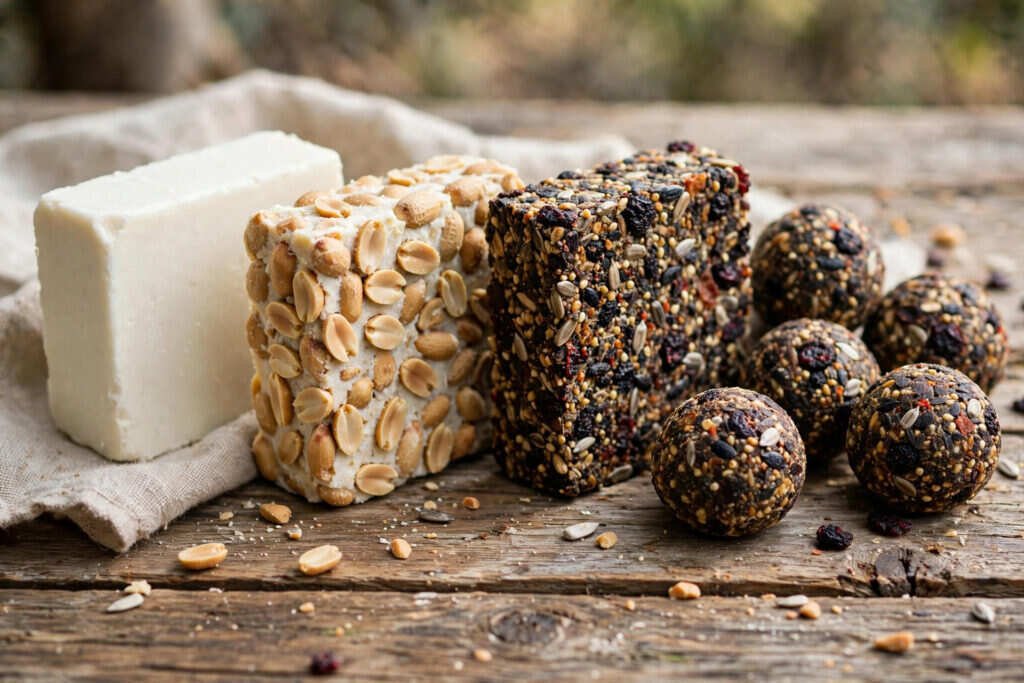
| Plain rendered suet | Rendered beef fat with a little cornmeal or flour | Woodpeckers, nuthatches, creepers | Autumn and winter |
| Peanut suet | Rendered fat, ground peanuts, peanut hearts | Woodpeckers, jays, chickadees, titmice | Autumn, winter, and early spring |
| Seed and fruit suet | Rendered fat, sunflower seed, millet, dried fruit | Chickadees, titmice, wrens, orioles | Winter and spring |
| Insect and mealworm suet | Rendered fat, dried mealworms, dried insects | Wrens, woodpeckers, warblers, nuthatches | Spring and winter |
| No melt summer dough | Rendered fat, peanut butter, cornmeal, flour, seed | Woodpeckers, chickadees, jays | Late spring and summer |
Plain cakes are the best starting point: cheap, and attractive to the core clinging species. Peanut cakes bring the widest range of birds, but peanuts must be fresh and meant for birds or for people. Never use salted, roasted in oil, or flavored nuts, and discard any cake that smells stale.
Seed and fruit blends work best when the seed inside is seed birds already eat at your feeders. A blend built around sunflower and peanuts will be eaten cleanly, while one built around filler grain will be picked apart and scattered. Our bird seed guide explains which seeds garden birds use well and which are mostly filler. No melt doughs are softer blends made to hold together in heat, and they belong in shade, not in full sun for a week.
Commercial Suet Cakes Versus Homemade
The right choice depends on your time, your freezer space, and how fussy you want to be about ingredients. Shop bought cakes are consistent and easy to store, while homemade cakes let you control every ingredient.
What Commercial Cakes Do Well
A good commercial cake is rendered properly, pressed firmly, and consistent from block to block, so birds get the same food each time. Sealed cakes keep for months in a cool cupboard. Read the ingredients and the date, not just the picture on the wrapper: a cake showing a pileated woodpecker will mostly feed downies and chickadees in a small garden, which is fine if the ingredients match your birds.
When Homemade Makes Sense
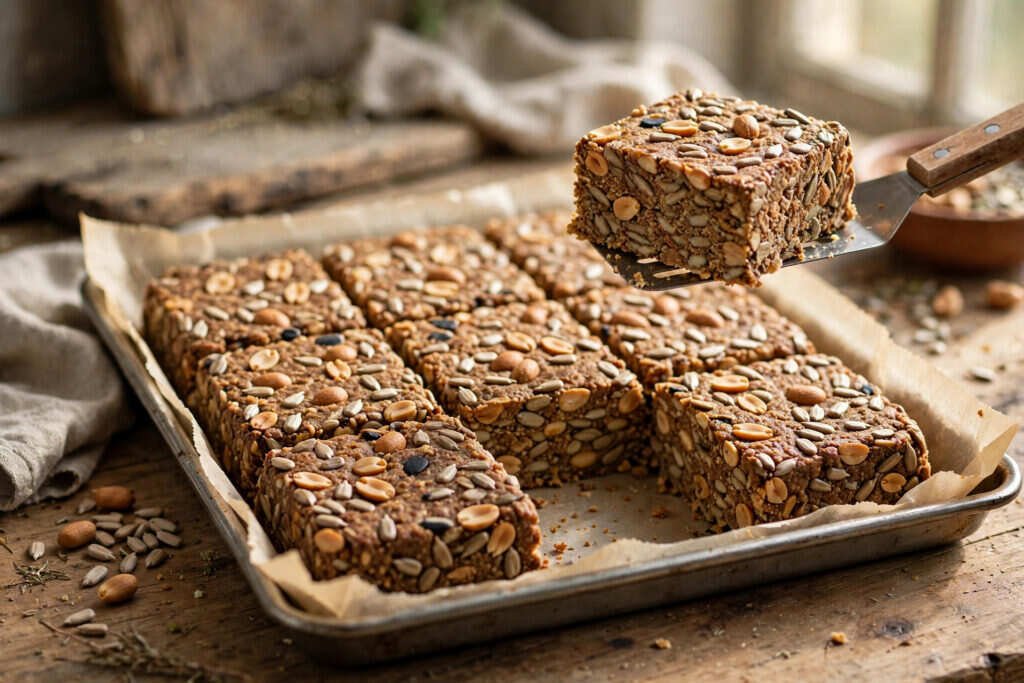
Homemade suet suits people who can get plain beef fat from a butcher, want no filler grain, or need small soft pieces for wrens and other delicate feeders. The work is real, though: fat must be rendered with care and stored frozen or chilled, because raw fat goes soft and rancid far faster outdoors and can coat feathers. For full ingredients, ratios, and the rendering method, use our how to make suet for birds guide, which carries the complete recipe.
What to Look for on the Label and What to Avoid
Fat should lead the list, followed by foods birds recognize: peanuts, sunflower, dried fruit, or insects. Our wider bird food guide sets suet alongside seed, nectar, and fruit, and the same rule applies across all of them: pay for food birds eat, not for bulk they drop.
Good Signs on a Label
Look for cakes where the first ingredient is rendered suet or rendered beef tallow. The nuts and seeds should be clearly identified. The weight should be clearly stated and there should be a use by date. The cake should be firm with a clean, faintly nutty scent. The cake shouldn’t bend like toffee at room temperature and shouldn’t have any mold spots along the edges.
Fillers and Risks to Skip
Milo, also sold as sorghum, is the classic filler in cheap bird food. Most eastern garden birds ignore it, so it ends up on the ground feeding mold and pests. Skip cakes with bright artificial colors, strong scents, and sweet coatings. Avoid any cake with a sour or paint like smell or a slimy surface, and never serve leftover cooking fat or bacon grease, which is unsafe for feathers.
When to Offer Suet Cakes Through the Year
Suet is a cold weather staple, but with the right type it can play a smaller role in every season.
Autumn and Winter
Autumn is the best time to start. Put a plain or peanut cake out as nights cool, let resident birds learn the spot before hard weather arrives, and keep the cage filled through winter. In deep cold, check the cage every morning, because a popular cake can shrink fast. Offer one cake at a time in a small garden.
Spring Nesting Season
Keep suet up in spring, but favor insect and peanut blends. Breeding adults burn huge energy hunting for their young, and a reliable fat and protein stop helps them through cold, wet spells. Adults may carry small pieces to nestlings as a soft food top up, though insects remain the main food for most young birds.
Summer Heat
In summer, switch to a no melt dough or pause suet until cooler days return. Ordinary cakes soften, drip, and spoil fast in heat, and melted fat on feathers is a genuine risk to a bird that preens contaminated plumage. If you do offer summer dough, hang it in full shade, put out a small piece at a time, and remove what is left after two or three days.
Melting, Rancidity, and Storage
Fat is suet at its best and its worst. It feeds birds brilliantly while it is fresh and firm, and it becomes a problem when heat, air, and time break it down.
How to Tell a Cake Has Spoiled
A spoiled cake smells sour, sharp, or like old cooking oil. The surface may look dark, slimy, or patchy, and in warm weather the block may slump or drip through the cage. Birds often give the first warning: if regulars land, look, and leave without feeding for a day or two, check the cake before you blame the birds, and replace doubtful food at once.
Storing Cakes at Home
Store sealed commercial cakes in a cool, dry cupboard away from sun and radiators. Homemade cakes keep best in the fridge for short use and in the freezer for longer storage: wrap each block well, label it with the date and blend, and thaw only the cake you are about to serve. Never refreeze a cake that has been out in the feeder, or top up an old cake with a fresh one.
Feeders That Hold Suet Cakes
Most suet feeders are variations on one idea: hold the block still, let birds cling and peck, and keep bigger or clumsier animals from taking the whole cake away.
Wire Cage Feeders
The standard wire cage is cheap, durable, and fits almost every commercial cake. Birds cling to the mesh and pull pieces through the gaps, while the cage stops a jay or squirrel carrying the whole block off in one visit. Choose coated metal over thin wire, and check that the door closes firmly, because rough edges can catch feet and feathers.
Tail Prop and Upside Down Feeders
Tail prop feeders add a wooden board or paddle below the cage. Woodpeckers brace their stiff tails against it, as they do on a tree trunk, and feed in comfort for much longer, making this the single best upgrade for woodpecker visits. Upside down feeders present the cake from below: woodpeckers, nuthatches, and chickadees hang underneath easily, while starlings and grackles struggle and usually leave.
Log, Plug, Ball, and Nugget Options
Log feeders are short sections of drilled wood, or ready made wooden holders, filled with suet plugs. Suet balls are the same idea rolled into a ball: feed them only in a proper holder, never in loose plastic netting, which can trap feet, tongues, and beaks. Suet nuggets are small pieces served in a tray or mesh feeder; serve small amounts, because loose pieces spoil faster than a solid block.
Placement, Hygiene, and Keeping Suet to the Birds
Where a suet feeder hangs decides who eats from it as much as the recipe inside it does. A few minutes spent on placement and cleaning will do more for your birds than any premium blend.
Where to Hang a Suet Feeder
Hang or fix the feeder near trees or shrubs, birds like a short flight to cover. Keep suet away from windows or place it very close to the glass, because birds leaving a feeder within a few feet of glass cannot build up speed before they reach it.
Cleaning and Rotating Food
Wash the cage with hot water and a brush each time you change the cake, and let it dry before refilling. Use a mild disinfectant rinse, well rinsed off, every few weeks. If you see birds with swollen eyes or growths, or a bird that cannot feed properly, remove feeders, clean them thoroughly, and pause feeding briefly so birds disperse instead of gathering at one infected spot.
Squirrels, Starlings, and Bulk Pests
Squirrels treat a suet cage as a puzzle worth solving. A baffle on the pole, a cage inside a larger guard cage, or a feeder hung from a thin horizontal wire away from launch points all slow squirrels down. If rats appear, stop suet feeding, remove every crumb, and restart only with a fixed cage, small amounts, and a spot you can clean daily.
Frequently Asked Questions
Can I Put Suet Out All Year?
Yes, with changes by season. Offer firm cakes freely in autumn and winter, insect or peanut blends in spring, and only small amounts of no melt dough in shaded spots in summer, or pause until cooler weather returns.
How Long Does a Suet Cake Last in a Feeder?
In cold weather a busy garden can finish a cake in two to four days, while a quiet garden may take two weeks. Judge by freshness, not by the calendar: replace any cake that smells sour, looks moldy, or has been out through a long warm spell.
Will Suet Attract Only Woodpeckers?
No. Woodpeckers are the headline visitors, but nuthatches, chickadees, titmice, wrens, and creepers use suet daily, and jays, warblers, and orioles visit at times. A cage feeder in a good spot usually adds several species that seed alone does not bring.
Is Raw Fat From the Butcher Safe for Birds?
Raw, unrendered fat is a poor choice. It softens fast, turns rancid quickly, and can smear onto feathers. Rendered fat, cooled into a firm cake, is the safe form, whether you buy the cake ready made or render the fat at home with care.
What Do I Do if a Cake Melts in Hot Weather?
Take it down at once, scrape up any drips below the feeder, and clean the cage before anything goes back in it. Switch to a small piece of no melt dough in full shade, or pause suet feeding until the heat passes.
Can Young Birds Eat Suet in Spring?
Adults of several species carry small pieces of suet to their young as a supplement, but insects and caterpillars remain the main food for most nestlings. Keep spring pieces small and fresh, favor insect blends, and let adults choose what to take to the nest.
Sources
Conclusion
Suet cakes earn their place because they do one job very well: they give small, hard working birds rich energy in a form that fits how they already feed. Start with a plain or peanut cake, hang it in a firm cage near cover, and watch which birds claim it in the first week.
After that, small adjustments do the rest. Change the blend with the season, replace food the moment it smells off, clean the cage at every refill, and use feeder design, not extra food, to settle starling and squirrel problems. Do those basics well, and a single cake at a time will bring you some of the best birds in the garden, all winter long.