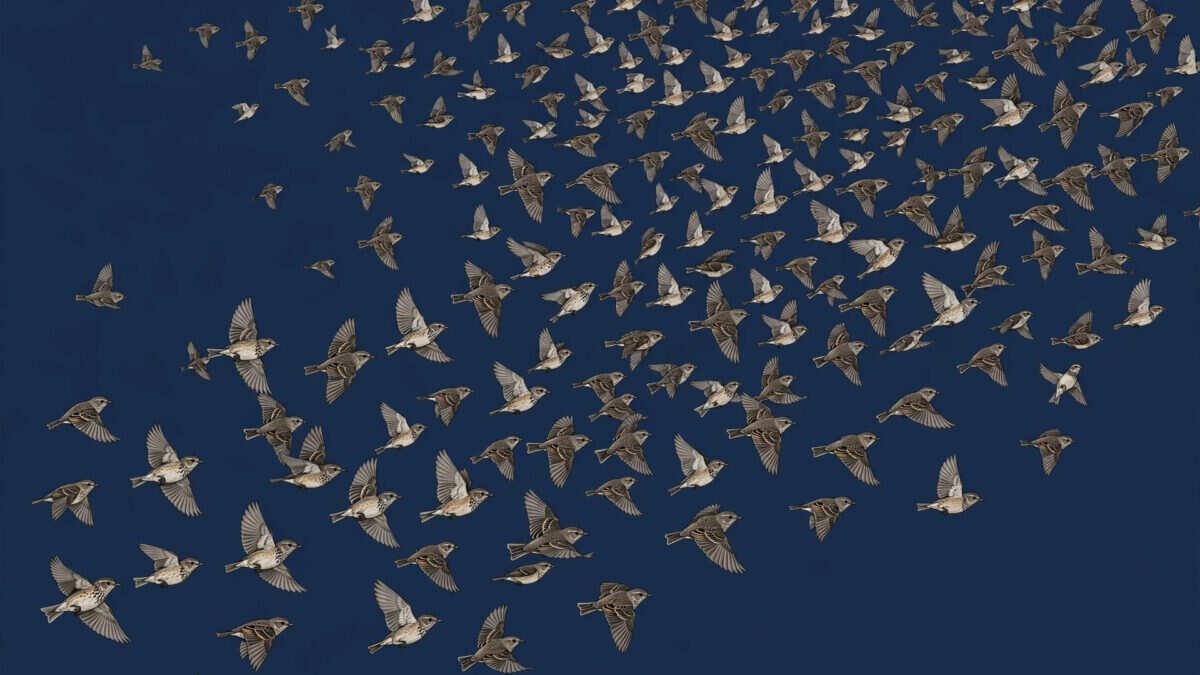
The Billion Bird Night took place on 16th October 2026. At its peak time (10:40 Eastern Time), there were a total of 1.0318 billion birds flying across the contiguous United States according to BirdCast.
This was only the 4th billion bird night that BirdCast has ever recorded, but it is the first and only billion-bird night of the Fall 2026 season so far. Although most people were asleep, there were over a billion migratory birds flying south in a stream across the sky during one cold front above the clouds.
However, this resulted in a tragic incident in one city, with over 1000 birds dying or being injured after colliding with windows in Chicago (Smithsonian, 21st October 2026).
The billion bird night is a testament to the achievements of migration but also presents us with the risks of glass collisions. This article will explain what birds were involved, how BirdCast calculated how many there were, why Chicago suffered so badly and what you can do to prepare for the next big night.
Billion Bird Night October 2026: What Happened on 16 October
This is the fourth billion bird night in BirdCast’s history. The previous three were on the 6 October 2023, 25 September 2025 and 8 October 2025.
This means that this night in 2026 has made it into an incredibly exclusive club. To have a billion birds flying on any given night, several factors must come together: a large number of migrating birds must be available, a weather system that prompts them to take off en masse, and favorable winds.
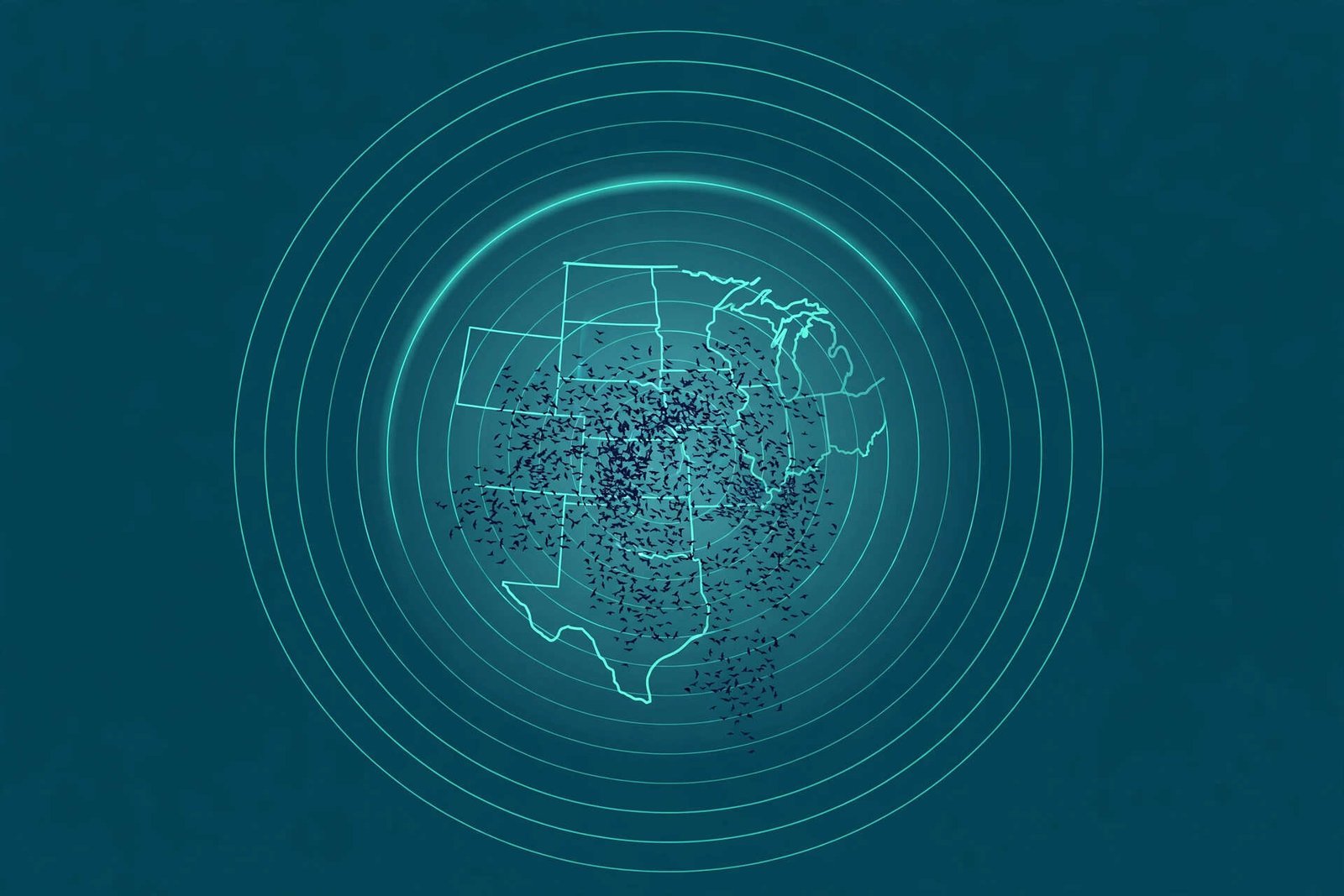
The peak time was at 10.40 Eastern Time, with an estimated 1.0318 billion birds flying across the contiguous United States. This was concentrated around Texas and the central and lower Mississippi River valley. Although it may seem incredible that a billion birds were flying across the country, when they concentrate in the central flyways, numbers can be intense in those areas. This means there were millions of birds flying across one county in one night.
Over Cook County (Including Chicago) BirdCast estimated that over 5 million birds flew through the area on the evening of the 16th October. (Smithsonian)
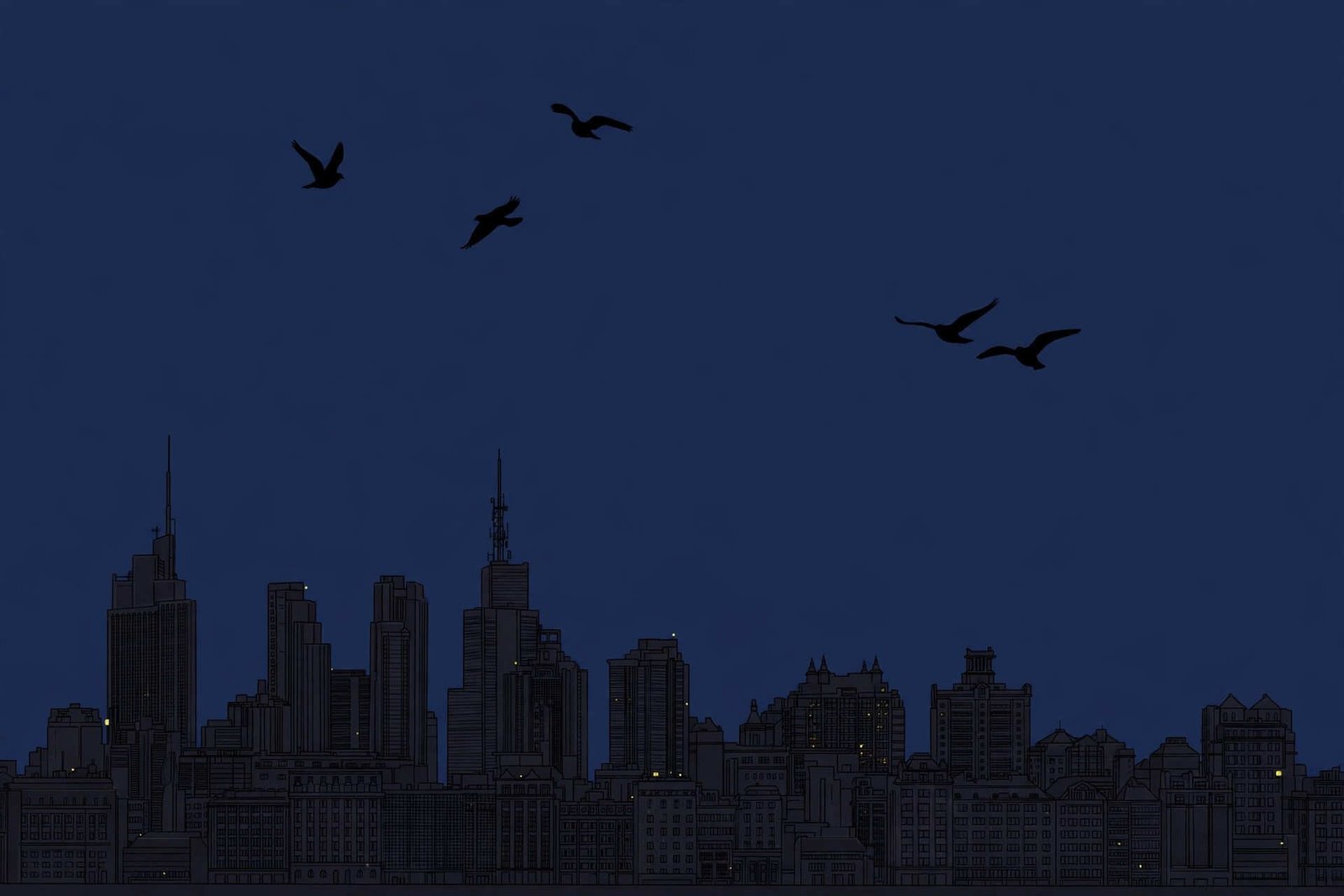
This gives you an idea of how busy the skies were. There were hours of birds passing overhead, including warblers, thrushes, sparrows and other nocturnal migrants. The majority were flying very high and made no noise at all. Only a small proportion flew low enough to collide with buildings, but over 1000 birds were killed or injured in Chicago during the weekend.
How BirdCast Counts a Billion Birds
BirdCast does not actually count birds one by one, but instead uses the national weather radar network. This network was designed to track rainfall, but can also detect birds, insects and other airborne targets. Algorithms are used to filter out all the weather signals and leave only those from birds. This allows the radar energy to be converted into a bird density. The bird density is integrated across space and height to give an estimate, which is what is shown on BirdCast.
This gives us the best estimates of what happens during migration. Radar gives an overall picture of what is happening in the dark and can be used every night. Humans can only observe one area at a time.
Before a big night, BirdCast provides forecasts so birdwatchers, conservationists and building managers can plan ahead. These are based on weather models and migration timing. The forecast said that it was going to be a big night on the 16th October, which was then confirmed by the radar.
It’s easy to get confused with the two numbers, so keep them separate. The forecast numbers are a prediction based on models. The 1.0318 billion figure is the live radar estimate at the peak moment, after the birds were actually in the air. They are both very useful, but they answer different questions. A forecast tells you to turn lights off. A live count tells you how many birds were actually flying when you did.
If you wish to follow the migration, there is a helpful guide on the BirdsBuzz website explaining how to use BirdCast live migration forecasts, including information on understanding the dashboard, county level view, and how to read a forecast without overstating what it promises.
Why a Cold Front Creates a Billion-Bird Night
Migrants wait for favorable weather. Flying south on a calm and warm night means the bird uses extra energy and may arrive exhausted. Waiting until the cold front hits means the bird can fly further with less effort, as it will have a tailwind from the north. When a strong front sweeps across the country, thousands of waiting birds take off on the same night. That synchrony is what creates a billion-bird night.
On 16 October, BirdCast describes a strong autumn cold front moving southeast through the contiguous United States. The low pressure is getting deeper as it moves from the Great Lakes into the Northeast. High pressure is moving in behind, bringing cooler, drier air to the Great Plains and Mississippi Valley.
Behind the front, northerly to northwesterly winds occurred with cooler temperatures, making this some of the coolest we have seen so far this fall. Conditions improved for a large part of the central and southern United States. This front not only helped birds that were already flying, but also released birds that had been waiting for days.
There is a pattern to when they fly. Most nocturnal migrants take off 30 to 45 minutes after sunset. The highest numbers are flying two to three hours after that. That is why BirdCast’s peak at 10:40 Eastern Time makes sense. Birds that took off in the central time zones at dusk will have been flying for a while by late evening Eastern Time. However, fresh waves of birds are taking off further west. A billion-bird night is therefore not a single instant. It is a wave that builds, peaks, and fades over hours, county by county.
Why Chicago Lost More Than 1,000 Birds That Weekend
Chicago is located along the Mississippi Flyway, an important migratory route for millions of birds traveling from North, Central and South America every spring and fall. Location alone puts the city in the path of a huge migration, and glass and light turn that path into a hazard. Many times birds cannot see through the glass, or they mistake reflections of sky and trees for a clear path. The birds can fly at speeds up to 30 miles per hour, and when they hit windows it can cause them to die, bleed internally, get concussions or other injuries.
The problem can be made worse by artificial lighting. Many species migrate at night, and the lights can attract and disorient birds, drawing them toward buildings and keeping them circling in lit areas instead of passing over. If there are lots of tall buildings with lights on in an urban area, then large numbers of birds can be killed in one night. Even if only a small percentage of birds are affected, this can still cause a large number of deaths. The number of birds over Cook County is over 5 million, and over 1,000 were killed or injured. This is a small percentage but a large absolute loss.
This is part of a larger, grimmer total. Smithsonian notes that an estimated one billion birds die after colliding with buildings in the United States each year. North America has lost around three billion birds since 1970. This is about 29 percent of the continent’s population, or more than one in four birds.
Window collisions are not the only cause of that decline. There are many reasons birds are declining in numbers. Habitat loss, intensive farming and rising temperatures are big factors. However, collisions are one of the most preventable causes, which is why a billion-bird night in Chicago draws attention far beyond the city.
According to the wildlife advocates cited by Smithsonian, most of these deaths could be prevented. In the case of the birds lost in Chicago, they were ‘fit and strong’ birds who were doing everything right. That framing matters: they are not weak birds who would have died anyway but successful migrants who are often in their prime. They have been taken away by something man-made which we can reduce.
What Flew: The Birds Behind the Number
BirdCast radar cannot determine individual species but can estimate the overall number of birds migrating. During a night in mid-October the overall mix of species in the central flyways can be predicted from their migration schedules.
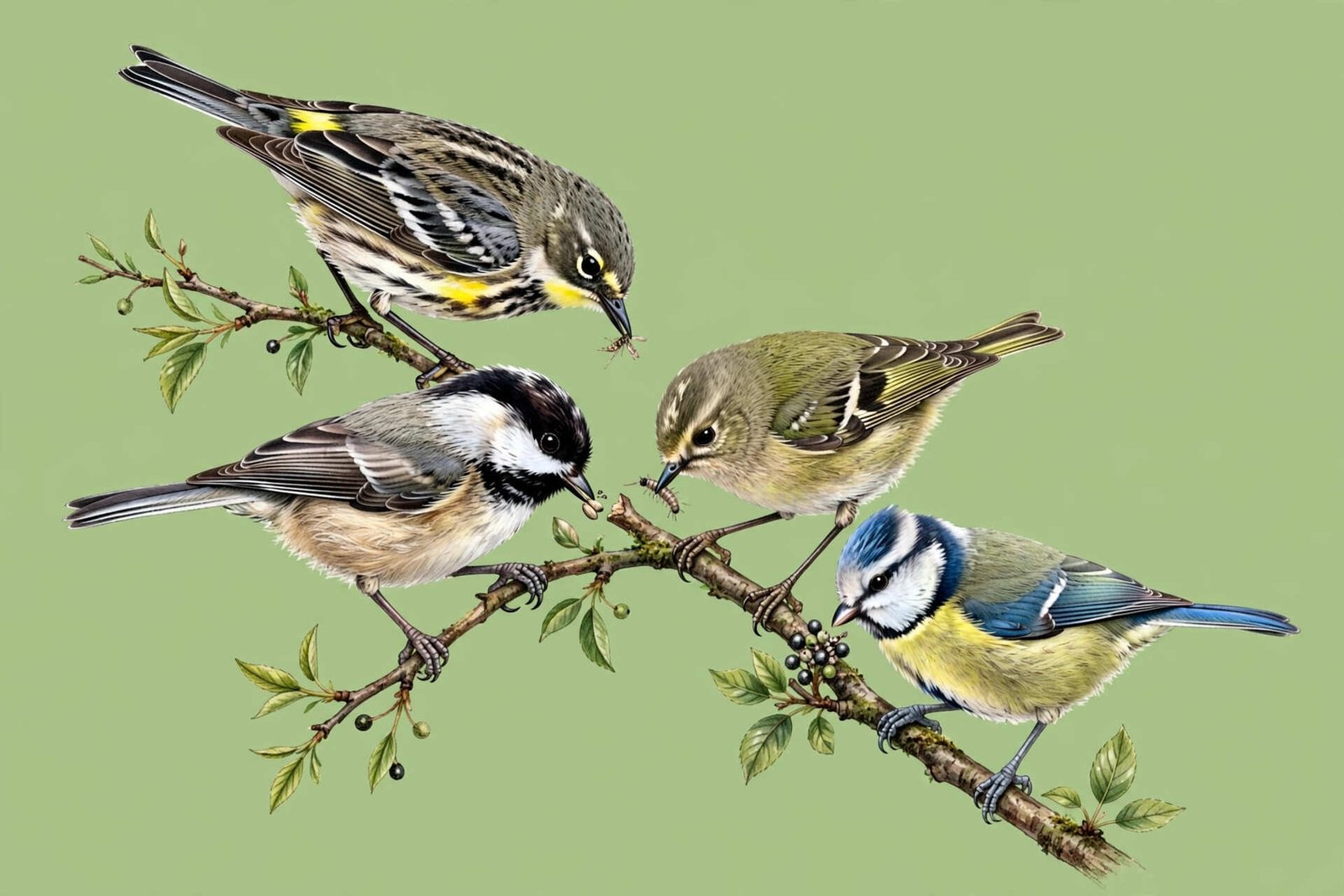
Warblers are prominent in early fall, and by mid-October the mix shifts toward thrushes, sparrows, kinglets, creepers, and other late migrants, plus waterbirds and shorebirds moving along river corridors.
Many of these birds are small, nocturnal migrants that spend the day hidden in trees and shrubs, which is why a billion-bird night can pass almost unnoticed on the ground.
Daytime birding the day after a great night can be interesting. Parks and woodlots will be full of birds who have arrived and are feeding up for their next leg. If you bird in Chicago or anywhere along the Mississippi Flyway, then the days after a cold front in October are among the best of the year for seeing migrants at eye level. That daytime pulse is the visible echo of the invisible night flight.
Do not expect a single species to dominate the radar count. A billion-bird night is a community event, with dozens of species moving together. That diversity is also why collision tolls include many species. A building that kills warblers one night may kill thrushes and sparrows the next, depending on which birds are passing and at what height.
Your Checklist for the Next Big Night
While the next billion-bird night won’t be announced ahead of time, you can get a few days warning from the BirdCast forecasts. Use that warning. The following tips are simple, low cost and effective, and they work for a house, an apartment, or a small business.
- Lights out: On any night expected to have high migration, turn off any unnecessary exterior lights between 11 p.m. and 6 a.m., and draw your curtains in lit rooms. This is the one most effective measure you can take in most homes.
- Window markers: Use markers, dots or stickers on the outside of large windows. The markers should be close together so that birds see a barrier, not a gap. Markers on the outside are more effective than those on the inside, where reflections can still confuse birds.
- Check the county dashboard: Look at BirdCast for your county before a cold front, not just for your state. Migration intensity varies sharply by county. One night may be quiet in one place but intense 50 miles away.
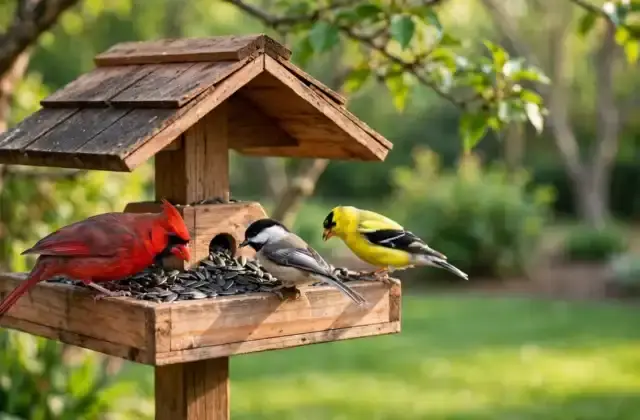
- Keep feeders clean: Migratory birds who stop to eat will need fresh seeds and clean water. A clean feeder helps arriving birds refuel, and it reduces disease risk at a crowded stopover site.
- Watch the morning after: Visit a local park the morning after a big night. You may see species that were invisible in the dark, and your sightings help document the flight.
- Share the alert: Tell neighbours, building managers, and local groups when a high night is forecast. One lit building in a dark block can still draw birds in.
See Lights Out for birds in fall migration for more information on how to make your building Lights Out friendly, including building-level steps. To learn more about why birds hit glass, including reflections and territorial behavior, see why birds peck at windows.
What to Do If You Find an Injured Bird
If you find a bird on the ground after a collision, act quickly and gently. Place the bird in a dark, ventilated box lined with a soft cloth, keep it warm and quiet, and do not offer food or water. Contact a local wildlife rehabilitator as soon as possible.
Many collision victims that look stunned recover with care, and many that look fine have internal injuries that need professional assessment. Do not keep a wild bird as a pet, and do not release it immediately if it cannot fly strongly or hold itself upright.
If you find a dead bird, note the location, date, and building, if you can do so safely. Collision monitoring programs use those records to identify dangerous buildings and to push for fixes. A single dead bird is sad. A pattern of dead birds at one address is evidence, and evidence changes buildings.
Frequently Asked Questions
Was 16 October 2026 really the biggest migration night ever?
No, not according to BirdCast. This is the fourth time there have been over a billion birds migrating during the night. These three nights were 6 October 2023, 25 September 2025, and 8 October 2025. Although the 1.0318 billion peak is impressive, BirdCast does not say it is the largest ever. It just says it is one of only four nights it has recorded with over a billion.
How accurate is a figure like 1.0318 billion?
This is a rough radar-based estimate. The number of decimal places does not mean we counted every single bird, but rather it is an order of magnitude. We estimate there are about a billion birds, with a peak in the central and lower Mississippi Valley, rather than an exact census.
Why did Chicago suffer so many collisions if most birds flew high?
Because even a tiny fraction of five million birds is a large number, and because light and glass draw some birds lower. Birds that are attracted to lit buildings, disoriented by reflections, or forced low by weather can strike windows even when most of the flight passes safely overhead.
Do window markers really work?
Yes, if they are used appropriately on the outside of the glass, and are close together. If you put a few decals in the middle of a large window, then it leaves most of the glass open for the bird to see through. A dense pattern, dots or lines that cover the whole surface will be much more effective. Internal markings are less effective as they can be hidden by reflections on the outside.
Can I see a billion-bird night with my eyes?
Not as a billion birds at once. You may hear flight calls overhead on a still night, see birds silhouetted against the moon, or notice a surge of migrants in a park the next morning. The radar view is what reveals the full scale. Your ears and your morning birding reveal the local echo.
Will there be another billion-bird night this fall?
Possibly, if there is another strong cold front and a large group of migrants left. Fall migration continues into November for many species, but the best periods are usually September and October. After cold fronts check the BirdCast forecasts. Any night with a high forecast should be a lights-out night.
Conclusion
More than a billion birds passed over America on one night on 16 October 2026. They rode a cold front south through Texas and the Mississippi Valley. In Chicago, more than 1,000 of them died or were injured at windows, a loss that is small as a percentage and large as a fact.
Both numbers are important. The first shows migration at a scale that is hard to grasp and easy to ignore. The second shows what that scale costs when it meets a lit, glass city.
The practical lesson is simple, and it does not require a new law or a new technology. Check BirdCast before a cold front. Turn lights off on high nights. Mark your windows. If you find an injured bird, get it to a rehabilitator. If you find a pattern of deaths at one building, report it.
A billion birds may fly over a city at night, but whether they do so safely will partly depend on how we use our lights and glass while they are overhead. Sources for this article include BirdCast’s report on another billion bird night and Smithsonian’s Chicago window collision report.