
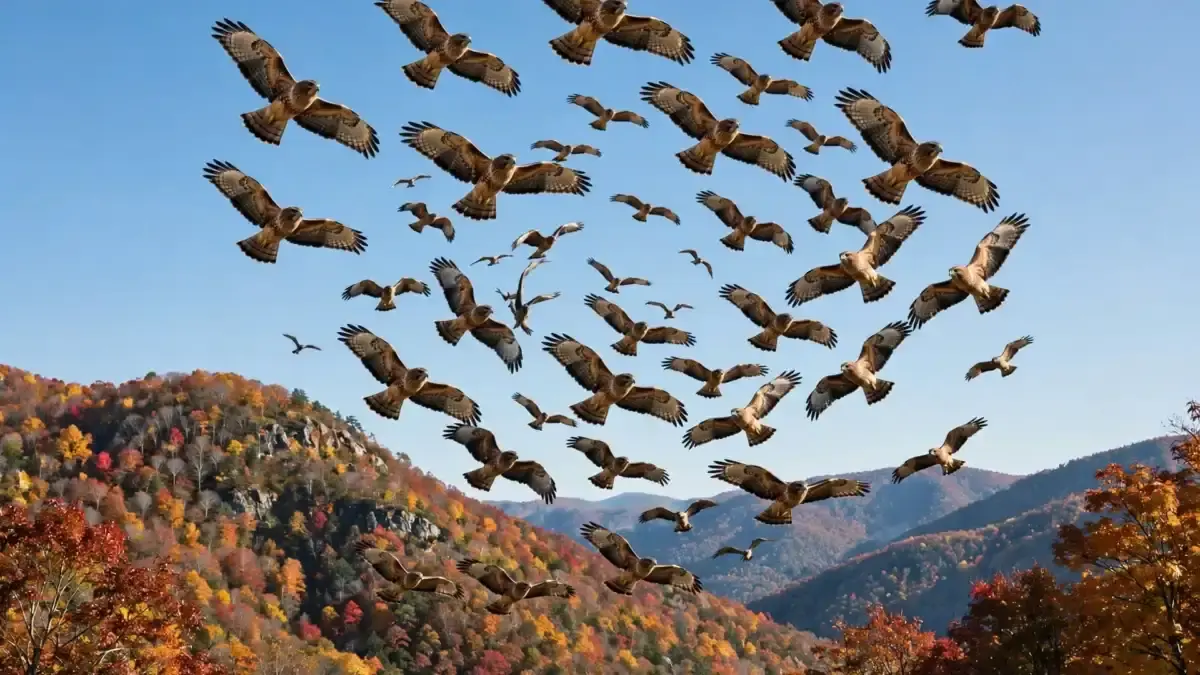
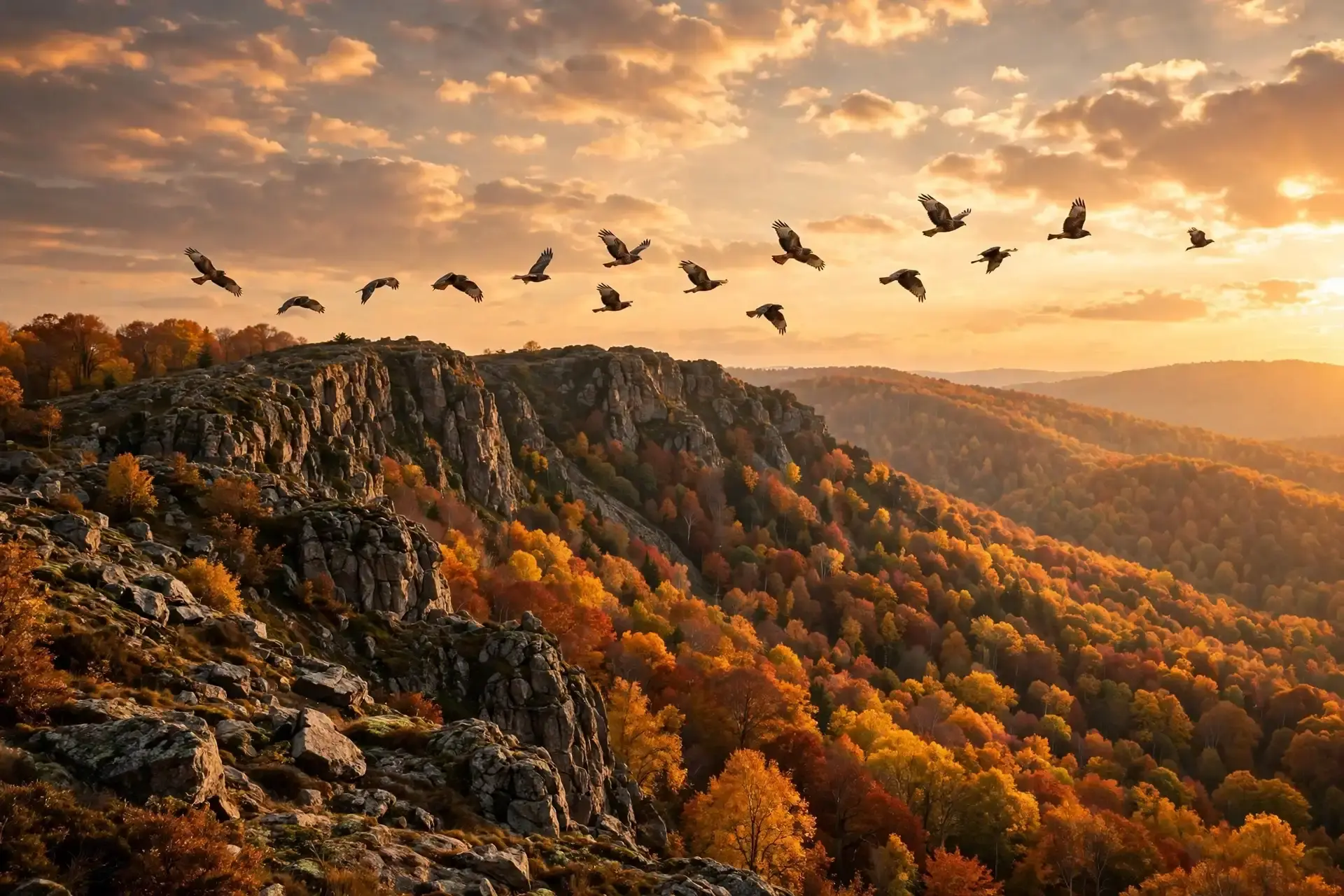
On a crisp October afternoon, look up along any mountain ridge or lakeshore and you might catch the sight that defines fall birding: a slow, circling stream of hawks riding the wind, hundreds of wings spread, not a single wingbeat among them.
These are migrants, and their southbound journey is one of the most dramatic animal movements on the planet. But do all hawks migrate, and where exactly are they going?
The answer depends on the species, the weather, and the year. Here is the full story of the fall raptor flight, from the broad-winged hawks that empty entire forests to the red-tails that stake their claim on winter and refuse to leave.
The Short Answer
Yes, most hawks migrate. The majority of North American hawks are partial or complete migrants, flying south each fall to wintering grounds where food stays available.
Broad-winged hawks are the most committed travelers, with nearly the entire population funnelling through Central America to South America. Red-tailed hawks, Cooper’s hawks, and sharp-shinned hawks migrate in large numbers but leave northern residents behind in milder areas. A few species, like the red-shouldered hawk in the deep south, barely move at all. October is the peak month to watch them.
Which Hawks Migrate and Which Stay Put
Migration is not an all-or-nothing habit for hawks. Most species sit somewhere on a spectrum, and even within a single species, some populations travel while others hold their ground. Birders call this partial migration, and hawks are textbook examples of it.
The long-distance specialists
Broad-winged hawks win the prize for the most dramatic migration of any North American raptor. This crow-sized forest hawk spends the summer spread thinly across eastern forests, almost invisible.
Then, starting in early September, the entire population gathers into enormous flocks called kettles and pours south in a river of wings. Tens of thousands can pass a single watch site in one day.
They cross the Gulf region, funnel through the narrow waist of Mexico and Central America, and settle in South America for the winter. Mississippi kites and Swainson’s hawks make similarly epic journeys, with Swainson’s hawks travelling from the Great Plains all the way to Argentina, one of the longest raptor migrations in the world.
The partial migrants
Red-tailed hawks, Cooper’s hawks, sharp-shinned hawks, and northern harriers all migrate, but northern populations travel farthest while southern birds may not move at all. A red-tail nesting in Ontario will likely winter in the southern United States or Mexico.
The same species nesting in Texas might stay home all year. Age matters too. Young birds of the year tend to migrate farther and earlier than experienced adults, which know exactly where the reliable winter territories are. In irruption years, when northern prey crashes, even more hawks push south than usual.
The homebodies
Some hawks barely migrate at all. Red-shouldered hawks in the southeastern United States are largely resident, defending the same wooded territory year-round. Harris’s hawks in the desert Southwest stay put.
And even in far-northern species, a small fraction of hardy individuals may attempt to overwinter wherever open hunting ground and prey remain. Migration is a strategy, not a rule, and each bird is weighing the same equation: is staying worth the risk?
The Fall Migration Timetable
Fall hawk migration does not happen all at once. It unfolds in waves, species by species, and knowing the schedule is the difference between a sky full of birds and an empty one. The general rule is simple: the farthest travellers leave first.
| Species | Peak migration | Where they winter |
|---|---|---|
| Broad-winged hawk | Mid September | Central and South America |
| Mississippi kite | Late August to mid September | Central South America |
| Sharp-shinned hawk | Late September to mid October | Southern US, Mexico, Central America |
| Cooper’s hawk | October | Southern US, Mexico |
| Red-tailed hawk | Mid October to November | Southern US, Mexico (northern birds) |
| Rough-legged hawk | October to November | Northern and central US (southbound from Arctic) |
| Golden eagle | October to November | Western US, some stay near breeding grounds |
| Northern harrier | October | Southern US, Mexico |
Broad-winged hawks are the early headliners, with most of the population moving through in a frantic few weeks around mid September. Track the season live on the HawkCount migration database run by the Hawk Migration Association of North America.
By the time October arrives, the show belongs to the accipiters and buteos: sharp-shinned and Cooper’s hawks slipping through in steady numbers, red-tails building through late October, and rough-legged hawks arriving from the Arctic tundra as the first real cold pushes down.
Late October and November bring the finale, with golden eagles drifting along mountain ridges and the last red-tails settling into winter territories. If you only visit a hawkwatch once, go in October. You will miss the broad-wing peak, but you will catch the greatest variety.
Why Hawks Migrate: It Is About Food, Not Cold
Hawks do not migrate because they dislike the cold. Feathers are excellent insulation, and many hawks handle freezing temperatures just fine. They migrate because their food disappears. A sharp-shinned hawk that hunts small songbirds cannot eat when those songbirds have all left for the tropics.
A broad-winged hawk that feeds on amphibians, reptiles, and large insects finds its menu gone the moment the first frosts arrive. Red-tails that rely on rodents can stay longer, because voles and mice remain active under the snow, which is exactly why red-tails are among the last to leave and the first to return.
The trigger for departure is not the weather on any given day but the calendar written in daylight. Shortening days in late summer shift hormone levels, creating a restless urge to move. Birders call it Zugunruhe, migratory restlessness.
A cold snap can push birds that were already restless, which is why the biggest flights often follow a cold front with northwest winds, but the underlying schedule is set by light, not temperature. That is also why your backyard feeders do not delay hawk migration. No hawk is waiting around for your suet.
How Hawks Migrate: Thermals, Flyways, and Open Water
Watch a migrating hawk and the first thing you notice is how little it flaps. Hawks are soaring specialists. They climb inside rising columns of warm air called thermals, circling upward without a wingbeat, then glide in a straight line to the next thermal, losing height slowly until they catch another lift.
Groups of hawks circling together in a thermal form the swirling flocks known as kettles, one of the great sights of fall. A single kettle can hold hundreds or thousands of broad-winged hawks, all rising together like leaves in a chimney of air.
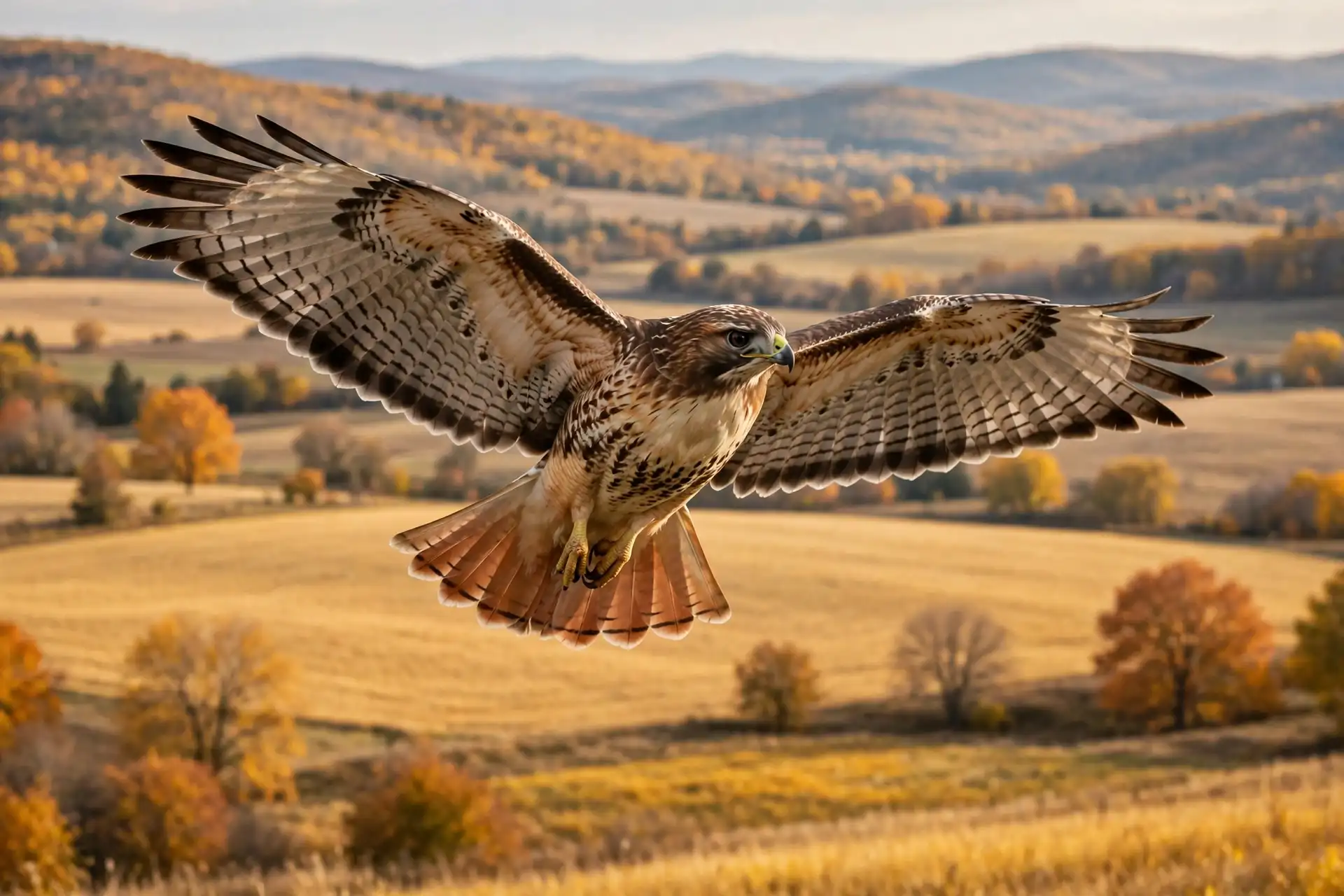
Because thermals form over land, especially over sun-warmed ridges and valleys, hawks follow the land. They concentrate along mountain ridges like the Appalachians, along the edges of the Great Lakes, and down the narrow land bridge of Central America.
Cornell Lab’s Broad-winged Hawk species account describes how completely these birds depend on soaring flight during migration. Open water is the enemy of a soaring bird: no thermals rise from a cool lake or sea, so hawks detour around large bodies of water rather than crossing them.
That is why watch sites cluster at geographic funnels, places where topography squeezes the broad front of migration into a narrow stream. The hawks are not lost. They are following the only road that works for wings built to soar.
Wind matters enormously. A strong tailwind lets hawks cover huge distances with minimal effort, and the biggest flight days almost always follow cold fronts that bring brisk northwest winds. Headwinds ground them. Experienced hawkwatchers check the forecast as carefully as the calendar, because a perfect October day with the wrong wind can mean an empty sky.
Day Fliers in a Night Migrant World
Here is a detail that surprises many new birders: hawks migrate by day, while most songbirds migrate by night. The reason is the thermals. Soaring flight needs sun-warmed air, so hawks travel in daylight, typically between mid-morning and mid-afternoon when thermals are strongest.
That is what makes the fall raptor flight such a gift to watchers: the migration happens in plain sight, at eye level along ridges, in the middle of the day.
Songbirds, which power their flight with constant flapping, have no use for thermals and prefer the cooler, calmer night air, where fewer predators hunt.
So a single October day can hold two migrations at once: hawks streaming overhead by day, and warblers, thrushes, and sparrows passing silently overhead after dark. If you want the full picture of fall migration, watch the ridges by day and listen to the night sky. You can read more about the night shift in our guide to birds that migrate in October.
The Great Raptor Flyways
North American hawk migration follows a few great corridors, each with its own character and its own legendary watch sites.
- The Atlantic Flyway: hawks funnel down the Appalachian ridges, with famous sites like Hawk Ridge in Minnesota at the western edge of the Great Lakes and Cape May in New Jersey where birds hesitate at the Delaware Bay crossing.
- The Mississippi Flyway: a broad front of accipiters and buteos moves down the river valley, concentrating where bluffs and thermals align.
- The Central Flyway: Swainson’s hawks and Mississippi kites stream south through the Great Plains, gathering in enormous kettles over Texas.
- The Pacific Flyway: raptors follow the coastal ranges and interior valleys, with Goshute Mountains in Nevada among the premier western sites.
- The Veracruz bottleneck: the greatest raptor spectacle on Earth. Each fall, millions of hawks, kites, and vultures funnel through the narrow coastal plain of Veracruz, Mexico. Single-day counts can exceed 100,000 birds.
These funnels exist because of geography, and they are the reason organized hawkwatches can count migration with such precision. Volunteers at these sites have been tallying the fall flight for decades, building one of the longest-running datasets on raptor populations in the world.
Best Places to Watch Hawks Migrate
You do not need to travel to Veracruz to see the flight. Dozens of hawkwatches operate across North America every fall, most of them free and staffed by volunteers who love explaining what is overhead.
- Hawk Ridge, Minnesota: perched above Lake Superior in Duluth, one of the most famous inland sites, with huge September flights and a steady October stream.
- Cape May, New Jersey: the fall funnel at the tip of the peninsula, where sharp-shinned hawks, falcons, and monarchs pile up before the bay crossing.
- Goshute Mountains, Nevada: the premier western site, with golden eagles and red-tails riding the ridge thermals.
- Veracruz, Mexico: the world capital of raptor migration, where the River of Raptors project counts millions of birds each fall.
- Your local ridge: any prominent hill, lakeshore bluff, or coastal headland with a view and northwest wind can produce a flight. Local birding clubs usually know the spots.
How to Watch a Hawk Migration
Hawkwatching is gloriously low-tech. Bring binoculars, a chair, sunscreen, and patience. Face into the wind, because hawks ride toward you on the updrafts along the ridge.
Scan the sky in slow sweeps rather than staring at one spot, and learn to spot the distant specks that resolve into soaring birds. Early in the day the flight is low and close; by afternoon, thermals lift the birds high and far.
Identification at a distance is the fun challenge. Start with shape: buteos like red-tails soar with broad wings held flat, accipiters like Cooper’s hawks flap-flap-glide with shorter rounded wings, and falcons drive forward with stiff, pointed wings.
Our complete hawk vs falcon identification guide breaks down the field marks, and the Cooper’s vs sharp-shinned comparison sorts out the two trickiest lookalikes. Do not be discouraged if most birds stay unidentified at first. Even the counters miss plenty.
What About Owls, Eagles, and Falcons?
Hawks are not the only raptors on the move. Most falcons migrate, with peregrines making spectacular long-distance journeys and American kestrels partially migrating. Bald eagles in the north move south to open water, while southern eagles stay home.
Northern saw-whet owls migrate in large numbers each fall, almost entirely at night, and are studied at banding stations across the continent. Short-eared owls and snowy owls irrupt south in some winters when lemming populations crash. The raptor migration is a whole community on the wing, and hawks are just the most visible part of it.
Hawks in Your Backyard This Fall
Fall migration brings hawks to backyards too, and not always as welcome guests. Cooper’s hawks and sharp-shinned hawks time their migration to coincide with the songbird movement, and they hunt at feeders the way lions hunt at waterholes. If a Cooper’s hawk starts visiting your feeders daily, take it as a compliment to your habitat and a sign of a healthy food web. The songbirds will return once the hawk moves on.
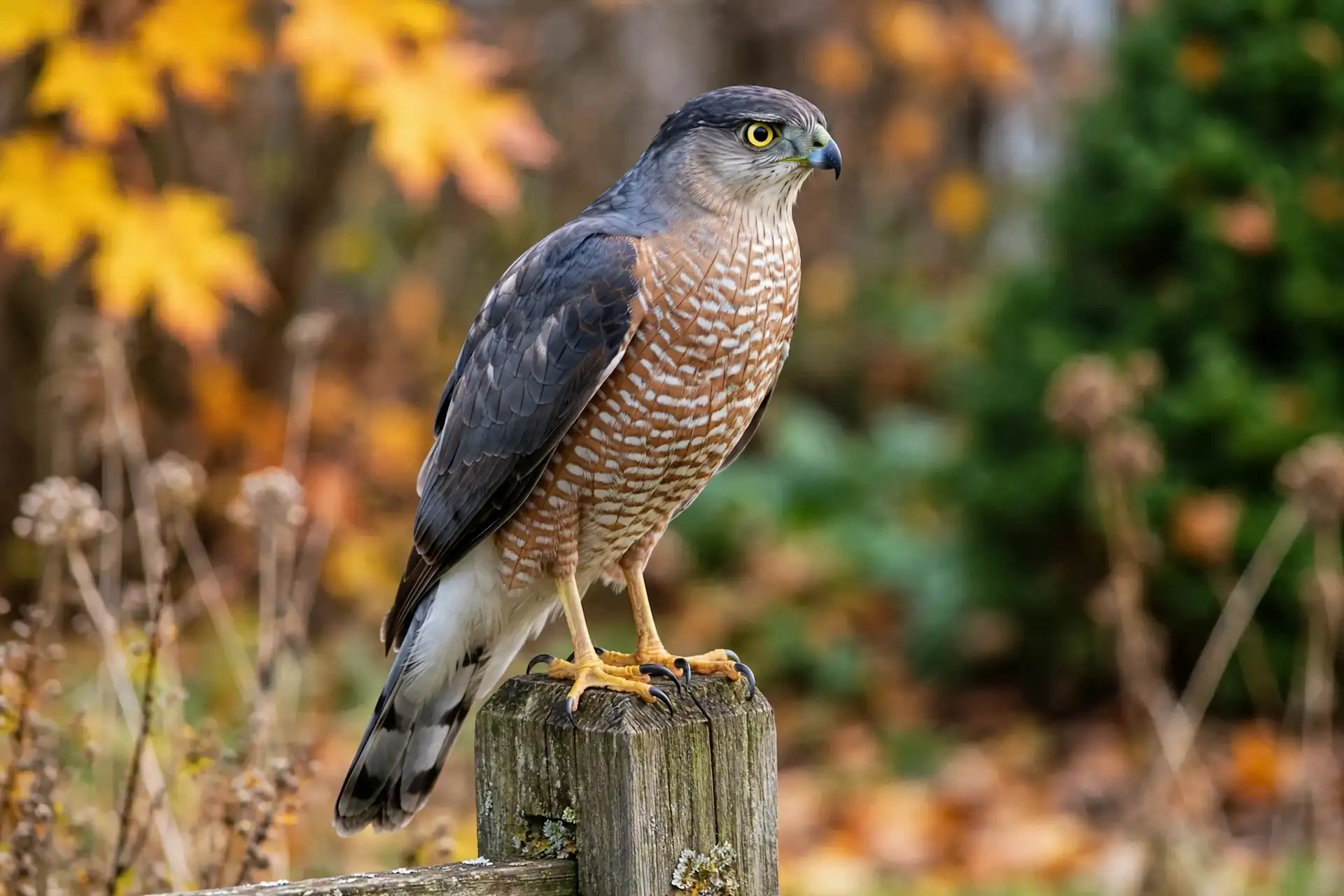
You can make your yard less of a hawk hunting ground without harming anything: place feeders within a few feet of dense shrubs so songbirds have instant cover, avoid open ground feeding that exposes birds, and skip the temptation to trap or harass the hawk, which is illegal under federal law.
Most backyard hawk visits last a week or two as the bird refuels and continues south. Enjoy the close-up views. A sharp-shinned hawk threading through your garden at full speed is migration at its most personal.
Do hawks migrate at night?
Almost never. Hawks depend on daytime thermals for soaring flight, so they migrate between mid-morning and mid-afternoon. The rare exceptions are usually birds displaced by storms. If you hear migration at night in fall, those are songbirds, thrushes, and sparrows, not hawks.
Where do hawks go in winter?
It depends on the species. Broad-winged hawks and Swainson’s hawks travel to Central and South America. Red-tailed, Cooper’s, and sharp-shinned hawks mostly winter in the southern United States and Mexico, with northern populations travelling farthest. Rough-legged hawks reverse the pattern, flying south from the Arctic to winter in the northern United States.
Do hawks return to the same place every year?
Many do. Adult hawks show strong fidelity to both breeding territories and wintering areas, returning to the same stretches of coastline, valley, or farmland year after year. Young birds wander more widely on their first migrations, gradually settling into a routine as they gain experience.
How far can a hawk migrate in one day?
On a good day with strong thermals and tailwinds, a migrating hawk can cover 200 to 300 miles. Broad-winged hawks have been tracked moving more than 4,000 miles from Canada to South America over the course of a few weeks, averaging well over 100 miles per travel day.
Why do hawks circle in groups?
Circling groups are kettles, flocks of hawks sharing a rising thermal. Each bird circles to stay inside the column of lift, gaining altitude without flapping. When the birds reach the top of the thermal, they peel off one by one and glide toward the next one. You can read the full explanation in our guide to why vultures circle in kettles, which covers the same soaring mechanics hawks use.
Conclusion
So do hawks migrate? Most do, each in its own way and on its own schedule. The broad-winged hawks are already gone by October, pouring south in kettles that darken the sky over Central America. The red-tails, Cooper’s hawks, and harriers are moving now, riding October thermals down the ridges and flyways.
A few hardy residents will stay all winter, watching the snow from a favourite perch. Find a ridge on a crisp October day with a northwest wind, look up, and watch the oldest commute in North America stream overhead. Few wildlife spectacles reward so little effort so richly.